Alibaba Fires Back in the Frontier AI Race, Pitching Qwen3.8 Max Against Anthropic’s Fable 5
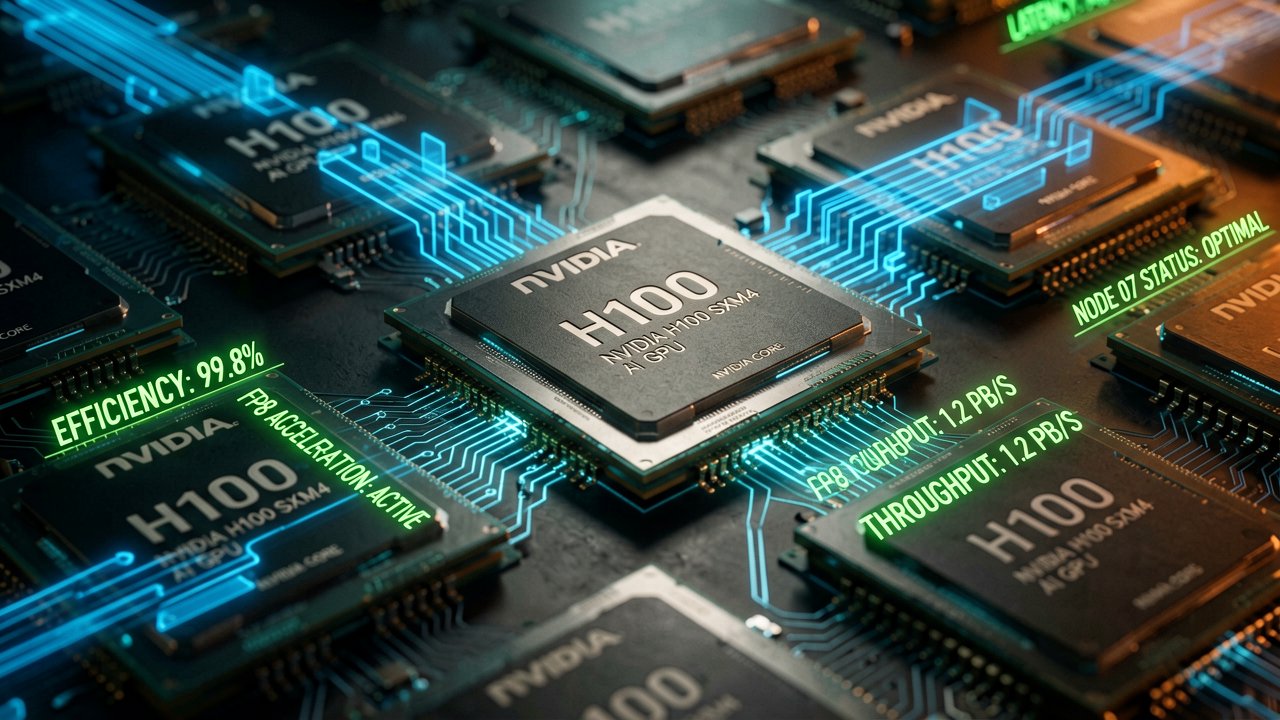
The global race for generative artificial intelligence supremacy just witnessed another massive shift as Chinese e-commerce and cloud giant Alibaba officially previewed its latest flagship large language model, Qwen3.8 Max. Unveiled on July 19, 2026, at the World Artificial Intelligence Conference in Shanghai, the massive model marks an aggressive escalation by Alibaba to assert global dominance in advanced generative reasoning. In a bold declaration that rippled through the tech sector, the company’s Qwen team announced on social media that their new architecture is globally "second only to Fable 5," referring to the highly anticipated frontier model from Anthropic.
According to comprehensive coverage by Bloomberg, the timing of this release is anything but accidental. Alibaba's announcement came just days after local rival Moonshot AI shook up Silicon Valley by introducing its own 2.8-trillion-parameter system, Kimi K3. By quickly countering with Qwen3.8 Max, Alibaba has firmly positioned itself at the absolute pinnacle of enterprise-grade AI development, triggering a sharp 5.4% surge in its Hong Kong-listed stock as investors reacted to the intensifying geopolitical tech clash.
Trillion-Parameter Heavyweights and the Open-Weight Disruptor
At the core of this benchmark showdown are two dramatically different approaches to ecosystem dominance. While Anthropic’s Claude Fable 5 operates behind a strictly managed, closed-source commercial API, Alibaba is executing a hybrid strategy designed to win over the global developer ecosystem. Alibaba revealed that Qwen3.8 Max boasts a staggering 2.4 trillion parameters, giving it the raw computational capacity needed to tackle complex multimodal tasks, agentic coding workflows, and long-horizon document analysis. The model is currently accessible in a preview phase via Alibaba’s first-party developer environments, including its Token Plan and the Qoder coding platform.
However, the real disruption lies in what comes next. Unlike its Western counterpart, Alibaba has committed to releasing the open weights for the Qwen3.8 family in the near future, as detailed by The Next Web. This open-weight commitment means that independent researchers and global enterprise teams will soon be able to download, modify, and host this multi-trillion-parameter beast locally on their own infrastructure. If Alibaba’s bold performance claims hold true under rigorous third-party testing, providing open access to a system capable of rivaling a closed frontier engine like Fable 5 could fundamentally democratize advanced enterprise AI and alter the economics of the entire industry.
Technical Specifications Matrix
| Specification Metric | Alibaba Qwen3.8 Max | Anthropic Fable 5 |
|---|---|---|
| Model Size / Parameters | 2.4 Trillion (Dense/MoE hybrid architecture) | Undisclosed (Estimated multi-trillion dense equivalent) |
| Speed / Latency | High-throughput streaming, optimized for local enterprise clusters | Ultra-low time-to-first-token via proprietary cloud routing |
| Hardware Requirements | Multi-node H100/A100 clusters (FP8/INT4 quantization supported) | Fully managed cloud infrastructure (AWS Bedrock / Google Cloud) |
Hardware Footprints and Infrastructure Realities
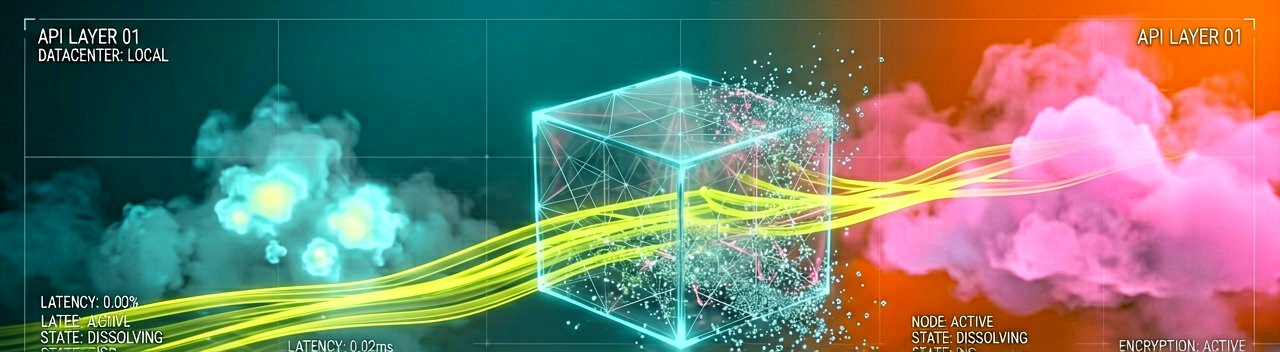
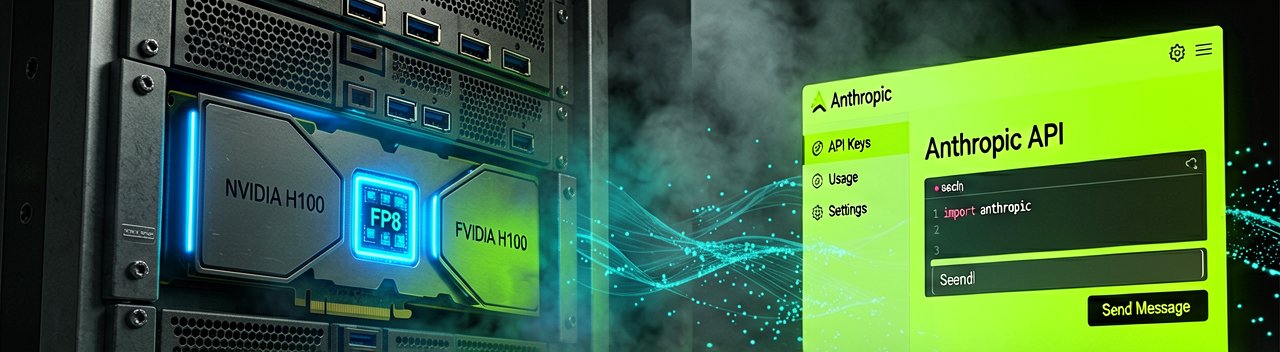
Deploying a 2.4-trillion-parameter architecture like Qwen3.8 Max demands a massive underlying hardware footprint that fundamentally reshapes data center strategies. For enterprises choosing to run the upcoming open-weight version locally, the hardware barrier to entry remains steep, requiring multi-node clusters linked by high-bandwidth interconnects like NVIDIA's NVLink. Alibaba has mitigated some of these extreme resource demands by building native support for advanced FP8 and INT4 quantization directly into the model's core framework. These mathematical optimizations allow corporations to compress the model's massive memory footprint, making it possible to execute inference on more accessible hardware configurations without triggering catastrophic drops in generative accuracy.
Conversely, Anthropic’s Fable 5 completely bypasses the localized hardware bottleneck by operating exclusively within a highly optimized, fully managed cloud environment. Instead of forcing developers to manage raw GPU allocations, VRAM constraints, and node-to-node latency, Anthropic abstracts these infrastructure complexities away through proprietary cloud routing layers on AWS and Google Cloud. This closed-API paradigm ensures that Fable 5 delivers incredibly snappy, ultra-low time-to-first-token metrics because the underlying hardware is dynamically scaled and tuned by dedicated platform engineers. It creates an operational environment where speed is guaranteed by the provider, shifting the burden of infrastructure optimization from the client back to the cloud vendor.
This stark divergence in deployment philosophy directly influences how latency and throughput scale under heavy corporate workloads. Local deployments of Qwen3.8 Max can achieve astonishingly high token-throughput rates for internal data processing because they do not have to contend with public internet routing or external API queuing. For bulk document processing, offline code generation, and sensitive data indexing, a dedicated local cluster running the Alibaba architecture can run hot and continuously at a predictable fixed cost. The trade-off is the upfront capital expenditure for the silicon, alongside the ongoing engineering overhead required to keep the cluster synchronized and cooled.
On the other flip of the coin, Fable 5 shines in bursty, consumer-facing applications where unpredictable traffic spikes would instantly crush a privately owned local server rack. Anthropic’s infrastructure utilizes global load balancing and custom silicon accelerators to absorb massive surges in user demand without degrading individual session performance. While this managed model keeps initial deployment costs remarkably low, the long-term API token expenses can quickly balloon for organizations running continuous, high-volume analytical pipelines. Ultimately, the choice between these two generative powerhouses forces a strategic decision between total operational autonomy over raw hardware and the frictionless scalability of premium cloud ecosystems.
Editorial Pros & Cons
| Model | Operational Advantages (Pros) | Operational Disadvantages (Cons) |
|---|---|---|
| Alibaba Qwen3.8 Max | Complete deployment sovereignty via upcoming open weights; predictable cost structure for massive workloads; support for aggressive quantization (FP8/INT4) reduces hardware overhead; immune to external API outages. | Substantial engineering complexity to configure and optimize locally; massive initial capital expenditure for private GPU clusters; localized scaling bottlenecks during unexpected data surges. |
| Anthropic Fable 5 | Frictionless, zero-infrastructure deployment via premium managed cloud APIs; instantaneous global scalability; continuous backend updates without client-side downtime; exceptional out-of-the-box reasoning capabilities. | Total platform dependency with no control over model deprecation or API pricing hikes; severe data privacy concerns for sensitive enterprise telemetry; variable long-term operational costs that scale linearly with volume. |
The Strategic Tug-of-War
Reading Between the Lines: The fierce rivalry between Alibaba's Qwen3.8 Max and Anthropic's Fable 5 is not merely a clinical battle of benchmark scores, but a fundamental clash over who controls the digital substrate of the next industrial revolution. Alibaba is playing a masterful long game by dangling the carrot of open weights in front of a developer community increasingly weary of Silicon Valley's closed-door policies. By offering a multi-trillion-parameter model that can be pulled down, picked apart, and hosted on private infrastructure, the Chinese tech giant is effectively positioning itself as the champion of data sovereignty. This strategy appeals directly to heavily regulated industries like banking, defense, and healthcare, where sending proprietary intelligence over a third-party public API is an absolute regulatory non-starter.
Anthropic, on the other hand, banks heavily on the luxury of sheer convenience and polished refinement. Fable 5 treats artificial intelligence as a premium utility, akin to electricity or running water, where the end-user simply flips a switch and expects flawless, state-of-the-art performance. This managed ecosystem entirely spares enterprises from the grueling, expensive nightmare of scouting, securing, and maintaining scarce AI silicon in a volatile global supply chain. For agile startups and rapid-deployment corporate innovation teams, the ability to integrate frontier-tier cognitive capabilities into a product within an afternoon completely outweighs the philosophical desire for open-source purity or localized model control.
However, this frictionless convenience introduces a quiet vulnerability that corporate procurement teams frequently overlook until it is too late. Relying exclusively on Fable 5 means tethering a company's core operational capabilities to the corporate health, pricing whims, and political alignments of a single vendor. If API rate limits choke during a critical product launch, or if subscription costs suddenly spike to subsidize Anthropic's massive training overhead, clients have zero recourse but to pay up or completely rewrite their application stacks. Alibaba's open-weight alternative acts as a powerful hedge against this exact flavor of vendor lock-in, providing an insurance policy that keeps the power dynamics tilted firmly back toward the enterprise client.
Ultimately, the choice between these two architectural titans distills down to a classic build-versus-buy dilemma scaled to catastrophic proportions. Choosing Qwen3.8 Max means committing to the harsh reality of building a localized AI powerhouse, complete with the sleepless nights of managing multi-node cluster latencies and thermal dynamics. Choosing Fable 5 means buying into a gilded cage of effortless performance, where the views are spectacular but the lock on the door belongs to someone else. As the boundaries of generative computing continue to expand, organizations will find that their choice of model says far less about their computational preferences and far more about their willingness to manage their own technical destiny.
"Choosing between an open-weight multi-trillion-parameter giant and a closed-API cloud marvel is a lot like deciding between buying a high-performance, disassembled supercar that you have to build in your own garage, or leasing a sleek autonomous limousine. The limousine gets you to the gala looking flawless without getting grease under your fingernails, but you’ll feel incredibly silly when the chauffeur decides to change the route, double the fare mid-highway, or abruptly lock the doors because of a corporate policy update."
Artūras Malašauskas is an AI Systems Integrator with 20+ years of production-grade web engineering experience. He has designed, shipped, and scaled enterprise Python/PHP systems for logistics, SaaS, and public-sector clients. For the past year, he has focused exclusively on AI integrations: deploying open-source LLMs, building generative media pipelines (image, audio, video), and engineering multi-agent workflows for real production environments. His standard: reproducibility, security, cost-efficient inference—no vaporware. He documents and evaluates emerging AI tooling, separating verified capabilities from marketing noise. Technical editor at: muza-ai.eu, ai-verslas.lt, ai-naujinos.lt Connect on LinkedIn
Comments