Tencent Cloud Escalates Global AI Race with International Launch of ADP 4.0
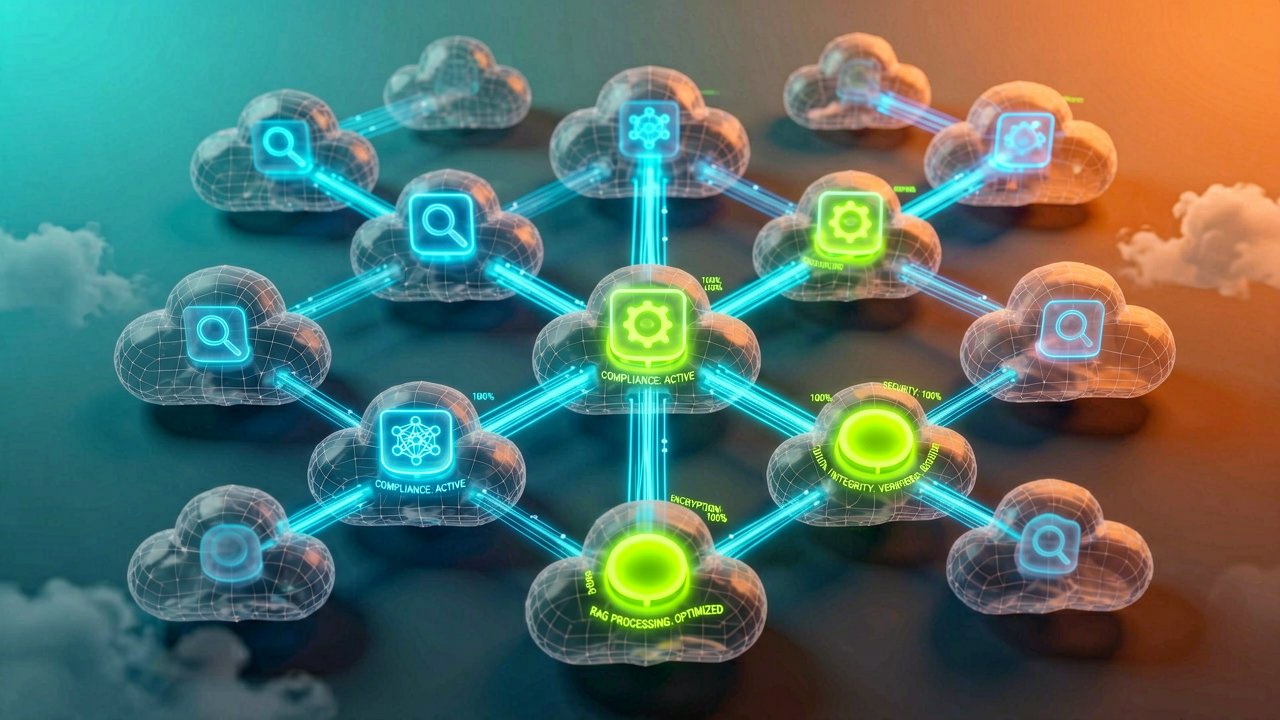
Tencent Cloud has officially unveiled the overseas edition of its Agent Development Platform (ADP) 4.0 at the 2026 World Artificial Intelligence Conference, introducing enterprise-grade artificial intelligence agents directly to the global market. This strategic expansion represents a critical shift for the Chinese technology conglomerate, positioning it as an immediate infrastructure competitor to Western hyperscalers. By deploying ADP 4.0 internationally, Tencent aims to capture the rapidly growing corporate demand for structured, managed AI agent architectures capable of transforming raw model outputs into quantifiable corporate productivity.
This global rollout aligns with a macro-level evolution in the enterprise software ecosystem, where organizations are transitioning away from standalone chatbots in favor of autonomous digital workforces. Industry analysis from Tech in Asia underlines how this platform allows international corporations to build, distribute, and orchestrate multi-agent workflows under stringent corporate frameworks. As businesses seek to integrate intelligence layer services deeper into existing internal customer relationship management (CRM) and enterprise resource planning (ERP) architectures, providing a governed, localized execution environment has become a mandatory prerequisite for global market capture.
Furthermore, the timing of this international product launch underscores an intense cross-border infrastructure race. As reported by 36Kr, Tencent Cloud's global delivery strategy relies on offering advanced operational tools designed to bypass localized adoption friction. By addressing foundational enterprise problems such as data sovereignty, role-based access control, and predictable model orchestration costs, the launch marks a definitive step toward localized software delivery in highly regulated foreign markets.
Functional Core and Upgraded Module Architecture
The global iteration of ADP 4.0 relies on an updated architecture that optimizes three core pillars: an Intelligent Workspace, a specialized Claw Mode, and an expansive Skill Marketplace. Built fundamentally on a foundation of Large Language Models (LLMs) and integrated Retrieval-Augmented Generation (RAG) capabilities, the platform simplifies agent development by allowing natural-language workflow orchestration. This enables enterprises to orchestrate long-running tasks, configure isolated cloud sandboxes for secure execution, and invoke specialized skills without rewriting foundational legacy code.
Enterprise Governance and Cross-Border Compliance
A significant differentiator for ADP 4.0 in international corridors is its heavy emphasis on enterprise compliance and auditable data pipelines. Rather than operating as an unmonitored consumer tool, the platform is engineered with built-in content moderation, administrative audit logging, and precise resource cost visibility. This structural transparency allows multinational enterprises to ingest internal corporate knowledge bases securely, ensuring that agent behaviors remain compliant with regional data protection standards and corporate privacy mandates.
Strategic Impact on the International Infrastructure Landscape
By offering pre-built templates for critical enterprise functions—including marketing analytics, brand intelligence, and automated employee administration—Tencent Cloud is effectively lowering the technical barrier to entry for complex AI orchestration. This approach pressures traditional cloud incumbents to accelerate their own agentic deployment timelines. The ability of ADP 4.0 to operate seamlessly across public cloud or dedicated hybrid cloud deployments provides international enterprises with deployment flexibility, triggering a more aggressive competitive dynamic within the global B2B artificial intelligence infrastructure layer.
What Most Reports Miss: The launch of the international edition of ADP 4.0 is not merely an infrastructure upgrade, but a calculated pivot from consumer-facing chatbot toys to deep enterprise-level governance. Speaking at the 2026 World Artificial Intelligence Conference (WAIC), Tencent Cloud Vice President Wu Yunsheng explained that the primary bottleneck for corporate AI deployment is no longer raw model intelligence, but rather organizational control. While personal productivity applications operate at individual endpoints, enterprise-specific agents require tight permission controls, data logging, and predictable execution loops that can scale across global business operations without risking security breaches.
Historically, Chinese tech giants have faced unique headwinds when exporting enterprise software, primarily due to localized data compliance laws and entrenched competition from Western legacy suites. Tencent is addressing this friction directly in ADP 4.0 by building out-of-the-box integrations with globally dominant workplace environments, including Google Workspace, Confluence, and Jira. Furthermore, rather than forcing international users into domestic messaging environments, the updated platform allows enterprises to deploy autonomous agents directly onto popular global communication networks like Telegram and LINE with a single codebase release.
Rethinking Software Architecture for Autonomous Agents
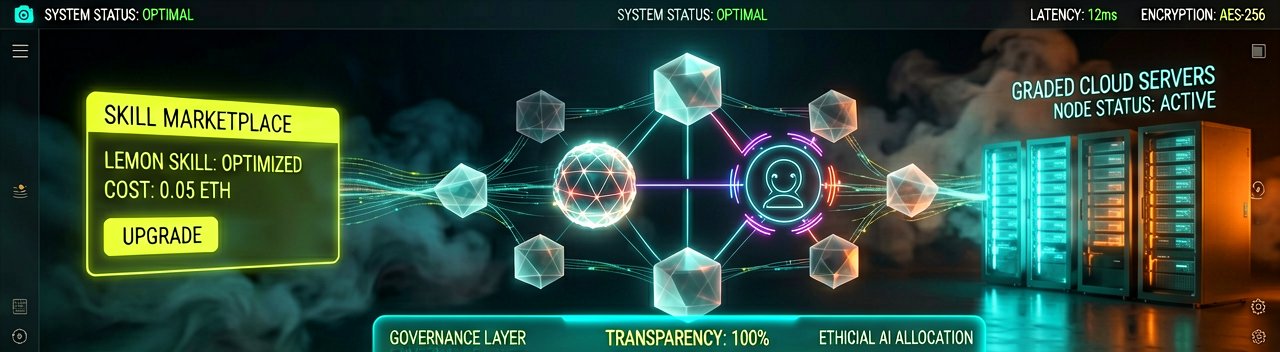
This operational pivot matches a broader philosophy shift in how corporate systems are being built from the ground up. As enterprise operations scale, corporate systems must transition from interfaces originally designed for human manipulation to architectures optimized explicitly for autonomous agents. According to product insights from Tencent Cloud ADP engineering teams, traditional API architectures often fail because they expect predictable, linear inputs, whereas multi-agent networks require dynamic execution loops, secure cloud sandboxes, and flexible memory-management gateways to adapt to unstructured workflows.
By positioning ADP 4.0 as a comprehensive AgentOps platform rather than a basic development library, Tencent is also restructuring the financial realities of enterprise AI procurement. Modern architectural audits demonstrate that model inference costs typically account for only a minority percentage of real-world production expenses, while integration, data pipeline maintenance, and continuous optimization consume the rest of corporate budgets. By offering a standardized framework that natively handles complex Retrieval-Augmented Generation (RAG) and low-code workflow orchestration, the platform lowers long-term operational overhead for global businesses adjusting to agentic architectures.
Reading Between the Lines: The market enthusiasm surrounding Tencent Cloud’s international push frequently overlooks the fierce platform-lockout strategies currently being deployed by established Western hyperscalers. While ADP 4.0 boasts versatile integration with tools like Jira and Google Workspace, these incumbent environments are simultaneously embedding native agentic layers into their own ecosystems. Platforms like Microsoft Copilot Studio and Salesforce Agentforce already command deep institutional trust and systemic access, meaning Tencent is not merely introducing a competitive utility, but attempting to wedge its infrastructure into enterprise software layers that legacy vendors are actively trying to close off to outsiders.
Furthermore, the industry-wide promise of low-code or natural-language multi-agent orchestration consistently collides with the chaotic reality of legacy corporate infrastructure. While promotional narratives depict a seamless environment where non-technical operations managers can construct autonomous workflows over a weekend, real-world deployment reveals a steep technical debt barrier. Enterprises routinely discover that their internal data repositories are far too fragmented, poorly indexed, or riddled with permission contradictions for a plug-and-play Retrieval-Augmented Generation (RAG) architecture to function reliably without extensive, costly custom engineering intervention.
The Cross-Border Compliance Paradox
There is also an inherent operational contradiction in marketing a heavily governed, highly compliant platform across geopolitically fractured technology ecosystems. For multinational corporations operating under stringent European GDPR or American data privacy frameworks, adopting a foundational AI infrastructure layer originating from a Chinese technology conglomerate involves navigating an intense gauntlet of regulatory scrutiny and vendor risk assessments. Even when Tencent Cloud hosts its infrastructure entirely on localized sovereign cloud nodes, the legal and psychological friction of cross-border software procurement remains an uphill battle that superior technical features alone cannot easily resolve.
Finally, the cost-efficiency narrative of autonomous digital workforces requires measured skepticism from IT procurement leaders. Enterprises are being sold on the ideal of replacing human labor overhead with cheap, tireless AI agents, yet they frequently trade predictable payroll structures for volatile API token-consumption bills and unpredictable system debugging cycles. When an autonomous multi-agent workflow enters an infinite loop or misinterprets an unannounced software change, the resulting compute bill and operational downtime can rapidly erase any theoretical savings, forcing organizations to re-introduce human supervisors simply to manage the software that was meant to operate independently.
Deploying an autonomous enterprise AI agent to save money is a lot like hiring an eager, unpaid intern with infinite processing speed and zero common sense—eventually, your senior engineers will spend their entire day making sure the software hasn't accidentally reordered ten thousand office chairs or shared the corporate payroll dataset with a public forum.
Artūras Malašauskas is an AI Systems Integrator with 20+ years of production-grade web engineering experience. He has designed, shipped, and scaled enterprise Python/PHP systems for logistics, SaaS, and public-sector clients. For the past year, he has focused exclusively on AI integrations: deploying open-source LLMs, building generative media pipelines (image, audio, video), and engineering multi-agent workflows for real production environments. His standard: reproducibility, security, cost-efficient inference—no vaporware. He documents and evaluates emerging AI tooling, separating verified capabilities from marketing noise. Technical editor at: muza-ai.eu, ai-verslas.lt, ai-naujinos.lt Connect on LinkedIn
Comments