VAST Data Rewrites the Infrastructure Playbook to Anchor the Enterprise Agentic AI Era
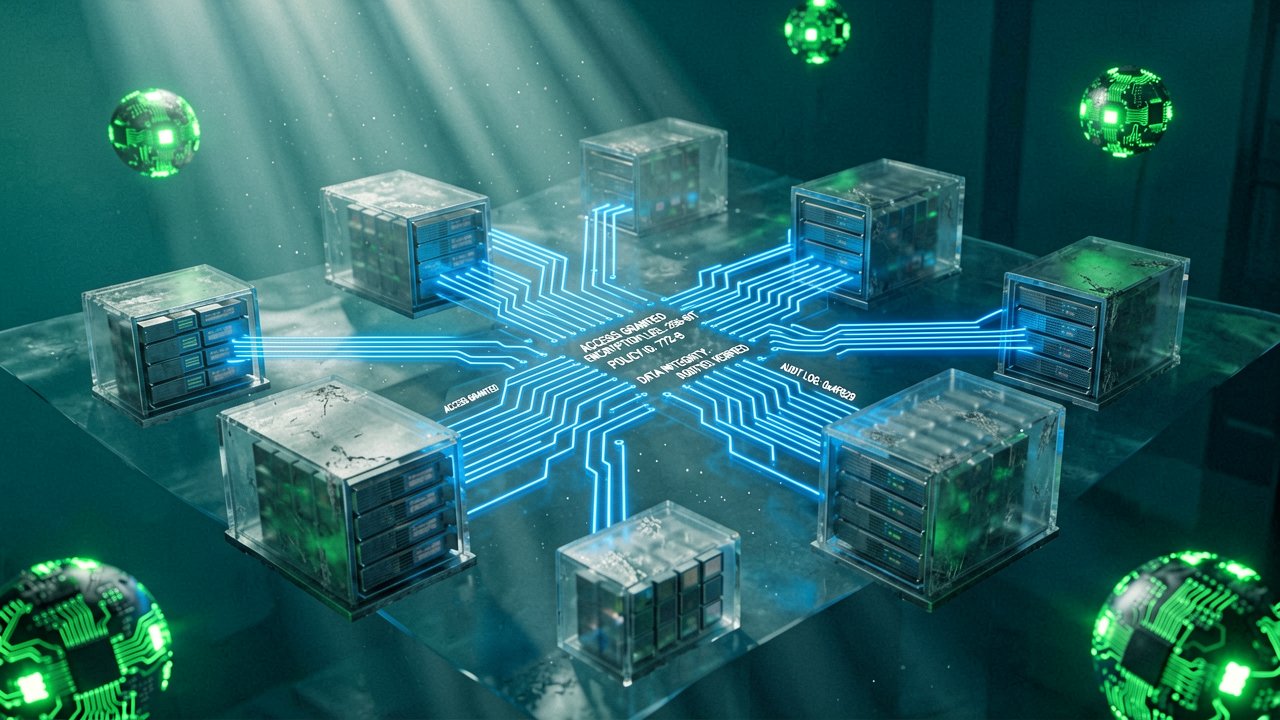
The enterprise artificial intelligence landscape is undergoing a structural transition from static, human-prompted large language models to autonomous, self-learning agentic workflows. As these decentralized software agents begin interacting dynamically with real-world enterprise repositories, legacy data architectures are increasingly buckling under the operational dualities of strict data governance and intense throughput requirements. In response to this widening structural void, storage disruptor VAST Data introduced a dedicated computing and data architecture layer targeted entirely at securing the lifecycle of self-learning agentic AI networks, as detailed in the official launch announcement by VAST Data.
By shifting governance rules and automated continuous model fine-tuning directly into the unified data platform layer, the infrastructure specialist attempts to solve a critical trust deficit preventing widespread multi-agent deployment in regulated business segments. The core architectural additions enabling this trusted closed operational computing loop are the VAST Data PolicyEngine and the VAST Data TuningEngine. These dual pillars aim to deliver a fully verifiable, zero-trust system of record where model reasoning, data ingestion, and recursive machine learning actions remain consistently visible and auditable, according to technical tracking by HPCwire.
Architectural Security and Zero-Trust Guardrails
Unlike historical systems that attempt to apply access controls inside isolated business applications, the newly added PolicyEngine enforces access rights, compliance guidelines, and behavioral guardrails at the underlying data layer before an autonomous agent can execute an action. This approach establishes a zero-trust posture across enterprise workflows. Decisions made by autonomous models are logged alongside immutable cryptographic audit trails to guarantee absolute explainability. This capability directly reduces the risks of unauthorized data exfiltration or unchecked model deviations as agents interact across globally distributed hybrid networks.
Continuous Optimization via Autonomous Closed-Loop Fine-Tuning
The operational bottlenecks of traditional model optimization are addressed by the TuningEngine, which builds automated optimization loops natively into the system storage layer. The engine continuously aggregates operational outcomes and feedback loops from agent pipelines to execute rapid parameter adjustments via Supervised Fine Tuning (SFT) and Low-Rank Adaptation (LoRA). By directly matching execution metrics to storage pipelines, candidate models can be evaluated, benchmarked, and automatically redeployed. This approach mitigates the risk of GPU starvation and eliminates the costly manual engineering steps that traditionally stall AI development cycles.

Market Impact and the Rise of the Enterprise AI Factory
This tactical infrastructure update repositions VAST Data from a high-performance scale-out storage vendor into an essential operating platform for production-grade AI factories. As modern enterprises deploy billions of dollars into accelerated hardware clusters, data pipeline congestion frequently limits overall compute efficiency. Industry analysts note that anchoring security and real-time fine-tuning into a single distributed data fabric provides a critical blueprint for scaling autonomous networks safely, helping bridge the trust gap highlighted by Fierce Network. This foundation proves essential as organizations shift away from rigid legacy computing stacks toward flexible, hybrid cloud computing environments built explicitly around continuous agentic intelligence.
Reading Between the Lines: The Pragmatic Friction of Agentic Autonomy
The marketing architecture surrounding agentic AI infrastructures presents a flawless vision of frictionless corporate efficiency, yet a closer examination reveals a fundamental operational contradiction. Enterprise storage vendors promise that embedding zero-trust policy engines at the data layer will seamlessly secure autonomous workflows, but this assumption overlooks the chaotic realities of real-world corporate environments. Corporate data repositories are rarely pristine, well-structured environments; instead, they are messy, sprawling landscapes of fragmented permissions, historical silos, and conflicting compliance mandates. Forcing an automated infrastructure layer to dynamically decipher and police these ambiguous data rights across millions of rapid agentic queries is highly likely to cause widespread operational bottlenecks, frequently blocking legitimate automated processes simply to avoid a security false positive.
Furthermore, the technical promise of continuous, autonomous model fine-tuning introduces a compounding cycle of hidden algorithmic risks that enterprise buyers are poorly equipped to manage. While automated optimization loops theoretically keep models accurately aligned with real-time business data, they also create a highly unpredictable feedback loop where autonomous agents essentially grade and refine their own performance. Without strict, resource-intensive human-in-the-loop oversight, a single bad piece of automated telemetry or a skewed data ingest pipeline could quietly corrupt a localized model over several automated retraining generations. This risk forces enterprises into a difficult catch-22 situation: they must either slow down their autonomous data factories with heavy manual auditing, or risk letting their self-learning agents drift into costly, hallucinatory compliance violations.
This dynamic ultimately shifts the real battleground from pure hardware capabilities to the complex, unglamorous domain of data lineage and enterprise liability. Building immutable cryptographic audit trails into the underlying storage layer solves the problem of proving what went wrong after a system failure, but it does very little to prevent the initial algorithmic mistake from occurring. As insurance providers and corporate legal departments struggle to define who exactly holds the financial liability when an autonomous agent makes a catastrophic operational decision, infrastructure metrics will no longer be judged solely by raw throughput or storage capacity. Instead, the ultimate survival of these specialized agentic data platforms will depend on their ability to survive aggressive forensic audits and prove that an enterprise did not completely abdicate its corporate governance responsibilities to a self-learning machine.

"We are rushing to build flawless, bulletproof data highways for autonomous agents that still can't reliably distinguish a corporate financial invoice from a cleverly formatted phishing email, proving once again that enterprise IT loves nothing more than buying a high-speed engine before figuring out who is actually sitting in the driver's seat."
Artūras Malašauskas is an AI Systems Integrator with 20+ years of production-grade web engineering experience. He has designed, shipped, and scaled enterprise Python/PHP systems for logistics, SaaS, and public-sector clients. For the past year, he has focused exclusively on AI integrations: deploying open-source LLMs, building generative media pipelines (image, audio, video), and engineering multi-agent workflows for real production environments. His standard: reproducibility, security, cost-efficient inference—no vaporware. He documents and evaluates emerging AI tooling, separating verified capabilities from marketing noise. Technical editor at: muza-ai.eu, ai-verslas.lt, ai-naujinos.lt Connect on LinkedIn
Comments