Sail Research Unveils Dedicated Cloud Infrastructure to Solve Long-Horizon AI Agent Scalability Woes
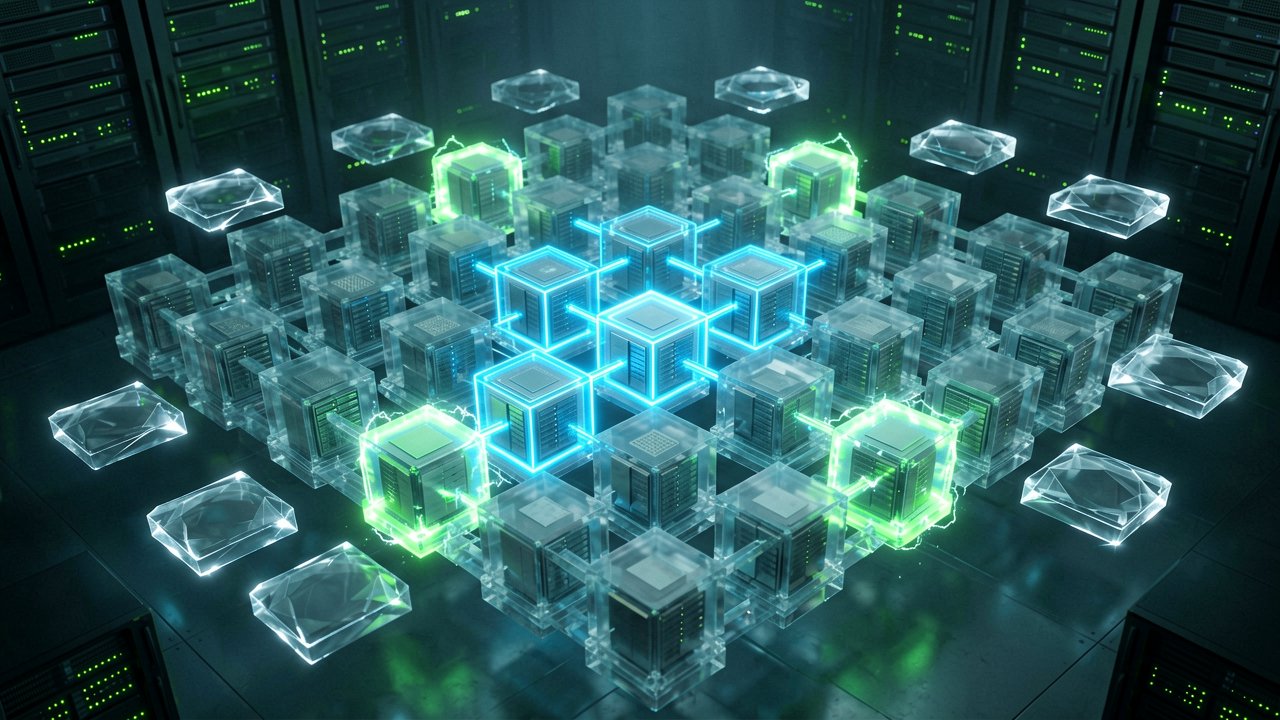
The artificial intelligence market is undergoing a fundamental shift away from simple stateless query-and-response interactions toward multi-turn, autonomous operations. However, deploying long-horizon AI agents that execute complex tasks over days or weeks has exposed a critical vulnerability in traditional cloud infrastructure. Traditional virtual machines force developers to reserve fixed CPU and memory resources, continuously charging for idle time while agents wait for data processing, external tool outputs, or model inferences. To eliminate these structural inefficiencies, Sail Research has officially launched Sailboxes, a pioneering cloud environment specifically engineered to scale long-running agentic workloads without prohibitive costs.
Backed by major venture capital firms including Sequoia Capital and Kleiner Perkins, Sail Research aims to rewrite the economics of persistent AI development. As detailed in the official announcement on the Sail Research Blog, Sailboxes feature an intelligent architecture that automatically sleeps when an agent is idle, eliminating unnecessary billing while waiting on external processes. This custom container environment is paired with an independent disk, persistent state, full Docker support, and uncapped runtimes, enabling background agents to maintain massive contextual histories over weeks of continuous operation. By providing kernel-isolated Linux virtual machines that live-migrate across physical hosts seamlessly, the company introduces a architecture tailored for the next era of enterprise computing.
Market Impact and the Rise of Stateful Computing
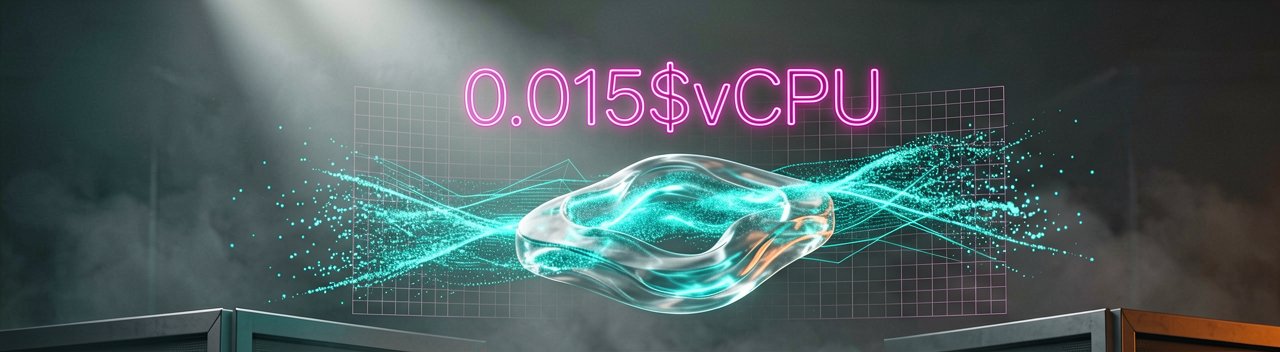
The introduction of Sailboxes directly answers a commercial pain point that has restricted autonomous agent deployment to heavily funded tech firms. For enterprises attempting to run complex coding agents, reinforcement learning rollouts, or continuous software triage systems, sandbox costs have quickly escalated into a primary budget constraint. Existing computing sandboxes force developers into an expensive compromise: either overprovision hardware to prevent runtime crashes or risk agent failure midway through a multi-step execution. By offering pricing starting at $0.015 per active vCPU-hour, Sail Research claims its platform operates up to 70% cheaper than traditional cloud providers, establishing a highly disruptive baseline for usage-based infrastructure.
Strategic Shifts in Autonomous AI Deployment
This launch signals a broader strategic pivot from general-purpose cloud computing toward highly customized, task-specific environments. As businesses transition from consumer-facing chatbots to fully autonomous research platforms—such as Quadrillion Labs utilizing Sailboxes for its parallel-experimentation engine—the underlying infrastructure must evolve in lockstep. The integration of stateful sandboxes with low-cost token inference engines allows enterprises to execute billions of tokens over a single comprehensive task without hitting standard API timeouts or resource limits. Consequently, developer demand is rapidly consolidating around platforms capable of bridging the gap between local prototype execution and large-scale cloud operations.
Anatomy of the Agent Execution Bottleneck
What Most Reports Miss: The core limitation of the current AI wave is not the raw intelligence of large language models, but rather the stateless, rigid boundaries of the infrastructure built to host them. For the past decade, cloud computing evolved to maximize microservice efficiency through short-lived serverless functions and container clusters that spin down within seconds. While this architecture perfectly suits standard web applications, it actively penalizes long-horizon AI agents. When a development agent pauses to wait for a code compilation tool to finish, or a financial research agent pauses for hours awaiting a scheduled market close, standard hyperscaler environments continue charging for active compute capacity or abruptly terminate the connection due to hard timeout limits.
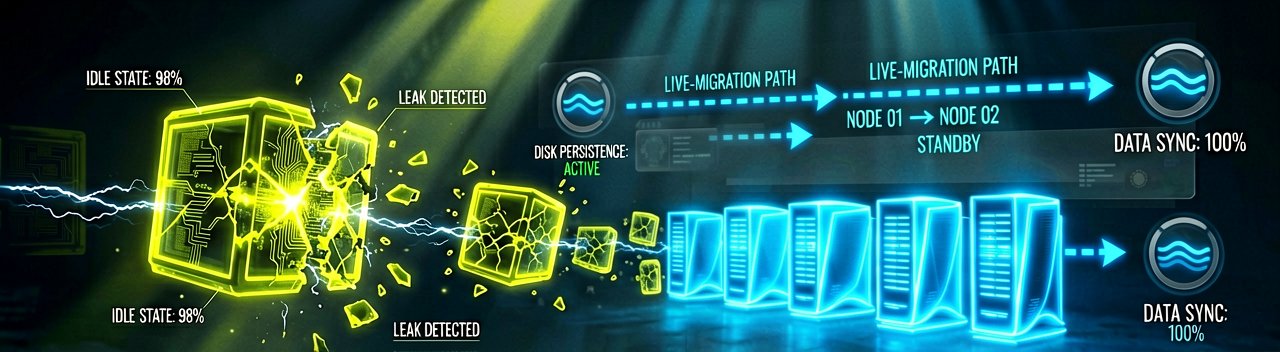
To bypass these structural barriers, software engineers have historically resorted to overly complex workarounds, such as continuously serialization-and-deserialization cycles to save an agent's memory state to external databases. This introduces massive latency, degrades context windows, and adds failure points to multi-step autonomous workflows. The engineering breakthrough behind Sailboxes lies in its decoupling of the compute layer from the execution state. By introducing kernel-isolated virtual machines that pause instantly when an agent is idle and resume within milliseconds upon receiving a new token input, the architecture mimics the operational suspension of a smartphone rather than the destructive shutdown of a traditional cloud server.
From an enterprise adoption perspective, this transition is highly reminiscent of the early days of virtualization, where resource allocation shifted from physical boxes to highly elastic virtual instances. Industry veterans note that current enterprise experimentation with autonomous agents has been severely bottlenecked by security and predictability concerns. By providing isolated Linux sandboxes with full Docker support and local, persistent disk attachments, the infrastructure effectively creates a secure, deterministic sandbox for agents to execute untrusted code without risking corporate network exposure. This architecture shifts the paradigm from ephemeral prompt-engineering to durable, stateful background computing.
Furthermore, early telemetry from pilot enterprises indicates that cost reductions are fundamentally changing the types of problems AI teams are willing to tackle. When a single long-horizon task spanning three days can run uninterrupted without the risk of an infrastructure timeout or an exponential spike in compute billing, developers can transition from narrow, single-step automation to expansive, open-ended objectives. As specialized infrastructure providers begin optimizing for the low-compute, high-uptime profiles of autonomous systems, traditional hyperscalers will face mounting pressure to re-engineer their core virtualization layers to support the specific demands of the agentic economy.
The Hidden Cost of Autonomy and the Hyperscaler Dilemma
Reading Between the Lines: The enthusiastic industry narrative surrounding dedicated agentic infrastructure conveniently glints over an underlying paradox: saving compute costs by introducing complex pause-and-resume states creates new points of vulnerability. While reducing active vCPU idle time from a continuous premium billing model down to fractions of a cent is a massive win for startup budgets, it introduces unprecedented orchestration overhead. Live-migrating a virtual machine state while maintaining the integrity of an expansive, multi-gigabyte memory context across physical servers is an engineering tightrope, meaning the promise of absolute reliability under long-term autonomy remains to be proven at a true global enterprise scale.
Furthermore, this specialized shift highlights a widening friction point between emerging AI infrastructure startups and established cloud hyperscalers. Large cloud providers have built highly lucrative business models on predictable, sustained hardware utilization. The introduction of highly irregular, bursty, and long-lived agentic workloads that demand massive disk persistence but minimal compute revenue directly challenges the unit economics of traditional data centers. While infrastructure providers boast massive percentage savings compared to traditional VMs, these numbers depend heavily on agents spending a vast majority of their operational life cycle in deep hibernation, an assumption that falls apart as agents become more deeply integrated into continuous corporate workflows.
There is also an architectural contradiction in optimizing cloud infrastructure for agent longevity just as the underlying AI models are undergoing drastic efficiency transformations. If the next generation of localized small language models can execute multi-step reasoning tasks entirely on peripheral devices or local edge hardware, the necessity for a centralized, long-horizon cloud sandbox diminishes significantly. Enterprises may find that instead of migrating their complex workflows to a new specialized cloud vendor, the more sustainable path involves deploying stateful agents directly within their existing, perimeter-secured internal networks, rendering external niche sandboxes a transitional step rather than a permanent fixture of the tech stack.
Ultimately, the long-term viability of this new compute category relies on whether autonomous agents can actually cross the chasm from experimental novelties to reliable revenue-generating assets. If agents continue to suffer from context drift or hallucination plateaus over multi-day operations, no amount of infrastructure cost-cutting will save them from budget reductions. Specialized infrastructure undoubtedly removes the immediate financial penalty of building complex AI workflows, but the ultimate burden of proof still rests on the software developers to prove that an agent left to its own devices for a week can actually deliver a flawless output without human intervention.
Building an AI agent that can autonomously run for three consecutive weeks is an extraordinary milestone in software engineering—right up until you realize it spent the final fourteen days confidently trying to debug a typo in a commented-out line of code on a virtual machine you are still technically renting.
Artūras Malašauskas is an AI Systems Integrator with 20+ years of production-grade web engineering experience. He has designed, shipped, and scaled enterprise Python/PHP systems for logistics, SaaS, and public-sector clients. For the past year, he has focused exclusively on AI integrations: deploying open-source LLMs, building generative media pipelines (image, audio, video), and engineering multi-agent workflows for real production environments. His standard: reproducibility, security, cost-efficient inference—no vaporware. He documents and evaluates emerging AI tooling, separating verified capabilities from marketing noise. Technical editor at: muza-ai.eu, ai-verslas.lt, ai-naujinos.lt Connect on LinkedIn
Comments