Bespin Global Deploys Autonomous AI Agents to Plug the Widening Cybersecurity Talent Gap with Its New HelpNow SOC Platform
The global cybersecurity sector faces a critical labor shortage, leaving organizations vulnerable to increasingly sophisticated digital threats. To address this crisis, cloud delivery company Bespin Global has launched HelpNow AI SOC, an advanced Security Operations Center platform powered entirely by autonomous AI agents. By automating routine security operations, managing complex alert queues, and augmenting human analysts, the platform introduces a fresh architecture designed to maintain robust defenses without relying on traditional recruitment pipelines.
As detailed by tech analysis from Digital Today, the modern threat environment requires defenses capable of operating at machine speed. Traditional rule-based security mechanisms often struggle to keep pace with rapid digital attack cycles. HelpNow AI SOC bridges this operational gap by deploying its autonomous AI agents directly within the customer's own cloud infrastructure. This structure distinguishes the platform from conventional managed security service provider models, keeping data secure and contextually localized.
Industry leadership notes that the core objective is to shift the security paradigm from manual triage to intelligent, self-contained workflows. According to coverage by Seoul Economic Daily, the autonomous agents continuously analyze logs, isolate infected assets, execute predefined response playbooks, and support system recovery. By delegating these intensive technical workflows to 24/7 autonomous agents, human personnel can step away from exhaustive lower-level monitoring to focus strictly on macro-level risk management and high-priority strategic decisions.
The Agentic Evolution in Enterprise Defense
The rollout of HelpNow AI SOC underscores a major strategic shift in enterprise defense, marking a transition from passive automation tools to highly proactive, agentic workflows. As digital infrastructures expand across multi-cloud and hybrid environments, human analysts are frequently overwhelmed by high alert volumes, a trend highlighted in security ecosystem evaluations by ViB. The deployment of contextual, autonomous AI systems represents a permanent evolution in how enterprises achieve operational scale amid severe talent shortages.
Overcoming the Cybersecurity Talent Scarcity
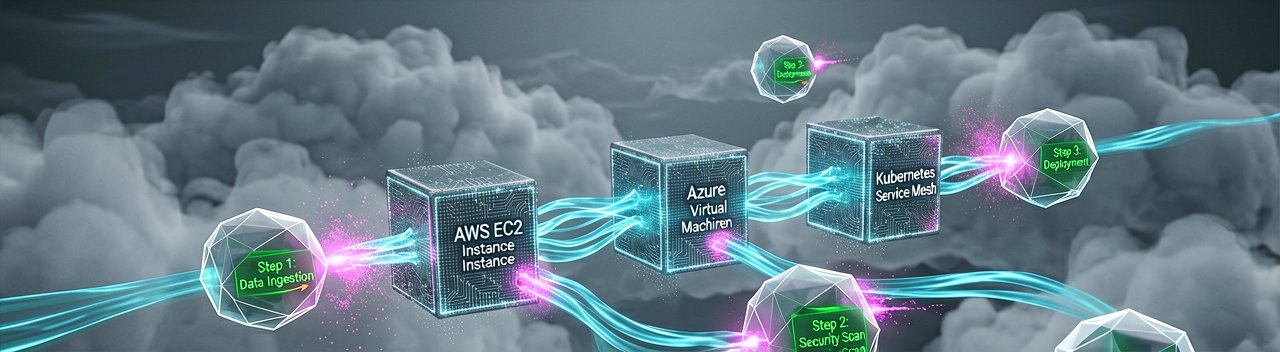
The traditional hiring pipeline is no longer sufficient to secure expanding corporate networks. Specialized competencies in areas like penetration testing, incident response, and cloud engineering require months or years of training, causing a persistent skills gap reported by Cybersecurity Dive. By allowing autonomous AI agents to manage continuous real-time monitoring and threat containment, enterprise security teams can effectively scale their technical response capabilities and stabilize operational efficiency despite structural labor deficits.
Inside the Machine Speed Defense Grid
Beyond the Automated Triage: The deployment of HelpNow AI SOC highlights a fundamental shift in how modern security centers handle telemetry data. While previous generations of Security Information and Event Management (SIEM) systems merely aggregated alerts for human review, autonomous agents act as self-contained operators capable of independent reasoning. This capability proves vital when dealing with multi-stage ransomware attacks, where the time elapsed between initial compromise and lateral movement is often measured in minutes. By placing these intelligent agents directly within the localized cloud boundary, enterprises avoid the latent delays of routing data back and forth to an external, human-reliant monitoring center.
This structural change addresses a persistent point of friction between traditional internal IT teams and external security vendors. Historically, third-party managed providers lacked the deep, contextual understanding of an organization's specific business logic, frequently triggering false positives that disrupted essential operations. Autonomous agents, conversely, continuously learn the unique baseline behavior of the native infrastructure they protect. This granular awareness allows the system to isolate an anomalies-producing server or revoke compromised credentials instantly without needing to pause for manual, cross-departmental authorization from a human manager.
From an economic standpoint, the integration of autonomous agents rewrites the operational model of corporate defense budgets. Chief Information Security Officers have historically battled a compounding math problem: as corporate data footprints expand, the cost of scaling human teams to monitor that data grows linearly, if not exponentially. By utilizing an agentic architectural layer, organizations can decouple data volume growth from human headcount expansion. This enables corporate security programs to remain financially viable and operationally resilient, even as enterprise networks expand through global multi-cloud setups and decentralized remote workforces.
Ultimately, this technological transition alters the career path and daily reality of the cybersecurity professional. Instead of spending long shifts performing repetitive data entry and manual log sorting, human analysts are moving into administrative roles where they oversee and tune the AI's playbooks. This shift mitigates the severe industry problem of analyst burnout, which regularly drives qualified talent away from the profession. By handing repetitive, high-stress tasks over to autonomous systems, enterprises create a more sustainable operational environment that maximizes human intellect for complex forensics and long-term risk strategy.
The Hidden Liabilities of Algorithmic Self-Defense
Reading Between the Lines: The industry enthusiasm surrounding autonomous AI agents often glosses over a critical structural paradox: outsourcing operational resilience to software may inadvertently compound the precise skills gap it claims to solve. When autonomous systems assume total control over real-time monitoring and threat containment, early-career analysts lose the foundational, hands-on triage experience that builds genuine technical intuition. Over time, an organization's internal human expertise risks atrophying, leaving the enterprise dangerously dependent on vendor algorithms and ill-prepared for novel "black swan" cyber attacks that fall completely outside an AI's historical training data.
Furthermore, deploying autonomous agents directly inside a customer's cloud infrastructure introduces an entirely new attack surface that threat actors are already learning to exploit. If an adversary successfully manipulates an enterprise's data telemetry, they can trick an autonomous agent into executing destructive response playbooks against legitimate business systems. A malicious actor could purposefully trigger a cascade of false positives designed to induce the AI into isolating critical production servers or revoking corporate administrative credentials. In this scenario, the machine-speed response mechanism becomes a self-inflicted denial-of-service attack, weaponized against the host network by its own autonomous defender.
There is also an unresolved tension regarding legal and regulatory accountability when automated operations go wrong. If an autonomous agent mistakenly isolates a vital database during a suspected breach, causing catastrophic downtime and millions in lost revenue, the liability boundary remains murky. Software vendors routinely shield themselves behind extensive end-user license agreements that disclaim operational damages, while regulatory bodies increasingly demand that human executives remain personally accountable for infrastructure failures. Consequently, organizations adopting agentic platforms must establish rigorous, deterministic guardrails around their probabilistic AI models to ensure that ultimate operational authority never truly leaves human hands.
"We are rushing to replace burned-out security analysts with autonomous algorithms, seemingly forgetting that a machine capable of patching a server at midnight with flawless efficiency is equally capable of deleting the entire corporate directory by breakfast with absolute confidence."
Artūras Malašauskas is an AI Systems Integrator with 20+ years of production-grade web engineering experience. He has designed, shipped, and scaled enterprise Python/PHP systems for logistics, SaaS, and public-sector clients. For the past year, he has focused exclusively on AI integrations: deploying open-source LLMs, building generative media pipelines (image, audio, video), and engineering multi-agent workflows for real production environments. His standard: reproducibility, security, cost-efficient inference—no vaporware. He documents and evaluates emerging AI tooling, separating verified capabilities from marketing noise. Technical editor at: muza-ai.eu, ai-verslas.lt, ai-naujinos.lt Connect on LinkedIn
Comments