AMD Fires Back at Nvidia Dominance as Microsoft Snaps Up New Helios AI Racks
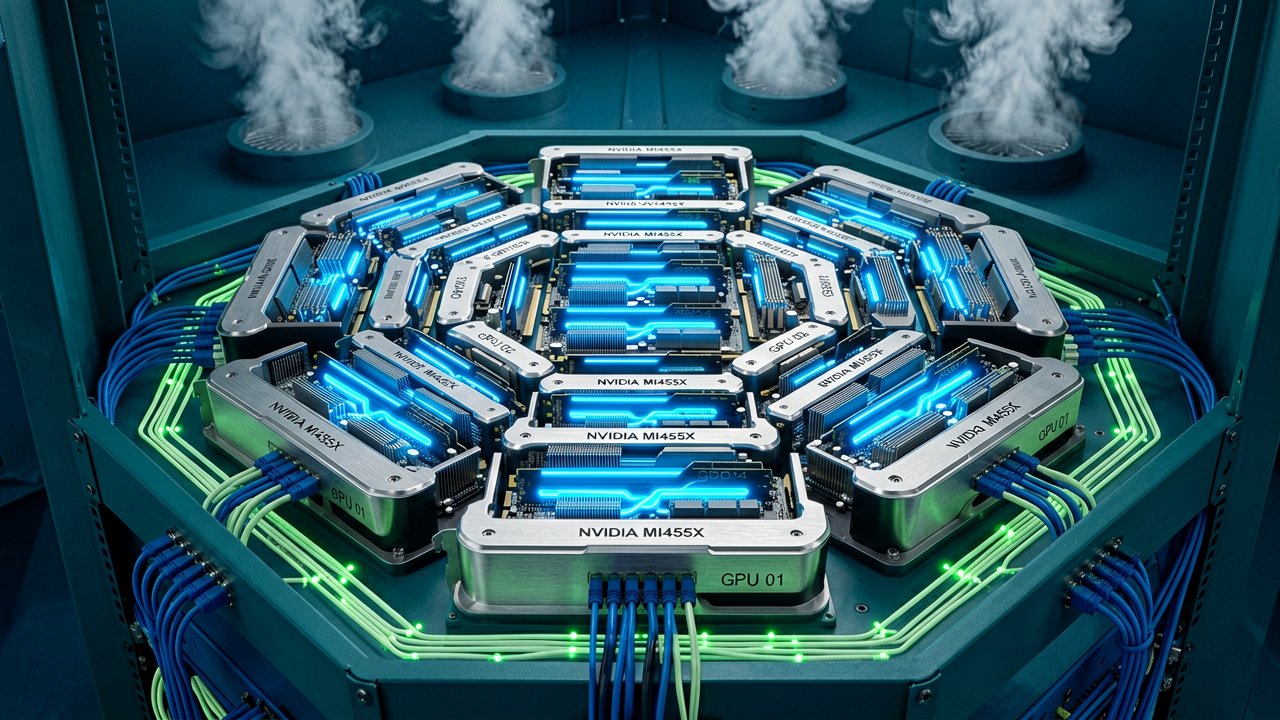
AMD isn't just content playing second fiddle in the silicon wars anymore. On July 20, 2026, the chipmaker officially launched Helios, its very first fully integrated, rack-scale AI system designed to hit Nvidia right where it hurts. The massive hardware platform didn't have to wait long for validation either, immediately securing tech giant Microsoft as its latest flagship enterprise buyer for Azure's growing cloud empire.
According to an announcement detailed on the official Microsoft Blog, the Redmond-based company plans to deploy these behemoth racks to fuel heavy-duty frontier model AI inference workloads, data processing, and advanced silicon design. It's a massive win for AMD, which has been aggressively engineering a full-stack platform ecosystem to break up Nvidia's near-monopoly on high-end data center hardware. By shipping Helios before the end of the year, AMD is offering hyper-scalers a viable alternative just as capacity demands threaten to boil over.
The Beast Inside the Rack
To understand why Microsoft is jumping on board, you have to look at the sheer scale of the engineering involved. Helios isn't just a collection of loose components; it's a unified 7,000-pound AI powerhouse that ties together 72 next-generation Instinct MI455X GPUs, sixth-generation EPYC "Venice" CPUs, and specialized Pensando networking. Tech enthusiasts tracking the specifications on Yahoo Finance, early commitments from hyperscale giants have already reshaped future infrastructure maps. Meta committed to expanding its footprint up to 6 gigawatts of AMD GPUs over time, dedicating an initial 1-gigawatt allocation specifically to Helios racks. This massive capital injection gives AMD the predictable volume it needs to scale up manufacturing pipelines and challenge Nvidia's 95% market market-share dominance.
The Interconnect Ideology
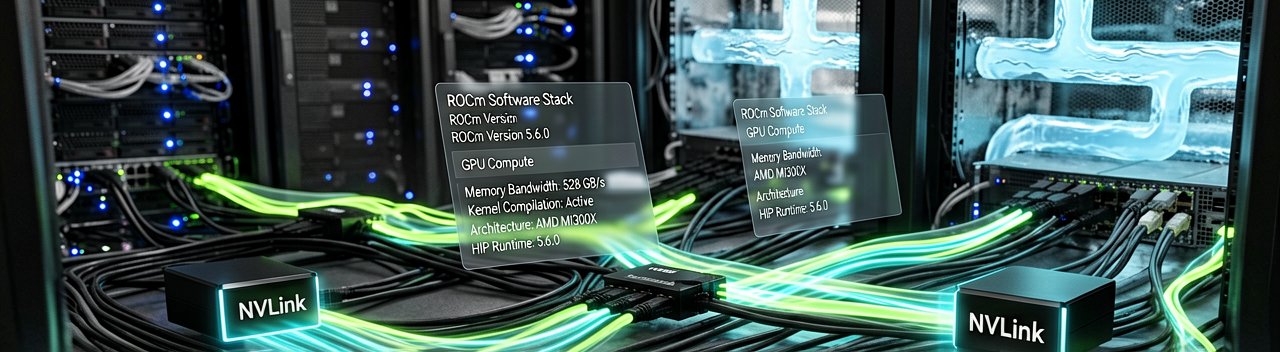
What sets this deployment apart from previous hardware cycles is a fundamental ideological divide over networking infrastructure. While Nvidia relies heavily on proprietary architectures like NVLink to tie its compute clusters together, AMD has placed its chips entirely on open, industry-standard networking frameworks. As explored in technical breakdowns on The Next Web, Helios leverages UALink over Ethernet for scale-up interconnects inside the rack, paired with Ultra Ethernet Consortium specifications for scaling out across the broader data center fabric. This architectural choice promises to deliver roughly twice the scale-out bandwidth of competing systems, offering a flexible layout that appeals directly to cloud providers determined to avoid proprietary vendor lock-in.
This push for open alternatives has fundamentally changed how hyper-scalers view their supply chain security. Tech giants like Microsoft are no longer using secondary hardware suppliers merely as bargaining chips to negotiate down Nvidia's steep premiums; they are actively integrating alternative silicon into their core service layers. Inside Azure's expanding infrastructure, Microsoft is launching dedicated virtual machine series that pair AMD’s sixth-generation EPYC "Venice" CPUs with their existing Pensando distributed processing units. This deep integration allows the cloud provider to offload front-end server-to-client operations directly into Azure Boost, creating a highly customized environment optimized specifically for next-generation agentic AI and heavy data processing pipelines.
Sustaining the AI Factory
Maintaining these massive compute clusters introduces brutal physical and operational challenges that go far beyond basic benchmark scores. Weighing in at 7,000 pounds and commanding a premium price tag of approximately $5 million per unit, each Helios rack functions as a self-contained, liquid-cooled AI factory. To prevent massive data center disruptions during routine maintenance, the platform utilizes a modular, double-wide Open Rack Wide architecture co-designed with Meta. This layout incorporates blind-mate quick-disconnect liquid cooling manifolds and centralized power shelves, enabling technicians to slide out failed compute trays and replace components without re-cabling or shutting down neighboring nodes.
Ultimately, the long-term success of this hardware expansion hinges on how smoothly enterprise software can bridge the architectural gap. AMD's ROCm open-source software ecosystem has undergone rapid iteration to natively support dominant frameworks like PyTorch, JAX, and TensorFlow right out of the box. While independent research firms note that Nvidia's mature developer ecosystem still maintains an optimization advantage, the sheer scarcity of global data center capacity has fundamentally altered the competitive landscape. For buyers like OpenAI and Oracle, having immediate access to high-bandwidth HBM4 memory pools at scale outweighs the friction of transitioning workloads to an open software environment.
Reading Between the Lines: The celebratory press releases surrounding the Helios launch gloss over a harsh operational reality: buying a multi-million-dollar AI rack is vastly different from getting it to run at peak efficiency. While Microsoft’s immediate commitment provides AMD with undeniable marketing ammunition, it also exposes a glaring structural contradiction in the hyper-scaler playbook. Cloud giants publicly champion open-source ecosystems and standard Ethernet architecture to escape vendor lock-in, yet their massive capital expenditure on highly customized, integrated systems like Helios creates a new, equally restrictive layer of infrastructure dependency. They are effectively substituting one proprietary hardware matrix for an open-standard matrix that requires specialized, hyper-specific engineering tuning to yield its promised performance benefits.
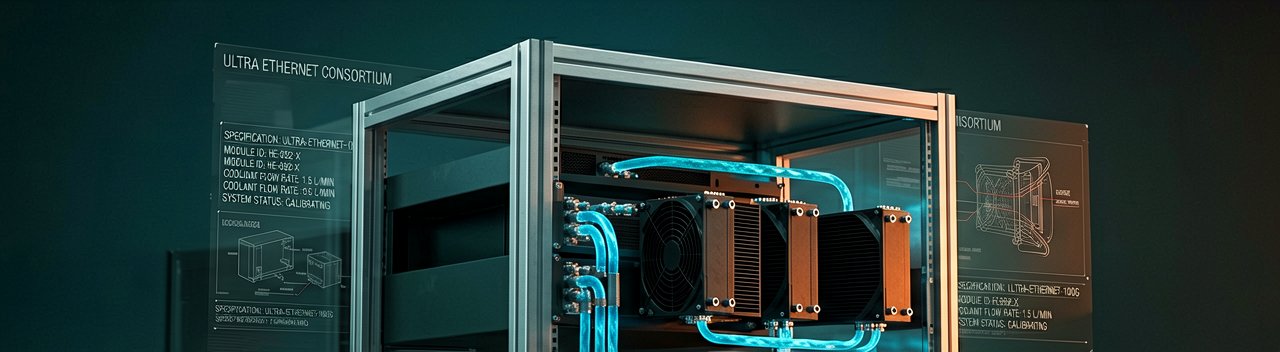
Furthermore, the physical and environmental demands of these 7,000-pound AI factories challenge the very narrative of seamless cloud scalability. Deploying liquid-cooled racks that draw massive amounts of power per unit forces a brutal choice upon data center operators, who must either overhaul existing air-cooled facilities at a staggering capital expense or construct entirely new, specialized data centers from the ground up. This structural bottleneck means that despite AMD's optimistic timeline of shipping units before the end of the year, the actual integration of Helios into live Azure workloads will likely face prolonged rolling delays. The bottleneck in the AI race is no longer just a shortage of advanced silicon chips, but a fundamental deficit in grid power capacity and specialized cooling infrastructure capable of sustaining them.
The Realities of Software Portability
Beneath the optimistic hardware specifications lies the persistent challenge of the software layer, where AMD’s ROCm framework must go toe-to-toe with Nvidia’s mature, deeply entrenched CUDA platform. Industry reports compiled on InfoWorld suggest that while compiling standard PyTorch models on ROCm has become significantly smoother, optimizing complex, custom enterprise pipelines still demands significant engineering overhead. Hyperscalers possess the elite engineering talent required to bridge these software optimization gaps manually, but the broader enterprise market does not. This stark discrepancy threatens to relegate Helios to an exclusive playground for the tech elite, limiting its ability to capture mainstream market share from Nvidia's universally understood software ecosystem.
This dynamic creates a precarious ecosystem balance for AMD, which must aggressively scale up production to justify its multi-billion-dollar infrastructure acquisitions while relying almost entirely on a tiny handful of volatile buyers. If Microsoft, Meta, or Oracle decide to dial back their capital expenditures or successfully pivot toward developing their own internal custom silicon, AMD's massive data center investments could rapidly outpace actual market demand. By betting everything on these ultra-dense, ultra-expensive configurations, AMD is tying its long-term corporate health directly to the speculative, hyper-inflated spending habits of a few cloud oligarchs.
"We are told that the future of computing is entirely open, democratic, and decentralized, yet it currently requires a five-million-dollar, three-ton liquid-cooled refrigerator and the permission of a trillion-dollar cloud monopoly just to run a slightly faster spelling checker."
Artūras Malašauskas is an AI Systems Integrator with 20+ years of production-grade web engineering experience. He has designed, shipped, and scaled enterprise Python/PHP systems for logistics, SaaS, and public-sector clients. For the past year, he has focused exclusively on AI integrations: deploying open-source LLMs, building generative media pipelines (image, audio, video), and engineering multi-agent workflows for real production environments. His standard: reproducibility, security, cost-efficient inference—no vaporware. He documents and evaluates emerging AI tooling, separating verified capabilities from marketing noise. Technical editor at: muza-ai.eu, ai-verslas.lt, ai-naujinos.lt Connect on LinkedIn
Comments