StepFun Leaps Ahead of the Pack with the World's First Agentic Smartphone

The relentless race to dominate the next era of consumer hardware just took an aggressive turn toward the East. Shanghai-based artificial intelligence startup StepFun officially launched the StepX Neo, making a bold claim to the title of the world's first mass-market agentic smartphone. Unveiled during a brand event in Shanghai, this ambitious device signals a profound paradigm shift. We're moving far beyond the era of passive chatbots that wait around for your text prompts, stepping instead into a world of proactive, native digital systems that can handle the heavy lifting for you.
Instead of slapping a glossy layer of generative AI onto an existing Android skin, the startup built the phone around its own proprietary operating system, Step AOS. It completely rebuilds the standard software layer to interact using the Model Context Protocol standard, turning traditional, siloed apps into a unified backdrop. At the heart of the experience is an AI assistant named Amoo. Give Amoo a single conversational directive, like planning an overseas vacation, and it acts as an autonomous agent. It coordinates everything from booking your flights to handling mobile payments through deep integrations with services like Alipay and Didi without forcing you to switch tabs once. It's a calculated, existential attack on the traditional app economy itself.
The Realities and Hurdles of the Agentic Future
While the prospect of saving yourself thousands of tedious screen taps every day sounds incredibly enticing, the actual implementation details introduce some fascinating friction. StepFun leverages a smart hybrid processing model. It runs basic tasks locally on the hardware to keep user workflows secure and private while shifting demanding computations to the cloud. This on-device architecture means the phone can execute multi-step automated workflows and process live translation across 32 languages completely offline. That's an impressive engineering feat for a company founded just a few years ago.
However, turning a brilliant conceptual flex into a ubiquitous consumer reality is an entirely different ballgame. Industry analysts from Beebom note that Step AOS is heavily re-engineered from deep Linux and RTOS layers, which means StepFun faces a steep uphill battle in convincing international software developers to adapt their platforms for an invisible, agent-first ecosystem. Furthermore, as pointed out by Gadgets360, early technical showcases leave several unanswered questions regarding consumer pricing and broader global availability. For now, the StepX Neo stands as a fascinating monument to structural innovation, proving that the future of mobile tech will be dictated by autonomous execution rather than mere conversation.
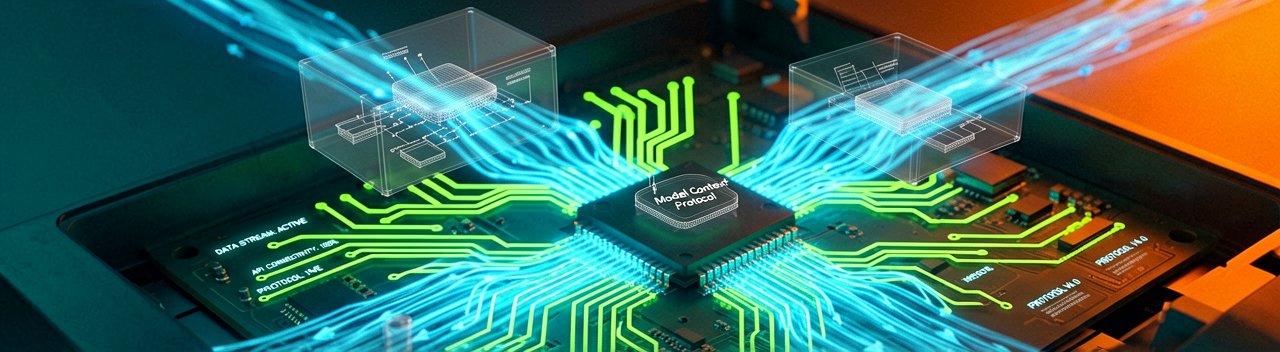
Under the Hood of the App Ecosystem’s Displacement
Beyond the Marketing Bluster: What the initial wave of hardware announcements misses is the quiet warfare happening beneath the glass. For the past decade, Apple and Google have locked consumers into highly lucrative app stores, skimming percentages off transactions and holding the keys to user data. StepFun’s choice to build Step AOS using the Model Context Protocol directly bypasses this dynamic. By treating apps as raw APIs rather than destinations, the phone transforms companies from digital gatekeepers into background utility providers. It is an approach that strips away the interface layer of tech giants, which explains why legacy platform holders are watching this development with intense scrutiny.
The engineering behind Amoo highlights a fascinating compromise between on-device processing limits and cloud dependency. Industry insiders have pointed out that running large multimodal models entirely on a mobile chipset drains battery life and generates immense thermal stress within minutes. StepFun’s solution relies on a split-second scheduling system. The device processes personal intent, voice recognition, and sensitive credentials locally on a secure enclave, while outsourcing the heavy reasoning and multi-step API mapping to external servers. This orchestration allows the phone to handle fluid, unpredictable tasks without turning the hardware into a pocket-sized furnace.
However, this hybrid architecture presents a massive regulatory and security headache that a startup of this size has never had to navigate before. When an autonomous agent is given permission to move funds, buy tickets, and access personal messages without explicit, click-by-click human verification, the room for catastrophic error multiplies. Security researchers are already questioning how Step AOS handles prompt injection vulnerabilities. If a malicious third-party website or email can trick the underlying model into executing unintended background commands, the user could find their digital wallet drained before they even notice a notification badge.
There is also the complicated matter of localized ecosystem survival. In its native Chinese market, where super-apps like WeChat already centralize commerce, StepFun had a relatively straightforward roadmap for deep integration. Exporting this agentic model to western markets is a vastly different challenge, requiring deep coordination with fragmented services like Uber, Booking.com, and local banking infrastructures. Without native cooperation from these regional platforms, an autonomous phone quickly degrades into an overpriced novelty, capable of acting only within a very narrow sandbox of supported software.

Ultimately, the launch of this device marks a definitive end to the passive era of Silicon Valley’s smartphone design. For years, mobile innovation has been stuck in an uninspiring loop of incremental camera upgrades, slightly brighter displays, and marginal battery improvements. Even early mainstream AI implementations felt like bolted-on gimmicks rather than structural evolutions. By forcing the operating system to think steps ahead of the user, this new wave of hardware proves that the true battleground of the next decade will not be fought over megapixel counts, but over who controls the autonomous intelligence layer running the show.
The Fine Line Between Autonomy and Obsolescence
Reading Between the Lines: The tech industry’s immediate infatuation with "agentic" hardware smells suspiciously like the same desperate marketing pivot that gave us the short-lived blockchain phone trend. While StepFun’s technical achievement in orchestrating autonomous workflows through Step AOS is genuinely impressive, the underlying premise rests on a massive contradiction. The device is marketed as a tool to liberate consumers from screen addiction by automating tasks in the background. Yet, the venture capital funding this breakthrough relies entirely on maximizing user engagement and capturing high-value transaction data. If a device successfully minimizes your screen time down to zero, it simultaneously destroys the traditional metrics used to value a hardware ecosystem.
Furthermore, there is a glaring discrepancy between the promises of autonomous AI and the messy reality of the modern web. StepFun assumes a digital landscape of perfectly cooperative APIs that will sit quietly while Amoo scrapes them for flights and dinner reservations. In reality, the web is a hostile territory of anti-bot protections, changing interface layouts, and aggressive monetization walls. The moment a major platform decides it does not want an autonomous startup bypassing its advertising banners, it will modify its code. This leaves the agentic smartphone trapped in a perpetual game of cat-and-mouse, requiring constant software updates just to keep basic automated workflows from breaking overnight.
This reliance on external stability exposes the fragile nature of a startup attempting to dictate a new hardware standard. Silicon Valley giants like Apple and Google have spent decades cultivating developer loyalty through robust, predictable APIs. StepFun is asking developers to trust a radically new, invisible infrastructure where the app itself is reduced to a faceless data pipeline. It is a tough sell for businesses that rely heavily on visual branding and targeted in-app advertisements to survive. Without a massive shift in how internet companies monetize their services, the agentic phone risks becoming a beautifully engineered island with nowhere to sail.
Looking ahead, the long-term survival of this new paradigm will likely be decided not by user convenience, but by liability. When a passive chatbot hallucinates a fake fact, the user suffers mild confusion or embarrassment. When an autonomous agent misunderstands a prompt and books a non-refundable, three-thousand-dollar flight to the wrong hemisphere, the financial consequences are immediate and painful. StepFun has yet to outline a clear framework for legal or financial accountability when its autonomous algorithms make an expensive mistake. Until the industry solves the problem of who pays for an AI’s bad judgment, mass adoption will remain a distant, risky frontier.
We are officially entering an era where you can blame your smartphone for blowing your entire monthly budget on an accidental vacation, proving that while AI can finally think for us, it still cannot fix our impulse control.
Artūras Malašauskas is an AI Systems Integrator with 20+ years of production-grade web engineering experience. He has designed, shipped, and scaled enterprise Python/PHP systems for logistics, SaaS, and public-sector clients. For the past year, he has focused exclusively on AI integrations: deploying open-source LLMs, building generative media pipelines (image, audio, video), and engineering multi-agent workflows for real production environments. His standard: reproducibility, security, cost-efficient inference—no vaporware. He documents and evaluates emerging AI tooling, separating verified capabilities from marketing noise. Technical editor at: muza-ai.eu, ai-verslas.lt, ai-naujinos.lt Connect on LinkedIn
Comments