The Screen is Dead: OpenAI’s Hardware Debut Bets It All on the Living Room
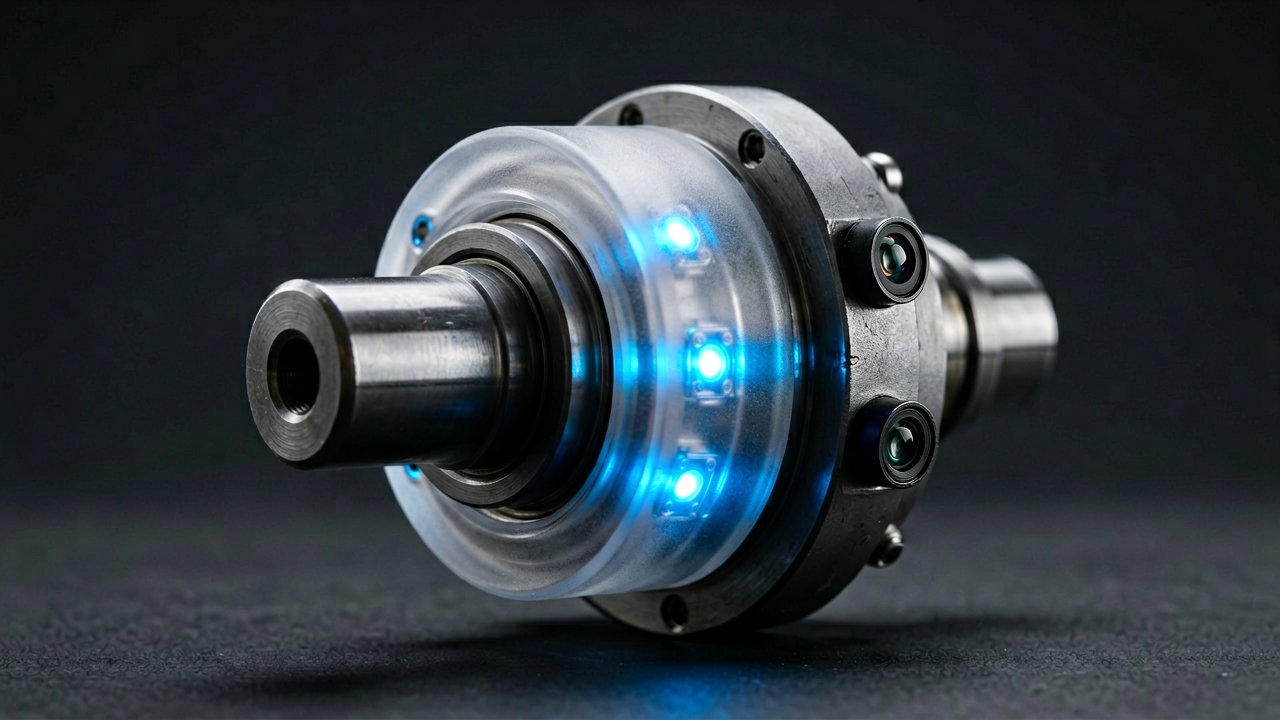
For months, the tech world convinced itself that Sam Altman and former Apple design maestro Jony Ive were cooking up a revolutionary AI smartphone. Instead, OpenAI is flipping the script by bypassing the pocket entirely. The artificial intelligence pioneer is officially making its debut in consumer hardware with a screenless, movable smart speaker built to serve as an autonomous AI companion. It is a bold, voice-first gamble designed to weave large language models directly into the physical environments of our homes without relying on glowing rectangles or app ecosystems.
This hardware push represents a massive strategic pivot. By building its own physical gear, OpenAI wants to control the user interface directly rather than renting space on platforms owned by Apple or Google. But shipping silicon is notoriously difficult, and OpenAI is diving into the deep end while entangled in a fresh, high-stakes legal battle. As reported by Reuters, the hardware division is currently juggling about five distinct concepts, but this ambient home companion is officially leading the charge.
A Speaker with Eyes, Ears, and a Mind of Its Own
Rather than acting as a passive box that sits on a shelf waiting for a wake word, this device is engineered to feel alive. It strips away the visual interface entirely, relying on a sophisticated, context-aware variant of ChatGPT to drive interactions. To bridge the gap left by the lack of a screen, the gadget features built-in cameras and environmental sensors, granting it a form of continuous situational awareness. It knows who is in the room, understands spatial context, and can even read your emails to deliver highly personalized, proactive assistance.
The design pedigree behind the device is undeniably elite. Jony Ive’s design firm, LoveFrom, alongside ex-Apple industrial design chief Evans Hankey, has crafted a form factor that reportedly utilizes subtle mechanical movements to express personality. Combined with a onboard rechargeable battery, the speaker is designed to dynamically navigate and follow you from room to room. It is a striking mixture of home robotics and ambient computing, functioning as a hub that plays media, handles personal messaging, and commands smart appliances through continuous conversational dialogue.

The Real-World Hurdle: A Living Room Wrapped in a Lawsuit
While the engineering goals are ambitious, OpenAI’s transition from software giant to hardware maker faces major headwinds. Apple recently threw a wrench into the works by filing a sweeping trade-secret lawsuit against OpenAI. The iPhone maker alleges that OpenAI’s massive hiring spree—which includes poaching high-level executives like Vision Pro chief Paul Meade and hundreds of former Apple employees—led to the illicit migration of proprietary hardware designs. OpenAI has firmly denied the allegations, stating they have zero interest in competitors' trade secrets and champion fair competition.
Despite the legal drama, OpenAI is charging forward with an aggressive product timeline. The company plans to officially unveil the speaker later this year, targeting a commercial release window. However, Apple is actively pursuing an injunction to block sales, meaning the ultimate arrival of this screenless companion will depend heavily on how the courtroom drama unfolds over the coming months. If it clears the legal hurdles, it will face stiff competition in a revitalized smart home market, where legacy players are already scrambling to deploy their own next-generation, AI-heavy command centers.
What Most Reports Miss: The Architectural Shift Behind Ambient Hardware
The race to replace the smartphone screen has a graveyard littered with cautionary tales, from the Humane AI Pin to the Rabbit R1. OpenAI’s decision to plant its flag in the living room rather than the consumer’s pocket is a calculated response to those failures. The company is leaning heavily on the realization that mobile AI gadgets fail because they cannot compete with the immediate, high-bandwidth utility of a modern phone. By shifting the battlefield to the home, OpenAI is targeting a space where users are already accustomed to hands-free, voice-first interactions, but have grown deeply frustrated by the rigid, command-and-control limitations of legacy assistants like Amazon Alexa and Google Assistant.
Behind closed doors, the engineering philosophy for this screenless companion isn't just about making ChatGPT louder; it is about solving the latency problem. For pure voice interaction to feel human, the gap between a user finishing a sentence and the device responding needs to drop below 300 milliseconds. Achieving this requires specialized edge-computing silicon capable of handling local speech-to-text processing before handing off the heavy semantic lifting to the cloud. OpenAI's aggressive poaching of hardware talent from Apple and major chipmakers suggests that this speaker is secretly a trojan horse for a proprietary system-on-a-chip designed explicitly for real-time, multimodal inference.

The inclusion of cameras and physical mobility introduces a fascinating, albeit controversial, layer of stakeholder dynamics. Privacy advocates are already sounding the alarm over a device that can actively follow a user from the kitchen to the bedroom, interpreting facial expressions and reading physical environments. Internally, OpenAI’s trust and safety teams have reportedly clashed with product designers over how much contextual memory the device should retain. While engineers argue that a true AI butler must remember that you left your keys on the counter, legal teams are hyper-aware of the massive data liability a constantly filming, mobile home robot creates under shifting global privacy frameworks.
Historically, this launch mirrors the early days of the smartphone wars, where software supremacy ultimately depended on controlling the physical glass and aluminum. OpenAI understands that relying entirely on Apple’s App Store or Google’s Android ecosystem to distribute its advanced voice models leaves its business model entirely at the mercy of its fiercest competitors. By creating an independent hardware anchor in the home, OpenAI establishes a direct, unmediated pipeline to the consumer. This move shifts the company from a mere software vendor to a foundational infrastructure player, forcing tech giants to react to OpenAI's ecosystem rather than the other way around.
Reading Between the Lines: The Friction Between Ambient Fantasy and Silicon Reality
The industry consensus is currently treating OpenAI’s screenless speaker as a profound philosophical statement on the future of human-computer interaction. The narrative suggests that stripping away the display is a conscious, noble effort to cure our collective smartphone addiction and return us to a more natural, ambient existence. In reality, this design choice is likely born out of cold, hard technical limitations rather than pure design idealism. Delivering an error-free, latency-free visual interface driven entirely by a dynamic large language model is a UI nightmare that often results in hallucinated text or disjointed graphical elements. By eliminating the screen entirely, OpenAI neatly sidesteps the visual high bar set by smartphones and forces users to adapt to the more forgiving, conversational errors of voice interaction.
There is also a glaring contradiction between OpenAI’s public-facing ethos and its current hardware trajectory. The company has long championed the democratization of artificial intelligence, yet its debut device relies on premium industrial design from LoveFrom and complex mechanical mobility. This inevitably positions the device as an expensive, luxury status symbol rather than a universal utility. Furthermore, building a device that relies on physical movement and continuous video processing creates an engineering paradox. The energy demands of processing real-time video on the edge, combined with the mechanical drain of motorized locomotion, will heavily test the limits of consumer battery technology, likely binding this "free-roaming" companion to its charging dock far more often than the marketing materials will suggest.
The long-term economic model of this venture raises serious red flags for the company's financial sustainability. Hardware margins are notoriously razor-thin, especially when compared to the highly scalable world of software-as-a-service. OpenAI is entering a market where it must not only absorb the massive upfront capital expenditures of manufacturing, supply chain logistics, and retail distribution, but also foot the astronomical cloud computing bill for every single conversation the device hosts. Unless OpenAI intends to lock its hardware buyers into a hefty, mandatory monthly subscription model, it risks creating a fleet of physical products that become increasingly expensive to maintain the more their owners actually use them.
Ultimately, the success of this device hinges on whether consumers are truly ready to trade the absolute certainty of a touch screen for the unpredictable charm of an ambient butler. For years, tech companies have promised that the next great interface was just around the corner, only to fall back on the comforting reliability of a glass panel. If OpenAI cannot convince users that a speaker with wheels and a camera is significantly more useful than the smartphone already resting in their palms, this device risks joining the long line of over-engineered novelties that collectors eventually find gathering dust in the back of a closet.
We are being asked to welcome a mobile, camera-equipped AI into our homes under the guise of digital detox, proving that the tech industry’s ultimate joke is convincing us to cure our screen fatigue by buying a robot that watches us sleep.
Artūras Malašauskas is an AI Systems Integrator with 20+ years of production-grade web engineering experience. He has designed, shipped, and scaled enterprise Python/PHP systems for logistics, SaaS, and public-sector clients. For the past year, he has focused exclusively on AI integrations: deploying open-source LLMs, building generative media pipelines (image, audio, video), and engineering multi-agent workflows for real production environments. His standard: reproducibility, security, cost-efficient inference—no vaporware. He documents and evaluates emerging AI tooling, separating verified capabilities from marketing noise. Technical editor at: muza-ai.eu, ai-verslas.lt, ai-naujinos.lt Connect on LinkedIn
Comments