Russia Tech Watch: Inside the First Domestic AI Accelerator Built to Run Offline

Faced with a tightening web of global trade restrictions, Russia is attempting to break its reliance on foreign silicon with the unveiling of its first domestically produced AI hardware accelerator designed specifically for offline neural networks. Officially introduced by engineers operating out of the specialized economic zone of Moscow City Web Site, the new hardware represents a direct effort to establish a self-contained ecosystem for artificial intelligence. By bypassing the requirement for persistent cloud connectivity or Western-sourced processing architectures, the silicon aims to carve out a secure, localized footprint for regional tech infrastructure.
The engineering philosophy behind this hardware leans heavily on edge computing. It targets local workloads where data privacy and autonomous operation are critical, such as industrial automation, real-time robotics, and localized data processing pipelines. It is clear that the developers are looking to build a fortress around their data; keeping neural network inference completely local eliminates the risk of external telemetry or sudden software lockouts from global cloud providers. While the architectural specifics and raw performance metrics remain tightly guarded, the regional government has positioned this release as a cornerstone of its broader technological sovereignty initiative.
The Realities of Sovereign Silicon
Building localized AI acceleration is an impressive engineering feat on paper, but the real test lies in the execution of the physical supply chain. The domestic design team managed to pull together functional architectures under difficult conditions, yet manufacturing advanced microelectronics entirely within domestic borders remains an uphill battle. Moving from a successful prototype to high-volume commercial manufacturing is a journey filled with bottlenecks, particularly when dealing with complex node sizes required for deep learning workloads.
Furthermore, hardware is only as good as the software ecosystem that feeds it. For this accelerator to become a viable alternative to established international platforms, developers will need robust compilers, optimized libraries, and seamless integration with mainstream machine learning frameworks. If the local tech sector can overcome these software and fabrication hurdles, this domestic chip could serve as a functional blueprint for specialized, isolated network deployments across the region.
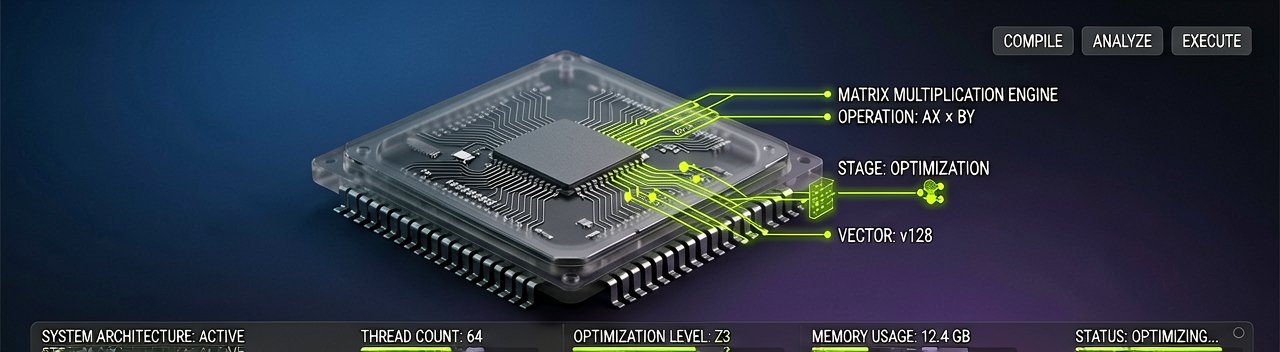
Behind the Architectural Blueprint: The Race for Autonomous Silicon
What Most Reports Miss: The true hurdle for this domestic accelerator is not the logical design of the silicon, but the sheer friction of bypassing the global electronic design automation (EDA) software monopoly. Western software suites traditionally dominate the chip design pipeline, from logical synthesis to physical routing. Russian engineering teams have had to rely on a patchwork of legacy licenses and emerging open-source EDA tools to bring this architecture to life. This structural bottleneck means that while the chip successfully achieves offline neural network inference, the development cycle itself was significantly prolonged compared to standard commercial timelines.
Local stakeholders view this release as a critical proof of concept for specialized edge applications rather than a direct competitor to high-end datacenter GPUs. According to industry insiders in the Moscow tech cluster, the hardware architecture is heavily optimized for low-precision mathematics—likely standard INT8 operations—which are perfectly suited for running computer vision and lightweight natural language models directly on site. By prioritizing power efficiency and localized latency over raw teraflops, the developers are targeting field deployment in industrial sensors, automated quality control lines, and localized security infrastructure where external network dependence is a vulnerability.
Historically, Russia's semiconductor strategy relied on designing chips locally but outsourcing the actual fabrication to high-tier Asian foundries. The enforcement of sweeping global sanctions abruptly severed those supply chains, forcing a radical pivot toward domestic manufacturing capabilities that lag several generations behind industry leaders. This new AI accelerator represents a pragmatic compromise: maximizing the efficiency of older, larger transistor nodes through clever architectural workarounds, such as expanding on-chip SRAM cache to reduce the need for high-bandwidth external memory access.
The domestic software ecosystem is now scrambling to build the necessary compiler stack to make this hardware useful to everyday engineers. Hardware is essentially inert without a translation layer that can ingest standard PyTorch or TensorFlow models and compile them into machine code optimized for this specific matrix multiplication engine. Early developer feedback indicates that while basic model conversion is functional, achieving optimal hardware utilization remains a highly manual process that requires deep familiarity with the proprietary instruction set architecture.
Ultimately, the long-term viability of this sovereign silicon project hinges entirely on sustained state procurement and the willingness of local enterprises to absorb the higher costs of domestic hardware. If the government can successfully mandate its adoption across critical infrastructure sectors, the steady volume of orders could provide the financial runway needed to refine the architecture. Without that artificial market support, the project risks becoming a highly specialized academic curiosity rather than a transformative foundation for independent regional AI development.
The Engineering Paradox of Sanction-Era Silicon
Reading Between the Lines: The triumphant rhetoric surrounding a "fully independent" AI accelerator glosses over a fundamental contradiction in modern semiconductor fabrication. No silicon chip is an island. While local design bureaus can mathematically optimize an architecture for offline neural network inference, the machinery required to etch those designs onto silicon wafers remains a global monopoly. Claiming total technological sovereignty while relying on deeply complex, foreign-built lithography equipment already installed in local foundries creates a fragile foundation. This creates a ticking clock for maintenance, spare parts, and the inevitable degradation of the manufacturing line itself.
Furthermore, the strategic emphasis on offline functionality may be less of an innovative feature and more of a technical necessity. Building a robust, high-throughput cloud infrastructure requires massive datacenters packed with high-end, interconnected processors that Russia currently cannot manufacture or easily import. By pivoting the narrative toward edge computing, local surveillance, and autonomous robotics, the developers have smartly aligned their architectural goals with the limitations of their available hardware. It is a classic engineering pivot: transforming a structural infrastructure deficit into a touted security feature.
The economic reality for local software developers also presents a significant hurdle to widespread adoption. Silicon valley giants spent over a decade building deep software ecosystems, making their hardware incredibly easy to program for. Forcing domestic engineers to abandon polished, universally understood tools in favor of an unproven, proprietary local compiler layer introduces massive frictional costs. Unless the state enforces strict software mandates or offers massive subsidies, local enterprise developers will naturally resist migrating to an environment where deploying a standard neural network requires complex, manual optimization.
Over the next few years, this domestic accelerator will likely serve as a stark case study in the limits of forced technological isolation. If the architecture can successfully scale to modest production volumes, it will prove that usable, low-precision AI acceleration does not always require cutting-edge node sizes. However, if the fabrication yields remain unsustainably low or the software stack remains frustratingly opaque, the project may ultimately be remembered as an expensive, state-funded exercise in reinventing a wheel that the rest of the world has already perfected.
Designing a sovereign chip to run neural networks completely cut off from the global internet is certainly a bold security play, though it does carry the distinct flavor of building a meticulously engineered, state-of-the-art typewriter in the middle of a computer revolution.
Artūras Malašauskas is an AI Systems Integrator with 20+ years of production-grade web engineering experience. He has designed, shipped, and scaled enterprise Python/PHP systems for logistics, SaaS, and public-sector clients. For the past year, he has focused exclusively on AI integrations: deploying open-source LLMs, building generative media pipelines (image, audio, video), and engineering multi-agent workflows for real production environments. His standard: reproducibility, security, cost-efficient inference—no vaporware. He documents and evaluates emerging AI tooling, separating verified capabilities from marketing noise. Technical editor at: muza-ai.eu, ai-verslas.lt, ai-naujinos.lt Connect on LinkedIn
Comments