Samsung Teases Next-Gen Galaxy Watch as an AI-Driven Health Gateway
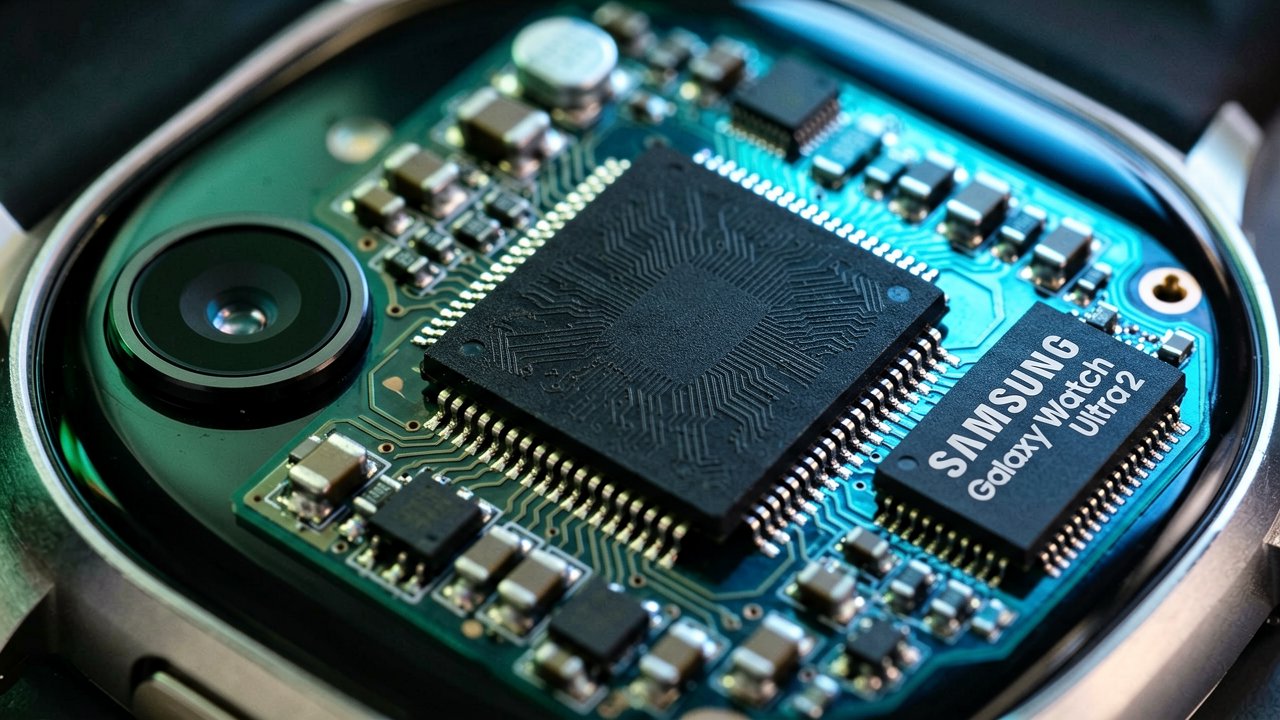
Samsung is officially doubling down on wearable artificial intelligence, offering a blatant glimpse into the future of its smartwatch ecosystem. In a series of official teasers published across its global channels, the South Korean tech giant confirmed that its upcoming wearable lineup will act as an always-on gateway for personalized health experiences. By leaning heavily into intelligent, real-time insights, the company wants to turn basic biometric logging into proactive, actionable guidance that works silently in the background while you go about your day.
This major push into AI-centric health tracking is slated to make its grand debut at Samsung’s highly anticipated Galaxy Unpacked event on July 22, 2026. The official announcement, detailing what the brand calls "the next evolution of Galaxy Watch," promises a complete overhaul of how we interact with wrist-bound data. Industry whispers reported by SamMobile suggest this upcoming portfolio will ditch the classic physical rotating bezel variants entirely this year, leaving a streamlined base Galaxy Watch 9 alongside a powerhouse Galaxy Watch Ultra 2 to lead the charge.
Upgraded Internals for All-Day Intelligence
Rather than relying purely on cloud-based processing, the upcoming wearables are getting a major foundational injection of brand-new internal hardware. According to details shared on the official Samsung Newsroom, these upgraded architectures are engineered specifically to handle advanced algorithmic workloads without killing your battery life. This means deeper, continuous tracking for sleep metrics, heart rate variations, and sleep apnea monitoring, giving users a much clearer picture of their everyday physical strain.
It is a necessary evolutionary step for Samsung as it fights to stay ahead in a hyper-competitive wearable market. While previous generations felt like passive fitness logs, integrating localized machine learning aims to transform the device into an active digital health coach. We will see exactly how much smarter these sensors have truly become when the virtual curtains rise at Unpacked next week.
What Most Reports Miss: The rush to plaster the "AI" label on every consumer gadget obscures a massive, foundational shift in how wrist-bound silicon handles biometric processing. For years, smartwatches have acted as glorified couriers, capturing raw sensor data and tossing it over the fence to your smartphone—or worse, a distant cloud server—to figure out what it actually means. Samsung's latest pivot represents a deliberate effort to keep that computing power local, a technical necessity driven by the strict latency requirements of real-time health coaching and the ever-growing consumer anxiety surrounding personal data privacy.
The Real Battle is Over Silicon, Not Features
To pull this off without forcing users to charge their devices twice a day, engineers had to completely rethink the efficiency of the wearable processor. Standard application processors handle interface rendering and background syncing well enough, but they choke on the continuous, complex matrix math required by machine learning algorithms. By baking specialized neural processing blocks directly into the watch's architecture, the incoming hardware can process heart rate variability, peripheral oxygen saturation, and sleep disturbances on the fly, using a mere fraction of the power a traditional chip would demand.
This architectural shift is also a defensive maneuver against a looming regulatory wall. As consumer tech companies push deeper into medical-adjacent territory—like detecting sleep apnea or catching signs of atrial fibrillation—the scrutiny from global health authorities intensifies exponentially. Processing sensitive biometric data directly on the device, rather than beaming it across the web, provides a robust shield against data leaks and helps clear the high bar set by data privacy watchdogs in both Europe and North America.
A Strategy for Ecosystem Lock-In
Beyond the raw engineering triumphs, there is a fierce corporate chess game at play. Samsung’s wearable strategy is no longer just about selling a standalone accessory; it is about building an indispensable, intelligent companion that makes switching to a competing ecosystem financially and behaviorally painful. When your watch deeply understands your personal baseline health anomalies and tailors its daily coaching to your specific recovery patterns, the friction of abandoning that accumulated intelligence for a competitor's device becomes remarkably high.
This launch also serves as an aggressive counter to Apple's dominant position in the premium wearable market, especially as rumors circulate about a refreshed competitive lineup on the horizon. By anchoring its marketing strategy so heavily to proactive, hardware-accelerated health intelligence, Samsung hopes to capture an audience that has grown weary of incremental screen-size updates and aesthetic refreshes. The success of this gamble will ultimately hinge on whether these new intelligent features feel truly life-altering or if they simply register as more algorithmic noise on the wrist.
Reading Between the Lines: The tech industry’s current obsession with wearable artificial intelligence assumes a crucial, yet entirely unproven premise: that consumers actually want their watches to talk back to them with clinical authority. For nearly a decade, the primary value of a smartwatch has been its utility as a quiet, frictionless filter for notifications and basic activity metrics. By attempting to transform these devices into proactive, analytical medical guides, Samsung risks alienating users who may find constant, algorithmic behavior modification reminders more stressful than helpful.
The Data Accuracy Paradox
There is also an uncomfortable contradiction sitting at the center of this biometric push. While marketing materials frequently tout sophisticated medical-grade capabilities like sleep apnea detection and heart rate anomaly alerts, these features are still bound by the physical limitations of wrist-based optical sensors. Skin tone, wrist movement, and even how tightly a user straps on their watch can drastically skew raw data inputs. Forcing a localized neural network to generate highly specific health insights based on inherently noisy data could easily result in a flood of false positives that trigger unnecessary anxiety.
This reality highlights the gap between engineering ambition and practical daily utility. If the incoming AI-powered health coach routinely mistakes a restless night of reading for a medical emergency, users will simply mute the notifications. For all the talk of advanced neural processing units, the true bottleneck for wearable tech remains the fundamental physics of non-invasive sensors, an area where breakthroughs happen in decades, not yearly product cycles.
The Real Goal of Predictive Coaching
We must also look skeptically at the promise of personalized productivity and health advice. True customization requires an immense amount of historical data baseline logging before it yields anything resembling actionable wisdom. In practice, early adopters of these new wearables will likely spend the first several months receiving generic, boilerplate advice disguised as machine-learned revelations. The real beneficiary of this early phase isn't the consumer, but rather Samsung's own data models, which will be continuously refined on the wrists of paying customers.
Ultimately, the pivot to AI on the wrist feels less like a natural response to a burning consumer demand and more like an industry-wide scramble to justify the premium price tags of modern smartwatches. As hardware specifications plateau across the board, software-driven intelligence has become the final frontier for marketing departments desperate to spark a replacement cycle. Whether this push results in a genuinely indispensable health tool or just a glorified, over-engineered alarm clock remains to be seen.
Until our watches can automatically generate the willpower required to skip that midnight snack, an AI health coach is mostly just a very expensive way to confirm that we are, once again, failing to get eight hours of sleep.
Artūras Malašauskas is an AI Systems Integrator with 20+ years of production-grade web engineering experience. He has designed, shipped, and scaled enterprise Python/PHP systems for logistics, SaaS, and public-sector clients. For the past year, he has focused exclusively on AI integrations: deploying open-source LLMs, building generative media pipelines (image, audio, video), and engineering multi-agent workflows for real production environments. His standard: reproducibility, security, cost-efficient inference—no vaporware. He documents and evaluates emerging AI tooling, separating verified capabilities from marketing noise. Technical editor at: muza-ai.eu, ai-verslas.lt, ai-naujinos.lt Connect on LinkedIn
Comments