MOVA Disrupts Aussie Floorcare with the Absurdly Powerful Z70 Ultra Roller
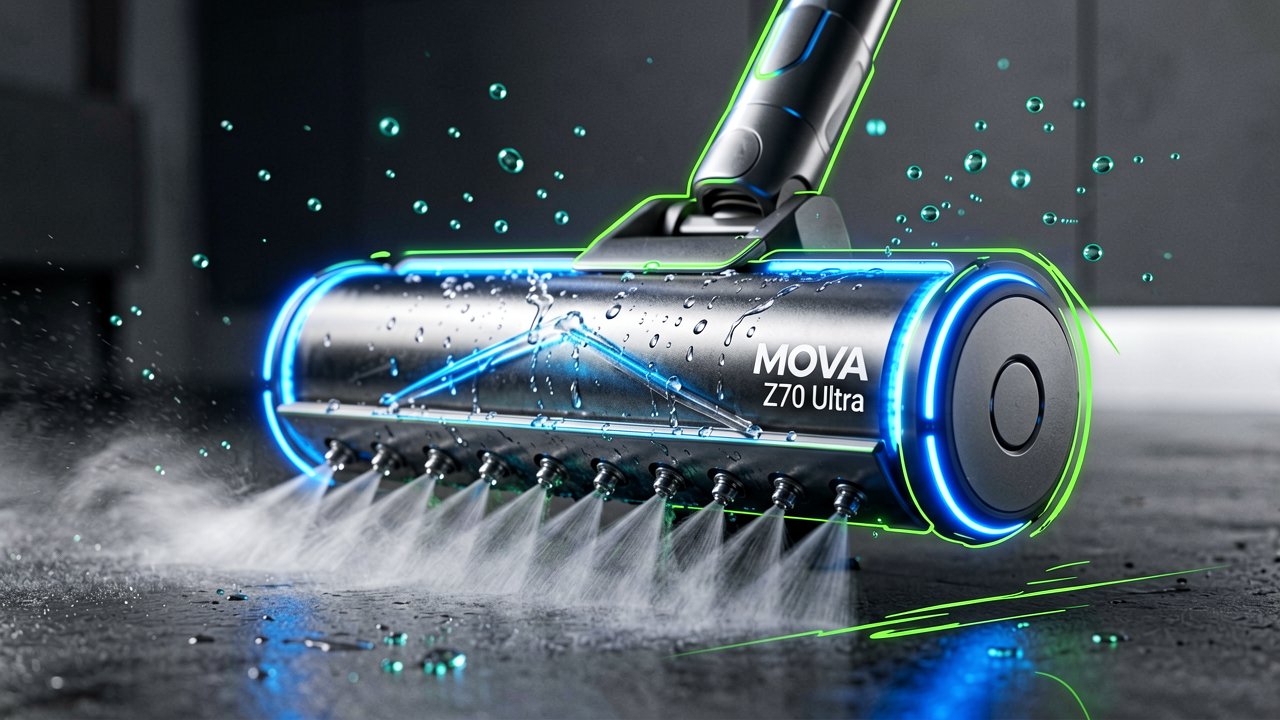
The premium robot vacuum market just received a massive jolt. Smart home innovator MOVA has officially launched its flagship Z70 Ultra Roller robot vacuum in Australia this July, completely resetting the baseline for domestic automated cleaning. While most premium brands are fighting a war over subtle increments in suction power, MOVA just blew the doors off the competition by packaging an astonishing 36,000Pa suction rating into an elegant, low-profile machine designed to dominate both thick carpets and sticky hard floors.
What makes this debut particularly interesting isn't just the raw power—though a 36,000Pa vacuum motor is frankly ridiculous. The real magic lies in how it handles hard surfaces. Instead of dragging a damp, increasingly filthy microfiber pad across your floorboards, the Z70 Ultra Roller utilizes a sophisticated HydroForce 2.0 system that implements a real-time fresh-water mopping cycle. An array of 12 precise spray nozzles continuously saturates the massive 270mm extra-wide roller mop with clean water, while a 360-degree internal scraper simultaneously strips away the dirty water, ensuring the floor only ever touches a pristine cleaning surface.
Power Meets Agility
Living with the Z70 Ultra Roller means fewer manual interventions, a recurring theme in modern smart home tech. The unit comes equipped with a highly optimized TroboWave DuoBrush backed by a four-layer anti-tangle geometry, explicitly engineered to prevent long pet hair from strangling the roller. When it encounters obstacles, the robot deploys its unique StepMaster 2.0 architecture, giving it the physical capability to clear thresholds and barriers up to a staggering nine centimeters high—a feat that leaves traditional robot vacuums stranded in doorways.
The automated maintenance base station matches the sophistication of the robot itself. Once the cleaning cycle finishes, the dock takes over, washing the roller mop with 100°C hot water to eliminate bacteria before drying it with 70°C hot air to prevent any musty mildew odors. For Australian homes dealing with mixed flooring, the robot features AutoShield technology, automatically lifting the wet roller mechanism to keep carpets completely bone-dry. The device has rolled out nationwide and is currently available via the official MOVA Australia portal as well as through major local electronics retailers including Harvey Norman and JB Hi-Fi.
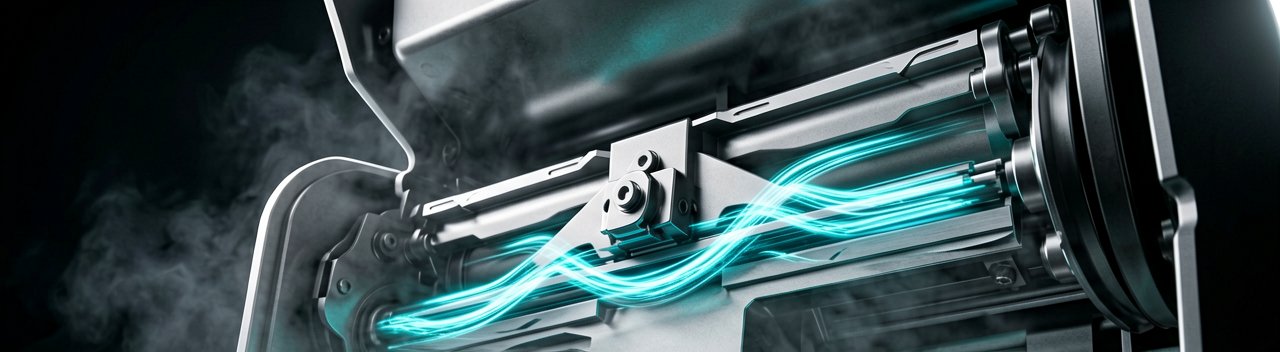
Beyond the Spec Sheet: This sudden leap to a 36,000Pa suction threshold signals a major philosophical shift in how engineering teams are approaching automated floor care. For years, the industry operated under the assumption that a robot vacuum simply couldn't generate enough airflow to replace a traditional corded upright. Early models relied on spinning side brushes to sweep debris into a relatively weak vacuum stream, often scattering light dirt rather than capturing it. MOVA's latest engineering feat challenges this paradigm by utilizing ultra-high-speed digital motors that mimic the internal dynamics of premium stick vacuums, fundamentally changing what users can expect from a hands-off appliance.
Industry insiders note that this aggressive push for higher suction ratings is a direct response to the diversifying floor plans found in modern Australian suburban homes. Open-plan layouts frequently blend thick wool rugs with expansive engineered timber or polished concrete surfaces, creating distinct cleaning challenges within a single room. While a standard 5,000Pa motor is perfectly adequate for surface dust on tile, it fails to lift heavy grit or pet dander buried deep within thick carpet fibers. By delivering seven times that power, the hardware ensures that heavy dirt is dislodged through sheer atmospheric pressure, filling a performance gap that has long frustrated smart home enthusiasts.
Rethinking the Mechanics of Liquid Cleanups
However, the real engineering battleground isn't happening on dry carpet, but on hard floors where liquid mess has traditionally baffled robotic cleaners. Standard mopping modules that rely on static, damp pads often do little more than distribute a thin layer of diluted residue across the floor surface. MOVA's decision to pivot to a continuous-flow, fresh-water system reveals an acute awareness of these hygienic limitations. By implementing a constant supply of clean water paired with an aggressive internal scraper, the machine isolates the captured grime immediately, preventing the cross-contamination that typically undermines automated mopping.
This approach mirrors the mechanics found in commercial-grade floor scrubbers used in hospitals and retail environments. The inclusion of a 100°C hot-water wash cycle at the base station addresses a long-standing consumer pain point regarding upkeep. Traditional robot mop pads can quickly become breeding grounds for bacteria and sour odors if left damp. Forcing boiling water through the roller component not only sanitizes the material but actively breaks down stubborn oils and grease that standard cold-water rinses leave behind, transforming the dock from a simple charging pad into a self-contained sanitation hub.

Navigating the Competitive Landscape
Retail analysts view this launch as a direct shot at established premium market leaders who have historically dominated local retail shelves. Australia’s tech-savvy consumer base has always shown a high willingness to adopt premium smart home automation, making the region a critical proving ground for next-generation hardware. By securing day-one distribution through major brick-and-mortar giants like JB Hi-Fi and Harvey Norman, the brand is positioning itself not as an online novelty, but as a premium powerhouse ready to challenge the status quo in the high-end domestic appliance sector.
Ultimately, the success of this high-powered hardware will depend on its real-world durability and the intelligence of its navigation software. Raw suction power and extreme hot-water cleaning cycles place immense thermal and mechanical stress on internal plastics, seals, and batteries. If the physical architecture can withstand the rigors of daily high-output operation, this release may well mark the moment when robot vacuums transitioned from secondary maintenance tools into primary, standalone cleaning solutions for the modern home.
Reading Between the Lines: While a 36,000Pa suction rating looks spectacular on a marketing billboard, it forces a necessary confrontation with the laws of physics and battery degradation. In the world of cordless appliances, extreme power requires immense energy, and drawing that level of current from a compact lithium-ion pack inevitably creates a thermal bottleneck. It is highly probable that this record-breaking suction is reserved for brief, localized bursts rather than sustained whole-home cleaning cycles. If the machine only hits its peak performance for a few minutes before throttling down to prevent overheating, the headline figure becomes more of a theoretical benchmark than a daily reality for the average consumer.
Furthermore, the physical implications of such intense negative pressure on residential flooring cannot be overlooked. A vacuum pulling with that much force risks creating a literal seal against certain delicate surfaces, potentially stalling the motor or, worse, lifting loose vinyl planks and fraying the edges of aging carpets. There is a delicate irony in designing a smart home helper so profoundly powerful that its peak setting might actually accelerate wear and tear on the very home it is tasked with preserving. Software throttling will undoubtedly be heavy-handed to mitigate these risks, meaning users may rarely experience the full raw power they paid for.
The Logistical Burden of True Automation
The fresh-water mopping system presents a similar paradox of convenience versus maintenance. Continuous spraying and scraping require a significant volume of liquid, which means the onboard water reservoirs must be kept small to maintain the robot’s low profile. Consequently, the machine will be forced to make frequent trips back to its base station to dump dirty water and replenish its clean supply. This constant commuting across the house increases total cleaning times significantly and accelerates the mechanical wear on the drive wheels and navigation sensors, trading manual floor cleaning for a highly complex game of robotic logistics.
There is also the matter of the 100°C hot-water washing cycle at the dock, a feature that demands serious electrical infrastructure. Rapidly heating water to boiling point inside a residential docking station requires sophisticated thermal shielding and draws considerable peak wattage. In an era where household energy efficiency is under intense scrutiny, running a mini-boiler in the living room just to wash a miniature mop roller feels somewhat counter-intuitive, especially when a manual microfiber swap achieves a similar hygienic result with zero standby power consumption.
Market Realities and Longevity
Ultimately, this feature war highlights a growing commoditization among premium smart home brands. When every competitor can navigate a room using LiDAR and avoid stray socks with artificial intelligence, hardware manufacturers have little choice but to escalate the specification numbers to stand out on retail shelves. This arms race benefits consumers in the short term through rapid innovation, but it risks creating overly complex machines that are difficult to repair outside of official warranty channels, turning what should be a long-term household investment into a rapidly depreciating piece of consumer electronics.
It seems we have finally reached the pinnacle of domestic luxury: buying an incredibly complex, industrial-grade engineering marvel just so we don't have to look a spilled cup of coffee in the eye.
Artūras Malašauskas is an AI Systems Integrator with 20+ years of production-grade web engineering experience. He has designed, shipped, and scaled enterprise Python/PHP systems for logistics, SaaS, and public-sector clients. For the past year, he has focused exclusively on AI integrations: deploying open-source LLMs, building generative media pipelines (image, audio, video), and engineering multi-agent workflows for real production environments. His standard: reproducibility, security, cost-efficient inference—no vaporware. He documents and evaluates emerging AI tooling, separating verified capabilities from marketing noise. Technical editor at: muza-ai.eu, ai-verslas.lt, ai-naujinos.lt Connect on LinkedIn
Comments