SpaceX and Cursor Forge Alliance to Launch Enterprise AI Agent, Threatening ChatGPT’s Workplace Dominance
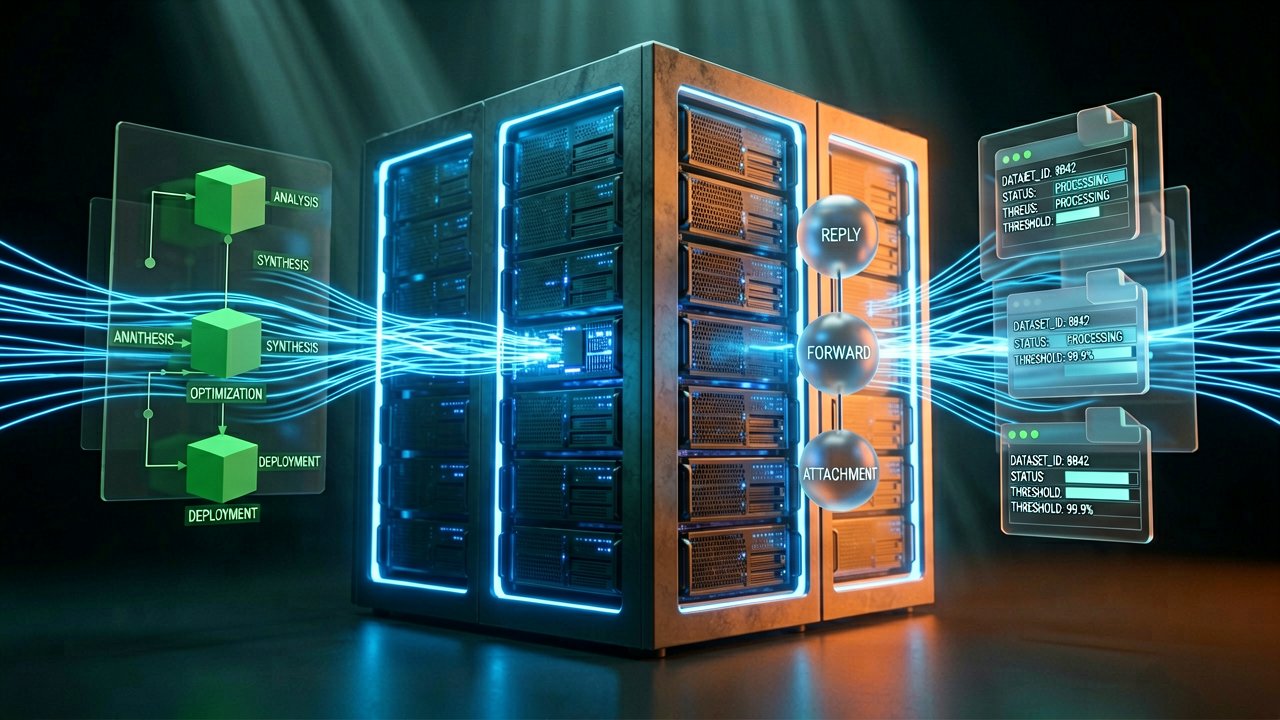
The enterprise artificial intelligence landscape is experiencing a massive tectonic shift as SpaceX leverages its newly announced $60 billion pending acquisition of Anysphere, the creator of the wildly popular AI code editor Cursor. Following an initial model training partnership formalized earlier this year, the two companies have co-developed a general-purpose workplace automation tool code-named "Sand." Currently testing in a closed beta using computational infrastructure leased from the newly consolidated SpaceXAI division, this all-round office AI agent aims to bypass traditional chat interfaces in favor of proactive execution. By moving aggressively into mainstream corporate productivity, the joint venture sets up a direct confrontation with incumbent workspace solutions such as OpenAI's ChatGPT Work and Anthropic’s Claude Cowork.
Historically recognized for automating intricate developer workflows, Cursor is actively pivoting its core product strategy toward non-technical business professionals. This structural transformation comes at a crucial time; despite hitting a staggering $3 billion in annual recurring revenue by early 2026, the startup faced intense pressure from generalized foundational models integrating native coding features. Rather than remaining siloed within the developer market, Cursor is leveraging SpaceX's financial muscle and the massive computational power of its Colossus supercomputer array to scale infrastructure. Industry analysts note that this consolidation alters the unit economics of enterprise software deployment, effectively shielding the product from the prohibitive cloud computing costs currently burdening independent AI startups.
For SpaceX, expanding into administrative AI agents represents a calculated extension of its broader technological ambitions. While the company's valuation has surged past $2 trillion following its recent public debut, its operational philosophy increasingly treats deep software integration as a critical component of aerospace and industrial scaling. By controlling the work surface where enterprise professionals respond to emails, orchestrate spreadsheets, and manage engineering logistics, the combined entity aims to anchor itself as the primary operating system of the modern corporation. This offensive indicates that the next phase of tech dominance will not be won through conversational chat boxes, but through agentic systems capable of executing end-to-end multi-step operational workflows.
Challenging the Chatbot Paradigm with Agentic Workflows
The introduction of the Sand agent signals an industry-wide transition from conversational assistants to autonomous workforce execution. While conventional tools require continuous, iterative human prompting to draft communications or analyze files, the SpaceX-Cursor agent operates directly within user interfaces to manage complete tasks. It can autonomously parse incoming communications, draft contextual replies, organize data architectures inside spreadsheets, and connect directly to engineering pipelines. This paradigm shift addresses a core criticism from corporate buyers: chat interfaces save minutes, but autonomous workspace agents capable of manipulating cross-application workflows save entire business hours.
Strategic Imperatives Behind the $60 Billion Merger
The financial scale of SpaceX's all-stock transaction for Cursor reflects a deeper race for developer mindshare and deep file-level integration. By acquiring Anysphere, SpaceX gains immediate access to granular developer habits and comprehensive codebase analytics. This proprietary data engine accelerates model optimization far faster than public web-scraping methods can achieve. Furthermore, the partnership directly counters the enterprise distribution networks built by Microsoft and OpenAI. Detailed coverage of the initial corporate alignment can be reviewed on the Cursor Blog, which highlights how the early stages of their joint model training laid the groundwork for this massive software expansion.
Market Impact and the Enterprise Battle Ahead
The closed beta release creates immediate competitive tension for dominant AI labs that have historically controlled the corporate productivity sector. According to initial market reporting by 36Kr, the co-developed product is positioned to fundamentally challenge ChatGPT's enterprise footprint by tying deep context awareness directly to execution layers. Concurrently, business intelligence published by The Information confirms that this agentic diversification is intentionally designed to strip market share from Anthropic's administrative platforms. As SpaceXAI prepares to finalize the merger in the third quarter of 2026, the enterprise software ecosystem is rapidly consolidating into a high-stakes conflict between traditional Big Tech cloud providers and heavily capitalized industrial platforms.
The Hidden Architecture of the SpaceX-Cursor Alliance
Beyond the Flashy Headlines: The true catalyst for this partnership lies within the operational bottlenecks of SpaceX’s own manufacturing facilities. Over the past three years, Starlink production and Starship iterative testing generated petabytes of unstructured telemetry and logistics data that traditional enterprise resource planning systems failed to synthesize efficiently. Internal engineering teams had quietly begun modifying Cursor’s repository-wide codebase indexing to parse physical blueprints, supply chain manifests, and regulatory filing histories. What started as an internal software patch soon revealed a broader commercial reality: the exact same semantic engine used to understand deep codebases could be applied to map the chaotic, multi-layered data structures of a multi-national enterprise.
This technical realization shifted the power dynamic between Silicon Valley’s foundational model builders and traditional industrial giants. For years, major tech firms argued that raw computing power and massive parameter counts would eventually yield generalized intelligence capable of handling any office task. However, enterprise buyers grew weary of high-latency chatbots that could draft a marketing email but lacked the system permissions or structural awareness to update inventory databases. By embedding Cursor’s context-retrieval mechanisms directly into the operating system layer, the new "Sand" platform approaches workplace automation from the bottom up, prioritizing execution speed and localized context over conversational eloquence.
The geopolitical and regulatory implications of this software consolidation are already rippling through Washington and Brussels. Industry insiders report that national security agencies are viewing the SpaceX-Cursor merger with a mix of dependency and caution. Because SpaceX maintains stringent ITAR compliance and handles sensitive defense contracts, the underlying AI infrastructure must be entirely air-gapped from standard commercial cloud provider networks. This unique security posture gives the new agentic platform an immediate competitive advantage among Fortune 500 companies in heavily regulated sectors like aerospace, defense, and biotechnology, which have historically banned the use of public cloud-based consumer assistants due to data exfiltration risks.
Meanwhile, employee sentiment within the broader tech sector reflects a mixture of anticipation and structural anxiety. While developers initially championed Cursor for eliminating the mundane aspects of syntax debugging, the transition into a generalized office agent introduces an existential friction for mid-level administrative personnel. Corporate procurement officers are already auditing departmental workflows to see how many data entry, scheduling, and basic financial analyst roles can be safely offloaded to autonomous agents. The narrative is no longer about human-in-the-loop augmentation; it has fundamentally evolved into a calculated effort by executive leadership to permanently compress operational overhead ahead of the next macroeconomic cycle.
The Friction Between Automated Autonomy and Silicon Valley Hubris
Reading Between the Lines: The corporate enthusiasm surrounding the SpaceX-Cursor merger conveniently ignores a glaring operational contradiction at the heart of the agentic AI market. While executive boards are eager to purchase software that promises to eliminate costly human overhead, the reality of deploying autonomous agents at scale introduces an entirely new category of systemic risk. Unlike developers who carefully review a block of AI-generated code before pushing it to production, the average office worker lacks the technical training to audit thousands of automated database updates or cross-application transactions executed in the background. The industry is effectively trading predictable, localized human errors for unpredictable, cascading software anomalies that can disrupt a supply chain or compromise financial records before an administrator even notices.
Furthermore, the assumption that SpaceX’s hardware dominance will seamlessly translate into enterprise software supremacy deserves severe skepticism. Building a resilient global satellite constellation requires rigid, deterministic engineering principles where physics dictates the boundaries of success. Conversely, the enterprise software ecosystem is notoriously messy, driven by legacy databases, fragmented API architectures, and highly irrational human workflows that vary wildly from one corporation to the next. Forcing these fragmented systems into a unified AI operating model using raw computational muscle from the Colossus supercomputer is an incredibly expensive gamble, and historical tech expansions show that throwing capital at complex software integration frequently yields diminishing returns.
This massive capital expenditure also exposes a structural hypocrisy among the foundational model builders who are racing to defend their turf. For the past several years, prominent AI labs argued that their core competitive advantage lay in proprietary algorithmic breakthroughs and sophisticated architecture designs. Yet, the rapid commoditization of these basic models has forced a frantic pivot toward infrastructure acquisition and distribution lock-ins. The fact that an aerospace titan had to buy a specialized code editor just to build a viable workplace agent demonstrates that generalized intelligence was never the silver bullet tech executives claimed it to be; true market dominance requires capturing the specific, unglamorous user interfaces where work actually happens.
Ultimately, the escalating conflict between traditional cloud monoliths and this new industrial-software alliance will likely reshape corporate data privacy for the next decade. If business data becomes entirely siloed within proprietary, closed-loop ecosystems under the guise of security, the open web and interoperable software standards will suffer a devastating blow. Companies will find themselves trapped in digital company towns, unable to migrate their automated workflows to competing platforms without rebuilding their entire operational infrastructure from scratch. The promised era of AI-driven corporate liberation may very well culminate in the most aggressive vendor lock-in the technology sector has ever witnessed.
"We were promised a future where artificial intelligence would free humanity from grueling corporate drudgery, but instead we built autonomous software to automate the emails, leaving us with more time to manage the software that replaces our colleagues."
Artūras Malašauskas is an AI Systems Integrator with 20+ years of production-grade web engineering experience. He has designed, shipped, and scaled enterprise Python/PHP systems for logistics, SaaS, and public-sector clients. For the past year, he has focused exclusively on AI integrations: deploying open-source LLMs, building generative media pipelines (image, audio, video), and engineering multi-agent workflows for real production environments. His standard: reproducibility, security, cost-efficient inference—no vaporware. He documents and evaluates emerging AI tooling, separating verified capabilities from marketing noise. Technical editor at: muza-ai.eu, ai-verslas.lt, ai-naujinos.lt Connect on LinkedIn
Comments