Smarttech247 Unleashes Agentic SOC Platform to Automate Microsoft Enterprise Defenses
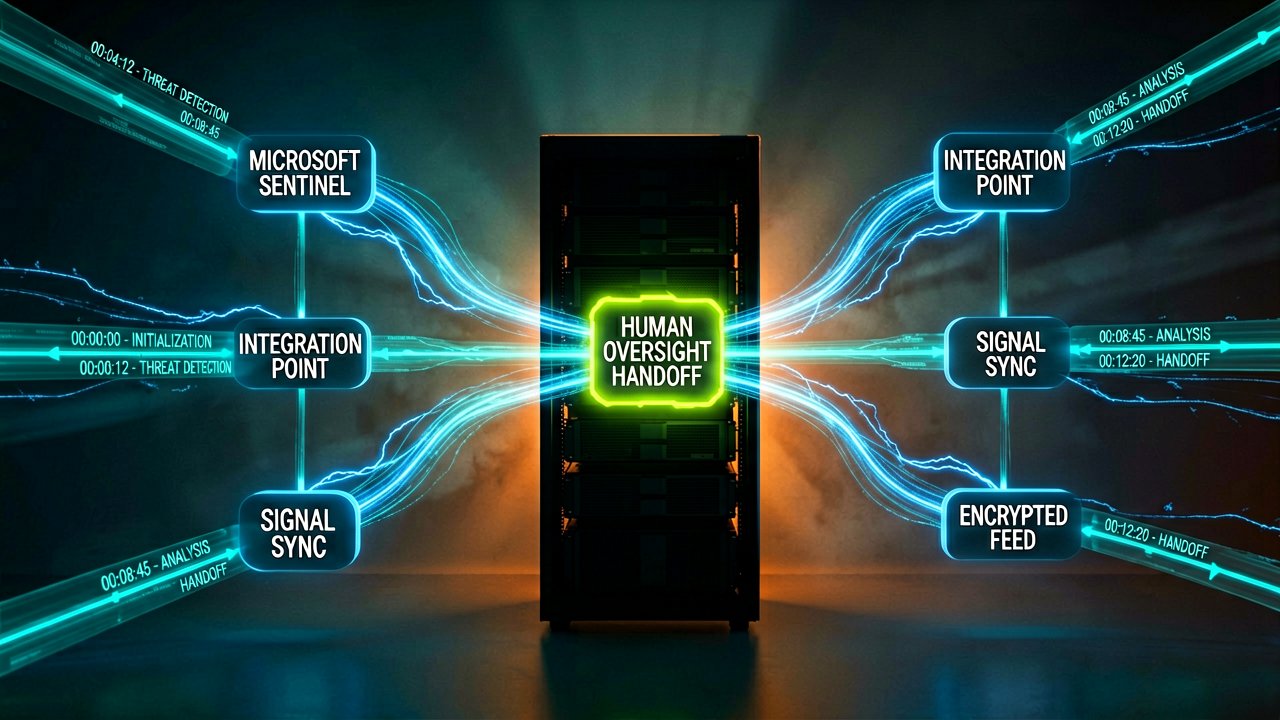
The relentless flood of corporate security alerts has long driven enterprise IT teams to the brink of burnout, but a new autonomous solution looks to shift the balance of power. Cybersecurity firm Smarttech247 announced the official launch of its new "Agentic SOC" capability integrated directly into its flagship VisionX platform. Rolled out to the global market, this deployment introduces specialized artificial intelligence agents specifically engineered to automate heavy-duty security operations across complex Microsoft enterprise environments.
By dropping these AI agents straight into existing infrastructures, corporate defense architectures can rapidly aggregate cross-domain intelligence without traditional deployment friction. According to details shared by the company via PRLog, the automated agents systematically coordinate telemetry across identity frameworks, cloud assets, corporate emails, and endpoints. Instead of merely highlighting problems for human intervention, the system is designed to independently run threat hypotheses, build out forensic attack timelines, and dynamically adapt investigation paths as fresh data spills into the enterprise network.
Rather than replacing human oversight entirely, the platform relies on a collaborative workflow where autonomous software absorbs the brute force of rapid-fire telemetry processing. This strategic interplay allows human analysts to step away from initial triage loops and focus entirely on high-consequence decision-making. Highlighting this shift in reporting from Technology Record, the new architecture integrates natively with Microsoft Sentinel and Defender protocols. The platform is available for deployment within heavily targeted, regulated industries including financial services, aviation, and healthcare networks that require strict, auditable trails for every incident.
Behind the Scenes of the Autonomous Security Shift
What Most Reports Miss: The rush to deploy autonomous agents into corporate defense pipelines is less about adopting flashy new technology and more about solving a structural math problem. For years, enterprise security operation centers have functioned like overwhelmed triage units, buried under a mountain of low-level data. Security teams face thousands of daily alerts, and even a massive staff cannot parse that much data fast enough to prevent sophisticated lateral movement within a cloud network. Smarttech247’s shift toward an "Agentic SOC" model acknowledges that standard automation—like basic scripts and static rule sets—has reached its technical ceiling in defending complex Microsoft-centric setups.

Industry veterans recognize that Microsoft's security portfolio has grown incredibly powerful but deeply intricate. Integrating Microsoft Defender with Sentinel provides organizations with vast telemetry, yet managing this interconnected ecosystem requires highly specialized knowledge. When a threat actor targets an active directory or leverages an API loophole, standard security software often flags the individual events as isolated anomalies rather than a unified attack. By embedding cognitive agents directly into these specific protocols, the defensive architecture can continuously run background investigations, mapping out an entire attack chain long before a human analyst opens a support ticket.
This development is also heavily influenced by evolving regulatory pressures in critical infrastructure sectors. Corporate leadership teams in finance, healthcare, and aviation are no longer just evaluated on whether they can block an attack, but on how quickly they can document and report the breach to government regulators. Because these new AI agents automatically compile forensically sound timelines during an active investigation, they drastically reduce the time it takes to understand the scope of an incident. This addresses a major operational bottleneck for corporate legal and compliance teams who must operate under strict, ticking clocks during a crisis.
However, the broader rollout of agentic security forces a crucial cultural evolution within enterprise IT departments. Security directors are historically skeptical of giving autonomous software the power to make real-time decisions, fearing that an overzealous AI agent might mistakenly shut down a critical production server during a false alarm. To address these anxieties, the integration of these tools relies heavily on a hybrid operational model. The software handles the exhausting, repetitive task of cross-referencing identity logs and network traffic, but it hands off the final containment execution to human supervisors, striking a careful balance between automated speed and human accountability.
The Hidden Cost of Autopilot Defenses
Reading Between the Lines: The cybersecurity industry loves a silver bullet, and "agentic" software is the latest buzzword promised to cure corporate operational headaches. While automating the painstaking triage of Microsoft enterprise telemetry sounds like a flawless victory on paper, it introduces a dangerous paradox. By delegating the foundational dirty work of threat hunting to autonomous agents, organizations risk creating a generation of human analysts who lack the muscle memory required to investigate complex incidents from scratch. When the automated layer encounters an exotic, highly customized zero-day exploit that evades its cognitive models, a heavily dependent security team may find themselves entirely unequipped to manually untangle the mess.
There is also an inherent contradiction in vendor promises regarding the reduction of "alert fatigue." Historically, introducing smarter detection tools does not actually decrease the workload; it merely shifts the bottleneck further down the pipeline. Instead of sifting through thousands of raw, low-level alerts, human analysts are now tasked with auditing complex, AI-generated forensic timelines and validating autonomous conclusions. This requires a much higher level of technical expertise, effectively transforming a volume problem into a skill-gap problem. Finding tier-one analysts to click buttons is relatively easy, but finding senior architects capable of interrogating an AI agent's logic is an entirely different uphill battle.
Furthermore, locking an autonomous defense strategy so tightly into the Microsoft ecosystem creates an intense vendor lock-in that should give chief information security officers pause. Enterprise environments are rarely purely homogenous, often resembling a chaotic patchwork of legacy multi-cloud architectures, third-party APIs, and decentralized SaaS applications. If an AI agent relies on deep, native integration with Microsoft Sentinel and Defender to achieve its high-velocity decision-making, its defensive blind spots will naturally widen the moment a threat actor steps outside that specific sandbox. True corporate resilience demands cross-platform agility, a requirement that often clashes with the reality of hyper-tailored ecosystem solutions.
Ultimately, the true test of these autonomous platforms will not be measured by their success in pristine lab environments, but by how they handle the inevitable chaos of a real-world adversarial counterattack. Threat actors are already utilizing their own adversarial machine learning models to map out, poison, and trick defensive AI logic. As these automated security agents become standard fixtures in corporate networks, they will inevitably become the primary targets for sophisticated manipulation. The industry is rapidly moving toward an era where software-on-software warfare is the norm, and enterprises must remain deeply skeptical of any tool that promises to let human defenders completely set it and forget it.
The corporate dream of achieving a completely autonomous, self-healing network is highly commendable, provided everyone remembers that automated security agents never get tired, never sleep, and, unfortunately, will happily automate a catastrophic false positive at three o'clock on a Sunday morning with absolute, unblinking algorithmic certainty.
Artūras Malašauskas is an AI Systems Integrator with 20+ years of production-grade web engineering experience. He has designed, shipped, and scaled enterprise Python/PHP systems for logistics, SaaS, and public-sector clients. For the past year, he has focused exclusively on AI integrations: deploying open-source LLMs, building generative media pipelines (image, audio, video), and engineering multi-agent workflows for real production environments. His standard: reproducibility, security, cost-efficient inference—no vaporware. He documents and evaluates emerging AI tooling, separating verified capabilities from marketing noise. Technical editor at: muza-ai.eu, ai-verslas.lt, ai-naujinos.lt Connect on LinkedIn
Comments