Injective Unveils Autonomous AI Agent SDK, Merging Intelligent Execution with Decentralized Finance
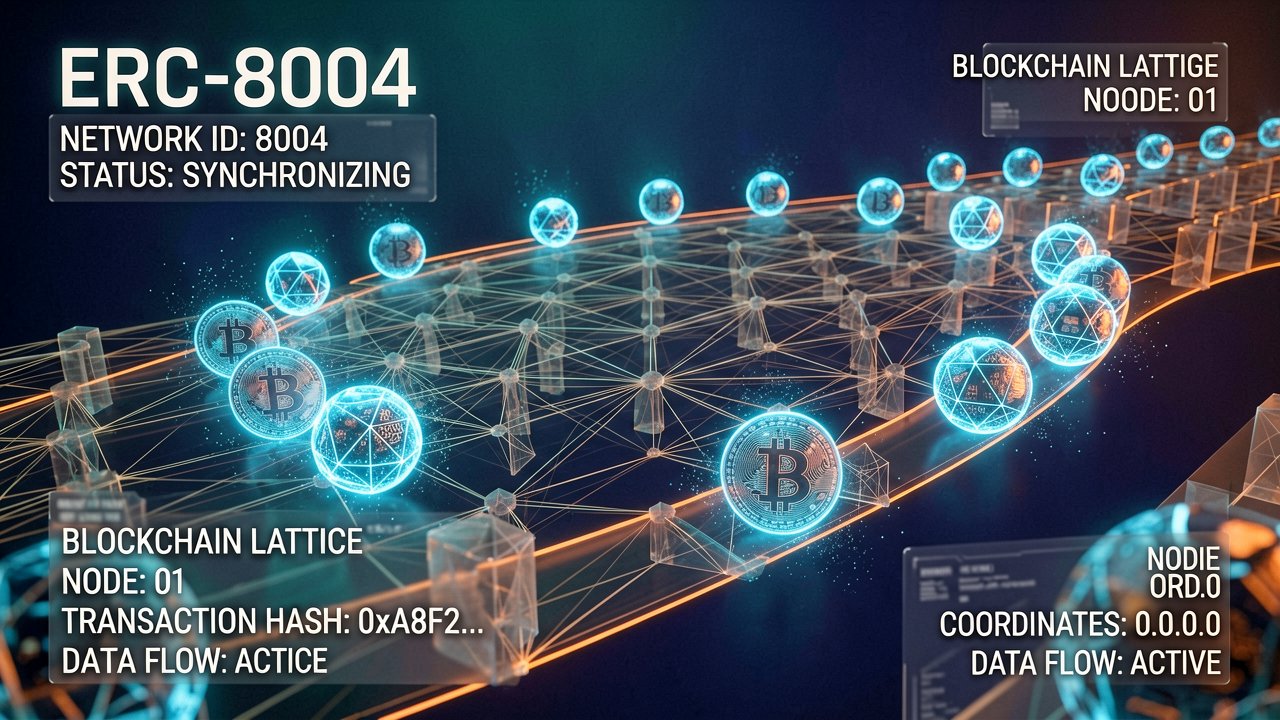
The convergence of decentralized finance (DeFi) and artificial intelligence has reached a critical milestone as the Layer-1 blockchain network Injective officially unveiled its pioneering iAgent SDK. This advanced software development kit is meticulously engineered to allow developers to construct, deploy, and manage fully autonomous AI agents directly within the blockchain architecture. By abstracting away the complex parameters of manual transaction architecture, this tool enables smart contracts to execute sophisticated, self-directed operations without any form of human intervention.
From an architectural standpoint, this strategic pivot repositions the blockchain from a passive transactional ledger into an active, intelligent computational environment. Built on top of a highly modular framework, the iAgent infrastructure integrates natural language processing with algorithmic precision, allowing users to command tasks such as real-time predictive data analysis, liquidity management, and instant asset transfers using simple conversational English. The rollout, heavily backed by core developments from Injective Labs, represents a foundational change in the web3 landscape, accelerating the transition toward a truly autonomous internet economy where non-human entities participate natively in financial markets.
Market Implications and Strategic Shift Toward Machine DeFi
The release of this development kit marks a dramatic acceleration in the broader sector trend toward autonomous onchain operations. Previously, algorithmic web3 strategies relied on rigid, offchain bots that required persistent monitoring and were vulnerable to API downtime and central points of failure. By establishing an open-source Model Context Protocol (MCP) server environment, Injective allows these agents to mint their own unique ERC-8004 identity tokens and execute complex workflows entirely onchain. This shift significantly reduces operational friction for institutional and retail users alike, paving the way for multi-market algorithmic execution, portfolio-wide automated rebalancing, and decentralized media creations that occur independently of human scheduling or manual validation.
Regulatory Questions and the Horizon of Code Accountability
While the technical advantages of autonomous execution are undeniably transformative, they simultaneously introduce unprecedented challenges regarding market supervision and accountability. Allowing AI agents to write, deploy, and verify smart contracts unsupervised forces an immediate re-evaluation of current legal frameworks surrounding digital asset trading. If an autonomous machine agent acts on predictive analytics and independently initiates a transaction that causes market volatility or violates compliance standards, standard regulatory systems lack the protocols to assign direct liability. As developers aggressively utilize the new toolkit to scale decentralized automation, the industry must quickly confront these compliance realities, creating a delicate balance between engineering breakthroughs and systemic market oversight.

Architectural Realities of Onchain Machine Intelligence
Behind the Tech Stack: The architectural reality of deploying autonomous agents directly on an asynchronous ledger like Injective demands a total re-engineering of the typical Web3 developer pipeline. Traditional artificial intelligence architectures rely heavily on centralized cloud infrastructure to manage memory states, massive dataset training, and heavy vector database computations. Merging this compute-heavy framework with a strict, state-machine deterministic blockchain environment requires a unique bridge. Injective circumvents these limitations by decoupling the heavy natural language parsing from the transactional layer, allowing the newly introduced SDK to interpret intent off-chain or via decentralized oracle networks before converting that intent into gas-efficient, single-block atomic actions on-chain.
This design choice has ignited a fierce debate among decentralized infrastructure purists and pragmatic software engineers. Critics point out that if the underlying machine learning models are hosted on centralized servers, the resulting financial agents are not truly decentralized and remain vulnerable to external data manipulation or API outages. Conversely, the development teams backing this ecosystem argue that the ultimate settlement, identity verification, and asset control remain strictly bound to immutable onchain smart contracts. By tokenizing the agent identities, the network creates a verifiable provenance trail where every decision-making loop can be audited post-execution, establishing a permanent record that balances performance with transparency.
From the perspective of institutional liquidity providers, the immediate allure of this framework lies in the elimination of the traditional latency tax associated with multi-step smart contract interactions. Instead of relying on human operators to monitor market anomalies and manually sign transactions across disparate protocols, these self-directed agents operate with localized autonomy. They can rebalance delta-neutral portfolios, harvest yields across isolated lending pools, and hedge structural risks in milliseconds. This structural evolution effectively shifts the role of the human fund manager from an active executioner of trades to an upstream architect who merely defines risk parameters, budgetary guardrails, and overarching optimization goals.
The broader strategic trajectory suggests that Injective is positioning itself to capture the foundational layer of a rapidly emerging machine-to-machine economy. As cross-chain communication protocols mature, these autonomous agents will not be confined to a single network; they will actively bridge assets, lease decentralized storage, and buy computational power from other specialized blockchains entirely on their own balance sheets. This fluid, automated interaction heralds an era where the majority of onchain transaction volume may soon be generated not by human speculation, but by thousands of algorithmic agents interacting, trading, and settling values with one another in a frictionless digital wilderness.

The Friction Between Algorithmic Freedom and Ledger Constraints
Reading Between the Lines: The industry enthusiasm surrounding self-directed onchain intelligence routinely glosses over a fundamental contradiction in the design of deterministic state machines. Blockchains are fundamentally engineered to be predictable, immutable, and slow to change, ensuring that a specific input always yields an identical, verifiable output across thousands of global nodes. Artificial intelligence, conversely, thrives on heuristic drift, probabilistic reasoning, and iterative optimization loops that are inherently unpredictable. Forcing a non-deterministic entity to dictate operations within a hyper-deterministic financial ledger creates an architectural friction point that marketing narratives conveniently overlook, as a single faulty model hallucination translated into an unalterable smart contract execution could easily drain millions in liquidity with no option for a manual rollback.
Furthermore, the true extent of this autonomy remains heavily constrained by the systemic limitations of current oracle infrastructure and offchain compute bridges. While the developer kits promise agents that can navigate complex multi-protocol workflows independently, these entities remain structurally dependent on traditional Web2 API gateways to interpret external data or execute complex vector lookups. This dependency reveals a significant vulnerability where an automated strategy is only as decentralized as the centralized server hosting the agent's core weights. If a primary cloud provider suffers an outage or an API parameter shifts unexpectedly, these sophisticated agents risk freezing mid-transaction or, worse, misinterpreting stale data inputs and triggering catastrophic cascading liquidations across decentralized lending markets.
This reality forces institutional stakeholders to view the immediate deployment of these toolkits with a degree of measured skepticism. While the prospect of reducing overhead by automating treasury management is highly appealing, the lack of robust debugging environments for autonomous agent logic poses an existential compliance and security risk. Traditional automated trading algorithms undergo months of rigorous backtesting in ring-fenced environments, yet an agent operating with native ledger autonomy can theoretically alter its own operational logic on the fly based on incoming data streams. Until developers can reliably implement cryptographic guardrails that strictly limit an agent's maximum drawdown and transactional velocity without neutralizing its adaptive problem-solving capabilities, the technology will likely remain confined to speculative sandboxes rather than handling core corporate balance sheets.
"We have spent a decade trying to eliminate human error from global financial networks, only to realize that the ultimate reward for our engineering triumphs is handing the keys to a machine that might accidentally wipe out an entire liquidity pool because it misread an internet meme as a profound macroeconomic indicator."
Artūras Malašauskas is an AI Systems Integrator with 20+ years of production-grade web engineering experience. He has designed, shipped, and scaled enterprise Python/PHP systems for logistics, SaaS, and public-sector clients. For the past year, he has focused exclusively on AI integrations: deploying open-source LLMs, building generative media pipelines (image, audio, video), and engineering multi-agent workflows for real production environments. His standard: reproducibility, security, cost-efficient inference—no vaporware. He documents and evaluates emerging AI tooling, separating verified capabilities from marketing noise. Technical editor at: muza-ai.eu, ai-verslas.lt, ai-naujinos.lt Connect on LinkedIn
Comments