Airia Tackles Enterprise AI Fragility With Advanced Model Change Management Platform
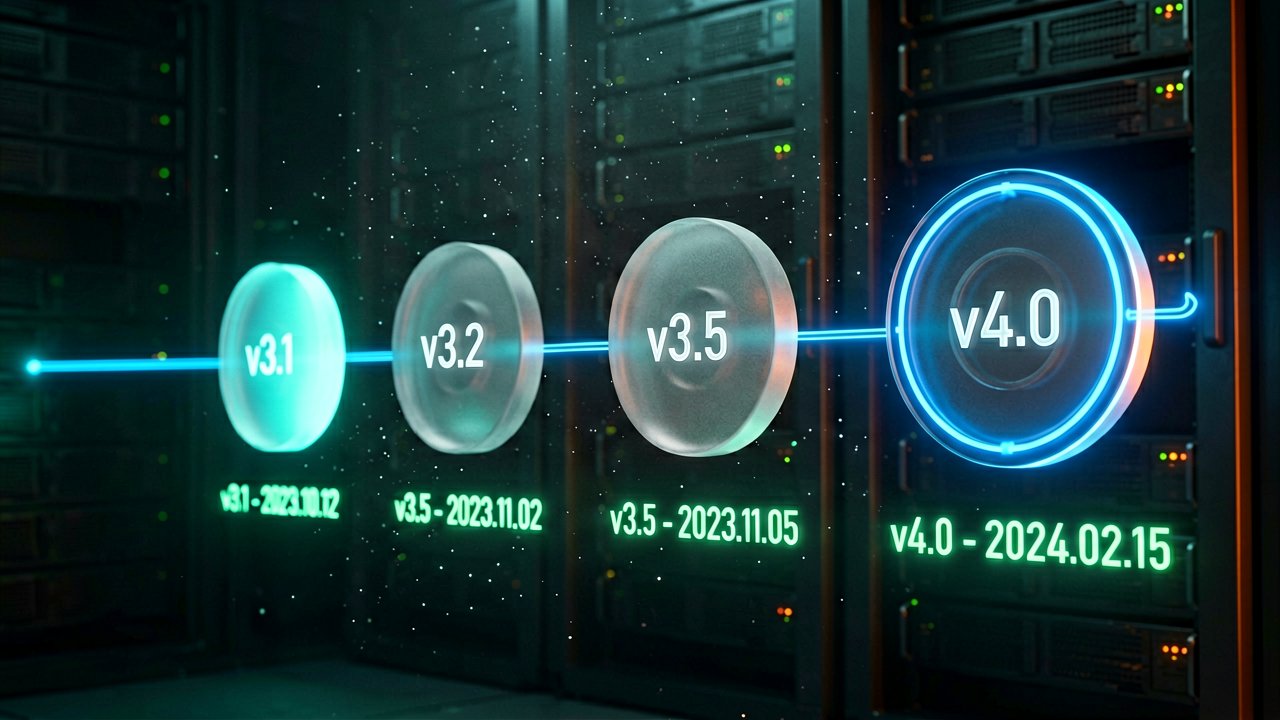
The enterprise AI landscape is shifting rapidly from passive text generation to autonomous agentic infrastructure. As organizations scale their autonomous agent footprints, they increasingly confront a brittle reality: the underlying large language models are constantly updated, deprecated, or retired by vendors. When a foundational model shifts or disappears, the dependent AI agents can suffer sudden operational failure. To eliminate this vulnerability, enterprise AI control platform Airia has launched its new Model Change Management system, establishing a dedicated infrastructure tier designed to prevent unexpected AI agent downtime and close critical corporate governance gaps.
Historically, enterprise IT departments managed software lifecycles through predictable, multi-year deprecation schedules. In contrast, the modern AI ecosystem operates on aggressive vendor timelines where frontier models are frequently swapped or altered with minimal notice. Organizations deploying dozens of specialized agents across workflows like contract analysis or supply chain management face severe operational risk without centralized orchestration. By introducing dedicated lifecycle automation, Airia transitions enterprise AI engineering from a state of reactive firefighting to proactive, structured governance.
Market Impact and Strategic Infrastructure Shifts
The release of this capability addresses a massive operational blind spot in corporate AI deployment. According to details published via GlobeNewswire , Airia's Model Change Management system introduces escalating administrative alerts that activate up to 90 days before a targeted model retirement. This timeline gives enterprise engineering teams a predictable runway to evaluate subsequent models, run automated regressions, and safeguard operational continuity. Crucially, the system features bulk migration tools that allow administrators to simultaneously update the underlying models of multiple running agents, eliminating the need for manual, code-heavy adjustments across individual projects.
Closing the Autonomous AI Governance Gap
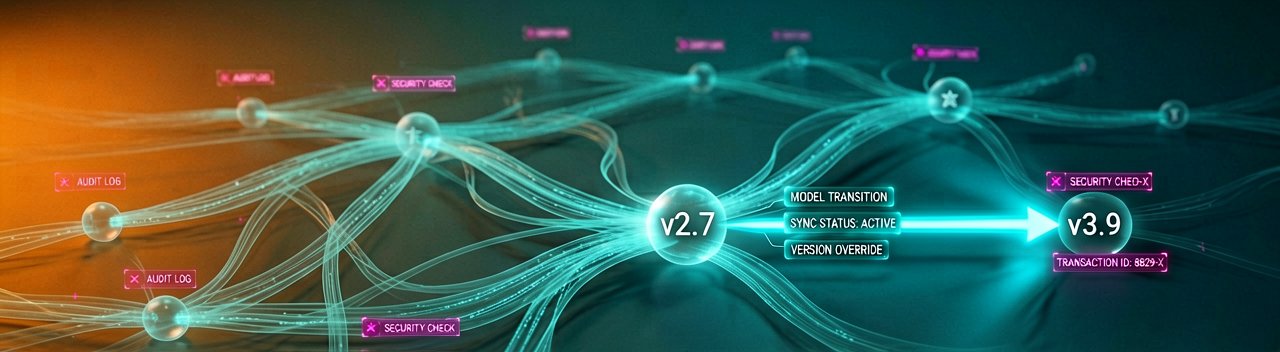
Beyond maintaining continuous operations, the system enforces a rigorous compliance framework required by heavily regulated industries. As reported by AiThority , every automated model replacement automatically generates an unalterable version history. This centralized ledger captures complete traceability, providing the exact documentation required for corporate risk mitigation and strict regulatory audits. By documenting model drift and structural modifications automatically, Airia effectively standardizes compliance for enterprise environments where shadow AI deployments and unmonitored vendor dependencies otherwise expose firms to liability.
Expert Commentary: The Evolution of the AI Control Plane
This structural update cements Airia's broader role as an essential enterprise control plane. Modern corporations cannot afford fragmented visibility across isolated LLM vendors. By consolidating model access, policy enforcement, and agent lifecycle tools into a single, model-agnostic layer, the infrastructure normalizes active governance without throttling developer innovation. As autonomous workflows assume higher levels of corporate responsibility, building enterprise trust will depend entirely on these automated, infrastructure-level safeguards rather than ad-hoc developer oversight.
Behind the Scenes of the Agentic Continuity Crisis
The push toward autonomous AI agents has forced corporate engineering teams into an uncomfortable reality: the core engines powering their business workflows are fundamentally rented and inherently unstable. While traditional enterprise software relies on immutable APIs that remain operational for decades, frontier AI models are living systems. When a model provider pushes a silent update to optimize latency or reduce inference costs, the underlying behavior of the model shifts. For a consumer chatbot, this might mean a slightly different phrasing; for an enterprise agent executing automated financial compliance audits, a microscopic shift in prompt interpretation can completely break downstream data parsers.
Engineering leaders inside Fortune 500 companies frequently vent about the logistical nightmare of managing these silent updates. A single enterprise workflow often stitches together multiple specialized agents, each fine-tuned or heavily prompted on a specific vendor model checkpoint. When that checkpoint is abruptly deprecated, the entire pipeline collapses like a house of cards. Teams are forced to halt active development, pull engineers off core product roadmaps, and spend weeks manually testing, benchmarking, and re-optimizing prompts against a newer model version just to restore basic functionality.
This structural volatility has created a profound tension between innovative developer teams and corporate risk officers. Legal and compliance departments are increasingly terrified of "shadow AI upgrades," where developers swap models under the hood of a production application to fix a broken feature without undergoing formal risk assessments. Without an immutable, centralized ledger documenting exactly which model version handled a specific transaction or automated decision, companies face massive liability gaps during external regulatory audits or internal forensic investigations.
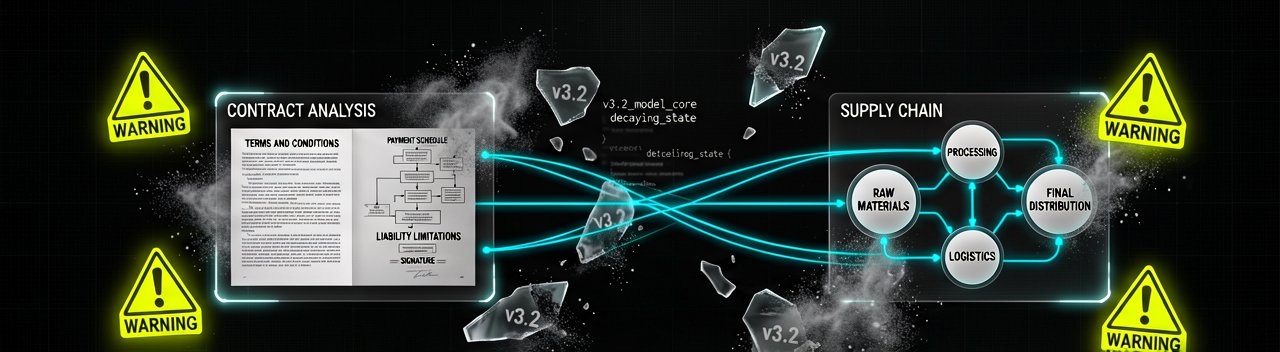
Airia's architectural intervention shifts this dynamic by treating model lifecycles as a core component of continuous integration and continuous deployment infrastructure. By decoupling the agent's behavioral logic from the specific, volatile endpoints of underlying model providers, enterprise IT departments finally gain a standard abstractions layer. This platform approach allows companies to aggressively adopt cutting-edge agentic workflows without tethering their operational survival to the unpredictable roadmap of any single AI lab.
Reading Between the Lines: The Illusion of Autonomous Stability
The enterprise rush to embrace model change management tools reveals a glaring paradox in the current artificial intelligence narrative. Industry leaders frequently pitch autonomous agents as self-sustaining, labor-saving infrastructure capable of operating with minimal human oversight. Yet, the very existence of a dedicated management tier to prevent agent downtime proves that these systems are among the most high-maintenance software deployments in enterprise history. Organizations are essentially building a complex, secondary layer of human-driven monitoring software just to babysit the primary layer of automated agents, calling into question the true net efficiency gains of early adoption.
Furthermore, while automated migration tools and 90-day warning windows mitigate the symptoms of vendor model drift, they fail to cure the underlying disease. A bulk migration tool can easily point fifty separate agents to a newer model version at the click of a button, but it cannot guarantee that those agents will behave identically under the new architecture. Because deep learning models remain black boxes, even comprehensive automated regression testing can miss subtle behavioral deviations that only manifest under specific edge cases in production. This reality exposes a fundamental friction point: enterprise IT craves absolute predictability, while frontier AI thrives on statistical probability.
This structural dependency also highlights an escalating power imbalance between enterprise buyers and foundational model providers. By formalizing model change management as a standard corporate practice, the tech sector is quietly normalizing a state of perpetual instability. Rather than demanding that model vendors provide the long-term API stability standard in traditional SaaS, enterprises are accepting the burden of continuous adaptation. This shift ensures that corporate engineering teams will remain on an endless treadmill of testing and re-validation, turning model maintenance into a permanent overhead cost that could permanently suppress the return on investment for enterprise AI initiatives.
"We were promised a world where autonomous digital workers would tirelessly run our businesses for free, but it turns out we just traded our human staff for a sprawling bureaucracy of software systems designed solely to keep those digital workers from firing themselves every ninety days."
Artūras Malašauskas is an AI Systems Integrator with 20+ years of production-grade web engineering experience. He has designed, shipped, and scaled enterprise Python/PHP systems for logistics, SaaS, and public-sector clients. For the past year, he has focused exclusively on AI integrations: deploying open-source LLMs, building generative media pipelines (image, audio, video), and engineering multi-agent workflows for real production environments. His standard: reproducibility, security, cost-efficient inference—no vaporware. He documents and evaluates emerging AI tooling, separating verified capabilities from marketing noise. Technical editor at: muza-ai.eu, ai-verslas.lt, ai-naujinos.lt Connect on LinkedIn
Comments