Port Merges Vibe Coding with Platform Engineering to Unleash Enterprise Agentic Workflows
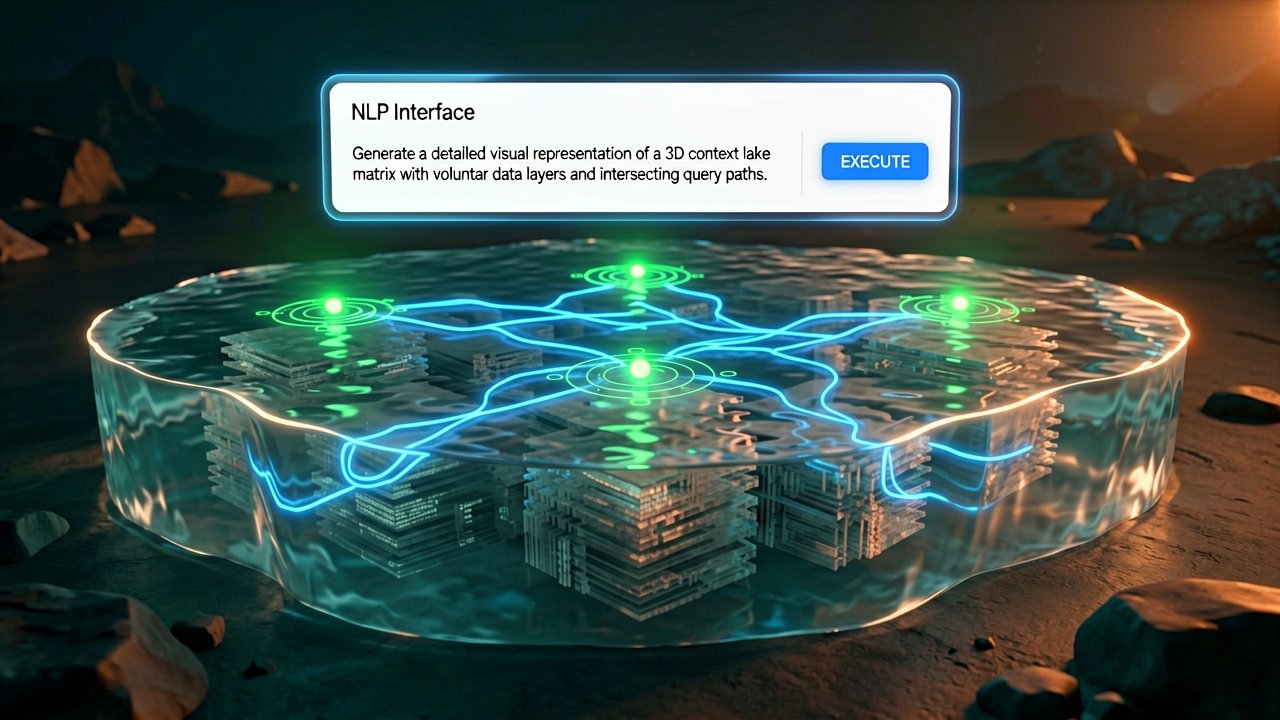
The enterprise automation market has reached a critical inflection point as the agentic software development lifecycle (SDLC) shifts from experimental scripts to governed infrastructure. Port, an innovator in the internal developer portal (IDP) sector, has launched its new Port AI Builder, establishing the industry's first purpose-built vibe coding environment designed specifically for platform engineering teams. This rollout marks an evolutionary step in how complex enterprise systems are orchestrated, enabling developers to build and deploy production-ready AI agent systems in mere minutes using natural language.
This strategic move addresses a severe bottleneck in corporate AI adoption: the tension between engineering velocity and operational control. While individual developers have rapidly embraced "vibe coding"—a paradigm where code is generated entirely through natural language prompts—platform engineering teams have traditionally lacked the tools to govern these autonomous behaviors at scale. By embedding a prompt-driven creation layer directly over its robust context lake, Port bridges this gap, providing the core security infrastructure and operational guardrails required for enterprise compliance.
The Architecture of Governed Vibe Coding
Building resilient enterprise automation requires more than just raw code generation; it demands deep contextual awareness and structured integration with existing software infrastructure. Port AI Builder achieves this by sitting directly on top of the company's core Port Agentic SDLC Platform, which provides the critical data layer, workflow orchestration capabilities, and agent management services required to operationalize AI safely. This foundation allows autonomous AI agents to draw on localized domain expertise spanning site reliability engineering (SRE), devops, cloud security, and architecture while operating inside platform-enforced parameters.
According to product details published by InfoWorld, the platform enables technical teams to apply specialized AI agents to intricate, multi-stage workflows such as autonomous ticket resolution, automated incident remediation, and engineering performance tracking. Crucially, the system mandates built-in human-in-the-loop review and approval workflows, preventing runaway agent behaviors and ensuring that no destructive changes are committed to production without explicit engineering oversight.

Market Shift: From Portals to Agentic Control Planes
The launch of Port AI Builder signals a broader realignment within the DevOps and platform engineering tooling landscapes. Traditional internal developer portals were primarily designed to act as passive registries and self-service catalogs, helping human engineers reduce cognitive load when navigating fragmented microservices and complex Kubernetes environments. As noted by SD Times, the widespread democratization of AI generation means that software creation is democratizing rapidly, rendering legacy manual configuration workflows obsolete.
By transforming the IDP into an active control plane for AI agents, Port is redefining the platform engineering mission. Platform teams are no longer just building "golden paths" for human developers; they are now creating structured environments, tool schemas, and data boundaries for digital workers. This transition is essential for building scalable agentic systems, as autonomous agents require explicit, high-quality metadata and systemic context to effectively diagnose issues, execute actions, and safely mutate software state across enterprise clouds.
What Most Reports Miss: The Architectural Shift from Portal to Control Plane
Behind the Scenes of the Agentic Shift: The rush to embrace vibe coding in the enterprise often overlooks the stark difference between generating an isolated script and orchestrating an ecosystem of interdependent digital workers. In traditional DevOps frameworks, platform engineering teams spent years building rigid, deterministic pipelines designed to prevent human error. The introduction of autonomous agents breaks this model entirely, shifting the platform engineer's role from a pipeline builder to a policy governor. Port’s integration of natural language construction directly over an enterprise context lake acknowledges that the primary bottleneck to AI adoption isn't the generation of code, but the validation of intent against enterprise infrastructure constraints.
From a stakeholder perspective, Chief Information Security Officers and platform directors are grappling with a new vector of operational risk: prompt drift and non-deterministic agent behavior. If an AI agent attempts to remediate a production incident based on a flawed real-time interpretation of an SRE runbook, the downstream blast radius can be catastrophic. By embedding strict human-in-the-loop validation checkpoints into the core architecture of the Port Agentic SDLC Platform, engineering leaders are establishing a standardized security boundary. This approach ensures that while the workflow configuration is built at the speed of a conversation, the execution remains tightly bound to organizational compliance rules.
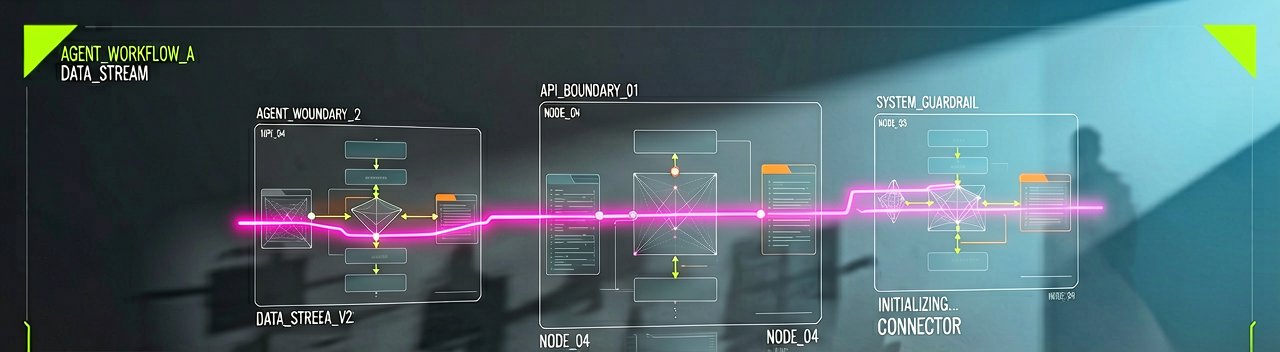
Historically, the evolution of internal developer portals was triggered by the sheer complexity of cloud-native microservices, which overwhelmed human cognitive limits. Early portal iterations focused heavily on cataloging software assets to help developers find information faster. The current transition into an agentic control plane, as highlighted by industry analysts at InfoWorld, flips this dynamic on its head. Portals are no longer passive search directories for humans; they have become the authoritative source of truth and metadata required by AI agents to safely navigate, diagnose, and manipulate live software environments.
This architectural shift is also changing the economic profile of enterprise software automation. Previously, developing custom automation for complex, multi-stage tasks like automated performance tracking or incident response required weeks of dedicated engineering sprints and constant codebase maintenance. The democratization of vibe coding for platform infrastructure means these tools can be spun up, tested, and discarded fluidly based on immediate operational demands. According to data tracked by SD Times, reducing this engineering friction allows teams to reallocate thousands of high-value developer hours back into core product innovation rather than pipeline upkeep.
Ultimately, the long-term viability of this paradigm depends on how effectively these tools can synthesize localized domain expertise. An AI agent is only as competent as the contextual data it can access and interpret. By mapping natural language prompts directly to structured infrastructure schemas, platform teams are successfully translating tribal engineering knowledge into actionable, governed machine intelligence. As enterprise infrastructure grows increasingly complex, the organizations that successfully pair the fluid velocity of vibe coding with the rigid guardrails of platform engineering will redefine operational efficiency across the tech sector.
Reading Between the Lines: The Friction Between Chaos and Control
Reading Between the Lines: The narrative surrounding the democratization of vibe coding presents a seductive reality where complex enterprise automation is conjured instantly from pure intent. However, merging this free-form, prompt-driven paradigm with the rigid discipline of platform engineering introduces an inherent philosophical contradiction. Platform engineering exists fundamentally to enforce predictability, standardize environments, and eliminate variance. Introducing AI agents that generate code based on shifting natural language interpretations threatens to inject a wave of non-deterministic chaos into the very control planes built to suppress it.
While marketing materials celebrate the ability to deploy production-ready agentic systems in mere minutes, experienced systems architects remain deeply skeptical. The core promise of tools like the Port Agentic SDLC Platform relies on a highly manicured context lake and flawless metadata infrastructure. In reality, most enterprise architectures are messy patchworks of legacy technical debt, poorly documented microservices, and fragmented data silos. If an AI builder constructs workflows based on incomplete or out-of-date contextual data, the resulting automation will simply execute flawed logic at an unprecedented, automated scale.
Furthermore, relying on human-in-the-loop review as the ultimate safety net may prove to be an operational illusion. As the volume of AI-generated agentic workflows expands exponentially across an organization, human oversight inevitably bottlenecks or degrades into rubber-stamping. Engineering teams already suffering from alert fatigue cannot realistically audit hundreds of lines of fluidly generated agentic logic before every deployment. Industry reports from InfoWorld emphasize the efficiency gains of these rapid deployments, but they rarely account for the hidden cognitive debt shifted onto the human engineers tasked with debugging autonomous systems when they inevitably fail.
There is also an underlying paradox in how this shift redefines the developer experience. Vibe coding promises to liberate software engineers from syntax and boilerplate configurations, allowing them to focus purely on high-level architecture. Yet, as covered by SD Times, the platform team must now spend an enormous amount of time designing hyper-specific schemas, API boundaries, and safety guardrails just to keep the AI agents from breaking the system. We risk moving from an era where humans maintain code to an era where humans spend all their time maintaining the elaborate scaffolding required to let machines write code safely.
Ultimately, Port's venture into governed vibe coding represents a high-stakes gamble on the maturity of enterprise platform engineering. If platform teams can truly lock down boundaries and provide pristine contextual data, vibe coding could realistically compress months of automation engineering into afternoon tasks. If they fail to maintain that underlying discipline, enterprise automation risks devolving into a black box of autonomous scripts that nobody fully understands but everyone relies on to keep the lights on.
"We are rapidly moving toward a future where a developer can confidently command a fleet of autonomous AI agents to remediate a critical database failure using nothing but a casual paragraph of text—and then spend the next three days trying to figure out which prompt accidentally gave the AI permission to delete the corporate billing registry."
Artūras Malašauskas is an AI Systems Integrator with 20+ years of production-grade web engineering experience. He has designed, shipped, and scaled enterprise Python/PHP systems for logistics, SaaS, and public-sector clients. For the past year, he has focused exclusively on AI integrations: deploying open-source LLMs, building generative media pipelines (image, audio, video), and engineering multi-agent workflows for real production environments. His standard: reproducibility, security, cost-efficient inference—no vaporware. He documents and evaluates emerging AI tooling, separating verified capabilities from marketing noise. Technical editor at: muza-ai.eu, ai-verslas.lt, ai-naujinos.lt Connect on LinkedIn
Comments