Frigade Skills: The Shift to Zero-Code Autonomous AI Agents in Enterprise Software
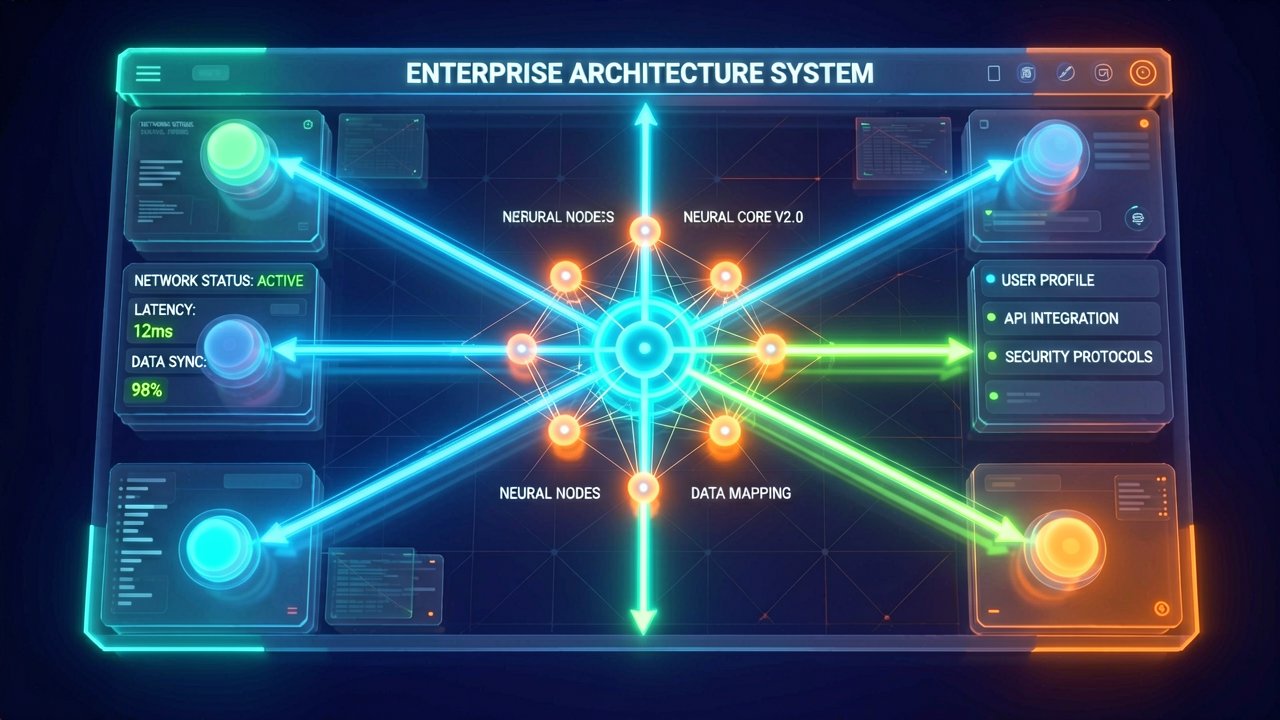
The enterprise software ecosystem is undergoing a fundamental shift from passive, text-based guidance to autonomous task execution. San Francisco-based Frigade has accelerated this transition by launching Skills, a zero-code capability integrated into its flagship platform. This update enables developers to embed fully functional, action-oriented AI assistants into existing applications without writing or maintaining complex integration code, transforming how businesses approach digital adoption and user engagement.
Historically, embedding actionable AI within software required substantial engineering resources to build, map, and continuously maintain custom APIs. According to Eric Brownrout, co-founder and CEO of the company, traditional in-app assistants were heavily restricted because every specific user action demanded an independent development project. As detailed in the official launch announcement on PR Newswire, the new Skills layer removes these technical bottlenecks by allowing the underlying AI assistant to autonomously discover, map, and execute multi-step operations using a product's native user interface and functional architecture.
This rollout directly challenges traditional Digital Adoption Platforms (DAPs) like Pendo by introducing a self-learning paradigm. Rather than forcing teams to manually build rigid onboarding sequences, product tours, or static help triggers, the platform automatically trains itself by interacting with the target software. This structural flexibility allows the AI agent to dynamically adapt when application layouts or core codebases change, drastically lowering the long-term total cost of ownership for engineering and product management teams.
Strategic Market Implications for the B2B SaaS Ecosystem
The introduction of zero-code execution capabilities highlights a broader commoditization of agentic workflows across the software industry. By offering out-of-the-box infrastructure backed by prominent investors like Y Combinator and Craft Ventures, the company is democratizing access to native, natural-language automation that was previously restricted to tech giants with dedicated machine learning infrastructure. For businesses, this translates to immediate workflow automation where end-users can request complex tasks—such as generating, formatting, and preparing a weekly data report—in plain language and have it executed natively inside the application interface.

Disrupting Traditional Customer Onboarding and Retention
From an product-led growth perspective, autonomous agent integration represents a major evolution beyond standard interactive walkthroughs and checklists. By processing real-time user context and software state changes simultaneously, the AI assistant actively lowers the time-to-value metric for new enterprise clients. This shift from conversational text responses to real-time, automated backend actions creates a more sticky product experience, effectively turning standard user interfaces into dynamic, intent-driven application layers.
Deep-Dive: The Realities Behind the Zero-Code Agentic Push
Beyond the Marketing Pitch: The promise of zero-code autonomous agents signals a deeper structural conflict inside enterprise engineering teams. While product managers welcome the ability to deploy AI assistants without tapping into engineering backlogs, senior developers remain skeptical of any "no-code" tool operating inside complex application architectures. Building a platform like Frigade Skills means resolving the fundamental friction between technical control and operational speed, particularly when an AI agent is granted permission to execute state-changing actions on behalf of a user.
Early enterprise adoption data reveals that the primary bottleneck for autonomous software agents is no longer natural language processing, but rather interface predictability. When a software update alters a native UI component or renames a key API endpoint, traditional automation scripts break instantly. By shifting to a self-learning paradigm that dynamically maps product layouts, the underlying architecture tries to abstract away this maintenance burden, yet enterprise security teams frequently demand rigid permission boundaries to prevent AI agents from accidentally triggering unauthorized data mutations or financial transactions.
Industry analysts point out that this evolution mirrors the early days of robotic process automation (RPA), which suffered from high fragility and steep maintenance costs. The modern wave of agentic software avoids these pitfalls by integrating directly into the application's document object model and state management layer rather than relying on brittle visual screen scraping. This structural proximity allows the AI to interpret user intent with higher contextual accuracy, shifting the assistant from a glorified search bar into a true co-pilot capable of stitching together multi-step administrative workflows.
From a competitive standpoint, the democratization of native AI agents erodes the traditional moats held by legacy digital adoption platforms. Companies that previously built massive businesses around building manual overlay tours and static tooltips are forcing a pivot toward generative capabilities to remain relevant. As enterprise software buyers increasingly demand intent-driven interfaces where users simply state their goals, software vendors who fail to embed autonomous execution directly into their products risk losing market share to younger, AI-native competitors.
An Analytical Reality Check on the Agentic Transition
Reading Between the Lines: The corporate enthusiasm surrounding zero-code AI agents overlooks a glaring operational paradox. Software vendors are eager to market autonomous assistants that execute complex user tasks with zero engineering oversight, yet this very autonomy strips away the predictable boundaries that enterprise compliance frameworks rely upon. In the rush to eliminate coding barriers, organizations risk trading manageable development backlogs for unpredictable, non-deterministic system behaviors that are significantly harder to audit and debug.
The core promise of these platforms hinges on their ability to self-learn and autonomously map changing product architectures. However, this assumption glosses over the chaotic reality of enterprise SaaS deployments, where custom configurations, localized user permissions, and erratic network latencies are the norm. When an AI agent misinterprets a dynamically loaded user interface component, the resulting failure is rarely clean; instead, it can lead to silent errors, such as corrupted user data or incorrectly submitted forms, creating an entirely new category of technical debt for engineering teams to untangle.
Furthermore, the claim that these solutions require "zero code" introduces a subtle shift in labor rather than its complete elimination. While product managers may not write JavaScript or Python to deploy an agent, they must spend hours crafting, testing, and refining natural-language prompts and guardrails to ensure the assistant behaves predictably. This transition transforms product teams into de facto prompt engineers, shifting the bottleneck from syntax-heavy coding to the equally tedious task of semantic debugging and edge-case validation.
Ultimately, the true test for action-oriented AI layers lies in their long-term economic viability within a crowded B2B marketplace. If embedding autonomous capabilities becomes as simple as clicking a button, the feature itself ceases to be a competitive advantage and instead becomes a baseline commodity. The vendor differentiation will inevitably pivot away from how easily an agent can be deployed, moving instead toward how robustly that agent handles unexpected software failures and unauthorized user actions in high-stakes enterprise environments.
"We are rapidly approaching an era where software will write itself, deploy itself, and fix itself, leaving humans with the sole responsibility of explaining to the board of directors why the AI assistant accidentally deleted the entire Q3 sales pipeline while trying to generate a summary spreadsheet."
Artūras Malašauskas is an AI Systems Integrator with 20+ years of production-grade web engineering experience. He has designed, shipped, and scaled enterprise Python/PHP systems for logistics, SaaS, and public-sector clients. For the past year, he has focused exclusively on AI integrations: deploying open-source LLMs, building generative media pipelines (image, audio, video), and engineering multi-agent workflows for real production environments. His standard: reproducibility, security, cost-efficient inference—no vaporware. He documents and evaluates emerging AI tooling, separating verified capabilities from marketing noise. Technical editor at: muza-ai.eu, ai-verslas.lt, ai-naujinos.lt Connect on LinkedIn
Comments