Luxonis Secures \$14M Series A to Standardize the Perception Layer for Physical AI
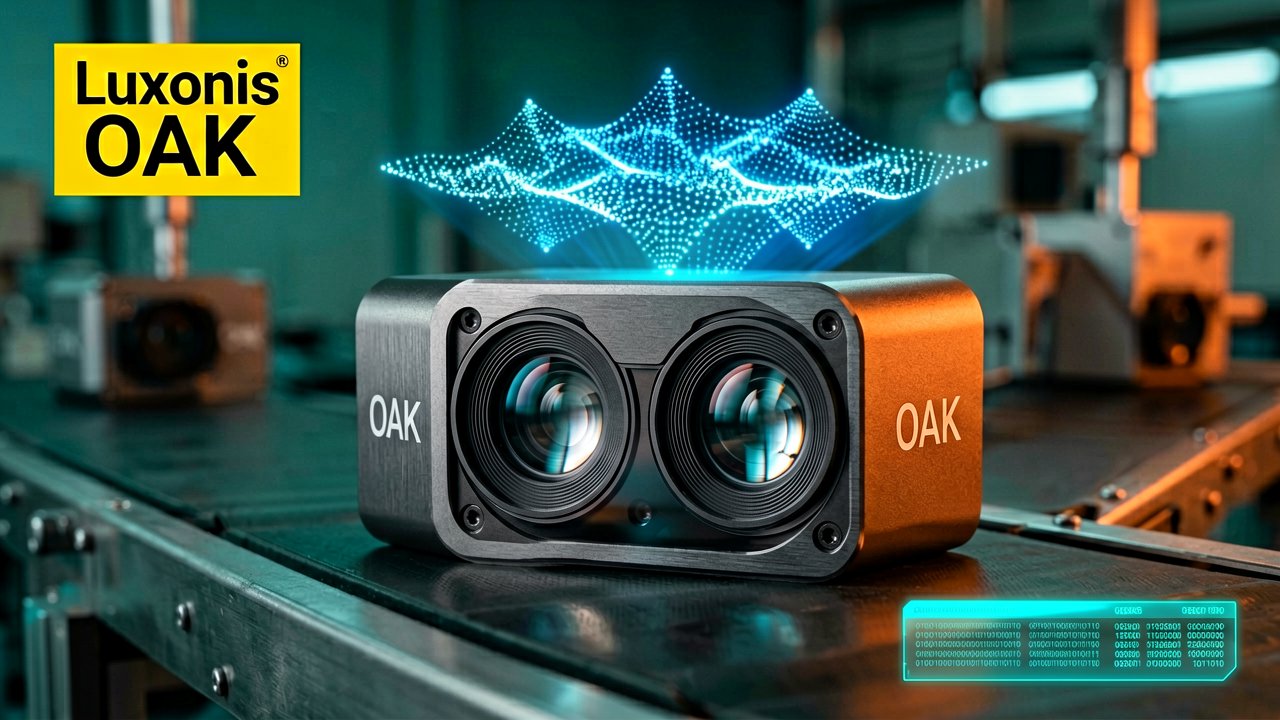
Luxonis has closed a \$14 million Series A funding round led by Denali Growth Partners to scale production of its spatial AI and computer vision OAK camera platform, expanding its role in the physical AI infrastructure market. The investment, which also includes participation from Taiwania Capital, marks the company's first institutional financing round after operating since 2019 with personal backing. The capital injection will accelerate the commercial deployment of the company's OAK4 cloud perception ecosystem and deepen integration across industries like defense, agriculture, medtech, and industrial automation.
According to the official announcement published by Business Wire, the company's open-source DepthAI SDK has already surpassed 6 million downloads. Luxonis's platform serves thousands of clients globally, including more than 60 Fortune 500 companies, by consolidating stereo depth, AI inference, and video encoding entirely on-device. This unified, self-contained hardware and software infrastructure directly targets the complexities of deploying autonomous machinery outside rigidly controlled factory settings.
Market Impact and Edge Perception Shifts
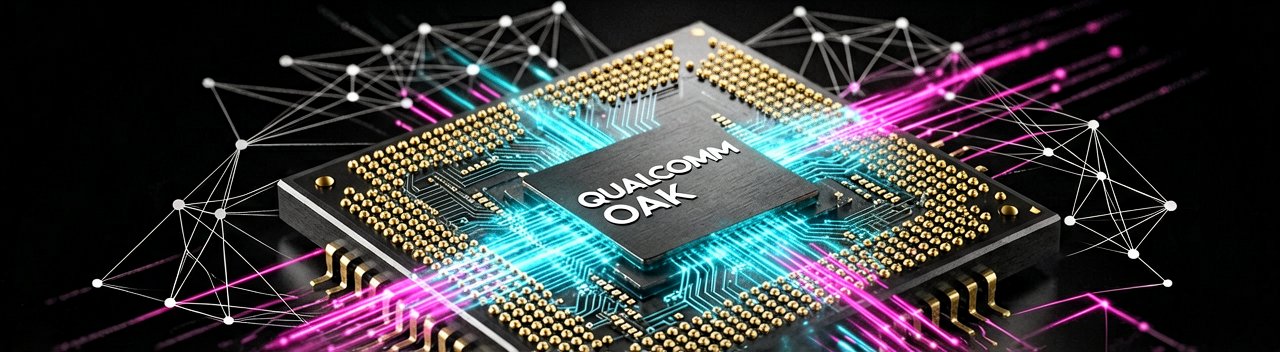
The market for physical AI is experiencing a profound transition away from high-latency, cloud-dependent intelligence toward robust edge processing. As detailed by sector trackers at TamRadar, standard industrial vision frameworks historically relied on external host PCs or remote server clusters, introducing strict latency bottlenecks and heavy bandwidth overhead. Luxonis bypasses these limitations by deploying self-contained Linux-capable systems equipped with up to 52 TOPS of on-device compute via Qualcomm processors, satisfying the strict real-time decision-making criteria of next-generation robotics.
This funding round mirrors a broader strategic consolidation and capital influx within the robotic sensing landscape, closely following multi-million dollar spinouts and acquisitions among computer vision hardware providers over the past year. By backing Luxonis, institutional investors are validating the thesis that fully integrated, on-device spatial perception will become the universal infrastructure layer required for autonomous systems to safely navigate the unpredictability of the physical world.
What Most Reports Miss: The Architectural Shift in Robotic Autonomy
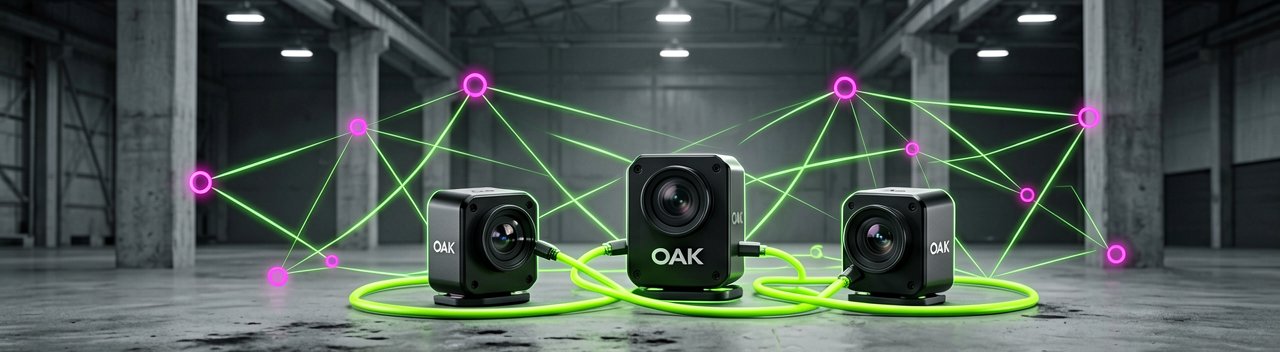
While high-profile generative AI models dominate public discourse, the physical AI sector faces a far more pragmatic bottleneck: the absolute reliability of incoming environmental data. Historically, deploying autonomous machines outside pristine warehouse floors meant grappling with a fragile assembly of separate cameras, specialized depth sensors, and external host computers. Luxonis has quietly targeted this fragmentation by embedding stereo depth, object tracking, and heavy AI inference directly onto a single microchip. This architectural consolidation bypasses the severe latency and bandwidth bottlenecks that often cause un-integrated robotic systems to freeze or fail when encountering real-world unpredictability.
The involvement of Taiwania Capital in this Series A funding round underscores a critical geopolitical and supply chain strategy that standard financial summaries overlook. Securing institutional capital from a firm deeply rooted in East Asian semiconductor ecosystem networks provides Luxonis with more than just a financial runway. It establishes a resilient manufacturing corridor capable of scaling hardware production even as global chip supply chains face continuous regulatory and logistical strains. For an automation market eager to move from pilot programs to fleet-scale deployments, guaranteed hardware availability is just as vital as software sophistication.
From an operational standpoint, the milestone of six million software development kit downloads reflects an intentional, developer-first philosophy that contrasts sharply with the proprietary models of traditional industrial automation giants. By lowering the barrier to entry with open-source infrastructure, the platform has cultivated an organic developer base across diverse sectors, including precision agriculture, medical robotics, and defense. This sprawling open-source ecosystem acts as a massive feedback loop, accelerating edge-case discovery and software refinement at a pace that closed internal engineering teams simply cannot replicate.
Ultimately, this capital influx signals a maturation phase for the broader robotics market, shifting investment priorities from experimental mobility to foundational infrastructure. As autonomous systems are increasingly tasked with navigating complex human environments, the demand for affordable, plug-and-play spatial awareness has escalated from a luxury to an absolute regulatory and operational requirement. The true value of this funding lies not in the valuation milestone itself, but in its potential to establish a standardized perception layer, turning fragmented machine vision into a ubiquitous utility.
Reading Between the Lines: The Friction of Real-World Deployment
The prevailing narrative surrounding this capital injection presumes that standardizing hardware will seamlessly unlock the bottlenecks of physical AI, yet this optimism overlooks a fundamental contradiction in edge-computing economics. Processing heavy computer vision models on low-power silicon at the edge introduces harsh thermal and thermodynamic trade-offs. While delivering 52 TOPS of compute on-device eliminates the latency of cloud communication, it simultaneously imposes rigid limitations on the complexity of the neural networks a compact robot can physically run without overheating or rapidly draining its battery reserves.
Furthermore, the reliance on an open-source development model introduces an operational paradox for enterprise-level scaling. While six million SDK downloads demonstrate exceptional grassroots adoption among developers and researchers, translating developer experimentation into standardized industrial deployment is notoriously difficult. Large corporate clients frequently demand bespoke, highly closed security architectures that directly clash with the iterative, open ecosystem that fueled Luxonis’s early software growth, forcing a delicate balancing act between open-source community loyalty and enterprise monetization.
There is also an inherent risk in tying the future of physical AI infrastructure to highly specific semiconductor partnerships. As autonomous vision systems embed deeper into defense and critical supply chains, the underlying hardware becomes a target for shifting trade regulations and global component hoarding. A standardized perception layer is only as reliable as the stability of the global foundries pressing its silicon, meaning that a single geopolitical disruption in East Asian manufacturing could stall the rollout of these physical AI systems regardless of how much capital sits in the bank.
Looking ahead, the success of this infrastructure play will not be measured by the sophistication of its cameras, but by how effectively it navigates the messy regulatory landscape governing public autonomous systems. Navigating the legal liabilities of an AI system misinterpreting an object in an uncontrolled human environment remains a massive gray area. Hardware can provide the most precise spatial coordinates in the world, but until the industry establishes clear framework liabilities for edge-calculated failures, commercial scaling will remain restricted by legal caution rather than technological capability.
Building an AI that can pass the bar exam turns out to be significantly easier than building a robotic delivery cart that doesn't mistake a wet puddle for a concrete wall or accidentally drive itself into a decorative fountain. It seems that teaching machines to think like humans is merely a prelude to the much harder task of teaching them how not to trip over their own feet in public.
Artūras Malašauskas is an AI Systems Integrator with 20+ years of production-grade web engineering experience. He has designed, shipped, and scaled enterprise Python/PHP systems for logistics, SaaS, and public-sector clients. For the past year, he has focused exclusively on AI integrations: deploying open-source LLMs, building generative media pipelines (image, audio, video), and engineering multi-agent workflows for real production environments. His standard: reproducibility, security, cost-efficient inference—no vaporware. He documents and evaluates emerging AI tooling, separating verified capabilities from marketing noise. Technical editor at: muza-ai.eu, ai-verslas.lt, ai-naujinos.lt Connect on LinkedIn
Comments