OpenAI's Hardware Shift: How the New Device Redefines AI's Role in Consumer Tech
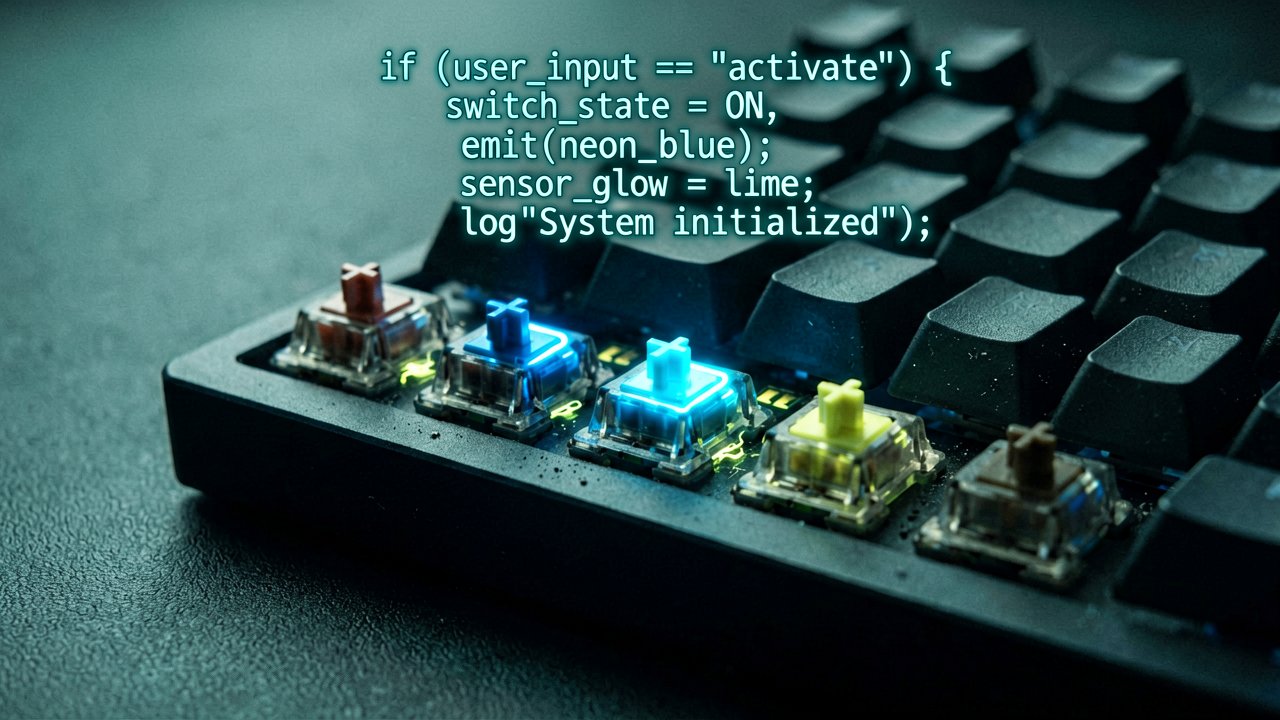
OpenAI is subverting industry expectations by pivoting its near-term hardware strategy away from the highly anticipated, multi-billion-dollar consumer wearable designed by Jony Ive. Instead, the company is preparing to launch a specialized peripheral known as the Codex Micro on July 15, 2026. According to a report by The Verge , this mechanical macro pad is built in partnership with boutique hardware manufacturer Work Louder, moving OpenAI into physical distribution via targeted developer tools rather than a mass-market smartphone alternative.
This tactical maneuver reflects a calculated approach to testing supply chains and community responses before initiating a full-scale consumer hardware ecosystem. Rather than absorbing the high capital expenditure and manufacturing risks of launching a standalone consumer computing platform from scratch, OpenAI is targeting its most loyal user base: the software engineering ecosystem. Data published by TechTimes highlights that OpenAI’s Codex platform has surged to over 5 million weekly active users, offering an immediate, high-intent target market for physical integration.
By shifting focus to workflow automation peripherals, the company establishes a hardware footprint that bypasses traditional mobile app store bottlenecks. Analysts view this device as an experimental mechanism to anchor developers into OpenAI's native terminal applications and cloud sandboxes. The rollout serves as a practical foundation for the company's grander physical computing roadmap while generating high-margin ecosystem revenue from specialized hardware configurations.
Bypassing the Gatekeepers: The Platform Play
The strategic imperative behind OpenAI's hardware expansion is the evasion of mobile operating system constraints enforced by incumbent tech giants. Currently, OpenAI relies heavily on distribution models controlled by Apple and Google, exposing its ecosystem to platform fees and API usage regulations. Developing custom physical interfaces allows OpenAI to construct direct-to-consumer conduits that secure user retention independently of third-party mobile frameworks.
Developer-First Hardware Execution
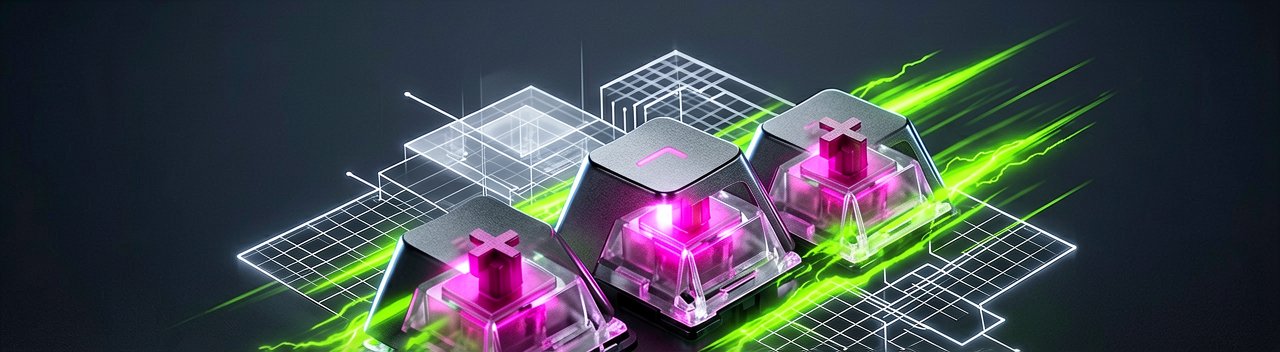
As documented by MLQ, the Codex Micro leverages the functional anatomy of Work Louder’s Creator Micro 2, integrating 13 mechanical switches, a joystick, and a touch sensor to streamline intricate coding workflows. This form factor transitions AI interactions from text-prompt engineering to tactile macro shortcuts. This product architecture shifts AI utility away from a novelty consumer chatbot toward an integrated, physical component of professional productivity setups.
Market Outlook and Enterprise Implications
While the Codex Micro represents an entry-level trial in peripheral manufacturing, it functions alongside OpenAI's long-term consumer ambitions. Industry details compiled by Firstpost indicate that the broader, screenless consumer device being engineered alongside LoveFrom is still slated for a subsequent launch cycle. Consequently, the Codex Micro establishes immediate logistics pipelines, proving that OpenAI intends to compete across the entire technology stack, spanning silicon architecture, cloud software, and physical consumer tech.
The Hidden Architecture of OpenAI’s Physical Computing Pivot
Beyond the Immediate Logistics: The rollout of the Codex Micro represents a profound philosophical shift in how artificial intelligence interfaces with human motor skills. For years, the tech industry assumed the ultimate manifestation of consumer AI would be an ethereal, voice-activated companion or a screenless wearable that operates entirely in the background. However, early market feedback from devices like the Humane AI Pin and the Rabbit R1 demonstrated that removing tactile feedback entirely often alienates users and increases cognitive friction. By anchoring its initial hardware footprint in a premium mechanical macro pad, OpenAI is acknowledging that complex productivity still requires physical, high-frequency human inputs that voice and gesture controls cannot yet replicate.
Internal tensions within OpenAI have long centered on how to scale consumer adoption without becoming entirely dependent on Apple’s App Store or Google’s Android ecosystem. Historically, platform shifts require a hardware anchor; Microsoft solidified its operating system dominance via the PC market, while Google secured its ad network through Android. Analysts monitoring OpenAI's corporate maneuvers suggest that the partnership with Work Louder is a low-risk reconnaissance mission into the consumer electronics supply chain. It allows OpenAI’s hardware division to establish relationship pipelines with components manufacturers, testing international customs, firmware deployment, and quality assurance protocols without risking the catastrophic financial exposure of a failed mass-market smartphone alternative.

From an enterprise perspective, this developer-centric strategy acts as a critical moat against competing large language models. While rivals like Anthropic focus strictly on the software layer, OpenAI is intertwining its API directly into the physical desktops of software engineers, data scientists, and creative professionals. When an engineer maps a complex multi-step debugging routine to a physical switch on their desk, switching to an alternative AI provider becomes a matter of rebuilding both digital and physical workflows. This creates a unique form of consumer stickiness that traditional software-as-a-service models cannot achieve, effectively turning hardware into a customer retention mechanism.
This developer tool also serves as a strategic testing ground for the broader, highly secretive consumer device being co-developed with Jony Ive's LoveFrom design firm. Operating a hardware division requires distinct institutional knowledge, ranging from managing lithium-ion battery lifespans to handling physical returns and warranties. By launching a niche product with a built-in, highly forgiving enthusiast audience, OpenAI can iron out the inevitable friction points of physical distribution. The telemetry data gathered from how users interact with tactile macro shortcuts will directly inform the user interface of the upcoming mass-market consumer device, proving that OpenAI views the desk peripheral not as a permanent destination, but as a necessary stepping stone toward total ecosystem integration.
The Friction Between AI Ubiquity and Mechanical Micro-Niches
Reading Between the Lines: OpenAI’s foray into boutique mechanical hardware exposes a glaring contradiction between its grand corporate mission and its immediate operational execution. The company frequently positions itself as the architect of Artificial General Intelligence—a boundless, omnipresent software layer designed to reshape global civilization. Yet, its first tangible product manifestation is an ultra-niche desktop accessory tailored to an elite subset of computer programmers who harbor a specific affinity for tactile key switches. This transition from theoretical world-altering software to selling premium physical buttons suggests a sudden collision with the hard realities of productization, forcing an ideological retreat into safe, tech-enthusiast subcultures.
This hardware strategy highlights a severe platform anxiety that OpenAI cannot easily code its way out of. Silicon Valley has watched with measured skepticism as the company attempts to bypass traditional mobile gatekeepers. The fundamental flaw in this approach is the assumption that users want an entirely separate physical device to manage utilities that could easily exist as keyboard shortcuts or system-level software integrations. By forcing its AI ecosystem into a standalone macro pad, OpenAI risks creating a solution in search of a problem, gambling that consumer behavior will adapt to discrete hardware interfaces rather than demanding that AI seamlessly blend into the operating systems they already own.
Furthermore, the long-term scalability of this strategy remains highly suspect under rigorous market scrutiny. Boutique hardware partnerships are notorious for their low margins, complex supply chain bottlenecks, and limited audience caps. While a developer-first peripheral generates temporary goodwill among early adopters, it does practically nothing to solve OpenAI’s pressing need for mass-market consumer data or diversified revenue streams to offset its monumental compute costs. The choice to launch a macro pad looks less like a visionary step toward a post-smartphone era and more like a defensive, transitional compromise while the company scrambles to figure out what an actual consumer AI device is supposed to do.
Ultimately, this pivot sets a precarious precedent for the upcoming, highly anticipated collaboration with LoveFrom. If a hyper-focused developer tool requires this much logistical pivoting and ecosystem insulation, a mass-market consumer device will face an exponentially steeper uphill battle against established titans like Apple and Google. OpenAI is learning that while software can be iterated globally in seconds, physical atoms demand a slow, unforgiving infrastructure that does not adhere to the laws of exponential scaling. The Codex Micro may prove to be an instructive experiment, but it underscores the uncomfortable truth that conquering the physical world is far more difficult than mastering the virtual one.
"In its quest to deliver a world-changing digital intelligence that transcends human capability, OpenAI has successfully engineered a device that lets you copy, paste, and debug code slightly faster, proving that even the most advanced alien mind must eventually bow down to the supremacy of a really satisfying plastic click."
Artūras Malašauskas is an AI Systems Integrator with 20+ years of production-grade web engineering experience. He has designed, shipped, and scaled enterprise Python/PHP systems for logistics, SaaS, and public-sector clients. For the past year, he has focused exclusively on AI integrations: deploying open-source LLMs, building generative media pipelines (image, audio, video), and engineering multi-agent workflows for real production environments. His standard: reproducibility, security, cost-efficient inference—no vaporware. He documents and evaluates emerging AI tooling, separating verified capabilities from marketing noise. Technical editor at: muza-ai.eu, ai-verslas.lt, ai-naujinos.lt Connect on LinkedIn
Comments