How Reliance Global Group is Rewriting the Rules of Compliance with Automated Insurance Agents

Insurtech pioneer Reliance Global Group has introduced a specialized artificial intelligence agent designed to automate complex, browser-based tasks within highly regulated insurance back offices. Operating under stringent compliance frameworks such as the Gramm-Leach-Bliley Act (GLBA), NAIC Model 668, and NY DFS 500, the system targets repetitive portal activities including endorsements, quote retrievals, and document downloads. This strategic deployment marks a significant shift from traditional robotic process automation (RPA) toward highly adaptive, context-aware digital workers capable of navigating legacy web systems natively.
The operational landscape for insurance intermediaries has long been bottlenecked by manual data entry across disparate carrier platforms. By deploying this autonomous layer across its expanding agency network, Reliance Global Group aims to absorb thousands of resource-heavy workflow hours without a linear scaling of human headcount. According to industry analysis by Coverager, this operational framework allows the firm to integrate newly acquired independent agencies rapidly, maintaining strict back-office continuity while optimizing overall margin efficiency.
The Architecture of Guardrailed Automation
Unlike standard autonomous agents that present deterministic execution risks, Reliance's platform enforces a strict boundary between analytical capability and execution authorization. The software utilizes hardcoded policy-enforced action controls that entirely block irreversible tasks such as submitting, issuing, or binding coverage. By restricting these functionalities exclusively to licensed human professionals, the system establishes a definitive barrier against hallucination-driven liabilities or unauthorized binding of policy risks.
Proactive Risk Mitigation and Auditing
Compliance integration within the agent relies on an isolated execution layer and a structured human-in-the-loop review architecture. Every completed administrative task is routed to a save-and-park interface, preventing any data submission before a formal employee sign-off occurs. Crucially, the platform evaluates its own performance by cross-referencing system run records, execution logs, and live screenshots rather than relying on self-reported agent data. This independent validation process flags variances, such as unexpected pricing swings or carrier premium mismatches, before final transaction clearance.

Securing Sensitive Portal Ecosystems
Data exposure remains a key vector of vulnerability when utilizing large language models within enterprise infrastructure. Reliance circumvents this obstacle by deploying an abstracted credential management system where carrier login protocols are processed at runtime and never exposed directly to the underlying neural network. Consequently, credential details remain scrubbed from system activity reports and logs. This architecture satisfies enterprise security mandates while allowing the system to scale fluidly from basic team configurations up to dedicated Virtual Private Cloud (VPC) deployments.
Strategic Modernization of the Underwriting Core
Behind the Scenes: The introduction of this autonomous layer marks a turning point for an industry traditionally weighed down by fragmentation. For decades, independent agencies have faced the burden of manually entering identical data fields across dozens of distinct, proprietary carrier portals. While first-generation robotic process automation attempted to alleviate this stress, it frequently failed when faced with minor user interface updates or altered website layouts. This new deployment by Reliance Global Group moves past brittle screen-scraping techniques, relying instead on contextual computer vision and adaptive reasoning to handle the volatile front-end environments of modern web portals.
From an operational standpoint, this technology changes how leadership views firm scalability and organic growth. Historically, scaling an independent agency required a direct, linear increase in administrative staff to handle the corresponding wave of endorsements, renewals, and policy service requests. By delegating these repetitive, multi-step portal workflows to digital agents, the firm can decouple premium volume growth from back-office operational expenses. This shifts the primary function of human account managers away from data entry and toward high-touch client advisory roles, maximizing the long-term enterprise value of each account.
The regulatory architecture of this system reflects a deliberate effort to address systemic blind spots in financial technology compliance. Insurance back offices operate under a complex web of state and federal guidelines that demand strict data governance and non-repudiation. By embedding hardcoded limits directly into the software runtime, the platform removes the risk of autonomous compliance drift. The absolute prohibition on binding coverage or submitting final premium payments prevents the AI from inadvertently creating legally binding contracts or financial liabilities without explicit human intervention.
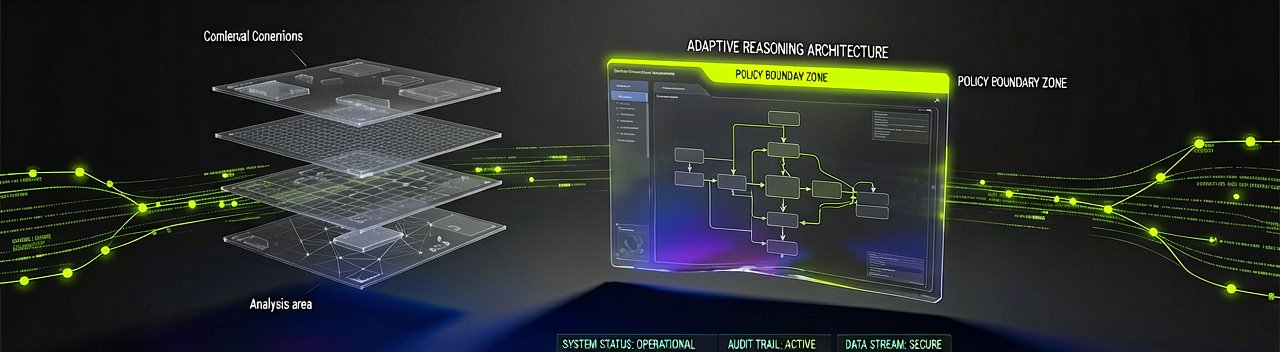
Furthermore, the structural design of the platform solves a persistent security dilemma regarding the handling of sensitive customer information. Standard large language models routinely require massive text inputs, which raises concerns about data leaks and compliance violations under modern privacy laws. By routing carrier credentials through an abstracted security layer and thoroughly scrubbing transaction logs, Reliance isolates critical login data from the generative processing environment. This dual-layer approach provides a highly auditable trail for regulators while maintaining the speed and adaptability of modern AI systems.
The Friction of Autonomous Frictionlessness
Reading Between the Lines: While the narrative surrounding automated insurance agents promises an era of seamless, touchless back-office operations, it glosses over an inherent structural contradiction. Software platforms designed to crawl and input data natively into third-party web portals are fundamentally parasitizing infrastructure they do not own. Carrier web portals are deliberately engineered with security gates, captchas, and proprietary firewalls to restrict unauthorized automated traffic and protect proprietary pricing algorithms. Reliance Global Group’s approach relies on the assumption that major carriers will continue to tolerate automated browser agents operating at scale within their networks without altering their defensive architecture to shut them out.
Furthermore, the reliance on a "save-and-park" mechanism exposes a deeper bottleneck in the human-in-the-loop paradigm. Tech developers frequently champion this model as an absolute compliance safeguard, yet it ignores the realities of workplace psychology and cognitive fatigue. When human account managers are reduced to rubber-stamping hundreds of pre-filled screens and automated logs per day, the process changes from true human oversight to passive validation. The risk shifts from software hallucination to human complacency, where critical data variances or minor carrier premium discrepancies are missed simply because the reviewer has been lulled into a false sense of security by the system’s historical accuracy.
The broader financial implications also challenge the premise that automated agents will permanently lower operating costs. True, the immediate reduction in manual labor hours offers an attractive spike in short-term agency margins. However, maintaining adaptive AI infrastructure across hundreds of shifting carrier interfaces requires constant, highly specialized developer oversight. As carriers inevitably update their portals, tweak UI elements, or modify submission fields, these autonomous agents will require continuous fine-tuning and debugging. This effectively swaps a predictable, linear administrative headcount expense for an unpredictable, non-linear tech support liability, potentially flattening the anticipated cost savings over a multi-year horizon.
The supreme irony of modern insurtech is that we have successfully spent millions of dollars building hyper-advanced, context-aware digital minds, all so human beings no longer have to endure the agonizing task of navigating other people's poorly designed websites.
Artūras Malašauskas is an AI Systems Integrator with 20+ years of production-grade web engineering experience. He has designed, shipped, and scaled enterprise Python/PHP systems for logistics, SaaS, and public-sector clients. For the past year, he has focused exclusively on AI integrations: deploying open-source LLMs, building generative media pipelines (image, audio, video), and engineering multi-agent workflows for real production environments. His standard: reproducibility, security, cost-efficient inference—no vaporware. He documents and evaluates emerging AI tooling, separating verified capabilities from marketing noise. Technical editor at: muza-ai.eu, ai-verslas.lt, ai-naujinos.lt Connect on LinkedIn
Comments