Omneky Opens Up Its Creative Engine: Public API and MCP Server Land for AI Agents
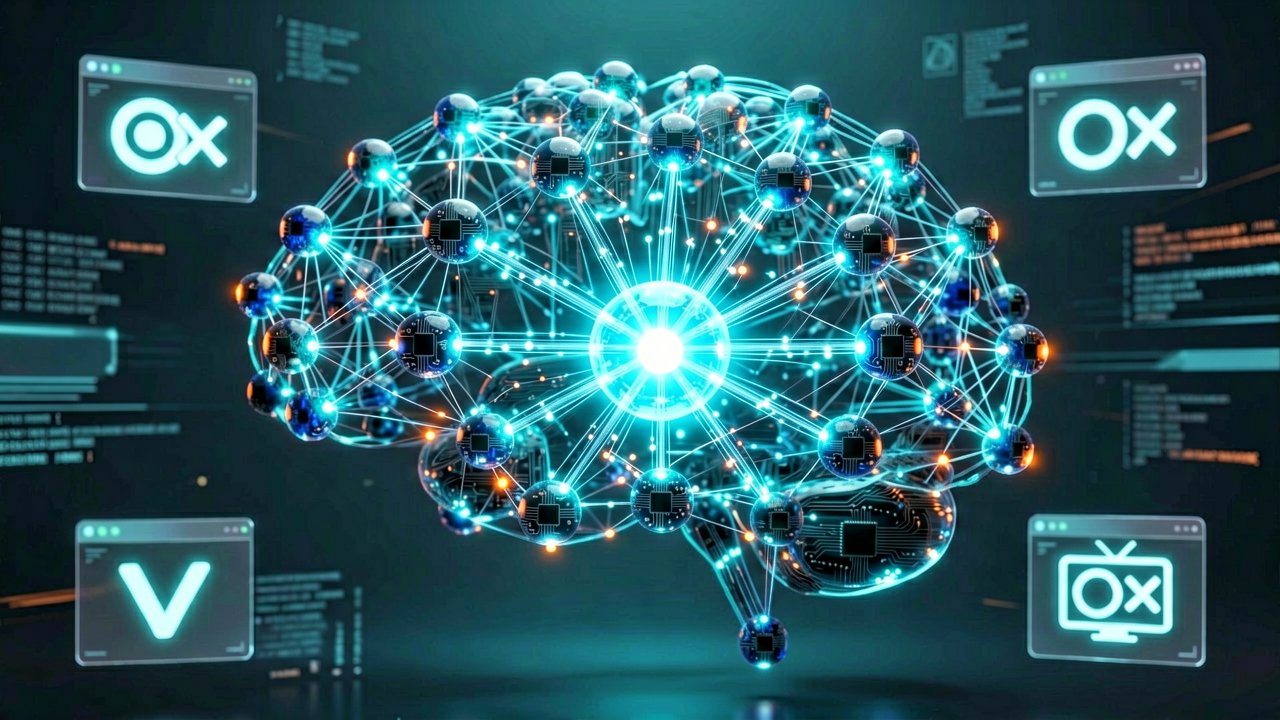
For a while now, autonomous AI agents have been fantastic at writing code, drafting emails, and sorting through massive spreadsheets. Yet, when it comes to churning out production-ready, on-brand advertising creative, things usually fall apart, leaving developers to stitch together messy generative design pipelines that require human babysitting. San Francisco-based autonomous advertising platform Omneky completely upended that workflow on July 10, 2026, by launching its public developer API and a dedicated Model Context Protocol (MCP) server. The expansion shifts the generative advertising bottleneck from constant manual polishing to high-level strategic decision-making.
The strategic release essentially turns Omneky’s proprietary ad generation infrastructure into a plug-and-play developer primitive. By pairing a standard public API with an MCP server, third-party software applications and autonomous AI agents can natively connect to the platform to generate multi-format, compliant creative assets on the fly. Founder and CEO Hikari Senju emphasized that while the new API transforms their creative engine into a flexible foundation for any external platform, the specialized MCP architecture makes ad generation entirely native to autonomous agents themselves. The system bridges the gap between text-based reasoning and complex multi-platform asset creation.
USB-C for the Generative Ad Stack
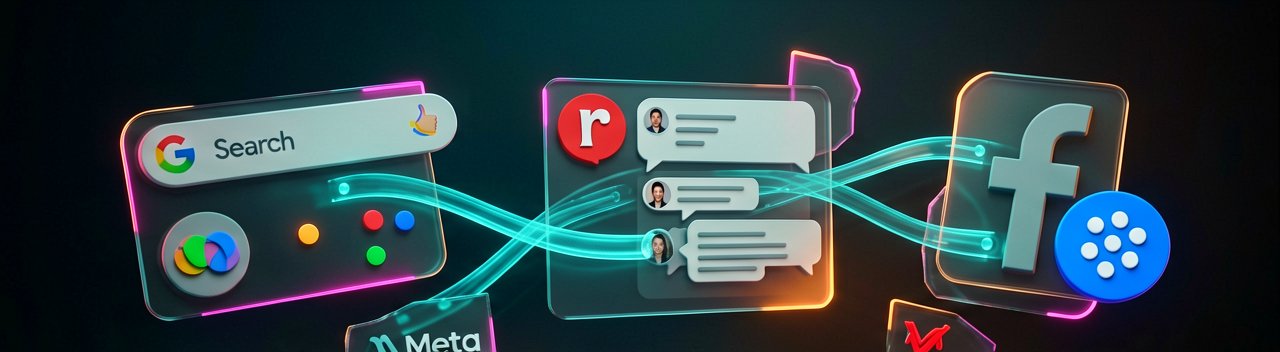
Integrating an open standard like the Model Context Protocol, originally developed by Anthropic, acts as a universal adapter for modern LLM applications. Because large language models natively understand the protocol, developers can immediately wire Omneky's specialized tools into existing agentic frameworks, including Anthropic's Claude. A user could simply instruct their digital assistant to spin up a fresh set of acquisition ads for a newly launched product page. From there, the agent autonomously pokes the Omneky server, pulls the necessary brand rules, and builds multi-platform ad variations tailored for channels like Meta, Google, LinkedIn, TikTok, and Reddit.
This development is tailored to target digital commerce suites wanting to embed white-label creative studios directly into their storefront platforms. Marketing agencies can tie Omneky’s toolsets directly into their existing internal asset managers, while standalone software developers can add native marketing capabilities to general-purpose business assistants. Complete technical details and endpoints are already available on the official PR Newswire documentation portal, providing immediate access to teams looking to replace manual design steps with programmatic creative generation.
Behind the Scenes: The Agentic Push for Programmatic Advertising
What Most Reports Miss about Omneky's latest infrastructure play is the deeper shifts happening across the enterprise software landscape. For years, the programmatic advertising space relied on rigid, static workflows where humans configured the rules and AI merely optimized the bid prices. By exposing its creative core via a public API and an MCP server, Omneky is betting on a world where the software itself determines what the ad should look like, when it should change, and how it aligns with localized cultural shifts. It is an intentional move to move away from isolated SaaS dashboards and head toward integrated agentic ecosystems where different specialized tools communicate fluidly without a human mediator clicking buttons.
The technical implementation of the Model Context Protocol is where the strategy gets interesting. While standard REST APIs are great for deterministic data fetching, they require developers to hardcode specific parameters into an application's backend. In contrast, an MCP server essentially hands an LLM agent a dynamic toolbox. When an AI agent encounters a marketing bottleneck, it can autonomously inspect the Omneky server, read the available capabilities, and generate the exact parameters needed to run a personalized campaign. This fluidity removes the brittle integration layers that usually plague enterprise software deployments, allowing tools to work together dynamically based on the goals assigned by the user.
Industry insiders view this development as a direct response to the rising costs of localized digital marketing. As privacy regulations tighten and traditional tracking cookies fade away, brands are forced to rely heavily on creative diversification to capture consumer attention. Managing thousands of bespoke visual assets across half a dozen distinct platforms like TikTok, Meta, and Google is historically labor-intensive. By opening up their proprietary design engine, Omneky allows external developer platforms to build automated feedback loops where an analytics agent can spot a dipping conversion rate and immediately trigger the creative agent to cook up a fresh batch of compliant variations.
This open architectural approach reflects a broader trend among modern AI startups aiming to anchor themselves as foundational infrastructure before legacy tech giants crowd the space. Rather than locking users inside a closed ecosystem, offering early public endpoints attracts a diverse developer community that builds unexpected use cases, effectively crowdsourcing the platform's long-term utility. As autonomous agents move from a novelty to standard operational infrastructure, the software platforms providing the most seamless, standardized integration points are the ones poised to dictate how business gets automated on the modern web.
Reading Between the Lines: The Friction in Seamless Automation
The Catch in This Agentic Utopia lies in the messy reality of brand safety and platform compliance. While the promise of an autonomous AI agent spinning up ad variations and deploying them directly to Meta or TikTok sounds incredibly efficient, it introduces a terrifying lack of oversight for enterprise legal teams. Generative AI models are notoriously prone to subtle hallucinations or drifting outside established brand guidelines. Handing a third-party application the keys to generate and publish multi-format creative assets programmatically requires a level of trust that most fortune 500 companies are simply not ready to give to an unmonitored algorithm.
Furthermore, standardizing on Anthropic’s Model Context Protocol is an ambitious bet on an open ecosystem, but it also ties Omneky's developer adoption to the broader success of the protocol itself. If the industry fractures into competing agentic communication frameworks—with OpenAI or Google pushing their own proprietary data-sharing architectures—developers may find themselves managing yet another layer of translation middleware. The open standard ideal is highly appealing on paper, but history shows that tech giants often prefer to build walled gardens rather than playing nicely with open-source universal adapters.
There is also the unresolved question of creative exhaustion. If every marketing platform and enterprise suite uses the same underlying generative engines via public APIs, digital advertising risks falling into a trap of visual homogeneity. An autonomous loop that continuously optimizes for click-through rates will naturally gravitate toward identical, high-performing design templates across different brands. The very infrastructure meant to democratize rapid creative production might inadvertently strip away the distinct, human artistic friction that makes an advertisement memorable in the first place.
"We are rapidly hurtling toward a future where an AI marketing agent will deploy a hyper-optimized ad to convince a shopping assistant AI to buy a product that a human user didn't know they wanted, leaving us to wonder if the real target audience for modern creativity isn't actually human at all."
Artūras Malašauskas is an AI Systems Integrator with 20+ years of production-grade web engineering experience. He has designed, shipped, and scaled enterprise Python/PHP systems for logistics, SaaS, and public-sector clients. For the past year, he has focused exclusively on AI integrations: deploying open-source LLMs, building generative media pipelines (image, audio, video), and engineering multi-agent workflows for real production environments. His standard: reproducibility, security, cost-efficient inference—no vaporware. He documents and evaluates emerging AI tooling, separating verified capabilities from marketing noise. Technical editor at: muza-ai.eu, ai-verslas.lt, ai-naujinos.lt Connect on LinkedIn
Comments