Webuy Global Bridges Hardware and AI to Paradigm-Shift the Connected Tourism Market
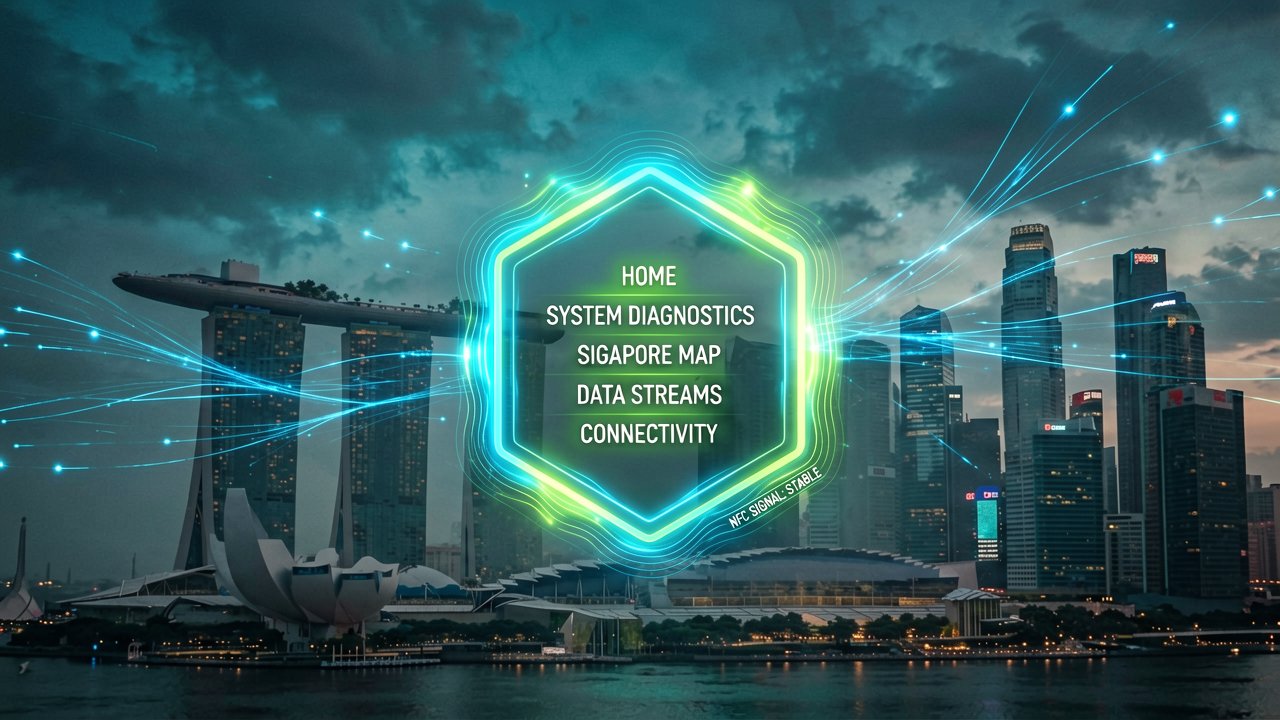
The Southeast Asian travel sector is undergoing a major technological transformation, moving from fragmented, app-heavy trip planning to fluid, ambient on-the-go support. A primary example of this evolution is the recent move by Singapore-based technology platform Webuy Global Ltd, which introduced a smart travel card integrated with a dedicated AI agent. By combining physical hardware with software, the platform removes the friction of downloading multiple smartphone applications while giving travelers real-time, context-aware assistance across their entire journey.
This development points to a broader trend within the tourism industry, where traditional digital itineraries are shifting toward autonomous, proactive AI guidance. Webuy’s system uses an NFC-enabled physical card linked to a personalized H5 web interface, meaning users do not need to install local apps or struggle with setup across different regions. Instead, the card coordinates flight schedules, real-time departure countdowns, destination itineraries, and direct communication channels with local guides or emergency services through a single portal.
Contextual Intelligence and Hardware Integration
Unlike standard travel tools that require manual searching, Webuy’s smart card works by constantly assessing geographic and contextual data. For example, when a traveler steps within 300 meters of a recognized historic landmark, the system automatically surfaces historical information and offers AI-generated audio commentary. This localized approach allows the AI agent to blend digital information directly into the physical trip, creating a highly customized sightseeing experience without interrupting the journey.
Strategic Implications for the Travel Ecosystem
From a market standpoint, moving away from standalone apps toward integrated hardware simplifies the user experience and gives companies a clear commercial advantage. By managing the end-to-end travel journey through a single physical touchpoint, Webuy captures a continuous loop of structured data detailing how customers interact with local services. Over time, these insights can help train and refine behavioral models, allowing travel providers to tailor their offerings, boost customer loyalty, and capture valuable repeat business in a highly competitive market.

An Analysis of Tangible AI Ecosystems in Modern Travel
Beyond the Headline Mechanics: The emergence of hardware-tethered AI agents reveals a strategic attempt to solve the "app fatigue" currently stifling the digital travel sector. For years, the prevailing industry logic dictated that the smartphone application was the ultimate destination for consumer loyalty. However, international travelers frequently push back against this model, hesitant to clog their devices with regional ride-hailing, ticketing, and translation apps that they will likely delete upon returning home. By embedding an AI companion within a physical, tap-to-activate card, technology providers are bypassing traditional app store friction entirely, creating an immediate and low-barrier gateway to localized digital services.
This hardware-first approach also addresses a persistent vulnerability in modern connected tourism: data fragmentation and intermittent connectivity. While software-only platforms struggle to maintain consistent user engagement across varying network conditions and strict privacy permissions, an NFC-enabled physical card serves as a reliable anchor. It establishes a persistent, lightweight digital identity that can easily interact with local merchants, public transit turnstiles, and hotel kiosks. For the traveler, this eliminates the stress of managing multiple digital accounts and toggling between platforms, transforming a chaotic series of logistics into a unified, predictable experience.
From an operational standpoint, this integration allows platform operators to shift from reactive booking agents to proactive journey managers. Traditional travel platforms only capture data during the booking phase or when a user explicitly opens an app to look for help. In contrast, a physical card equipped with contextual AI tracks real-time physical touchpoints, generating a richer, more accurate stream of behavioral insights. This continuous feedback loop enables the underlying algorithms to anticipate consumer needs—such as suggesting a nearby indoor activity during a sudden downpour—long before the user thinks to search for an alternative.
The broader economic implications for local tourism ecosystems are substantial, particularly for small-scale merchants who are often left out of major international booking platforms. By utilizing a localized AI agent that understands a traveler's real-time position and preferences, the system can direct foot traffic toward independent artisans, regional restaurants, and boutique cultural sites. This granular routing capability distributes tourism revenue more evenly across destinations, offering a practical tool to combat over-tourism at major landmarks while simultaneously enriching the cultural authenticity of the traveler's vacation.

The Friction Between Automated Simplicity and Fragmented Reality
Reading Between the Lines: The promise of an effortless, single-touch travel experience frequently collides with the messy reality of global infrastructure. While the concept of a single hardware card navigating diverse international networks sounds revolutionary, it assumes a level of standardized cooperation that rarely exists in the wild. Local transport authorities, municipal historical sites, and regional merchant networks are notoriously protective of their own proprietary payment systems and data ecosystems. An AI agent, no matter how sophisticated its predictive modeling, cannot magically overcome a localized transit gate that refuses to read outside hardware or an independent vendor that accepts only local cash.
Furthermore, relying on a physical card to eliminate "app fatigue" introduces an interesting paradox regarding device dependency. The smart card does not actually replace the smartphone; it merely acts as an NFC trigger for an H5 web interface displayed on that same smartphone screen. Travelers are still fundamentally tethered to their mobile devices for data consumption, map viewing, and interaction, meaning the physical card functions more like a marketing tool than an indispensable piece of hardware. This setup raises valid questions about whether a dedicated physical object is truly necessary, or if it is simply a clever way to capture consumer attention in an oversaturated software market.
The monetization model behind these automated ecosystems also warrants a degree of skepticism from consumer advocates. When an AI agent proactively recommends a specific local restaurant during a rainstorm or directs foot traffic toward a particular artisan shop, the line between genuine personalized assistance and algorithmic sponsorship becomes incredibly thin. If these recommendations are driven by back-end commission structures rather than objective quality, the technology risks transforming from a trusted digital tour guide into an aggressive, automated advertising channel. For the platform to maintain long-term user trust, operators will need to establish clear boundaries between helpful contextual guidance and paid promotional placement.
Finally, data privacy remains a critical hurdle for any platform attempting to log a traveler's physical and behavioral touchpoints in real time. Aggregating precise location data, purchasing habits, and real-time movement patterns across international borders creates a high-value target for cybersecurity threats and complicates regulatory compliance with frameworks like GDPR. If consumers begin to feel that their smart travel card behaves more like a tracking device than a helpful companion, the initial convenience will quickly be outweighed by privacy concerns, slowing down widespread adoption across privacy-conscious demographics.
"Ultimately, the dream of the perfect, frictionless vacation managed entirely by an AI agent overlooks the very reason we travel in the first place: the unexpected detour, the lost-in-translation meal, and the charming chaos of a new city. After all, if a smart card manages to automate away every single travel mishap, it might also accidentally automate away the best stories you tell when you get back home."
Artūras Malašauskas is an AI Systems Integrator with 20+ years of production-grade web engineering experience. He has designed, shipped, and scaled enterprise Python/PHP systems for logistics, SaaS, and public-sector clients. For the past year, he has focused exclusively on AI integrations: deploying open-source LLMs, building generative media pipelines (image, audio, video), and engineering multi-agent workflows for real production environments. His standard: reproducibility, security, cost-efficient inference—no vaporware. He documents and evaluates emerging AI tooling, separating verified capabilities from marketing noise. Technical editor at: muza-ai.eu, ai-verslas.lt, ai-naujinos.lt Connect on LinkedIn
Comments