Singapore’s Agnes AI Upends Coding Market with Free, Uncapped Agnes-2.5-Flash
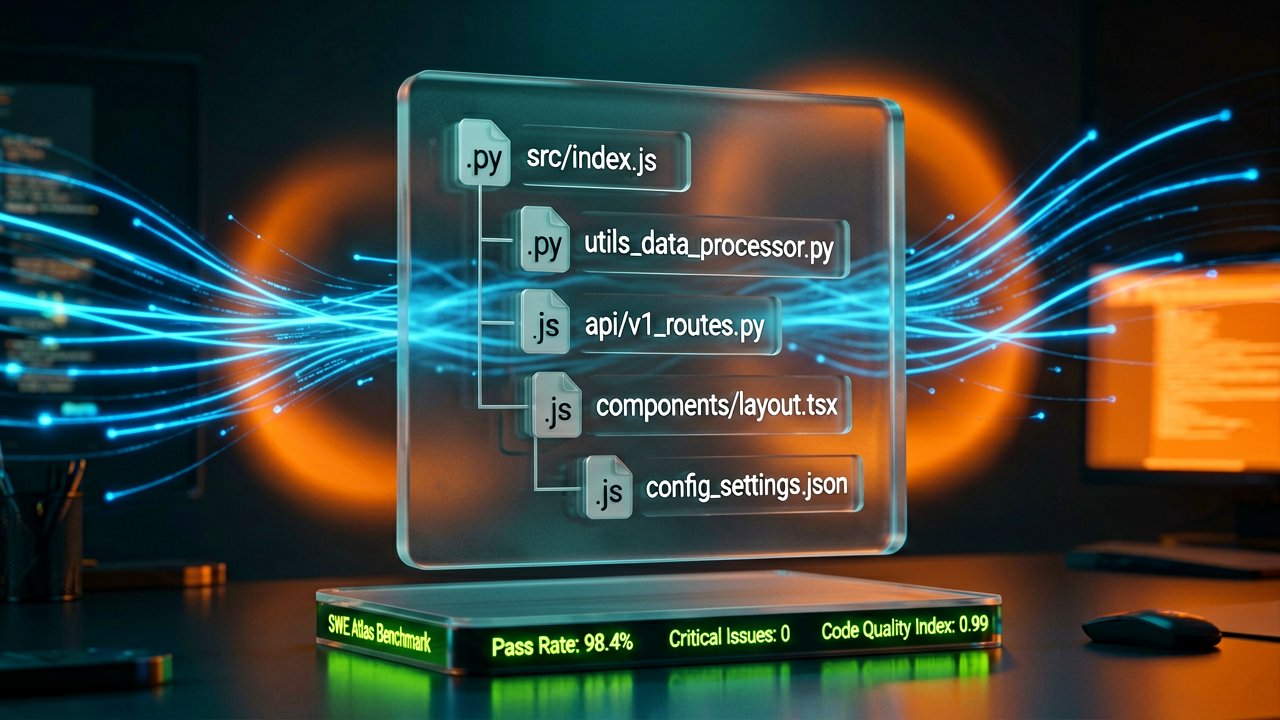
The global race for dominant AI coding environments just took an aggressive turn from Southeast Asia. Today, Singapore-based Agnes AI officially rolled out its next-generation text model, Agnes-2.5-Flash, alongside a dedicated desktop application called Agnes Code. By pairing this updated architecture with a completely free, uncapped access model, the company is mounting a direct challenge to the Western tech giants who have increasingly locked their advanced software-building tools behind premium subscriptions and rigid payload limits.
What makes this release notable isn't just the zero-dollar price tag; it’s the structural shift toward fully autonomous workflows. While established firms lean on gatekeeping features, e27 reports that the new model handles localized project understanding, multi-file editing, and agentic tool-calling with vastly improved stability over older iterations. It operates directly inside a developer's local environment through the Agnes Code workspace, letting engineers write plain-language prompts to execute complicated logic modifications across whole file trees.
Challenging the Paid Status Quo
Agnes AI is explicitly pitching itself as a frictionless alternative for developers left frustrated by recent policy shifts in the broader ecosystem. As rival Western platforms impose tighter identity verification requirements or scale back legacy access, this strategic open-access deployment from Singapore's fintech and AI sector provides an uninhibited entry point. The ecosystem relies on a unified credit system across web, app, and API interfaces, ensuring engineers aren't constrained by standard commercial bottlenecks when executing deep agentic coding loops.
Stronger Benchmarks and a Glimpse at Pro
The upgrade brings definitive performance gains that push the boundaries of what free models typically offer. Internal data shared on X via @agnesai_sapiens highlights that Agnes-2.5-Flash outpaces its predecessor across major code generation metrics, showing its most pronounced improvements on the SWE Atlas benchmark. Rather than relying solely on abstract scores, the team has packaged real-world development case studies into the application, giving programmers a transparent look at how the model manipulates local project structures before they deploy it.

This launch is only the first phase of a broader market expansion. While the Flash version remains permanently free to democratize autonomous software building, Agnes AI has already teased an upcoming premium tier powered by Agnes-2.5-Pro. That flagship version, slated to debut in the coming weeks, is designed to go toe-to-toe with frontier reasoning models, cementing the Singaporean outfit's intent to capture both independent developers and enterprise-grade software teams.
The Hidden Architecture of Singapore’s Bet
Beneath the Open-Access Marketing: The decision to drop a free, uncapped agentic model into the wild is less about sudden corporate philanthropy and more about a calculated play for developer mindshare. By eliminating the friction of token counting and API billing, Agnes AI is weaponizing developer workflows to train its systems at an unprecedented scale. Historically, developer tools that capture early, enthusiastic community adoption become the gravity wells of the industry; by anchoring the ecosystem with Agnes Code, the Singaporean fintech group is effectively positioning its infrastructure to become the default starting point for autonomous software creation before monetization ever enters the equation.
This aggressive go-to-market strategy highlights a growing ideological shift within Southeast Asia's tech hubs, which are increasingly weary of relying on Western infrastructure. Local engineering teams have frequently pointed out that major American AI providers treat international markets as secondary priorities, routinely rolling out new features, compliance frameworks, and low-latency servers to domestic audiences first. By positioning Agnes-2.5-Flash as a globally unrestricted alternative from day one, the platform bypasses regional gatekeeping and capitalizes on a deeply felt exhaustion among developers who are tired of sudden subscription price hikes and unannounced API rate-limiting.
The engineering team’s focus on the SWE Atlas benchmark also signals a distinct pivot away from traditional, academic LLM metrics. Instead of chasing abstract logic puzzles that rarely translate to real-world deployment, the architecture prioritizes the mundane, highly complex realities of modern software engineering: handling massive, poorly documented legacy codebases, managing multi-file dependencies, and executing accurate tool-calling without human intervention. Veteran software architects note that the real test for Agnes-2.5-Flash will not be how fast it generates boilerplate code, but how reliably it maintains state and avoids regressions when working inside deeply nested directory trees.

Furthermore, the impending arrival of the Pro tier reveals the true commercial flywheel driving this ecosystem. The free tier serves as a massive validation pipeline, uncovering edge cases, telemetry bugs, and user experience bottlenecks in real-time across a massive global cohort of engineers. As these refinements are continuously folded back into the underlying model architecture, the upcoming flagship model stands to inherit an incredibly robust foundation, allowing Agnes AI to present enterprise clients with a highly polished, battle-tested reasoning engine that is ready for production workloads from its very first hour of launch.
The Unavoidable Friction of Free Compute
Reading Between the Lines: The claim of "uncapped and free" AI compute always comes with a silent expiration date written in the margins of venture capital spreadsheets. While the immediate democratization of agentic coding is a massive win for independent engineers, running persistent, multi-file agentic loops is notoriously resource-intensive. Agnes AI’s current posture relies on absorbing massive operational deficits to starve out paid incumbents, a strategy that inevitably faces the harsh reality of server costs. The industry has seen this cycle before, where early, unrestricted access eventually morphs into tiered throttling or premium paywalls once the initial user acquisition targets are met.
There is also an inherent contradiction in trying to capture enterprise interest while offering a completely open, local-first ecosystem. Large fintech firms and established software houses are notoriously protective of their proprietary codebases, rarely trusting third-party agents that execute localized tool-calling without rigorous, bureaucratic oversight. By targeting independent developers who are willing to experiment with unvetted systems, Agnes AI builds a vibrant community but faces an uphill battle in convincing corporate compliance officers that its desktop workspace handles sensitive IP securely enough to warrant a migration away from entrenched, enterprise-grade incumbents.
Furthermore, relying heavily on the SWE Atlas benchmark as proof of superiority creates an optimized feedback loop that might not reflect messy, real-world engineering environments. Models trained to dominate specific benchmarks often struggle when confronted with chaotic, poorly containerized local setups, fragmented package managers, or erratic network environments. If Agnes-2.5-Flash stumbles under the weight of poorly maintained, real-world repositories that lack the clean structure of synthetic evaluation sets, the developer community’s initial enthusiasm could quickly sour into skepticism, leaving the platform with high infrastructure bills and a dwindling base of active power users.
Give a developer a free, uncapped AI agent, and they will spend the next six hours watching it autonomously refactor a minor CSS bug into a catastrophic, multi-repository server outage—proving that while the compute may be entirely cost-free, the emotional toll of debugging autonomous code remains as expensive as ever.
Artūras Malašauskas is an AI Systems Integrator with 20+ years of production-grade web engineering experience. He has designed, shipped, and scaled enterprise Python/PHP systems for logistics, SaaS, and public-sector clients. For the past year, he has focused exclusively on AI integrations: deploying open-source LLMs, building generative media pipelines (image, audio, video), and engineering multi-agent workflows for real production environments. His standard: reproducibility, security, cost-efficient inference—no vaporware. He documents and evaluates emerging AI tooling, separating verified capabilities from marketing noise. Technical editor at: muza-ai.eu, ai-verslas.lt, ai-naujinos.lt Connect on LinkedIn
Comments