Webuy's New Smart Travel Card: Seamless Tech or Just Another AI Gimmick?
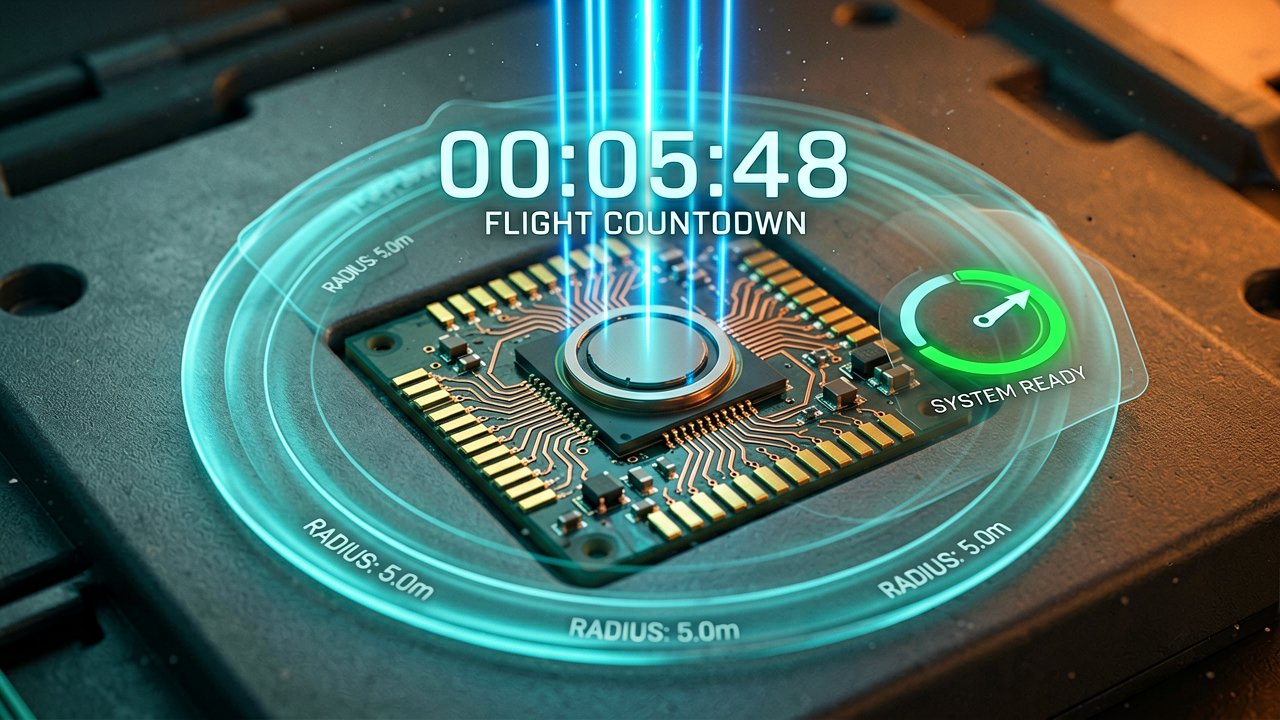
Travel tech loves a good buzzword, but the real test is whether a new tool actually makes your vacation less stressful or just gives you another screen to manage. Today, Singapore-based travel platform Webuy Global Ltd officially launched its AI agent-assisted Smart Travel Card, an ambitious hardware-software hybrid built to handle the heavy lifting of global tourism. It's a clear signal that the company wants to move away from fragmented trip planning and bundle the entire vacation experience into a single, unified ecosystem.
Instead of forcing you to download yet another heavy mobile application, Webuy's setup pairs a physical, Near Field Communication (NFC)-enabled card with a personalized H5 digital interface. Chief Executive Vincent Xue noted that the goal is to establish a continuous digital connection throughout the journey, providing everything from flight countdowns to instant on-the-ground support. For travelers moving through major hotspots across Southeast Asia, it means less time juggling apps and more time actually looking at the scenery.
Location-Aware Audio Guides and Real-Time Support
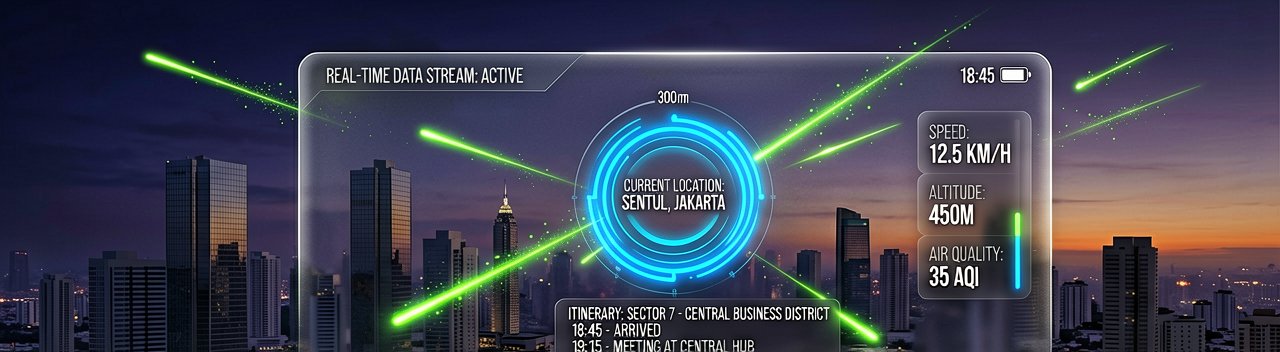
The smartest trick up this card's sleeve is its proximity-based contextual awareness. By utilizing location tracking, the system recognizes when a traveler is within roughly 300 meters of a major landmark or cultural attraction. Once you hit that radius, the H5 interface shifts dynamically, pushing relevant historical data and AI-assisted audio commentary straight to your device. It's a clever way to replace traditional tour guides, though the choice to play the audio remains entirely optional so you won't be bombarded with unsolicited history lessons while just looking for a restroom.
Beyond acting as a pocket museum guide, the card pulls double duty as a logistics hub. According to details shared via Yahoo Finance, users can view daily itineraries, coordinate with local drivers, and contact emergency support services through the same webpage. This tight integration helps Webuy gather continuous data on how tourists interact with local infrastructure, creating a feedback loop that the company claims will refine its AI capabilities over time. Whether users will embrace a physical card for digital navigation remains to be seen, but it's a fascinating look at how automation is quietly reshaping the future of leisure travel.
Behind the Scenes: The Infrastructure and Strategy Driving Webuy’s Pivot
What Most Reports Miss: While a physical card wrapped in AI marketing sounds like a nostalgic throwback to the days of pre-paid calling cards, Webuy's actual gamble is on data ownership and ecosystem lock-in. For years, the travel industry has been fragmented by platform fatigue, where a single tourist uses one app for flights, another for ridesharing, and a third for restaurant reviews. By introducing a dedicated hardware touchpoint, Webuy isn't just offering convenience; it is attempting to anchor the user within its proprietary digital walls from the moment they step off the plane. This data-heavy strategy gives the company an unvarnished look at real-time consumer spending and foot traffic patterns across Southeast Asia.
Industry insiders point out that relying on a lightweight H5 interface rather than a native mobile application is a calculated technical move. App stores are notorious bottlenecks, requiring constant updates, massive downloads, and strict compliance with shifting privacy policies. An H5 webpage, triggered instantaneously via an NFC tap, bypasses these friction points entirely, ensuring that travelers with limited roaming data or older smartphones can access the service without a hitch. This architectural choice reveals that Webuy is prioritizing immediate, low-barrier utility over the flashy, animation-heavy interfaces that often bog down modern travel software.
However, the reliance on continuous location tracking raises predictable questions about data privacy and user autonomy. The system's ability to trigger audio guides within a precise 300-meter radius means the platform is constantly mapping the user's coordinates against local geographic databases. While Webuy emphasizes that the audio playback is strictly opt-in and designed to enhance cultural immersion, privacy advocates remain wary of how long this location history is stored and whether it will eventually be monetized to serve targeted advertisements for nearby merchants. Balancing personalized hospitality with data security will likely dictate whether Western tourists embrace the technology or view it as overly intrusive monitoring.
From a commercial perspective, this launch marks a significant evolution for Webuy Global, a company historically rooted in community e-commerce and group-buying dynamics. By translating its experience in digital community building into the tourism sector, management is attempting to create a network effect where local vendors, drivers, and tour operators are incentivized to join the Webuy network. If successful, this ecosystem could lower acquisition costs for local businesses while giving tourists a vetted, predictable roster of service providers, effectively standardizing an often chaotic independent travel market.
Reading Between the Lines: The Friction in Seamless Travel
The Uncomfortable Reality: The travel industry routinely mistakes technological novelty for genuine utility, and Webuy’s smart card walks a incredibly thin line between innovation and redundancy. The core premise assumes that travelers feel a burning need for a physical plastic card to act as a bridge to a digital web page. In an era where Apple Wallet and Google Wallet have largely conditioned global consumers to expect entirely cardless, phone-only interactions, introducing a piece of physical hardware feels like a step backward disguised as a leap forward. It forces a logistical contradiction: a platform selling the future of modern digital minimalism while requiring you to keep track of a physical piece of plastic in your pocket.
Furthermore, the reliance on automated AI agents to handle real-time travel crises overlooks the deeply unpredictable nature of global tourism. While an algorithm can flawlessly execute a predefined itinerary change or pull up a historical fun fact when you are standing near a temple, it fundamentally lacks the agency to negotiate with a stubborn local driver or rearrange logistics when a monsoon cancels a regional flight. When travel plans inevitably unravel, tourists do not want to argue with an automated chatbot interface; they want a human fixer who understands the nuances of local bureaucracy. By positioning an AI agent as a comprehensive guide for every step of the journey, the platform risks leaving users stranded in a digital loop when real-world chaos strikes.
There is also an inherent tension between the concept of a curated vacation and the serendipity that makes travel memorable. By tracking a user's location to push automated audio guides and recommended itineraries within a strict geographic radius, the system implicitly funnels tourists along heavily commercialized, pre-determined paths. This algorithmic curation risks creating a homogenized travel experience, effectively turning vibrant, unpredictable Southeast Asian cities into a series of predictable, software-driven checkpoints. The ultimate irony of the "personalized" AI travel guide is that it often results in thousands of tourists receiving the exact same automated recommendations at the exact same coordinates.
Ultimately, the long-term viability of Webuy's venture will not be decided by technical specifications, but by merchant adoption and infrastructure stability. For the card to truly revolutionize the journey, an incredibly fragmented network of independent drivers, street food vendors, and boutique operators across multiple countries must seamlessly integrate into Webuy’s ecosystem. If the digital connection fails at a single remote outpost, the illusion of the all-in-one smart travel companion shatters completely, transforming an expensive tech ecosystem right back into an ordinary, useless piece of plastic.
"The ultimate goal of modern travel tech seems to be transforming the chaotic adventure of exploring a foreign culture into something as predictable and sterile as an afternoon spent browsing an online catalog—ensuring that no matter how far you fly, you never actually have to leave your digital comfort zone."
Artūras Malašauskas is an AI Systems Integrator with 20+ years of production-grade web engineering experience. He has designed, shipped, and scaled enterprise Python/PHP systems for logistics, SaaS, and public-sector clients. For the past year, he has focused exclusively on AI integrations: deploying open-source LLMs, building generative media pipelines (image, audio, video), and engineering multi-agent workflows for real production environments. His standard: reproducibility, security, cost-efficient inference—no vaporware. He documents and evaluates emerging AI tooling, separating verified capabilities from marketing noise. Technical editor at: muza-ai.eu, ai-verslas.lt, ai-naujinos.lt Connect on LinkedIn
Comments