TeamLease Revolutionizes Corporate Training with AI: Driving a 25% Surge in Workforce Productivity
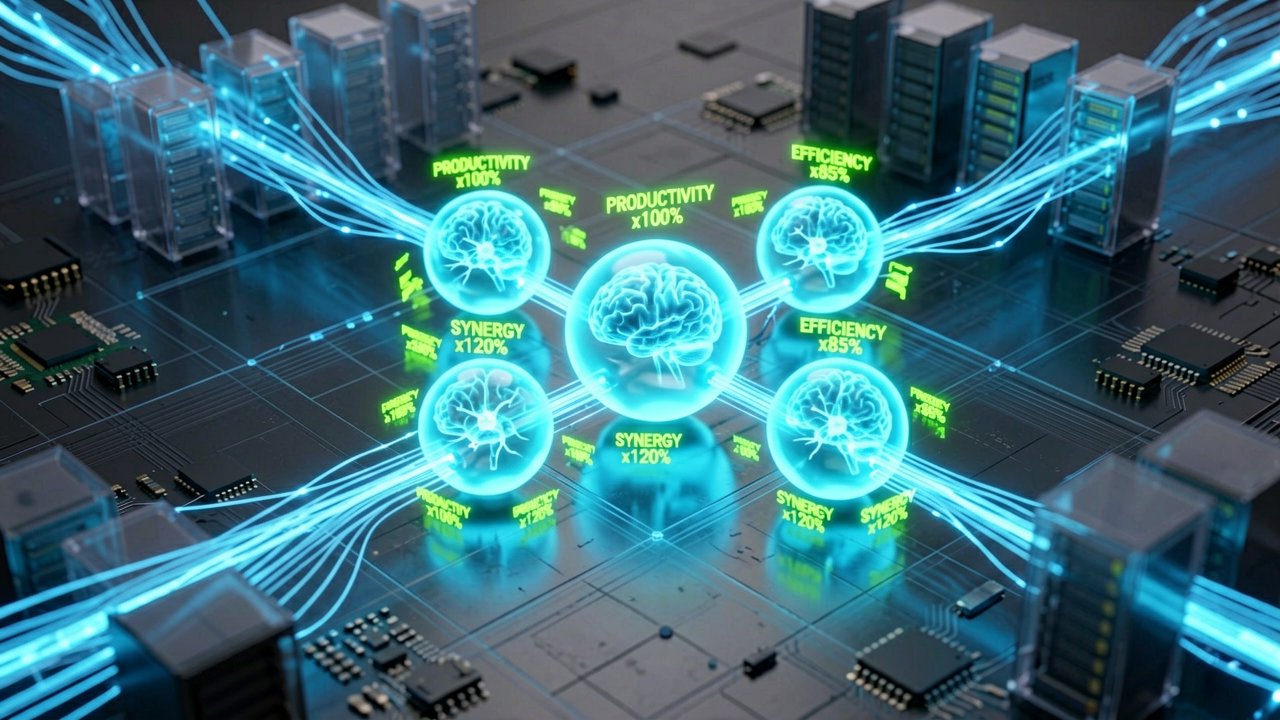
The landscape of Indian corporate training is undergoing a fundamental shift as enterprises move beyond experimental AI pilots toward scalable, work-integrated learning models. TeamLease Degree Apprenticeship has set a new benchmark in this transition by introducing specialized artificial intelligence programs that have already demonstrated the ability to boost apprentice productivity by 20 to 25 percent. By embedding Generative AI, prompt engineering, and large language model (LLM) training directly into the apprenticeship curriculum, the initiative bridges the persistent gap between theoretical academic knowledge and the practical, work-ready capabilities required by modern industries.
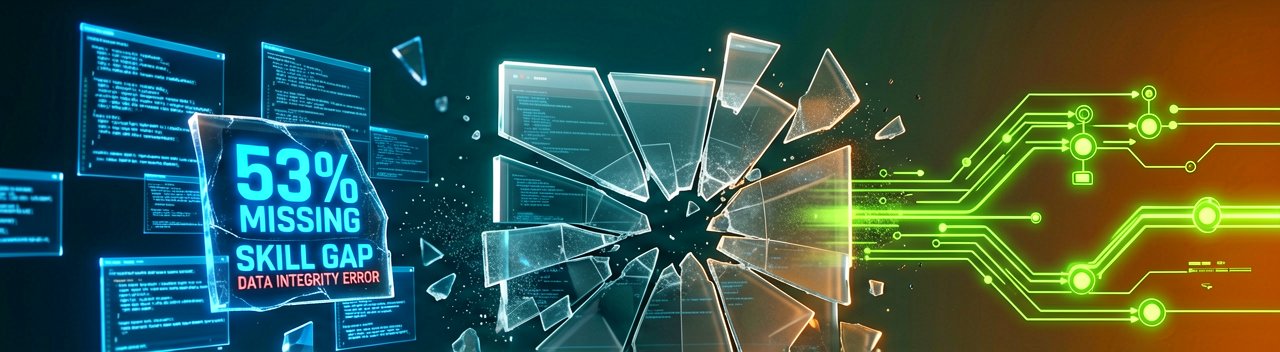
Market dynamics in 2026 indicate that AI proficiency is no longer a luxury but a core baseline for employability. According to Dr. Nipun Sharma, CEO of TeamLease Degree Apprenticeship, fresh talent often enters the workforce without the experiential training needed to apply AI on the job. This strategic intervention addresses the widening AI skills gap in India, which currently sits at approximately 53%. By focusing on sectors that are early adopters of emerging technologies, the program ensures that 40% of apprentices secure permanent roles within their training organizations, while over 90% find immediate opportunities within the broader industry.
The broader economic impact of these programs aligns with a global trend where AI-driven personalized learning is projected to increase employee engagement by 30%. With the global AI corporate training market expected to reach $11.4 billion by the end of 2026, TeamLease’s focus on high-demand modules—including Python for LLMs and specialized developer tools—positions it as a critical facilitator in India's digital transformation. This approach not only enhances the "employability quotient" of the youth but also provides enterprises with a robust, sustainable human supply chain capable of navigating the uncertainties of an automated workplace.
The Productivity Multiplier: Measuring AI-Driven Performance
The integration of AI into vocational training acts as a productivity multiplier by automating routine tasks and sharpening employee decision-making. Data from early adopters indicates that learning efficiency can increase by up to 57% when AI-tailored learning paths are implemented. TeamLease’s model capitalizes on this by moving training out of the classroom and into the flow of work, allowing apprentices to become "productive from day one." This shift is critical as companies increasingly pivot toward variable workforce models to manage the disruption caused by AI-led automation.
Closing the Talent Gap through Public-Private Partnerships
As India strives to become a global hub for digital innovation, the use of Public-Private Partnerships (PPPs) remains a cornerstone of the national skilling strategy. The TeamLease Degree Apprenticeship Program, a 100% employer-funded initiative, collaborates with the Ministry of Education and Ministry of Skill Development to ensure curriculum relevance. These programs are particularly vital for talent in Tier 2 and Tier 3 cities, converting basic AI awareness into professional skills that drive inclusive economic growth across the subcontinent.
Strategic Workforce Transitions and the Future of Work
Corporate leaders are increasingly prioritizing workforce redeployment over traditional hiring as a response to AI's impact on job roles. Strategic shifts toward outsourced and variable workforce models are becoming common, with recommendations suggesting firms keep 20-30% of their staff on variable contracts to remain agile. In this environment, the ability to rapidly upskill through structured apprenticeships provides a safeguard against obsolescence, ensuring that the human-AI collaboration remains a competitive advantage rather than a source of job insecurity.
The Efficiency Paradox: Scrutinizing the AI-Productivity Nexus
Reading Between the Lines: The claim that AI-driven training can yield a 25% productivity surge is impressive on paper, yet it invites a degree of healthy skepticism regarding the long-term sustainability of such gains. While initial metrics often capture the "low-hanging fruit" of automation—the rapid generation of boilerplate code or the summarization of lengthy briefs—they rarely account for the "complexity tax" that emerges later. As apprentices offload foundational tasks to AI, there is a risk that they bypass the critical struggle required to build deep, intuitive expertise. The industry must eventually confront the possibility that hyper-efficiency in the short term could lead to a diluted senior talent pool in the future, where the next generation of architects lacks the fundamental "muscle memory" developed through manual repetition.
There is also a notable tension between the speed of AI deployment and the traditional pace of institutional degree accreditation. While TeamLease Degree Apprenticeship bridges this via work-integrated learning, the rapid decay of AI skill relevance poses a systemic challenge. A prompt engineering framework or LLM orchestration tool mastered today may be obsolete by the time an apprentice completes their three-year degree. This creates a paradox where the "skills gap" is not merely bridged but becomes a moving target. Enterprises adopting these programs must move beyond static curriculum models and embrace a state of permanent beta, treating training not as a one-time injection of productivity but as a constant, resource-intensive maintenance task for the human workforce.

Furthermore, the measurable productivity gains of 20% to 25% often assume a frictionless integration into existing corporate hierarchies. In reality, introducing AI-literate apprentices into legacy teams can create a "technological friction" where senior staff, perhaps less fluent in generative tools, become the bottleneck for the very efficiency these programs aim to unlock. The strategic value of these apprenticeships is therefore contingent on a broader cultural overhaul within the enterprise. Productivity is not an isolated metric found in a trainee's output; it is a systemic result of how well the organization can absorb and validate AI-augmented work without succumbing to endless cycles of revision and oversight.
Measured skepticism is also warranted regarding the "employability quotient" in a market saturated with AI-enabled labor. If every fresh graduate enters the market with the same 25% productivity boost, that advantage becomes the new baseline rather than a competitive edge. This suggests that the real winners of the AI skilling revolution will not be those who simply know how to use the tools, but those who can apply them to solve unique, non-standardized problems. The focus on high-demand modules like Python for LLMs is a strong start, but the ultimate test of these apprenticeship programs will be their ability to foster "un-automatable" traits—judgment, ethics, and cross-disciplinary synthesis—within a tech-heavy curriculum.
Projecting into the next decade, the success of these AI initiatives may inadvertently lead to a "hollowing out" of entry-level roles. If an apprentice and an AI agent can do the work of two junior staffers, the total volume of available entry-level positions could shrink even as the productivity of remaining roles climbs. This necessitates a radical rethink of the apprenticeship volume. TeamLease’s focus on high-growth sectors is a defensive move against this contraction, but the broader economic implication is that "skilling for productivity" must eventually transition into "skilling for innovation" to avoid a zero-sum game of labor replacement.
The Human-Centric Resilience Factor
The transition toward AI-augmented labor ultimately highlights the irreplaceable value of human agency. Despite the relentless optimization of corporate training, the core of industrial success remains the ability of people to collaborate, iterate, and navigate ambiguity. The strategic integration of AI into TeamLease’s programs is a necessary evolution, but it serves as a reminder that technology is the engine, not the navigator. As enterprises refine their workforce models, the focus will likely shift from how much work an AI can do to how well a human can direct that work toward meaningful, value-driven outcomes in an increasingly automated world.
"We are currently in a race to see if we can train humans to use AI faster than AI can learn to imitate humans; the good news is that while the AI never sleeps, the humans are still the only ones who know why the work needed doing in the first place."
Artūras Malašauskas is an AI Systems Integrator with 20+ years of production-grade web engineering experience. He has designed, shipped, and scaled enterprise Python/PHP systems for logistics, SaaS, and public-sector clients. For the past year, he has focused exclusively on AI integrations: deploying open-source LLMs, building generative media pipelines (image, audio, video), and engineering multi-agent workflows for real production environments. His standard: reproducibility, security, cost-efficient inference—no vaporware. He documents and evaluates emerging AI tooling, separating verified capabilities from marketing noise. Technical editor at: muza-ai.eu, ai-verslas.lt, ai-naujinos.lt Connect on LinkedIn
Comments