The 'Vibe-Coding' Shift: How Meta’s Pocket Threatens the Traditional Developer Economy
Meta has quietly launched Pocket, an experimental artificial intelligence application that turns natural language text prompts into interactive digital "gizmos" and mini-games without requiring a single line of traditional code. First spotted on mobile storefronts in late June 2026, the application represents Meta’s deliberate pivot from static AI asset generation—such as text and images—toward user-generated interactive software. The core technology leverages Meta's strategic acquisition of the team behind Gizmo, an early pioneer in prompt-based game building, even retaining the original developer package footprint under the hood as reported by TechCrunch.
This aggressive entry into the generative tool ecosystem introduces a direct challenge to the established app store paradigm and the freelance developer economy. By enabling ordinary consumers to rapidly materialize software utilities, text-to-play mini-games, and custom interactive interfaces on demand, Meta is effectively pioneering consumer-grade "vibe-coding." According to market intelligence details published by Business Insider, Pocket is designed as a highly social platform where creations can be remixed, shared via standalone web links, and consumed instantly inside a central algorithmic feed, bypassing traditional, heavily frictioned app distribution channels.
The strategic deployment of Pocket highlights a broader tech industry trend focused on democratizing software development through specialized foundational models. While competitors like Sekai secure venture funding to capture the social gaming sandbox space, Meta's immediate advantage lies in its vast distribution infrastructure spanning billions of social media accounts. Analyst reviews curated by The Verge indicate that although the initial rollout remains geo-restricted to manage server capacities and content moderation risks, Pocket signals a long-term future where software is hyper-personalized, temporary, and created on the fly by end-users rather than compiled by specialized software engineers.
The Disruption of Low-Code and No-Code Platforms
Traditional low-code and no-code environments still demand structural, algorithmic reasoning from users, forcing them to manipulate logical nodes, databases, and visual workflows. Pocket shifts this paradigm by positioning the LLM as the structural compiler, translating ambiguous human descriptions into functional interactive objects. For small-scale utility creators and independent game designers, the barrier to entry has effectively collapsed, shifting commercial value from technical execution to pure conceptual imagination.

Bypassing Traditional App Distribution Channels
By wrapping these user-generated gizmos into lightweight, easily shareable web links, Meta sidesteps the stringent submission protocols, execution barriers, and fee structures imposed by legacy mobile operating systems. If consumers begin looking to algorithmic social feeds for bite-sized utilities and casual software experiences, the centralized dominance of native mobile application storefronts could erode in favor of dynamic, cloud-hosted AI containers.
The Rise of the Micro-Entertainment Ecosystem
The long-term economic footprint of Pocket rests heavily on its social infrastructure and community-driven remix features. Rather than purchasing static consumer software, users can fork, tweak, and immediately re-publish existing gizmos to fit ultra-niche or temporary use cases. This feedback loop transforms software application consumption into a form of active social communication, signaling a distinct transition from a software-as-a-service model to software-as-a-vibe.
Inside the 'Vibe-Coding' Engine Room
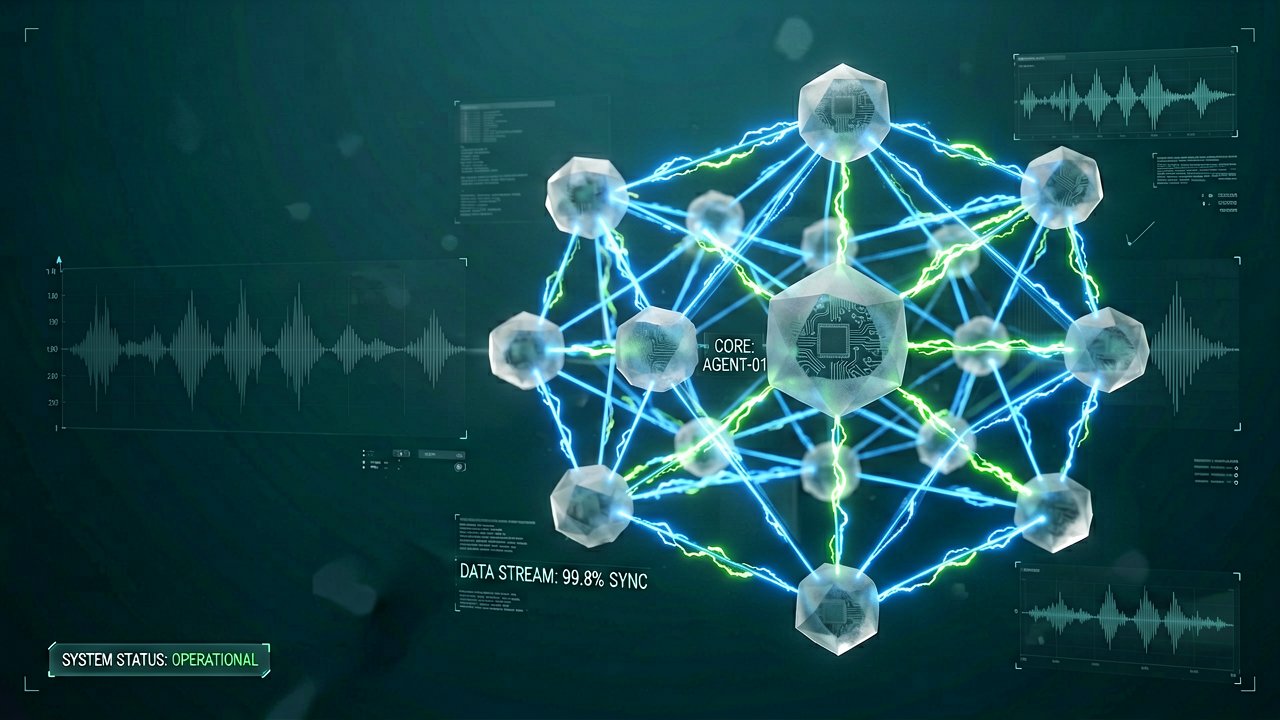
What Most Reports Miss: The underlying architectural mechanics of Meta's Pocket reveal a sophisticated synthesis of multi-agent orchestration rather than a simple single-prompt wrapper. While the consumer interacts with a seemingly straightforward chat interface, the application runs a decentralized cluster of specialized generative models under the hood. One model handles state machines and logical flow, another generates and updates dynamic styling, and a third continuously runs invisible diagnostic sweeps to self-correct code execution errors before the user ever sees a glitch. This layered framework transforms loose human intent into a predictably executable container, masking immense structural complexity behind an interface optimized for the average smartphone owner.
The strategic acquisition of the original Gizmo engineering cohort was less about purchasing intellectual property and more about securing rare institutional knowledge in persistent, stateful prompting. Early beta testers within Meta’s internal research groups noted that standard large language models struggled significantly with retention, frequently breaking the logic of interactive software once a user requested a third or fourth modification. The integrated Gizmo framework solves this by utilizing localized semantic memory nodes that treat the application’s state as an evolving repository, ensuring that new visual tweaks do not inadvertently break established mechanics. This tactical edge gives Meta a massive head start over traditional software environments trying to retrofit generative AI onto legacy development architecture.

This technical evolution places independent mobile developers and specialized software boutiques in an increasingly precarious position. For over a decade, a lucrative sub-economy thrived on building simple utility apps, basic digital calculators, and hyper-casual puzzle games for client businesses and consumer storefronts. As Pocket commoditizes these exact micro-utilities into zero-cost, zero-effort prompts, that entry-level contract pipeline risks evaporating entirely. Agencies are suddenly forced to pivot upmarket, focusing on heavy enterprise infrastructure and complex data pipelines that consumer-grade AI cannot yet replicate, while the baseline freelance market undergoes a profound structural contraction.
Regulatory scrutiny is already mounting behind closed doors as legal experts flag the unprecedented intellectual property vacuum created by algorithmic remixing. Because Pocket enables users to instantly fork, modify, and redistribute existing digital gizmos, the concept of original software ownership becomes heavily diluted. If a user prompts the system to clone the exact core mechanics of a popular commercial indie game, applies a localized visual overhaul, and distributes it to millions via an algorithmic social feed, establishing distinct copyright infringement becomes an uphill battle. Meta’s legal defense will likely rely on section 230 style provider protections, shifting the burden of content moderation and compliance directly onto the end-user base.
Ultimately, Meta's broader corporate objective is to weave these ephemeral interactive objects directly into the foundational fabric of its existing social graphs. Imagine a scenario where a user creates a hyper-specific trivia game during a live group chat, executes it instantly within an Instagram thread, and watches it mutate dynamically based on live responses from participants. By transforming static screens into living, user-generated micro-applications, Meta anchors user attention deeper inside its own closed ecosystem. This strategy effectively isolates audiences from the open web, positioning the company not just as a host for personal media, but as the default operating system for daily digital interactions.
The Ephemeral Software Paradox
Reading Between the Lines: The tech industry’s unbridled enthusiasm for the democratization of software creation through "vibe-coding" willfully ignores a fundamental truth of digital product design: building a feature is easy, but maintaining it is incredibly difficult. Proponents of Meta’s Pocket envision a utopian ecosystem populated by perfectly tailored, localized micro-utilities built in seconds by everyday consumers. However, this rosy projection fundamentally misunderstands the reality of technical debt. When software is generated entirely through the iterative stack of loose natural language prompts, it lacks clean documentation, standardized code architecture, and structured regression testing. The moment an underlying foundational model updates its API or a mobile operating system changes its web view rendering engine, millions of user-generated digital gizmos risk breaking simultaneously without anyone knowing how to fix them.
This reality exposes a glaring contradiction in Meta’s current platform strategy. Pocket is actively marketed as an empowering tool to liberate consumers from the gatekeeping constraints of corporate software development and traditional app store monopolies. Yet, in practice, it merely shifts dependency from one centralized corporate gatekeeper to another. A developer building a traditional native mobile application maintains ownership over their source code, compiling it locally and retaining the freedom to host it across a variety of independent servers. A consumer creating an AI-driven tool within Pocket remains entirely captive to Meta’s proprietary cloud infrastructure, content moderation filters, and algorithmic distribution whims. Rather than democratizing software, this framework effectively turns developers into digital sharecroppers whose creations exist solely at the pleasure of a single company's server allocation budgets.
Furthermore, the long-term monetization potential of this ephemeral software landscape remains deeply suspect. The traditional software economy relies on predictable value-exchange mechanisms: subscriptions, one-time purchases, or structured ad placements tied to ongoing utility. When software becomes as disposable and cheap to produce as a text message, its perceived economic value inevitably plummets to zero. Consumers are highly unlikely to tolerate advertisements or pay microtransactions for a makeshift calculator or a casual puzzle game that they—or anyone else—can trivially clone with a thirty-word prompt. Meta will likely be forced to absorb the staggering compute costs of hosting millions of broken, abandoned, or niche user applications, relying entirely on indirect data harvesting and ad attention metrics on their primary social feeds to justify the project's massive infrastructure overhead.
The cultural fallout of this shift will likely redefine our relationship with digital tools, transforming software from a durable product into an ephemeral piece of media. For decades, software engineering was viewed as an exercise in building permanent, scalable architecture meant to withstand the test of time. Pocket accelerates a shift toward disposable digital artifacts—apps built for a single afternoon, a specific party, or a localized joke, only to be discarded immediately afterward. While this hyper-personalization offers undeniable novelty, it threatens to flood the digital landscape with an unprecedented volume of low-quality software noise, making the discovery of genuinely useful, secure, and robust digital tools an exercise in filtering through endless rows of AI-generated clutter.
"We spent decades teaching humanity how to think like computers so they could write clean, logical code, only to pivot to a future where we scream vague vibes at an AI model and hope it builds a working calculator. The good news is everyone can now be an app developer; the bad news is that your uncle’s broken AI mini-game is about to become the new family group chat spam."
Artūras Malašauskas is an AI Systems Integrator with 20+ years of production-grade web engineering experience. He has designed, shipped, and scaled enterprise Python/PHP systems for logistics, SaaS, and public-sector clients. For the past year, he has focused exclusively on AI integrations: deploying open-source LLMs, building generative media pipelines (image, audio, video), and engineering multi-agent workflows for real production environments. His standard: reproducibility, security, cost-efficient inference—no vaporware. He documents and evaluates emerging AI tooling, separating verified capabilities from marketing noise. Technical editor at: muza-ai.eu, ai-verslas.lt, ai-naujinos.lt Connect on LinkedIn
Comments