The 2026 AI Employment Squeeze: Mapping Disruption Across the Global Labor Market
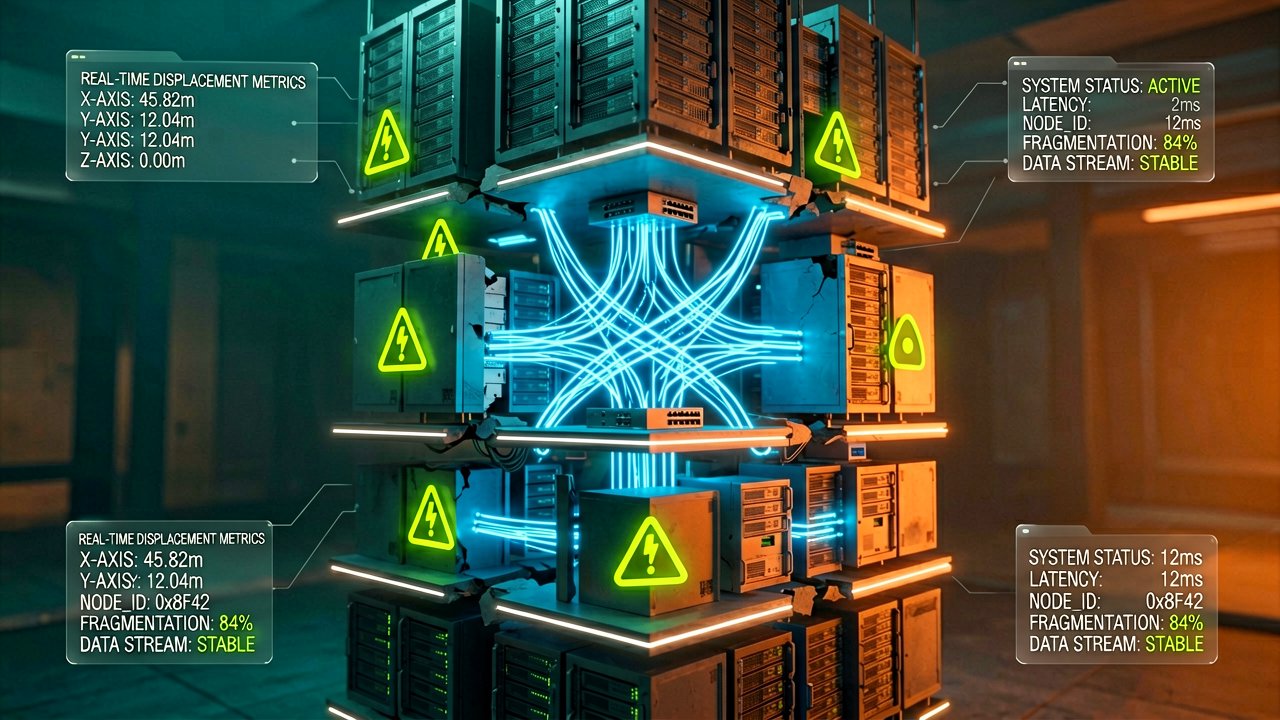
The global employment landscape in 2026 is experiencing an unprecedented structural shift as artificial intelligence and large language models transition from standalone tools to autonomous operational engines. This evolution has started leaving an explicit imprint on macroeconomic data, turning abstract predictions of workforce displacement into reality. Corporate strategies have pivoted aggressively from pilot experimentation toward agentic orchestration, fundamentally altering hiring priorities and putting downward pressure on legacy operational roles across multiple sectors.
According to recent government labor data published by Bloomberg, payroll contractions in the financial-activities and information sectors have accelerated significantly, averaging a loss of 28,000 jobs per month. This decline directly correlates with rapid AI adoption rates in administrative, analytical, and back-office pipelines. Furthermore, tracking by outplacement firm Challenger, Gray & Christmas indicates that artificial intelligence has emerged as a primary cited driver for structural layoffs this year, underscoring a broader corporate effort to trade human capital for automated enterprise resilience.
Professionals are operating within a sharply divided, two-track labor market. While process-driven functions face significant consolidation, the demand for specialized technical expertise and human-centric soft skills has intensified. To avoid obsolescence, the workforce must navigate a rapid evolution where role redesign dictates career longevity and AI fluency acts as the baseline for employability.
Displacement and Polarization in High-Exposure Sectors
The impact of automated workflows is highly uneven, hitting administrative, legal, and financial operations with the greatest velocity. Middle management is also facing severe contraction. Research by Gartner highlights that approximately 20% of organizations are utilizing AI tools specifically to flatten corporate hierarchies, a strategic shift projected to eliminate over half of traditional middle management positions, as reported by Gloat. This organizational restructuring targets the coordination layers of business, relying on intelligent agents to manage, track, and route data across legacy networks.

A comprehensive analysis of over a billion job postings across six continents by the PwC AI Jobs Barometer illustrates that skills required for highly exposed occupations are changing twice as fast as those in low-exposure sectors. This rapid skill obsolescence creates severe entry barriers for younger professionals. An International Monetary Fund staff discussion note reveals that while vacancies demanding AI skills offer substantial wage premiums, the broader diffusion of these technologies suppresses employment growth in occupations with high automation exposure and low human complementarity, disproportionately impacting entry-level job seekers.
The Rise of Agentic Orchestration and Role Augmentation
Enterprise technology in 2026 has progressed beyond basic generative assistance toward agentic AI—systems capable of evaluating, deciding, and executing complex workflows without constant human prompts. This technological leap has forced a massive redistribution of workforce responsibilities. Rather than erasing entire departments, enterprises are engaged in comprehensive role redesign. Employees are increasingly shifted from task execution to strategic oversight, acting as auditors and supervisors of automated machine learning outputs.
This rebalancing acts as a strong catalyst for specialized technical hiring. Market insights from Orange indicate a global talent shortage for advanced roles, driving aggressive salary growth for large language model engineers, retrieval-augmented generation (RAG) specialists, MLOps engineers, and AI governance professionals. Consequently, corporate compensation structures have decoupled, with AI-focused roles commanding premiums of 20% to 40% while non-AI exposed roles remain flat or experience steady declines.
Strategic Adaptation for the Automated Workforce
Remaining relevant in this transformed economic landscape requires rapid skill adaptation centered on human-in-the-loop oversight. Corporate upskilling programs are moving away from surface-level software training to focus heavily on structural AI experimentation, data fluency, and risk mitigation. Industry data indicates that junior positions in highly automated environments are now seven times more likely to require advanced, traditionally senior traits like leadership, independent judgment, and strategic accountability, as documented by PwC.

Ultimately, the professionals weathering this disruption successfully are those who treat AI as an operational partner rather than a replacement threat. As technical feasibility aligns closer with economic viability, the ability to architect, audit, and optimize automated systems has shifted from a niche technical advantage to a universal prerequisite for professional survival.
Behind the Scenes: The Invisible Friction of Corporate Agentic Transition
While executive suites publicize seamless automation metrics, enterprise tech stacks are undergoing a messy and fractured restructuring. Industry analysts tracking deployment velocity observe that the shift to agentic workflows is tearing at the fabric of internal data governance. Chief Information Officers find themselves trapped between competing pressures: the mandate to slash headcount costs and the immediate reality that autonomous LLMs frequently fail when hitting undocumented corporate legacy software. This technical friction has transformed many promised "lights-out" autonomous departments into high-stress troubleshooting teams, where a smaller, overextended human workforce spends its time auditing unformatted machine errors rather than engaging in strategic growth.
This operational reality is creating a quiet crisis among mid-career professionals who traditionally managed internal institutional knowledge. Historically, these individuals served as the intellectual bridge between legacy systems and corporate policy. As automated pipelines bypass these workers, decades of unwritten operational expertise are being permanently erased from organizations. Human resource directors are quietly warning that by over-automating these coordination layers, enterprises are losing their systemic resilience, making them highly vulnerable to software failures and unable to train the next generation of leadership from within their own ranks.
The displacement is also altering the power dynamics between global enterprises and outsourced labor markets. Software development and customer support hubs in regions like South Asia, which historically thrived on processing volume tasks, are experiencing severe economic headwinds as domestic automated agents absorb the baseline work. Labor economists note that this reverse-shoring trend is not bringing jobs back to Western economies; instead, it is consolidating economic value directly into the hands of hyperscale cloud providers and AI infrastructure developers. This concentration of wealth is triggering a regulatory reevaluation, with multiple labor unions pushing for "algorithmic impact assessments" before automated pipelines can legally replace localized human workforces.
Ultimately, the true cost of this rapid transition is being measured in human capital degradation. Employees who survive the initial wave of layoffs report intense burnout, driven by an relentless operational pace dictated by algorithmic workflows. They no longer control the rhythm of their workday, but instead respond to a constant stream of high-priority flags generated by automated systems. As this automated squeeze intensifies, the corporate focus is shifting from simple labor replacement to a complex battle over workforce autonomy, setting the stage for deep labor conflicts that will define the rest of the decade.
Reading Between the Lines: The Fallacy of the Infinite Productivity Paradigm
The prevailing corporate narrative assumes that automating core intellectual functions will spark a hyper-efficient productivity boom, yet this framework ignores a fundamental structural contradiction. If every competitor within a specific vertical deploys identical large language models optimized on the exact same industry datasets, operational differentiation effectively collapses. Companies are spending millions to automate departments only to achieve absolute strategic parity with their rivals, turning advanced software from a competitive edge into a hyper-expensive baseline utility that offers diminishing financial returns.
Furthermore, the assumption that displaced workers will seamlessly transition into newly created high-skill roles ignores the reality of human capital constraints and corporate hiring cycles. The speed of algorithmic optimization completely outpaces the biological and institutional limits of human retraining. Enterprises are eliminating entry-level analytical and writing positions at a record pace, effectively cutting off the foundational talent pipelines that produce the very senior strategists, auditors, and prompt architects they desperately require to oversee these systems.
This dynamic reveals a critical flaw in the automated economic model: the erosion of the consumer engine. A hyper-automated enterprise may succeed in driving down internal labor costs to near-zero margins, but it simultaneously reduces the purchasing power of the broader white-collar consumer class. When automated systems aggressively strip wages and employment out of the broader market, they unintentionally destroy the consumer base required to purchase the very goods and services their optimized pipelines are producing.
"We are rushing to build an economy where flawless, hyper-efficient machines spend all day selling mass-produced corporate strategies to other flawless, hyper-efficient machines, while the human beings who used to buy those products are left wondering if they can at least get paid to watch the servers blink."
Artūras Malašauskas is an AI Systems Integrator with 20+ years of production-grade web engineering experience. He has designed, shipped, and scaled enterprise Python/PHP systems for logistics, SaaS, and public-sector clients. For the past year, he has focused exclusively on AI integrations: deploying open-source LLMs, building generative media pipelines (image, audio, video), and engineering multi-agent workflows for real production environments. His standard: reproducibility, security, cost-efficient inference—no vaporware. He documents and evaluates emerging AI tooling, separating verified capabilities from marketing noise. Technical editor at: muza-ai.eu, ai-verslas.lt, ai-naujinos.lt Connect on LinkedIn
Comments