Alphabet’s Latest AI Double-Shot Propels Google Stock Closer to the Elusive $400 Mark

Alphabet has once again turned the tech world on its head by rolling out two powerful new artificial intelligence models designed to cement its dominance in the generative AI arms race. Tech investors are responding with overwhelming enthusiasm, rapidly driving Google’s stock up as Wall Street aggressively recalibrates its near-term price targets toward an ambitious $400 per share. According to recent market analysis published on Barchart, these latest breakthroughs are fueling major optimism around the tech giant's monetization strategy.
The sudden surge reflects a broader realization among traders that Alphabet isn’t just keeping pace with its rivals—it is actively outpacing them. Following the announcement, trading desks saw an immediate uptick in volume as analysts noted that these newly introduced systems will dramatically reduce operational costs while expanding enterprise capabilities. It’s a classic tech power play that demonstrates how quickly the parent company can translate raw engineering breakthroughs into serious shareholder value.
A Deep Dive into the New Models
The cornerstone of this product release centers around highly optimized variations of the tech giant's core architecture, tailored specifically for speed and massive scalability. These tools let developers integrate multi-modal intelligence into consumer applications without the astronomical computing overhead traditionally associated with advanced neural networks. By optimizing performance right at the foundational level, Google is effectively addressing the biggest bottleneck in enterprise AI adoption: the sheer cost of running these massive systems day in and day out.
This rollout comes at a crucial time as competition from agile startups and entrenched software giants intensifies across the industry. Industry watchers point out that by embedding these lighter, hyper-efficient models across the Google Cloud ecosystem, the firm is successfully building a sticky developer base that will be incredibly difficult for competitors to poach. The strategy leverages the company's existing hyperscale infrastructure to deliver pricing and efficiency that smaller rivals simply cannot match.
Wall Street Sharpens Its Bulls' Horns
Market analysts haven't been shy about adjusting their models to reflect this accelerated timeline. Investors who were previously cautious about heavy infrastructure spending are now leaning into the growth narrative, convinced that the company’s capital expenditure is yielding tangible, high-margin software revenue. The momentum has put the iconic $400 price target firmly within reach, transforming what used to be a long-term aspiration into a highly plausible near-term reality.
With macroeconomic tailwinds and a revitalized product pipeline working in tandem, the tech giant looks poised to dominate the next phase of the digital economy. The transition from experimental generative tools to profitable, daily utility platforms is happening right before our eyes, and Alphabet has positioned itself at the absolute center of this transformation.
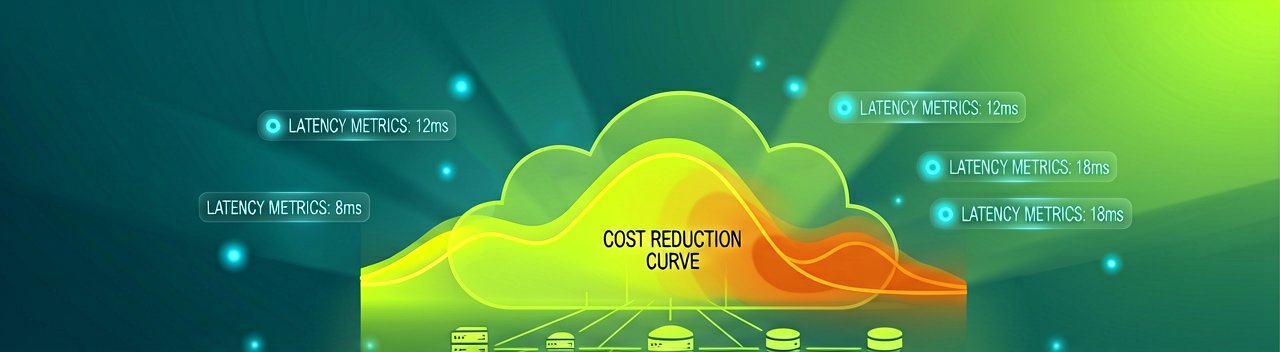
Behind the Technology Curve: The real triumph of this dual-model release lies not in the raw parameter count, but in how masterfully Alphabet’s engineering teams solved the crushing economic realities of infrastructure scale. For the past several years, the tech sector has wrestled with a dirty secret: running cutting-edge generative systems is an incredibly expensive endeavor that actively erodes traditional software margins. By re-engineering the core pipelines to handle complex reasoning tasks with a fraction of the typical compute overhead, Google has effectively broken the efficiency bottleneck, turning what was once a bleeding-edge research project into a highly efficient profit engine.
This operational shift has triggered a profound reassessment among institutional investors who were previously sounding the alarm over the company's aggressive capital expenditures. Silicon Valley watchdogs note that early enterprise adopters are already reporting dramatic reductions in API latency alongside plummeting deployment costs. It is this precise combination of speed and affordability that is driving the dramatic upward revision in equity valuations, as funds rapidly pivot away from speculative tech plays and double down on platforms with a proven path to high-margin monetization.

From a historical standpoint, the breakthrough mirrors the early days of mobile architecture, where optimization ultimately proved far more valuable than raw processing power. Competitors who focused strictly on building larger, more unwieldy systems are now finding themselves flat-footed as corporate clients demand practical, cost-effective deployments rather than abstract research milestones. Alphabet’s deep institutional experience in managing global data infrastructure has allowed it to scale these models natively across its cloud ecosystems, establishing an enterprise moat that grows wider with each passing fiscal quarter.
Inside the company's mountain view headquarters, the mood has shifted from defensive posturing to aggressive market expansion. Internal strategy shifts suggest that the product teams are no longer just focused on keeping pace with independent research labs, but are instead aiming to commoditize foundational intelligence for the global workforce. By lowering the financial barrier to entry for enterprise-grade tools, Google is effectively ensuring that its proprietary ecosystem remains the default operating layer for the next decade of software development.
Reading Between the Lines
The Cost of Unchecked Optimism: While Wall Street eagerly prints a $400 price target for Alphabet, a cold calculation of the underlying fundamentals suggests that this valuation rests on a remarkably fragile premise. The enthusiasm assumes a frictionless adoption curve for these two new models, conveniently ignoring the reality that enterprise buyers are growing weary of the continuous cycle of software upgrades. Corporate IT budgets are finite, and the initial rush to integrate generative capabilities is increasingly giving way to intense internal audits over actual return on investment, leaving a glaring gap between market hype and real-world utility.
Furthermore, Alphabet’s sudden emphasis on hyper-efficient, lower-cost models exposes a quiet contradiction in its long-term strategy. For years, the tech giant justified billions in data center expenditures by arguing that massive, brute-force computing power was the only path to artificial general intelligence. By pivoting so aggressively toward lightweight, optimized systems, the company is tacitly admitting that its previous infrastructure spending spree may have overshot demand, leaving it with expensive hardware that it must now desperately monetize through heavily discounted enterprise pricing.
There is also the looming specter of regulatory pushback and data sovereignty that could severely disrupt this projected growth trajectory. As these models become deeply embedded in global workflows, they face an increasingly hostile regulatory environment that views hyperscale platforms with intense suspicion. If compliance costs escalate or international data-sharing agreements fracture further, the operational efficiencies gained in the lab will quickly be swallowed up by legal overhead, turning a projected cash cow into a complex risk management headache.
"In the modern tech sector, the shortest distance between a brilliant engineering breakthrough and a four-hundred-dollar stock price is the infinite optimism of a Wall Street analyst who doesn't have to pay the electricity bill for the data centers."
Artūras Malašauskas is an AI Systems Integrator with 20+ years of production-grade web engineering experience. He has designed, shipped, and scaled enterprise Python/PHP systems for logistics, SaaS, and public-sector clients. For the past year, he has focused exclusively on AI integrations: deploying open-source LLMs, building generative media pipelines (image, audio, video), and engineering multi-agent workflows for real production environments. His standard: reproducibility, security, cost-efficient inference—no vaporware. He documents and evaluates emerging AI tooling, separating verified capabilities from marketing noise. Technical editor at: muza-ai.eu, ai-verslas.lt, ai-naujinos.lt Connect on LinkedIn
Comments