Bhavin Turakhia’s $30 Million Gamble: Why Neo Wants to Rebuild Your Workspace from the Ground Up
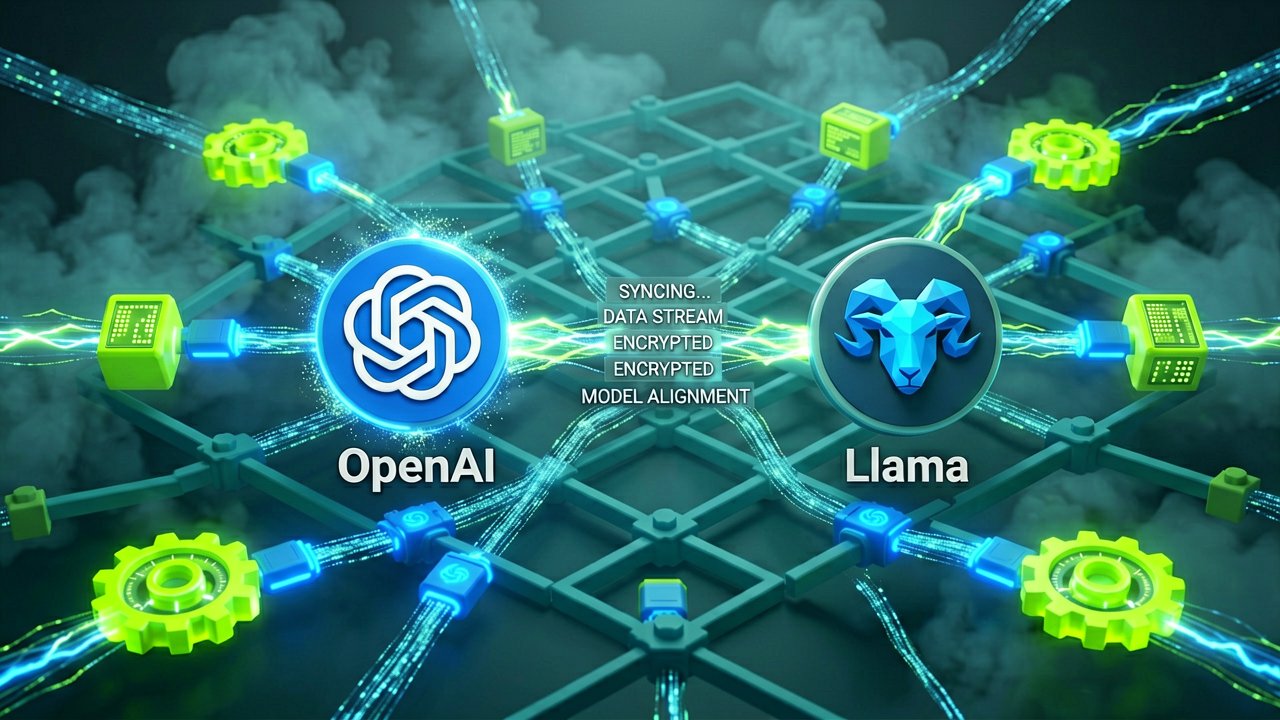
Serial tech entrepreneur Bhavin Turakhia is staging a massive intervention in the enterprise software space. On July 2, 2026, the co-founder of fintech unicorn Zeta officially unveiled Neo, an AI-native work platform backed by a cool $30 million of his own money. Instead of just slapping another chat window onto a legacy spreadsheet, Turakhia’s latest venture aims to blend task management, documents, and real-time collaboration directly with autonomous AI agents. According to details reported by TechCrunch, the system was built in under three months by a lean team of fewer than 20 engineers. It represents a bold attempt to challenge the dominance of entrenched tech giants like Microsoft and Google.
The core philosophy driving Neo is simple: workplace tools designed before the generative AI boom are fundamentally broken for the modern era. Turakhia argues that trying to patch these older platforms with standalone assistants leaves crucial organizational knowledge scattered across disconnected tabs and forgotten files. By contrast, Neo positions itself as a unified alternative that treats AI as a first-class participant in corporate workflows rather than an afterthought. To maintain ultimate flexibility for its enterprise clients, the infrastructure is entirely model-agnostic, giving companies the freedom to swap out underlying AI providers without upending their daily operations.
Challenging the Giants by Targeting the Middle Market
Taking on the likes of Microsoft Office and Google Workspace is notoriously difficult, but Turakhia is playing a highly calculated game. Rather than trying to pitch massive legacy corporations on day one, Neo is initially targeting mid-market companies and fast-growing knowledge-work sectors like SaaS, technology, and startups. A report by the Economic Times highlights that the software has already undergone rigorous internal testing across Turakhia's existing corporate ecosystem since April. This allowed the product to mature quietly before its broader commercial rollout.
This self-funded launch marks Turakhia's fifth major startup, following a long track record of successful B2B enterprise ventures that includes Directi, Radix, and Titan. His tendency to deploy personal capital early on gives his projects the runway to find a solid product-market fit without the immediate pressure of external venture capital. If Neo can successfully convince mid-sized businesses that a genuinely integrated AI workspace is worth abandoning their familiar office suites for, it could fundamentally shift how teams collaborate, organize, and execute tasks moving forward.
The Hidden Architecture of Model Agnosticism
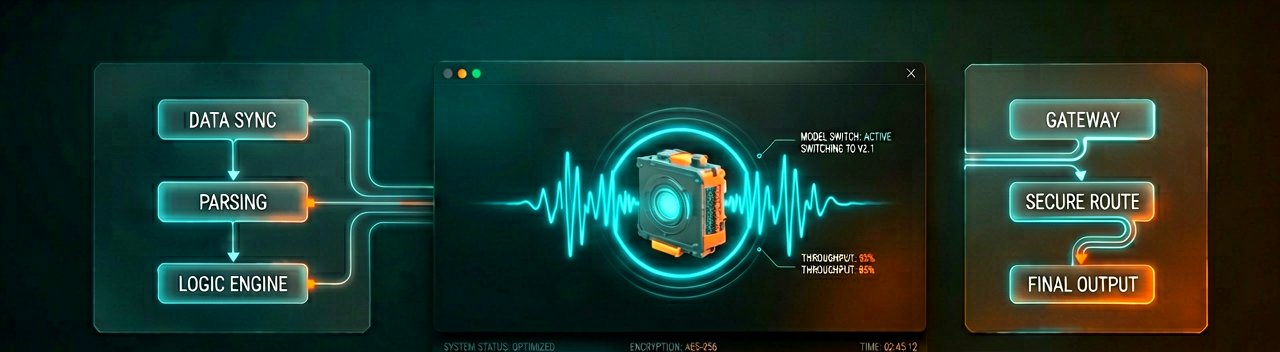
What most public reports gloss over is the structural gamble Neo is making by treating the entire underlying artificial intelligence layer as an interchangeable utility. In the current enterprise landscape, most software vendors are tethering their systems to specific large language model providers, a strategy that heavily exposes corporations to the pricing whims, downtime, and shifting capabilities of a single tech titan. Turakhia’s insistence on a model-agnostic infrastructure is not just a technical footnote; it is a calculated protective wall built for corporate IT departments that are increasingly anxious about vendor lock-in. By allowing companies to hot-swap between models from OpenAI, Anthropic, or open-source alternatives like Meta's Llama series, Neo aims to decouple the user interface from the volatile AI supply chain.
This architectural flexibility addresses a profound, yet quiet, frustration brewing among chief information officers who have spent the last two years piloting fragmented AI tools. When an enterprise adopts a tool that relies exclusively on a single proprietary model, they are inherently adopting that model's specific data-handling policies, latency quirks, and regional compliance limitations. Neo's framework acts as a translation layer, meaning a company can route sensitive financial analysis through a highly secure, self-hosted open-source model while letting a cheaper public API handle routine text summaries. This level of granular control is designed to appease strict European and American data governance standards, which have historically slowed down the corporate adoption of generative AI.
The Realities of the Three-Month Sprint
Building a comprehensive enterprise suite in under ninety days sounds like typical Silicon Valley hyperbole, but the backstory reveals a hyper-focused development methodology that only a seasoned founder could orchestrate. Instead of assembling a bloated engineering organization plagued by communication overhead, the core team was restricted to a handful of elite developers from Turakhia’s existing companies. This tight feedback loop allowed them to bypass the bureaucratic morass that usually bogs down enterprise software design. By utilizing pre-tested, modular components from earlier B2B ventures, the engineering team focused exclusively on the hardest problem in the space: creating a unified data fabric where calendar events, document text, and task boards can all be read and manipulated simultaneously by an autonomous agent.
However, the velocity of this initial build presents its own set of long-term product challenges that the company must now navigate. A product spun up that quickly inevitably launches with feature gaps when compared to platforms like Microsoft 365, which have benefited from decades of edge-case refinement. While Neo excels at fluid, AI-driven task automation, it faces an uphill battle in matching the deeply entrenched, hyper-specific feature sets required by legacy power users in accounting or legal departments. The success of this lean engineering approach will ultimately depend on how fast the team can patch these traditional utility gaps while maintaining the platform's speed and architectural purity.
Betting Personal Capital Against Wall Street Expectations
The decision to inject $30 million of personal wealth into Neo rather than pursuing traditional venture capital backing highlights a fundamental shift in how modern tech pioneers view growth. Venture-backed startups are bound to aggressive, often artificial timelines dictated by fund lifecycles, forcing many AI companies to chase immediate, superficial feature releases to please board members. By self-funding, Turakhia buys the luxury of patience, allowing Neo to iterate quietly with mid-market clients without the pressure of achieving hyper-growth metrics in its first fiscal year. It is a luxury born from his previous lucrative exits, granting him the rare ability to play a long-horizon game against competitors who are answerable to quarterly public market scrutiny.
This financial independence also shifts the power dynamic when sitting at the negotiating table with mid-market enterprise clients. Corporate buyers are notoriously risk-averse, often hesitating to trust their core workflows to early-stage startups that might burn through their cash runway and vanish within eighteen months. Presenting a platform backed entirely by a billionaire entrepreneur with a continuous twenty-five-year track record of enterprise profitability removes the existential survival risk from the equation. It reframes Neo not as a fragile experiment, but as a heavily capitalized, permanent infrastructure play designed to outlast the current venture-capital-fueled AI hype cycle.
The Friction of the Unlearning Curve
Reading between the lines of this ambitious launch reveals an uncomfortable truth about corporate psychology: technology is rarely the bottleneck; human habit is. Neo’s core premise relies on the assumption that enterprises are desperate to abandon their fragmented, multi-tab workflows in favor of a clean, AI-native slate. In reality, the chaotic patchwork of Slack, Google Docs, and Jira that defines the modern tech stack is not just a collection of tools—it is an deeply ingrained muscle memory. Forcing an organization to migrate to an entirely new platform requires a massive expenditure of cultural capital and administrative willpower. Mid-market companies may be more agile than Fortune 500 behemoths, but their employees are no less resistant to having their daily operational routines radically disrupted.
Furthermore, there is a fundamental contradiction in the promise of model-agnostic autonomy. While giving companies the freedom to swap out underlying large language models prevents vendor lock-in, it simultaneously introduces a chaotic layer of unpredictability into automated workflows. An enterprise AI agent that operates flawlessly using OpenAI’s latest model may exhibit entirely different reasoning patterns, latency spikes, or subtle prompt-compliance failures when suddenly shifted to an open-source alternative. For an IT department, maintaining stable, predictable business processes is paramount. The theoretical cost savings or strategic independence of switching models could easily be erased by the engineering hours required to debug broken prompts across a sprawling, interconnected workspace.
The Real Target of Autonomous Automation
There is also a stark economic tension embedded in the concept of a platform built explicitly around autonomous AI agents. If Neo’s workflows become as highly automated and self-executing as promised, it naturally diminishes the actual volume of human interactions required to manage tasks, draft documents, and compile reports. This directly challenges the traditional seat-based subscription model that has driven the SaaS explosion for over a decade. If a piece of software allows five employees to do the work of fifty, a vendor charging per human seat is actively disincentivizing their own revenue growth. Neo will eventually have to confront this paradox, likely shifting toward complex consumption-based or value-driven pricing metrics that could alienate mid-market buyers accustomed to predictable monthly software bills.
Ultimately, Turakhia’s $30 million bet will be tested not in the labs of elite software engineers, but in the mundane trenches of daily corporate administration. The dream of a fully integrated, self-organizing digital workspace is intoxicating to founders and tech journalists alike, but the enterprise software graveyard is filled with elegant platforms that underestimated the gravity of the status quo. If Neo can successfully navigate the cultural friction of user adoption while taming the erratic nature of multi-model infrastructure, it may well define the next era of knowledge work. Until then, it remains a brilliant, highly capitalized proof of concept racing against the reality that most people simply want their existing tools to work a little bit better.
"In the grand theater of enterprise software, the ultimate iron law remains undefeated: no matter how revolutionary the underlying artificial intelligence is, it must still survive the existential dread of a Monday morning deployment by an employee who just wants to find their spreadsheets and be left in peace."
Artūras Malašauskas is an AI Systems Integrator with 20+ years of production-grade web engineering experience. He has designed, shipped, and scaled enterprise Python/PHP systems for logistics, SaaS, and public-sector clients. For the past year, he has focused exclusively on AI integrations: deploying open-source LLMs, building generative media pipelines (image, audio, video), and engineering multi-agent workflows for real production environments. His standard: reproducibility, security, cost-efficient inference—no vaporware. He documents and evaluates emerging AI tooling, separating verified capabilities from marketing noise. Technical editor at: muza-ai.eu, ai-verslas.lt, ai-naujinos.lt Connect on LinkedIn
Comments