xAI Disrupts Enterprise Workflows with No-Code Grok Voice Agent Builder

Elon Musk’s artificial intelligence startup, xAI, has officially shifted the corporate automation frontier into the auditory realm by launching the xAI Voice Agent Builder in beta. This no-code platform empowers developers and corporate operators to configure and deploy human-like, production-ready voice assistants in under two minutes without writing a single line of code. By combining a simplified interface with robust underlying enterprise tools, the release marks a critical transition away from fragile text-based chatbots and toward real-time, vocal corporate workflows.
Historically, constructing an enterprise-grade vocal assistant required engineering teams to patch together fragmented, multi-hop architectures consisting of three disjointed APIs: automatic speech recognition, a large language model, and text-to-speech. According to technical documentation released by xAI, this traditional assembly method introduces crippling latency, compounding expenses, and multiple points of failure. The Grok Voice Agent Builder bypasses this hurdle by routing conversations through a singular native speech-to-speech model path, achieving the sub-second response times necessary for realistic customer-facing interactions.
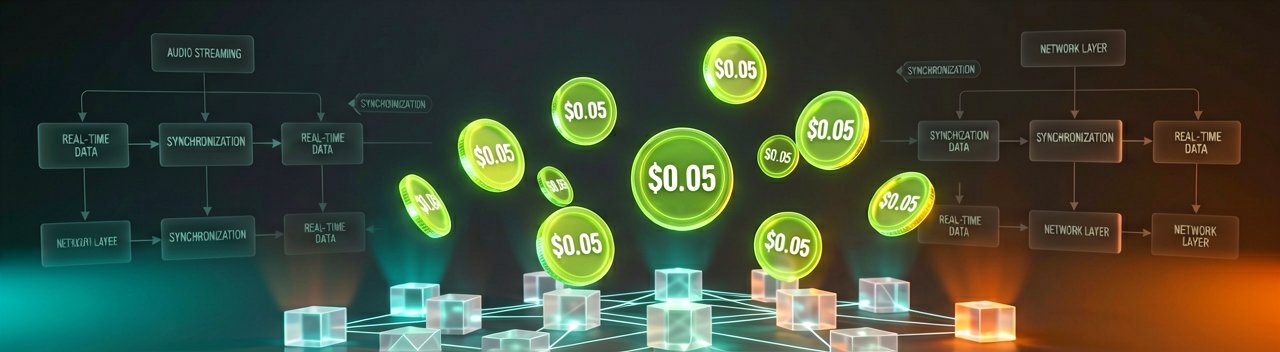
To capture immediate market share, xAI is heavily undercutting the token-based structures of legacy providers by offering a flat usage fee of $0.05 per audio minute. Analysis by tech integration platforms like eesel AI shows that while additional server-side tool lookups carry separate transaction costs, the core pricing structure offers an incredibly aggressive and predictable alternative to competitors like OpenAI. This combination of speed and low cost is already driving practical adoption across a variety of business infrastructure types.
Collapsing the Traditional Telephony Stack
The system packages everything needed for deployment natively, combining telephony provisioning, data retrieval, tool calling, behavioral guardrails, and analytics dashboards inside one console. Out of the box, businesses can leverage over 80 built-in voices or create high-fidelity brand clones using just two minutes of audio as outlined by TechDogs . For legacy compatibility, the platform allows enterprises to bridge their pre-existing phone numbers over standard Session Initiation Protocol (SIP) or link up external infrastructure using WebSockets.
Deep Integration with the Corporate Ecosystem
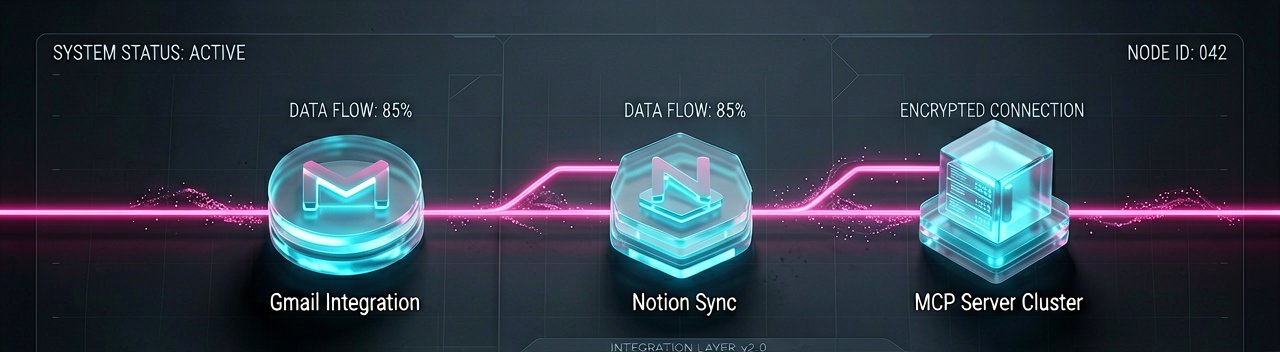
Unlike isolated conversational toys, these agents natively tap into existing enterprise workflows and databases to execute real-time operations rather than just reciting static text. System integrations natively support popular tools like Gmail, Google Drive, Notion, Outlook, OneDrive, and specialized Model Context Protocol (MCP) servers. During live customer service, scheduling, or sales calls, the agent can actively pull information from uploaded files or instantly trigger API tasks like generating support tickets and issuing monetary refunds.
Market Implications and the Enterprise Race
With this launch, xAI moves beyond experimental developer tools to challenge established call management giants like PolyAI, Retell AI, and Bland AI. Early internal deployments of the underlying stack for brands like Starlink have reportedly shown autonomous resolution rates touching 70 percent. As generative AI expands into real-world business environments, the capability to handle interruptions, heavy accents, and complex, multi-step transactions over phone lines will form the primary competitive benchmark for modern business operations.
Anatomy of the Omni-Modal Leap
Beyond the Hype: The release of the Grok Voice Agent Builder represents a calculated gambit to bypass the fragmentation that has long plagued enterprise communications. By engineering a native speech-to-speech architecture, xAI avoids the cascading delays inherent in older, multi-layered setups where audio had to be transcribed to text, processed by an LLM, and then re-synthesized into audio. Telecommunications veterans note that this architectural unification collapses latency from several seconds to a near-human cadence, removing the awkward pauses that typically alienate frustrated consumers during automated support calls.
From an operational standpoint, the platform’s real leverage lies in its aggressively low overhead. At five cents per minute, xAI is positioning itself to absorb high-volume customer service workflows that were previously cost-prohibitive to automate with cutting-edge AI. Industry analysts emphasize that this pricing strategy targets the traditional call center outsourcing model directly, offering mid-sized enterprises a clear path to scale their consumer touchpoints without a linear increase in headcount or reliance on unpredictable token-consumption models.
However, the transition to fully autonomous voice fleets introduces new layers of organizational friction. Corporate security officers are already raising questions regarding data privacy and the potential for sophisticated voice-cloning abuse. To mitigate these liabilities, the platform includes explicit system guardrails, but the burden of ensuring compliance with local call-recording and wiretapping laws remains squarely on the deploying businesses. This regulatory tightrope will likely determine how quickly risk-averse sectors like banking and healthcare adopt the platform.
The developer ecosystem is also watching the integration of the open Model Context Protocol closely. By allowing these vocal agents to securely interface with private databases and internal infrastructure right out of the box, xAI is attempting to build a sticky enterprise ecosystem rather than just a standalone voice channel. If successful, the platform will transform from a simple cost-saving call router into the primary conversational operating system through which companies manage daily logistics, internal data retrieval, and external client relations.
The Hidden Overhead of "No-Code" Automation
Reading Between the Lines: The corporate enthusiasm surrounding a platform that claims to deploy autonomous voice agents in under two minutes ignores a persistent operational reality. While navigating a slick visual dashboard and cloning a brand voice requires zero engineering talent, the actual utility of any enterprise agent is entirely dependent on its data integration layer. If the underlying data pipelines feeding an agent are poorly structured, the result is simply a highly articulate, low-latency engine for delivering inaccurate information to customers at unprecedented speeds.
Furthermore, xAI’s aggressive $0.05 per minute pricing model presents a classic loss-leader strategy that may face severe pressure as usage scales. Running real-time, native speech-to-speech models requires massive, sustained allocations of premium tensor processing units, which are notoriously expensive to operate during peak business hours. As corporate adoption climbs, xAI will eventually have to choose between subsidizing these operational losses indefinitely or quietly introducing tiered premium pricing structures that erode the very cost advantage that drew enterprises to the platform in the first place.
There is also an inherent contradiction in pitching a no-code tool to complex enterprises that naturally require hyper-customized workflows. When a voice agent encounters an unmapped edge case during a high-stakes client call, a simple visual builder rarely provides the granular debugging tools needed to diagnose the failure. Companies adopting these systems risk trapping themselves in a middle ground where they are too dependent on the platform to revert to human agents, yet lack the code-level access required to fix specialized behavioral glitches.
Ultimately, the rush to replace human call centers with real-time AI agents may trigger an unexpected consumer backlash. While a seventy percent autonomous resolution rate looks spectacular on a corporate balance sheet, it implies that thirty percent of callers are left stranded in digital loops. If the enterprise adoption of voice AI follows the historical trajectory of touch-tone menus, the businesses that stand out in the marketplace tomorrow might not be those with the most conversational AI, but those that still provide a prominent button to speak with an actual human being.
Replacing an entire customer support team with an autonomous, sub-second voice agent sounds like an absolute operational miracle—right up until the moment your synthetic brand voice politely, confidently, and flawlessly agrees to refund a customer three million dollars because of a minor database glitch.
Artūras Malašauskas is an AI Systems Integrator with 20+ years of production-grade web engineering experience. He has designed, shipped, and scaled enterprise Python/PHP systems for logistics, SaaS, and public-sector clients. For the past year, he has focused exclusively on AI integrations: deploying open-source LLMs, building generative media pipelines (image, audio, video), and engineering multi-agent workflows for real production environments. His standard: reproducibility, security, cost-efficient inference—no vaporware. He documents and evaluates emerging AI tooling, separating verified capabilities from marketing noise. Technical editor at: muza-ai.eu, ai-verslas.lt, ai-naujinos.lt Connect on LinkedIn
Comments