Autonomous Workflows Arrive: How Microsoft Agent Mode Changes Enterprise Productivity
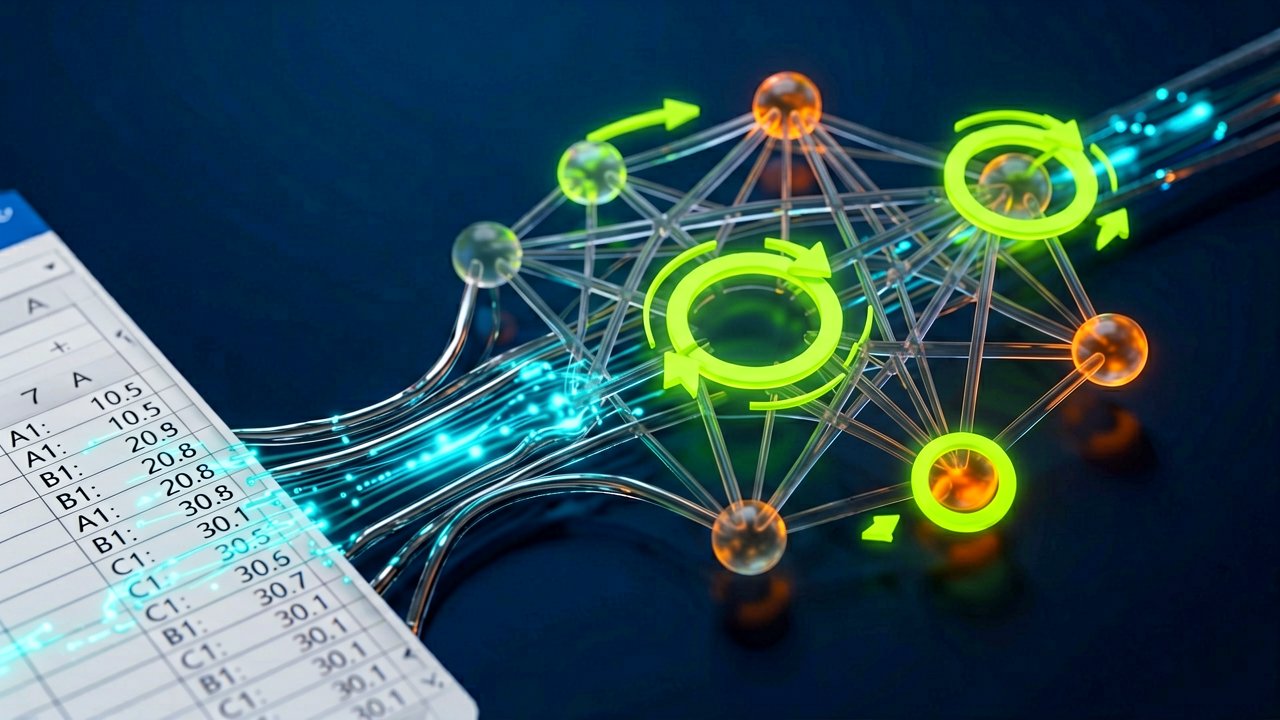
The enterprise artificial intelligence race has officially transitioned from advisory assistance to autonomous execution. With the general availability deployment of Agent Mode within Microsoft 365 Copilot for desktop applications like Excel and Word, Microsoft is moving past simple prompt-and-response dynamics. Instead of requiring human intervention for every iterative action, the software now executes complex, multi-step workflows directly within the application canvas. This fundamental platform evolution marks a strategic shift toward what Microsoft calls "vibe working," an operational philosophy where the human defines high-level goals and the AI system autonomously designs, calculates, and executes the necessary operational steps to achieve them.
This rollout repositions Microsoft 365 Copilot as an active collaborator rather than a passive assistant. For years, office workers have utilized generative tools to draft single emails or summarize documents, but Agent Mode breaks these structural limitations by acting independently across multiple turns. According to official documentation on the Microsoft Community Hub , Agent Mode in Excel allows the system to autonomously formulate next steps, build complex data tables, perform formula repairs, and generate data visualizations based entirely on overarching objective descriptions. This operational shift directly addresses early criticisms of enterprise AI tools, which often felt like a series of fragmented chat interactions that disrupted deep focus.
The strategic implications for enterprise workflows are substantial as AI systems take over heavy data processing and document structure management. Industry analysis notes that earlier iterations of digital assistants lacked the underlying architecture to modify documents directly, whereas Agent Mode can pull context from web-grounded search, utilize multi-model reasoning systems from OpenAI and Anthropic, and execute complex validation loops before presenting final outputs to the user. As reported by Enterprise DNA , Microsoft has institutionalized this framework as the default experience within Microsoft 365 Copilot, indicating an aggressive bet that organizations will choose to trust autonomous software to edit critical business files unsupervised.
Architectural Mechanics of Agent Mode
The engineering foundation supporting Agent Mode relies on a unified framework that shares core skills and intermediate structures across Word and Excel. The system processes an initial request by clarifying intent, executing background code, and engaging in internal validation loops to check reasoning before making direct document modifications. In Word, this manifests as autonomous multi-step content restructuring and formatting, while in Excel, it includes comparing actual versus forecasted data and generating integrated trend charts. By utilizing shared frameworks outlined on the Microsoft Tech Community, these headless Office capabilities can continuously evolve without requiring individual application re-engineering.
Market Impact and the Enterprise AI Paradigm Shift
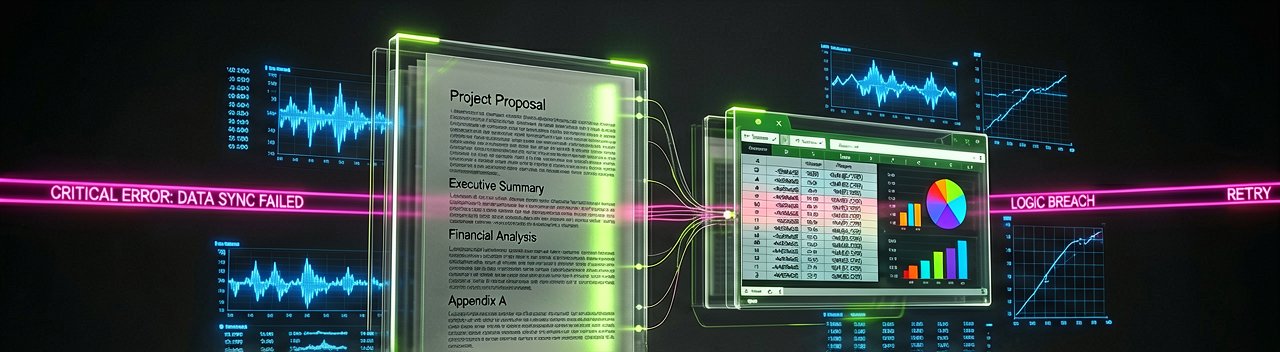
This release alters the competitive landscape by transforming static software applications into active multi-agent environments. Competitors who rushed early, prompt-based AI features to the public market are now forced to adapt to an ecosystem dominated by cross-application automation. As detailed by The Tech Buzz , the ultimate corporate test for this technology rests on reliability and user trust, as organizations evaluate whether autonomous agents minimize manual labor or introduce new auditing complexities. The success of this paradigm shift depends heavily on enterprise data quality, governance policies, and the willingness of executive leadership to delegate operational control to autonomous agents.
Behind the Architectural Shift: The Engine Powering Office Automation
The sudden move toward autonomous agents represents a radical departure from the text-completion models that kicked off the current enterprise AI cycle. Early iterations of Copilot operated inside a sandboxed chat window, treating each file as a static text dump and relying entirely on user prompts to move from step to step. This architectural dynamic forced human workers to spend hours playing project manager to their own digital assistants. By contrast, Agent Mode breaks through the chat interface by granting the AI core structural access to the underlying application runtime, allowing it to manipulate data arrays and paragraph structures behind the scenes before presenting a completed outcome.
This technical evolution solves a major headache for enterprise IT departments that have struggled with low user-retention rates for basic AI chat tools. Initial corporate enthusiasm often gave way to fatigue when users realized that crafting the perfect prompt for a complex pivot table took longer than simply building it manually. By implementing multi-turn reasoning loops, Microsoft has engineered a system that can self-correct when a formula fails or when a document format breaks. Corporate stakeholders view this change as a critical step toward proving the actual return on investment for high-priced software seats, shifting the technology from an expensive novelty to a measurable efficiency engine.
Historical context reveals that this release is the culmination of Microsoft’s decade-long effort to turn office software into a single, unified database. The foundations laid by the Microsoft Graph and centralized cloud storage are what allow these new autonomous agents to understand company relationships, historical file versions, and corporate jargon without needing endless training. Instead of building isolated models for word processing and spreadsheets, the engineering team has linked the applications together under a single orchestration layer. This ensures that an automated summary generated in Word can instantly dictate how data is categorized and visualized inside a companion Excel file.
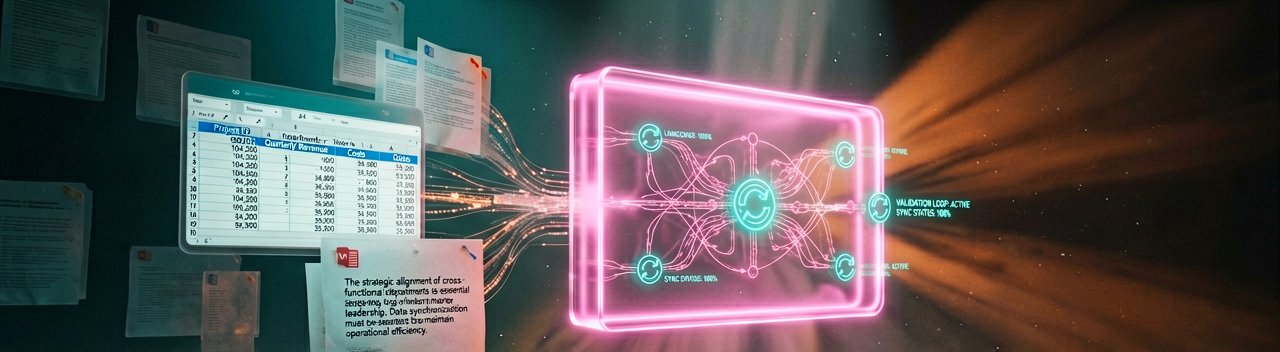
However, this level of autonomy introduces a new set of data governance risks that corporate legal teams are scrambling to address. When an AI assistant operates on a prompt-by-prompt basis, the human user serves as a natural firewall against data leaks and incorrect formatting. Under the new autonomous workflow model, a single high-level command can trigger dozens of automated edits across interconnected company documents, raising concerns about silent errors propagating through financial models. Tech executives must now figure out how to balance the clear productivity gains of headless automation with the strict compliance rules required in heavily regulated business sectors.
Reading Between the Lines: The Friction of Delegated Authority
The marketing narrative surrounding Agent Mode promises a frictionless corporate paradise where routine office work dissolves into thin air, yet this vision ignores the fundamental mechanics of organizational accountability. When a human analyst spends hours building a financial model, they develop an intimate understanding of its fragile assumptions, hidden variables, and structural quirks. Outsourcing this labor to a headless agent breaks that cognitive bond. If an autonomous agent quietly executes a multi-step calculation using a flawed data foundation, the final output may look pristine while harboring systemic errors that a human manager, removed from the creation process, cannot easily spot.
This dynamic exposes a core contradiction in the push for corporate AI efficiency. Executives purchase these tools to save time, but the resulting reality often requires workers to pivot from active creation to meticulous auditing. Reviewing hundreds of autonomously modified cells or paragraphs for subtle contextual logic errors can be far more tedious and mentally exhausting than simply generating the work from scratch. Microsoft’s focus on the ease of "vibe working" obscures the reality that in enterprise environments, the blame for a bad calculation or a misaligned corporate report still rests entirely on human shoulders, regardless of which agent pulled the data.
Furthermore, the long-term impact on junior talent development presents a silent risk to the future corporate pipeline. The mundane tasks targeted for automation—data entry, basic formula construction, and routine document formatting—are the exact proving grounds where entry-level workers master their industries. Stripping these foundational workflows away leaves a massive developmental gap between junior staff and senior decision-makers. Organizations may find themselves with a workforce that knows how to instruct an AI agent to build a spreadsheet, but lacks the core mathematical and logical skills to identify when that agent has hallucinatory errors in its output.
"We are rapidly approaching an era where software will write the spreadsheets, software will audit the spreadsheets, and humans will simply stand around holding the invoice for the computing power."
Artūras Malašauskas is an AI Systems Integrator with 20+ years of production-grade web engineering experience. He has designed, shipped, and scaled enterprise Python/PHP systems for logistics, SaaS, and public-sector clients. For the past year, he has focused exclusively on AI integrations: deploying open-source LLMs, building generative media pipelines (image, audio, video), and engineering multi-agent workflows for real production environments. His standard: reproducibility, security, cost-efficient inference—no vaporware. He documents and evaluates emerging AI tooling, separating verified capabilities from marketing noise. Technical editor at: muza-ai.eu, ai-verslas.lt, ai-naujinos.lt Connect on LinkedIn
Comments