Google Gemini Spark Arrives on macOS: Redefining Desktop Automation Through Strategic Ecosystem Partnerships
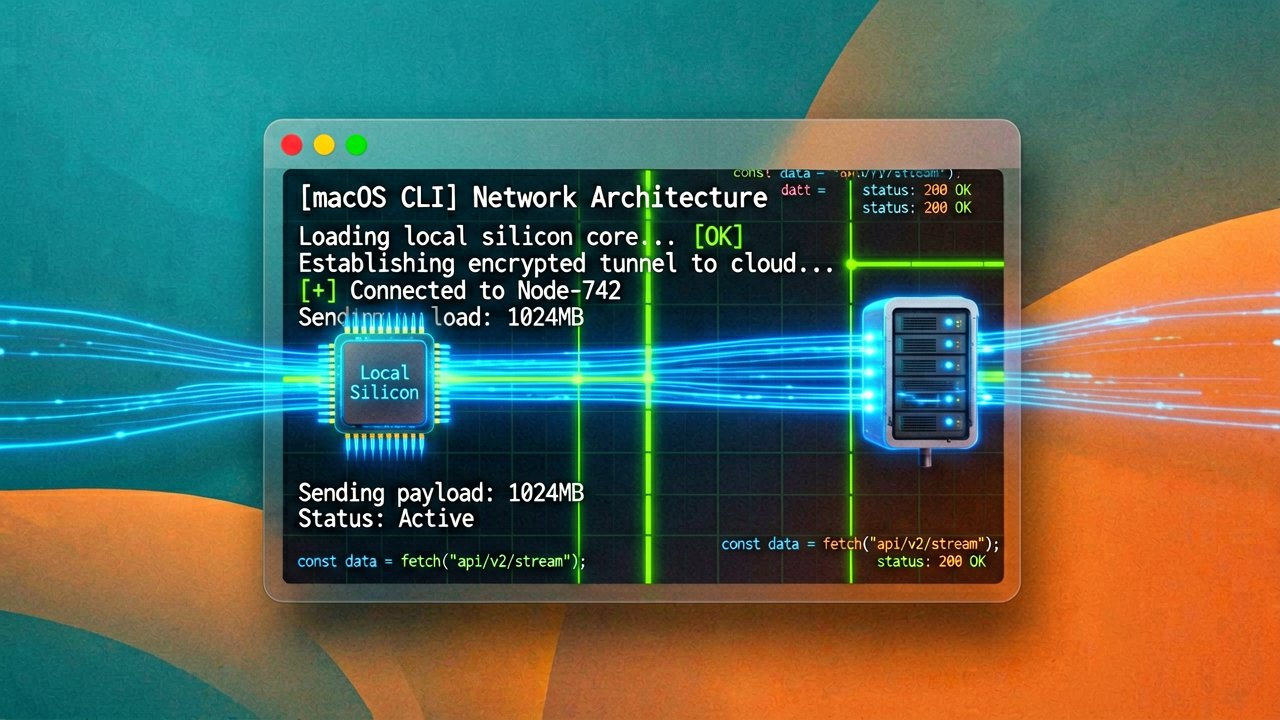
The landscape of desktop productivity has shifted significantly with Google’s official rollout of Gemini Spark for macOS. By transitioning from a reactive chatbot model to a proactive, cloud-based agentic architecture, Google is delivering continuous, always-on automation directly to the Mac ecosystem. This rollout marks an aggressive move to capture power users and enterprise professionals who rely heavily on local machine performance paired with cloud efficiency, effectively bringing sophisticated background orchestration to the desktop environment.
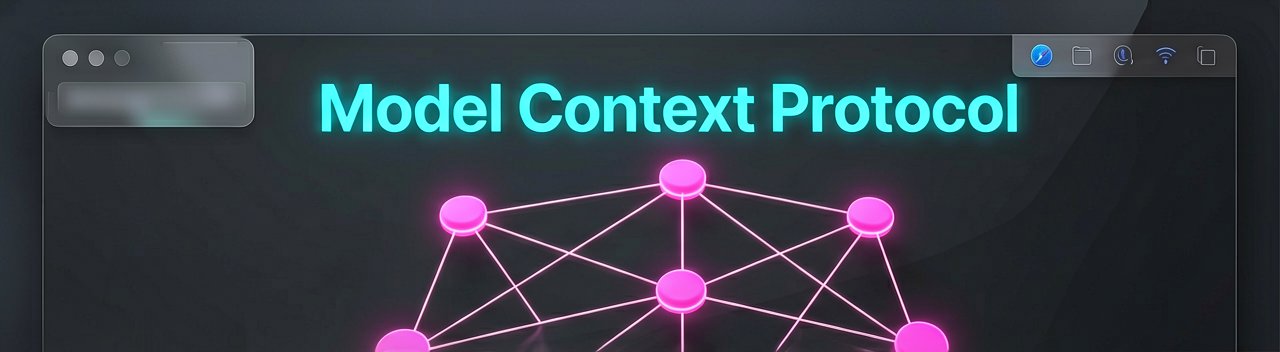
At the core of this release is a strategic six-partner integration layer built on open framework principles like the Model Context Protocol (MCP). Rather than siloing automation within its own proprietary software suite, Google has aligned with key ecosystem players to allow Gemini Spark to safely bridge cross-application gaps. Mac users can now construct multi-step, contextual workflows that monitor local events, schedule complex administrative tasks, and securely interact with third-party software, operating uninterrupted even when the primary device is locked or offline.
This deployment establishes a critical battleground for desktop AI supremacy, positioning Google ahead of traditional OS-level assistants by executing heavy agentic compute on dedicated Google Cloud virtual machines. As noted in product coverage by Google Blog and analyzed by TechCrunch, this hybrid local-to-cloud methodology ensures that complex background tasks do not compromise local hardware telemetry. For the broader industry, this establishes a new standard where desktop AI is judged not just by its conversational fluidity, but by its cross-platform operational autonomy.
The Architecture of Always-On Desktop Automation
Unlike traditional macro recorders or trigger-action automation tools that demand constant machine uptime, Gemini Spark relies on a persistent cloud-native layer to manage multi-step processes. The software captures system context through secure native macOS interfaces, allowing it to interpret local files and user actions before offloading the heavier analytical workflows to remote servers. This ensures that memory-intensive loops—such as running recurring style audits on communication history or syncing unstructured calendar notes into relational spreadsheets—happen without draining laptop battery life or utilizing local CPU cycles.
Bridging the Ecosystem Divide with Six-Partner Integration
The inclusion of a dedicated six-partner connectivity framework remedies one of the historical shortcomings of big-tech AI deployments: strict ecosystem lock-in. By leveraging flexible connector protocols, the agent expands its capabilities beyond standard Google Workspace tools to seamlessly read and write data across external enterprise platforms. This collaborative strategy allows the assistant to securely cross corporate data boundaries, meaning an event generated in a third-party project management tool can instantly trigger file generation, communications, and database updates across a user's entire local environment without manual intervention.
Market Impact and the Competitive Horizon
Google’s proactive deployment on macOS injects intense competition into Apple's native ecosystem, challenging standard platform utilities by offering an agent that operates on a continuous, 24/7 schedule. By targeting premium tiers and power-user demographics early, Google is setting a high benchmark for what native desktop intelligence should look like. The move signals an industry-wide transition where standalone productivity applications must either expose comprehensive APIs to third-party AI agents or risk becoming obsolete in automated professional workflows.
An Analysis of Agentic Architecture and Market Friction
Beneath the Automation Engine: The arrival of Gemini Spark on macOS highlights a deeper, more calculated infrastructure battle that extends far beyond a simple software update. For years, desktop assistants operated as isolated utilities, restricted by local hardware boundaries and the sandbox security protocols enforced by the host operating system. Google's strategic pivot shifts the heavy lifting of orchestration off the local silicon and onto its own cloud architecture. This design choice effectively bypasses traditional computing bottlenecks, ensuring that complex, multi-tiered scripts run seamlessly without causing thermal throttling or severe battery drain on modern laptops.
From the perspective of enterprise IT administrators and data security officers, this hybrid architecture introduces a complex set of compliance challenges. Entrusting an external AI agent to monitor, process, and execute operations across a variety of corporate applications requires unprecedented transparency in data handling. Early feedback from enterprise testing partners suggests that Google addresses these valid anxieties by leaning heavily on open-framework standards like the Model Context Protocol. By allowing organizations to define strict operational boundaries and local guardrails, the platform attempts to balance the convenience of autonomous automation with the absolute necessity of absolute data governance.

This deployment also intensifies the competitive tension between Google and Apple, transforming the Mac desktop into a high-stakes battleground for user loyalty. Historically, platform owners held a distinct advantage by embedding deeply integrated, native features directly into the operating system level. Google's rapid integration of a six-partner ecosystem effectively neutralizes this native advantage by offering a versatile utility that bridges disparate third-party applications. This approach leaves software developers with a critical strategic decision: they must either adapt their software to remain compatible with pervasive AI agents or risk being sidelined as users increasingly rely on automated workflows to manage their daily digital tasks.
The Hidden Fault Lines of Cloud-Tethered Desktops
Reading Between the Lines: The celebration surrounding Gemini Spark’s arrival on macOS obscures a fundamental paradox in modern computing philosophy. Google is marketing an advanced desktop automation tool that, by architectural design, actively distrusts the desktop itself. By offloading heavy agentic reasoning to remote cloud servers, the system reduces high-end local silicon into little more than a polished telemetry collector and display terminal. This creates an undeniable friction for power users who invested in premium hardware specifically to keep their data processing local, private, and independent of external server availability.
Furthermore, relying on a six-partner integration ecosystem introduces significant long-term maintenance risks that corporate IT departments are only beginning to calculate. Desktop automation is historically fragile; a single unannounced API tweak or UI layout change from any of the connected third-party platforms can instantly break complex, multi-step workflows. While open protocols aim to standardize these digital handshakes, Google is essentially asking enterprises to rely on a chain of dependencies where a failure at any link completely stalls background operations, turning a promised productivity booster into a troubleshooting bottleneck.
This aggressive ecosystem expansion also sets up an inevitable regulatory collision regarding platform dominance and user data boundaries. As the agent acts as an intermediary across different applications, it builds an incredibly detailed, centralized profile of an individual's or an enterprise’s operational habits. Regulatory bodies that are already scrutinizing big-tech monopolies will likely view this deep platform integration not as a helpful productivity bridge, but as a clever strategy to lock users into a single cloud ecosystem. This setup forces users to trade their operational autonomy for the convenience of automated workflows.
"We are rapidly entering an era where your computer can independently manage your entire schedule, file your taxes, and perfectly coordinate your team's workflow—provided, of course, that the cloud servers stay online, the third-party APIs never change, and you do not mind your assistant knowing more about your daily habits than your closest colleagues do."
Artūras Malašauskas is an AI Systems Integrator with 20+ years of production-grade web engineering experience. He has designed, shipped, and scaled enterprise Python/PHP systems for logistics, SaaS, and public-sector clients. For the past year, he has focused exclusively on AI integrations: deploying open-source LLMs, building generative media pipelines (image, audio, video), and engineering multi-agent workflows for real production environments. His standard: reproducibility, security, cost-efficient inference—no vaporware. He documents and evaluates emerging AI tooling, separating verified capabilities from marketing noise. Technical editor at: muza-ai.eu, ai-verslas.lt, ai-naujinos.lt Connect on LinkedIn
Comments