Nvidia Pivots to Revenue-Sharing Infrastructure Model to Redefine AI Cloud Economics
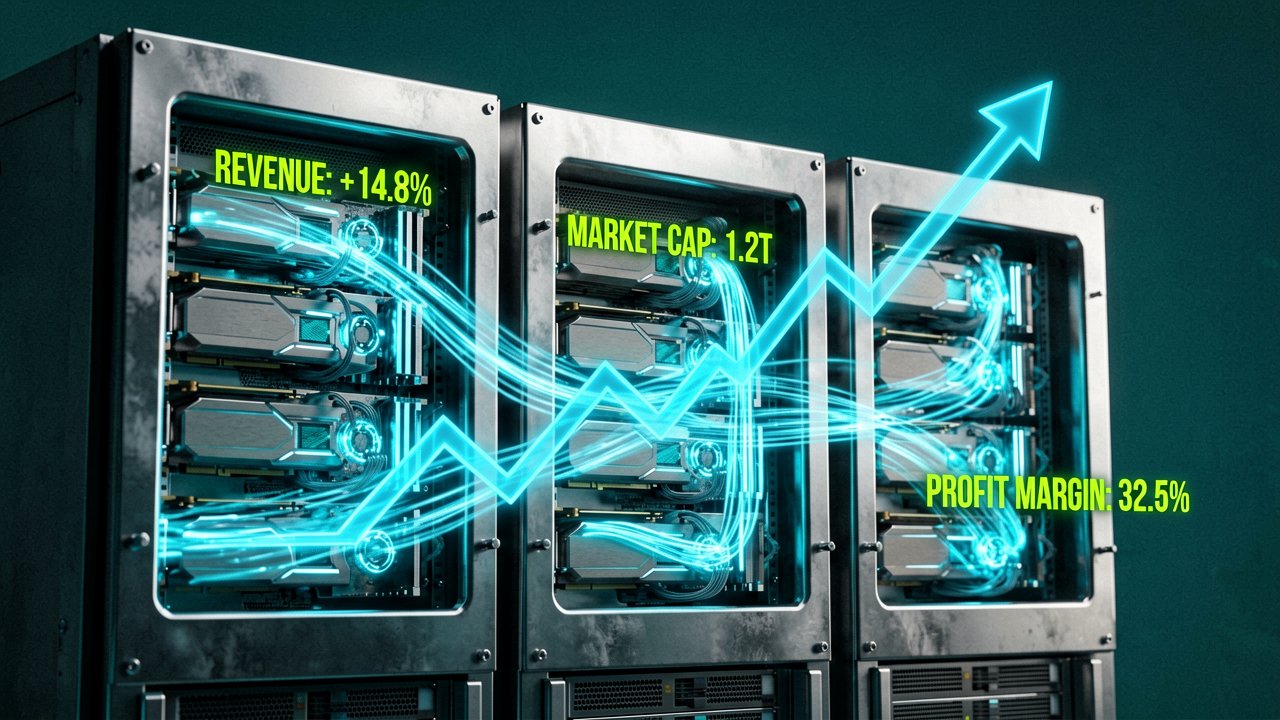
In a structural departure from its traditional hardware-sales model, Nvidia has unveiled a groundbreaking revenue-sharing and credit-support program designed to change how enterprises and startups finance large-scale artificial intelligence installations. Announced by Chief Financial Officer Colette Kress in an official NVIDIA Blog post, the strategic initiative combines token credit advances with financial backstops to unlock compute access for the fast-growing ecosystem of model builders, researchers, and regional AI players. By shifting the financial burden from astronomical upfront capital expenditure to an economically aligned partnership, Nvidia ensures immediate platform adoption while embedding its financial footprint directly into the downstream AI services economy.
Under this dual-monetization framework, participating AI cloud operators procure advanced Nvidia infrastructure using specialized credit support tied directly to the cloud services sold on that specific capacity. Nvidia receives its standard upfront product revenue from the initial hardware sales, but then continuously extracts an ongoing percentage royalty from the cloud revenue generated by that supported capacity, establishing what the company terms a recurring, usage-linked earnings stream. To further insulate early-stage cloud operators from macroeconomic risks, Nvidia has included financial repurchase guarantees within the contract terms, promising to fund the rental or buy back underutilized computing power at predetermined prices if a provider cannot fill its GPU slots.
The program launches with two primary infrastructure partners: Australia-based Sharon AI and Singapore-headquartered Firmus Technologies, who are collectively slated to deploy up to 210,000 graphics processors under the new agreement. According to market data tracked by MLQ AI, Firmus Technologies is currently developing a massive 360-megawatt data center campus on Batam Island, Indonesia, to house up to 170,000 GPUs, while Sharon AI plans to integrate 40,000 Nvidia Grace Blackwell GB300 chips for sovereign AI workloads. Enterprise demand-side participants already eager to utilize this capacity include highly specialized AI-native platform developers such as Together AI, Fireworks AI, and Baseten.
Mitigating Hyperscaler Concentration Risk and Protecting High Market Share
This aggressive pivot addresses deep structural vulnerabilities in Nvidia's current commercial position, notably its extreme reliance on a narrow cartel of hyperscale cloud giants like Microsoft, Amazon, and Google. By fostering a parallel ecosystem of localized, independent "neocloud" operators, Nvidia diversifies its customer pipeline and insulates its balance sheet against a potential spending slowdown from major tech firms. Furthermore, as major hyperscalers increasingly design proprietary custom silicon to lower internal costs, this performance-based partnership model allows Nvidia to secure long-term developer loyalty by out-financing the competition, effectively turning raw silicon into non-dilutive financing for cash-strapped AI startups.

Capitalizing on the Industry Shift from Model Training to Production Inference
The timing of this infrastructure rollout matches an industry-wide transition away from initial, capital-intensive foundation model development toward continuous, high-volume production inference. Industry analysts writing for The Economic Times note that production inference requires computing systems to operate non-stop to deliver localized AI outputs, driving token-based demand that demands flexible commercial agreements. By backing these multi-tenant "DSX AI factories," Nvidia capitalizes directly on real-time token generation, ensuring its hardware maintains an ironclad grip on enterprise software pipelines even as the commercial landscape matures.
A High-Margin Ecosystem Lock-In
While some market skeptics compare this strategy to the speculative vendor financing that exacerbated the telecom bubble of the early 2000s, tech industry journalists at Tom's Hardware observe that this program functions as an elite revenue "double-dip" built upon proven, active customer demand. For an organization already commanding massive gross margins, reaching directly into customers' recurring income statements allows Nvidia to extract maximum value from every piece of silicon shipped. This tactical evolution shifts Nvidia from a simple hardware vendor to a permanent stakeholder in global cloud operations, permanently redefining the financial boundaries of enterprise artificial intelligence adoption.
The Systemic Vulnerabilities of Algorithmic Venture Financing
Reading Between the Lines: This unconventional pivot from a pure-play hardware vendor to an infrastructure insurer exposes an underlying anxiety regarding the long-term stability of the artificial intelligence market. While Nvidia markets this revenue-sharing initiative as a benevolent democratization of compute infrastructure, it fundamentally resembles an aggressive form of market stabilization designed to prop up artificial demand. By absorbing underutilization risks and guaranteeing hardware repurchases, Nvidia is effectively constructing a financial buffer to prevent secondary-market GPU prices from collapsing. If independent cloud providers fail to attract a consistent pipeline of enterprise software developers, Nvidia risks accumulating massive quantities of depreciating, underutilized silicon on its own balance sheet, transforming a brilliant distribution strategy into a localized subprime computing crisis.
Furthermore, a glaring contradiction exists between Nvidia’s public corporate rhetoric and the economic realities facing its new tier of regional operators. The entire framework relies on the premise that smaller, localized "neoclouds" can efficiently compete with the massive economies of scale commanded by hyperscale giants like Amazon Web Services and Microsoft Azure. In reality, raw GPU access is only a single component of a viable enterprise cloud offering; independent operators routinely struggle with the exorbitant costs of long-distance fiber networks, localized power grid integration, and comprehensive cybersecurity compliance. Nvidia’s financial intervention keeps the physical chips affordable, but it does little to address the systemic operational overhead that historically drives boutique cloud providers into insolvency when enterprise spending cycles tighten.

The long-term macroeconomic implications of this dual-monetization strategy also challenge the assumption of perpetual ecosystem lock-in. By demanding an ongoing percentage royalty from the cloud revenue generated by its hardware, Nvidia introduces a permanent tax on AI startups, structurally depressing the profit margins of the very model builders it aims to nurture. As venture capital funding for speculative AI applications begins to cool, cash-strapped developers will inevitably face intense pressure to migrate their workloads away from high-tariff Nvidia environments. This financial squeeze will likely accelerate the adoption of cheaper, open-source architectures and secondary ASIC processors, inadvertently driving the exact customer defection that this revenue-sharing model was explicitly engineered to prevent.
"In the end, Nvidia has cleverly deduced that the safest way to survive an unpredictable gold rush is not merely selling shovels at an exorbitant markup, but aggressively financing the miners, leasing the land, insuring the boots, and quietly taking a twenty percent cut of whatever shiny dirt they manage to dig up before the fuel runs out."
Artūras Malašauskas is an AI Systems Integrator with 20+ years of production-grade web engineering experience. He has designed, shipped, and scaled enterprise Python/PHP systems for logistics, SaaS, and public-sector clients. For the past year, he has focused exclusively on AI integrations: deploying open-source LLMs, building generative media pipelines (image, audio, video), and engineering multi-agent workflows for real production environments. His standard: reproducibility, security, cost-efficient inference—no vaporware. He documents and evaluates emerging AI tooling, separating verified capabilities from marketing noise. Technical editor at: muza-ai.eu, ai-verslas.lt, ai-naujinos.lt Connect on LinkedIn
Comments