NVIDIA Hands AI Agents the Keys to the Biotech Lab with New BioNeMo Toolkit
General-purpose artificial intelligence models are incredibly smart, but they make terrible laboratory scientists. If you ask a standard large language model to design a novel protein binder, it will chew through millions of compute tokens reading literature, guessing parameter inputs, and trying to decide which specialized model to use, only to frequently fail the task entirely. To bridge this gap, NVIDIA unveiled the BioNeMo Agent Toolkit at the 2026 BIO International Convention in San Diego. This open-source platform is designed to transform those general-purpose AI brains into elite, autonomous lab assistants by giving them a dedicated, highly specialized scientific toolbox.
The toolkit essentially packages more than a decade of the company's life-sciences libraries, accelerated computing tools, and open models into documented, agent-callable "skills." Instead of just summarizing papers or guessing molecular structures, AI agents integrated with this stack can now independently orchestrate complex scientific computing. They can predict protein structures, analyze genomic sequences, run molecular docking simulations, and execute virtual drug screenings, shifting computational biology workflows from manual, step-by-step programming into highly automated, iterative discovery loops.
The Architecture of an Autonomous AI Scientist
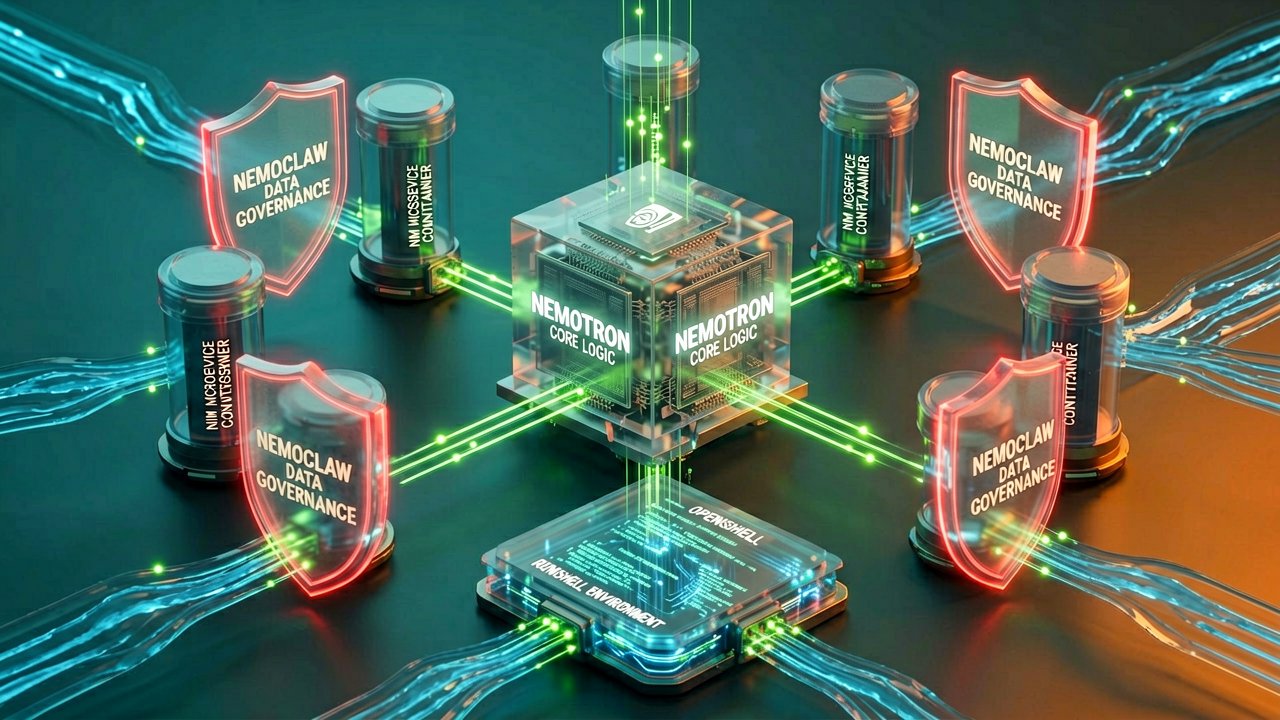
NVIDIA isn't building the final AI agents itself; rather, it is supplying the standardized infrastructure to make any agent or AI platform smart enough to operate in a lab. Architecturally, the platform acts as an agent-agnostic interface layer. It combines several foundational technologies to turn theoretical research hypotheses into repeatable, executable tasks:
- NVIDIA Nemotron: Serves as the core open-weight model framework providing the foundational reasoning and logic capabilities.
- NVIDIA NIM Microservices: Provides optimized, containerized runtime environments to quickly call and execute specific biomolecular models.
- NemoClaw Blueprints: Ensures data privacy and governance, allowing agents to securely handle sensitive proprietary biopharma datasets.
- OpenShell Runtime: Establishes a secure, controlled cryptographic execution environment where agents can run command-line tools without risking infrastructure safety.
Ecosystem Adoption and Real-World Speedups
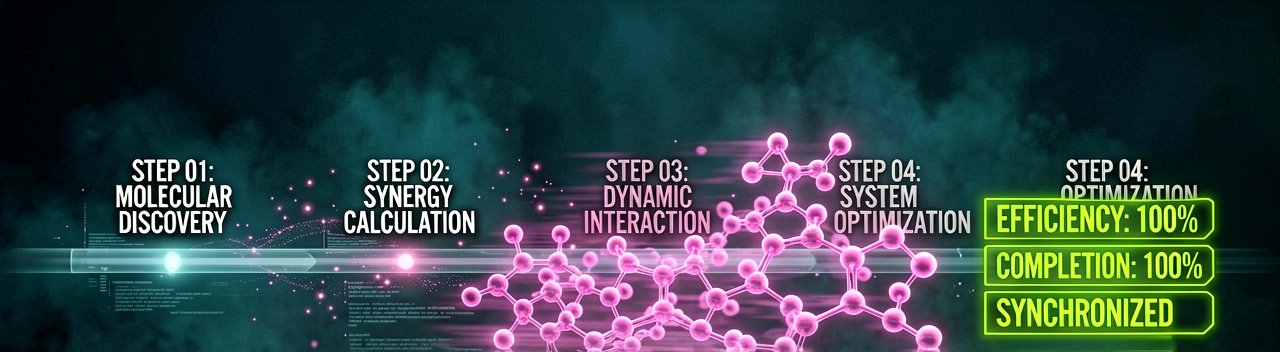
The practical value of this approach lies in its sheer speed and token efficiency. According to early developer benchmarks published on the NVIDIA Developer Blog, integrating these pre-packaged scientific skills doubled the token efficiency of autonomous agents while driving task completion rates from a shaky 57% up to a perfect 100%. In practical workflows like virtual drug screening, this allows an agent to generate compound designs, test their target binding strength, filter out unviable options, and output prioritized candidates in a matter of minutes rather than days.
A massive ecosystem of nearly 50 industry leaders and research institutions has already lined up to adopt or integrate the platform. Frontier AI labs like OpenAI and Anthropic are working to link their models with the toolkit, while tech giants like Snowflake and Databricks are leveraging it to power downstream enterprise biopharma software. On the academic side, open-science institutions are using the system to scale their own research. Notably, a collaboration with the University of Washington’s Institute for Protein Design has already doubled the runtime performance of its state-of-the-art RosettaFold3 biodesign model, cutting costs and enabling iteration at a scale that human researchers simply could not match manually.
The Hidden Bottleneck in AI-Driven Drug Discovery
Behind the Tech Hype: The real friction in modern computational biology is not a lack of powerful AI models, but rather a structural communication breakdown. Over the last five years, the life sciences sector has seen an explosion of highly accurate, hyper-specialized neural networks—some predict how a protein folds, others guess how a small molecule binds to a receptor, and others generate entirely new molecular structures from scratch. However, these tools operate as isolated islands. Human researchers have traditionally spent an immense amount of time writing custom script glue, manually formatting file outputs from one model so they can serve as inputs for the next, and babysitting data pipelines. NVIDIA’s move to introduce agent-callable frameworks addresses this exact fragmentation, aiming to replace human-in-the-loop orchestrators with software that understands both intent and execution.
From an architectural standpoint, the transition to autonomous agents marks a major paradigm shift away from static pipelines. In traditional computer-aided drug design, engineers write strict, linear workflows; if a step fails or yields poor results, the process halts until a human reconfigures the parameters. By providing large language models with automated access to these technical tools, an agent can look at a subpar molecular docking score, realize the compound is a poor fit, and independently decide to tweak the chemical structure or try an entirely different modeling approach. This mimics the iterative trial-and-error process of a human chemist, but it happens at the hyper-accelerated speed of a GPU cluster.
This evolution also signals a shifting dynamic between tech providers and the pharmaceutical industry. For years, major drug makers were hesitant to hand critical research phases over to black-box AI systems due to reproducibility and data privacy concerns. By building the platform on an open-source framework and anchoring it within secure, containerized microservices, the strategy shifts toward giving enterprises full custody over their proprietary data. Pharmaceutical companies can deploy these agents locally within their own secure clouds, allowing the AI to learn from decades of internal, confidential screening data without the risk of leaking valuable intellectual property to public models.
Historically, early attempts at building automated "AI scientists" stumbled because general-purpose models lacked the domain-specific reasoning required for precise lab work. Asking a standard commercial LLM to generate a chemical format often resulted in hallucinated structures that violated basic laws of physics. By constraining the agent's actions to verified, deterministic scientific tools, the system acts as a reliable supervisor rather than an unpredictable creator. The AI handles the high-level logic and strategy, while the underlying scientific libraries guarantee that the actual math, chemistry, and physics remain grounded in reality.
The broader implications for the biotech industry could fundamentally rewrite the economics of drug development, which historically requires over a decade and billions of dollars to bring a single molecule to market. While it is too early to claim that AI agents will completely eliminate clinical trial failures, accelerating the pre-clinical phase from years to weeks changes how organizations approach rare diseases and specialized therapies. By lowering the computational barrier to entry, smaller research labs and academic institutions can now run massive virtual screenings that were previously the exclusive domain of multinational pharmaceutical conglomerates with massive engineering budgets.
The Reality Check: Code Efficiency vs. Clinical Success
Reading Between the Lines: While a doubling of token efficiency and a perfect score on benchmark tasks sound impressive on a corporate slide deck, it is vital to separate computational velocity from clinical reality. In the world of biotechnology, the true bottleneck has rarely been a lack of digital hypotheses. The pharmaceutical industry is already drowning in an ocean of AI-generated candidate molecules, virtual protein designs, and predicted binding structures. The existential hurdle for any drug discovery platform is not how fast an autonomous agent can click "run" on a molecular simulation, but whether those digital designs can actually survive the brutal, chaotic reality of a living biological system.
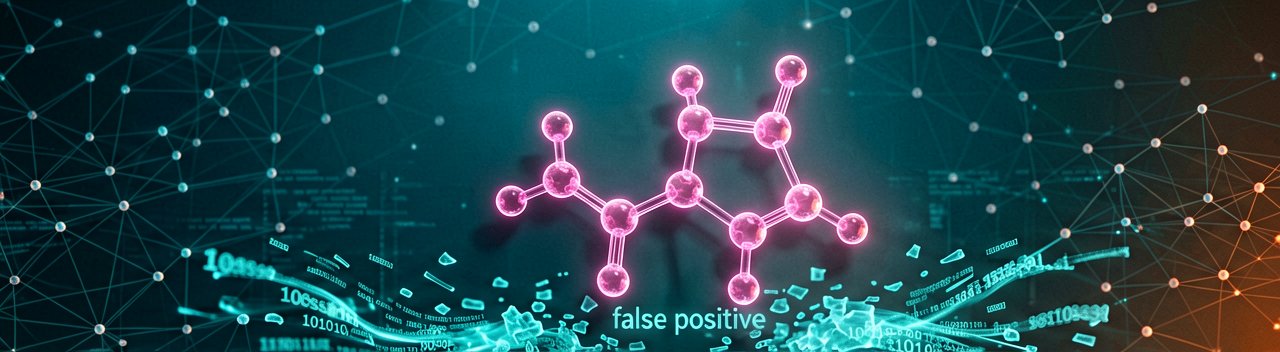
This creates an inherent contradiction in the current push toward fully autonomous AI scientists. An agent can optimize a molecular structure perfectly inside a simulated environment, passing every virtual check with flying colors, only for that same compound to prove completely toxic or entirely insoluble when introduced to real human cells. By accelerating the virtual pipeline, these agentic workflows risk simply flooding downstream wet labs with a larger, more convincing volume of false positives. Until automated robotics and physical lab validation can match the lightning speed of GPU-accelerated software, the ultimate validation of these discoveries remains firmly bottlenecked by the slow, unskippable pace of real-world biology.
Furthermore, the reliance on pre-packaged tools and microservices introduces a subtle risk of intellectual monoculture. When dozens of competing pharmaceutical companies and top-tier academic institutions begin leveraging the exact same suite of underlying models and automated skills, their discovery vectors risk converging. If every autonomous agent is using the same logic to filter out unviable compounds, the industry might collectively overlook radical, counterintuitive breakthroughs that defy standard algorithmic parameters. True scientific disruption often comes from the anomalies and eccentricities of human intuition—qualities that a highly optimized, efficiency-seeking AI agent is specifically programmed to eliminate as statistical noise.
There is also the unresolved question of liability and intellectual property ownership in an autonomous ecosystem. If an agent independently links four different open-source models, tweaks a parameter based on a hallucinated but accidentally brilliant correlation, and synthesizes a blockbuster drug, who holds the patent? Current legal frameworks globally are notoriously hostile to granting intellectual property rights to non-human entities. As biopharma companies hand more of the creative steering wheel over to autonomous agents, they enter a regulatory minefield where the line between a tool used by a human and an autonomous inventor becomes dangerously blurred.
"We are rapidly approaching a future where an AI agent can design a flawless cure for a rare disease in less time than it takes a human researcher to fill out the corporate travel expense forms for the annual BIO convention. Now we just have to wait and see if the human body’s messy, unpredictable biology is willing to cooperate with the software's immaculate code."
Artūras Malašauskas is an AI Systems Integrator with 20+ years of production-grade web engineering experience. He has designed, shipped, and scaled enterprise Python/PHP systems for logistics, SaaS, and public-sector clients. For the past year, he has focused exclusively on AI integrations: deploying open-source LLMs, building generative media pipelines (image, audio, video), and engineering multi-agent workflows for real production environments. His standard: reproducibility, security, cost-efficient inference—no vaporware. He documents and evaluates emerging AI tooling, separating verified capabilities from marketing noise. Technical editor at: muza-ai.eu, ai-verslas.lt, ai-naujinos.lt Connect on LinkedIn
Comments