SnapLogic MCP Builder Reshapes Enterprise AI Agent Development Workflows
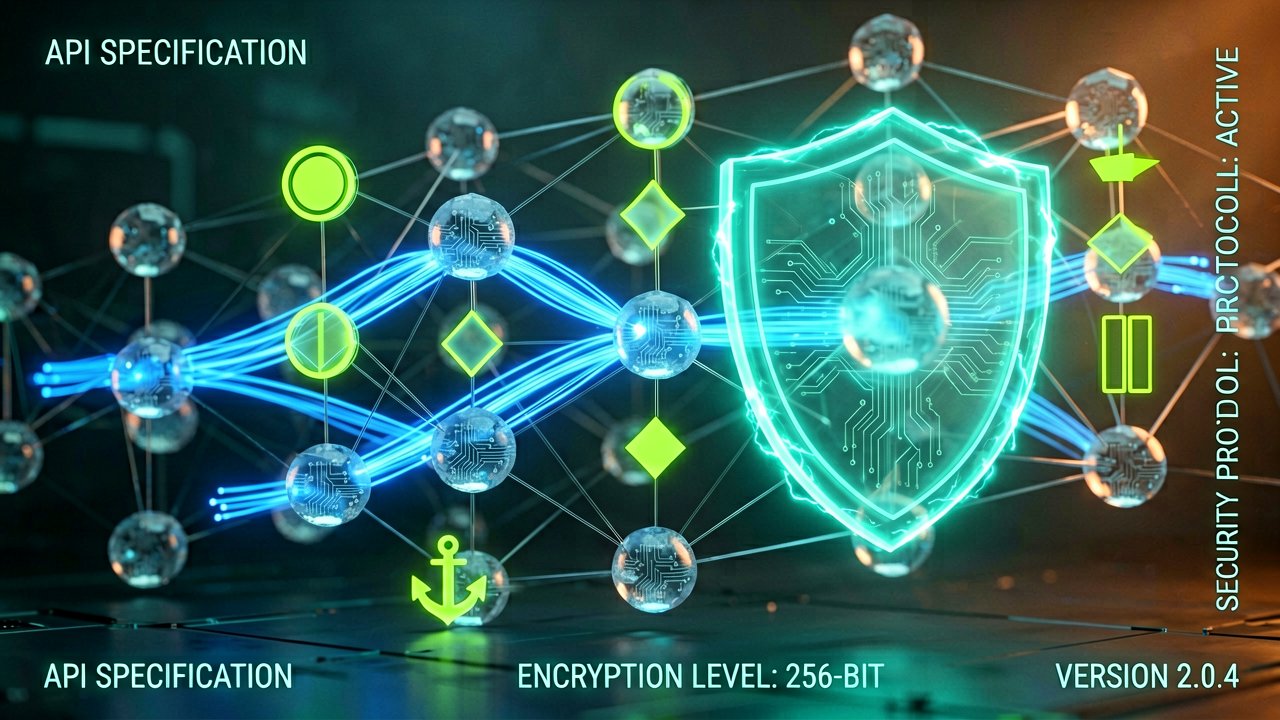
The enterprise artificial intelligence landscape is shifting from passive large language models to autonomous, goal-oriented AI agents. Connecting these intelligent agents to deeply siloed corporate data systems remains a significant operational hurdle. To bridge this gap, SnapLogic has announced the general availability of its new MCP Builder capability. This specialized tool simplifies how organizations turn internal data ecosystems into agent-ready workflows by utilizing the open-source Model Context Protocol.
Market data highlights the urgency of this operational problem. Research indicates that 50% of corporate AI initiatives are completely abandoned right after the initial proof-of-concept phase, according to a metric tracked by IT Brief UK via Gartner. Enterprises frequently struggle with giving autonomous applications safe access to proprietary infrastructure without manually rewriting large chunks of foundational code. By turning integration pipelines into standardized protocol formats, this tool eliminates custom code hurdles and helps transition stalled pilot programs into active production deployments.
Automating Protocol Complexity
The Model Context Protocol has emerged as an industry-standard connective tissue backed by major technology providers. It effectively solves the complex challenge where every unique AI model requires a custom, point-to-point data connector, as detailed by SnapLogic. The new template-based builder automatically provisions fully operational MCP Servers directly from existing software workflows, OpenAPI specifications, and enterprise API management frameworks.
Enterprise-Grade Governance and Security
Deploying autonomous agents within highly regulated corporate environments requires strict security boundaries. The vendor addresses this security risk by embedding governance directly into the core generation layer, according to documentation shared by VMBlog. The system utilizes an specialized AI Gateway alongside a feature called Trusted Agent Identity. This combination propagates specific human user permissions and access rights down to subsequent target applications, maintaining a rigorous audit trail across every active autonomous pipeline.

Strategic Outlook for Agentic Integration
This product release emphasizes a strategic industry movement away from legacy integration platform as a service models toward flexible, agentic systems. By exposing a library of over 1,000 corporate connectors as standard protocol tools, the platform merges flexible AI reasoning with strict, deterministic data systems. This architectural abstraction prevents corporate buyers from being locked into a single AI model ecosystem, allowing enterprise technology leaders to swap out underlying language models as the broader marketplace continues to mature.
The Architectural Pivot Beyond Legacy iPaaS
Behind the Scenes: The launch of the MCP Builder represents a fundamental shift in how enterprise software vendors view data movement. For over a decade, integration platform as a service models focused on deterministic, point-to-point application linkages designed to sync static records. The sudden rise of autonomous agents broke this framework, as large language models cannot efficiently navigate traditional, deeply nested API payloads. Engineering teams routinely lost months building bespoke middleware wrappers just to give a reasoning model basic visibility into corporate data silos.
By standardizing on Anthropic's open-source Model Context Protocol, the platform decouples the integration layer from specific model architectures. This strategic shift allows internal databases and operational workflows to present themselves uniformly as actionable "tools" that any compliant AI agent can read and execute. Chief technology officers are increasingly wary of vendor lock-in, knowing that an architecture built exclusively around one provider's API could become obsolete within a quarters-long development cycle. Adopting a universal protocol provides an architectural abstraction layer, allowing organizations to swap underlying model providers without rewriting their entire backend data infrastructure.
Enterprise adoption bottlenecks are shifting rapidly from model intelligence to governance and safety constraints. Early corporate pilots demonstrated that when autonomous agents are granted broad programmatic access, they frequently struggle with authorization boundaries, potentially exposing sensitive HR or financial data to unauthorized users. Industry analysts note that resolving these security blind spots usually requires manual role-based access configurations that stall deployment pipelines. The introduction of unified security gateways and federated identity mechanisms aims to solve this by forcing autonomous workflows to inherit the exact corporate permissions of the initiating user, providing an auditable trail for compliance teams.

The broader commercial implications point toward a rapid commoditization of basic API connectivity. As software ecosystems transition from human-operated dashboards to agentic workflows, the value shifts from merely possessing a data connector to dynamically exposing that connector to a reasoning engine. System integrators and development teams are pivoting toward low-code environments that can instantly generate protocol-compliant servers from legacy OpenAPI specifications. This automation significantly reduces development backlogs, transforming IT departments from bottleneck gatekeepers into facilitators of secure, agent-ready data pipelines.
The Hidden Frictions of Protocol Standardization
Reading Between the Lines: The enterprise enthusiasm surrounding universal protocols often masks a harsh architectural reality. While transforming legacy integrations into standardized Model Context Protocol tools sounds seamless on paper, it introduces a dangerous abstraction layer. Large language models do not possess innate corporate wisdom; they rely entirely on the quality, structure, and documentation of the APIs they ingest. Wrapping a poorly documented, chaotic legacy database in a shiny new protocol layer simply creates a standardized pathway for an autonomous agent to misunderstand data at an unprecedented scale and speed.
Furthermore, the technology industry's sudden rally around an open-source protocol backed heavily by Anthropic introduces a subtle geopolitical conflict within corporate IT stacks. Major cloud providers and model operators are fiercely competing to establish their own proprietary data runtime frameworks as the default industry standard. While template-based builders democratize server creation today, enterprise technology leaders risk finding themselves caught in a compliance crossfire if rival model ecosystems decide to quietly deprecate or limit compatibility with competing open standards in favor of their own native tooling.
There is also a profound operational contradiction in the promise of secure autonomous agents. Industry messaging emphasizes that these platforms enforce strict governance by propagating human user permissions down to the agent level. However, a human worker understands the unwritten context of data boundaries, whereas an LLM-driven agent interprets instructions literally. If an agent is granted valid human access to read a massive repository of internal legal documents to answer a simple query, its automated reasoning loop might still synthesize and leak sensitive insights across departments, perfectly adhering to the technical permissions while completely violating the spiritual intent of corporate security.
Ultimately, automating the pipeline from OpenAPI specifications to agentic tools will likely accelerate a massive volume explosion of experimental corporate agents. This shift risks trading a development bottleneck for a maintenance nightmare. As backend enterprise APIs inevitably change, update, and break over time, organizations will face a chaotic web of malfunctioning autonomous workflows that fail silently or act on stale schemas. The true cost of ownership will inevitably shift from the initial creation of these protocol servers to the continuous, exhausting task of auditing and debugging the erratic behaviors of agents operating within an ever-shifting corporate data landscape.
"We are rushing to give autonomous software agents the keys to the corporate kingdom before we have even taught them how to read the map, proving once again that in enterprise tech, there is nothing quite as permanent as a temporary workaround wrapped in a universal protocol."
Artūras Malašauskas is an AI Systems Integrator with 20+ years of production-grade web engineering experience. He has designed, shipped, and scaled enterprise Python/PHP systems for logistics, SaaS, and public-sector clients. For the past year, he has focused exclusively on AI integrations: deploying open-source LLMs, building generative media pipelines (image, audio, video), and engineering multi-agent workflows for real production environments. His standard: reproducibility, security, cost-efficient inference—no vaporware. He documents and evaluates emerging AI tooling, separating verified capabilities from marketing noise. Technical editor at: muza-ai.eu, ai-verslas.lt, ai-naujinos.lt Connect on LinkedIn
Comments