Loqua Launches Beta for Sui-Based Privacy Messenger with Built-In AI Agents and zkLogin
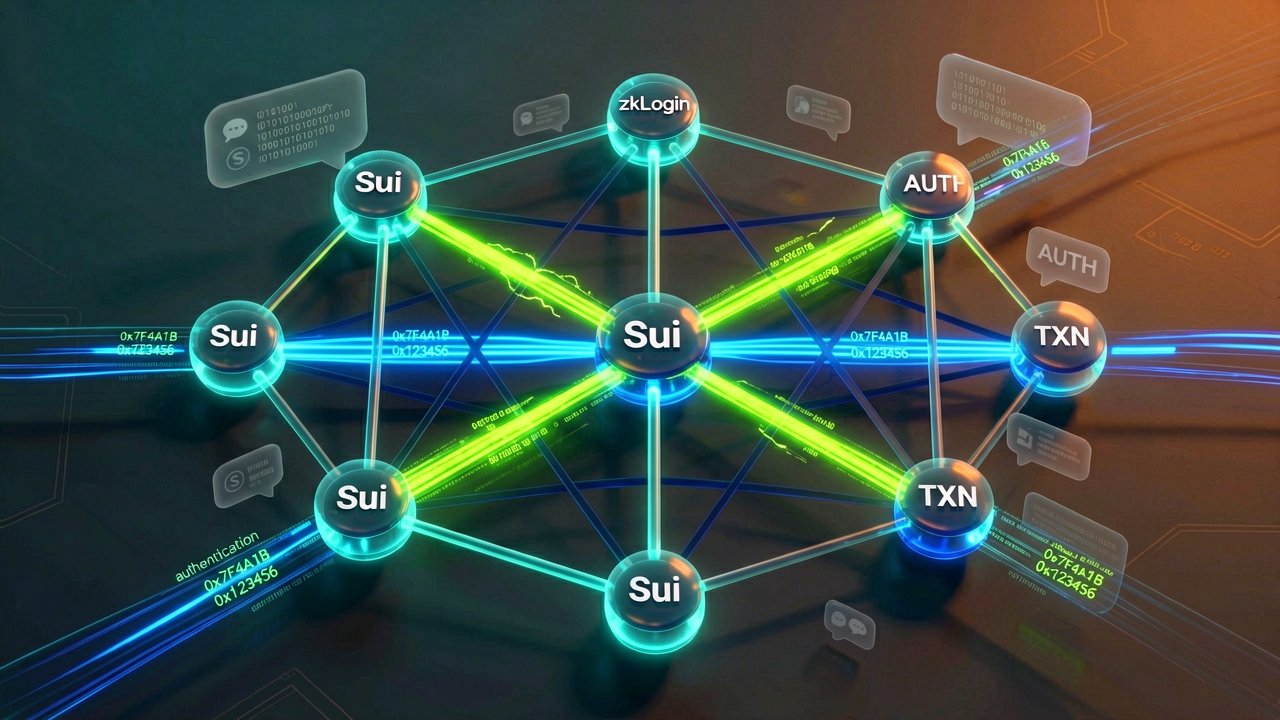
The quest for a secure yet highly functional chat application took a major leap forward on July 3, 2026. Bitget reported that Loqua officially launched the beta version of its privacy-first messaging platform built directly on the high-performance Sui blockchain network. Instead of forcing users to choose between the walled gardens of traditional chat applications and the clunky user experiences of early decentralized apps, this new platform offers encrypted peer-to-peer communication right alongside on-chain token transfers and automated tools. It is a bold attempt to make Web3 communication feel as fluid as sending a standard text message while keeping complete data ownership in the hands of the user.
What makes this rollout particularly interesting is how it addresses the onboarding friction that has plagued blockchain-based communication for years. By integrating Sui's native zero-knowledge authentication protocol, known as zkLogin, the application completely bypasses the need for users to manage complex seed phrases or private keys. Instead, individuals can log into the encrypted messenger using their familiar, everyday Web2 credentials from major providers like Google or Apple. Behind the scenes, cryptographic zero-knowledge proofs verify the user's identity on the blockchain without ever exposing their private account information, providing a seamless bridge for mainstream adoption.
Intelligent Communication Without Compromising Privacy
Beyond simple text messaging, the platform introduces specialized artificial intelligence agents designed to operate directly within its heavily encrypted environment. According to promotional announcements shared by the Sui Network, these AI agents are built to assist users with daily workflows, execute automated on-chain financial transactions, and interact with various decentralized applications through standard conversational text. Crucially, the system architecture ensures that these intelligent agents can perform their computational tasks and process on-chain commands without leaking or exposing the underlying private conversations of the users.
A Unified Hub for On-Chain Interaction
The beta release positions the messenger as a versatile, all-in-one workspace for the decentralized web. Users can participate in private group chats, explore a growing ecosystem of mini-apps, and send crypto tokens to one another as easily as sharing a photo. By combining secure end-to-end encryption with programmable assets and private AI, the platform aims to shift the narrative of blockchain messaging from a niche privacy tool into a comprehensive, highly capable daily utility.

Behind the Blockchain Hype: The architectural marriage of zero-knowledge proofs and autonomous artificial intelligence represents a massive shift in how we think about digital sovereignty. For over a decade, consumer tech has operated under a compromise where users routinely trade their behavioral data for convenience and smart features. Web3 messaging apps attempted to break this cycle but failed to achieve mainstream traction because they required users to think like cryptographers just to send a basic hello. By utilizing the Sui blockchain's infrastructure, the platform is attempting to eliminate this historical trade-off by proving that strict privacy does not have to mean a frustrating user experience.
The real technical breakthrough here lies in the implementation of zkLogin, which fundamentally rewrites the onboarding playbook for decentralized systems. Historically, a user had to write down a twelve-word seed phrase, store it safely, and manually sign every single cryptographic transaction. This friction point turned away all but the most dedicated privacy advocates. By leveraging OAuth 2.0 credentials—the standard protocol that powers every "Sign in with Google" button on the web—the barrier to entry evaporates. The system uses zero-knowledge cryptography to generate a temporary key pair that links a user’s social media account to a blockchain address, completely hiding the user's real identity from public ledgers while keeping the experience completely familiar.
The Paradox of Private AI Agents
Integrating large language models into an encrypted ecosystem introduces a fascinating engineering paradox. Traditional AI systems thrive on massive data aggregation, constantly scanning user interactions, chat histories, and personal context to refine their outputs and offer helpful suggestions. To make an AI agent useful inside an encrypted messenger without violating the core promise of total privacy, the data must remain entirely client-side or be processed through secure, isolated computational environments. Developers in this space are increasingly leaning on localized processing and zero-knowledge machine learning to ensure that while an agent can execute a token swap or summarize a chat, that data is never fed back into a centralized corporate server.
This approach moves the needle far beyond existing web-based assistants by turning the chat interface into a command line for the decentralized web. Instead of navigating separate, complex web interfaces to interact with decentralized finance protocols or look up on-chain data, a user can simply instruct an AI companion within the chat window to execute the transaction. This turns the messaging app into an active runtime environment rather than a passive communication pipe, creating a unified control center for a user's digital assets and interactions.

Challenging the Walled Gardens
From a broader industry perspective, this rollout intensifies the ongoing battle against traditional, centralized tech monopolies. Mainstream communication tools are notorious for harvesting metadata—such as who you talk to, when you talk to them, and how often—even when they advertise end-to-end encryption for the message content itself. Decentralized networks inherently disrupt this business model by distributing ledger data across thousands of independent nodes, making centralized data harvesting practically impossible. However, the success of this shift ultimately hinges on network effects; a communication tool is only as valuable as the number of people actively using it.
By targeting the massive user bases of traditional tech giants through familiar login mechanisms, the developers are betting that convenience will finally drive decentralized adoption. If the beta proves that consumer-grade AI and seamless onboarding can exist harmoniously inside a zero-knowledge framework, it could establish a blueprint for the next generation of consumer internet applications. The ultimate goal is to transition users into the decentralized web seamlessly, ensuring they enjoy advanced, modern features without ever realizing they are interacting with a blockchain network.
Reading Between the Lines: While the technical synergy of zero-knowledge proofs and autonomous AI sounds like a privacy advocate's dream, it forces us to confront a glaring contradiction in the web3 ethos. The core pitch of decentralized networks has always been absolute minimization of trust—the idea that you do not need to rely on any single central authority. Yet, by relying on Web2 giants like Google and Apple for the initial onboarding via zkLogin, this new breed of privacy messenger creates a strange dependency on the exact corporate tech monopolies it claims to bypass. If a centralized provider decides to arbitrarily ban a user's account or experiences a massive authentication outage, that user's seamless bridge into their decentralized identity could vanish instantly, proving that convenience always comes with an architectural tax.
There is also a profound technical skepticism regarding how effectively AI agents can operate inside a truly secure, encrypted sandbox without turning into a processing nightmare. Advanced AI requires significant computing horsepower and real-time data access to be truly useful. If the AI processes user data entirely on-device to protect privacy, it risks draining smartphone batteries and lagging during complex tasks. Conversely, if the system relies on cloud-based nodes to handle the heavy computational lifting of machine learning, it reintroduces a centralized point of failure and potential data leakage, regardless of how many cryptographic layers are wrapped around the transport protocol.
The Monitization and Scale Conundrum
Beyond the software architecture, the economic sustainability of privacy-centric networks remains a persistent question mark. Silicon Valley built its messaging empires on the back of data monetization and targeted advertising, models that are fundamentally incompatible with zero-knowledge infrastructure. While using a gas-efficient blockchain like Sui keeps transaction costs low for on-chain interactions, it does not magically solve the ongoing costs of maintaining decentralized storage or developing advanced AI models. If the platform eventually leans on subscription fees or token-gating to stay afloat, it risks alienating the broader public, who have been conditioned by a decade of free, ad-supported alternatives.
Ultimately, the battle for the future of digital communication will not be won in a whitepaper or a controlled beta test, but in the unforgiving arena of mass user adoption. History is littered with technically superior, deeply secure messaging applications that failed simply because they could not convince ordinary users to leave the comfort of their established social circles. The inclusion of AI agents is a clever hook to drive utility, but the platform must still overcome the massive inertia of the network effect, proving that a secure blockchain backend can deliver a product that is not just safer, but genuinely better than what consumers already use every day.
Building a completely decentralized, zero-knowledge sanctuary that relies on a Google password to let you in is the ultimate peak-Web3 paradox—proving that while we desperately want to escape the corporate matrix, we still expect it to remember our login details and hold our hand across the street.
Artūras Malašauskas is an AI Systems Integrator with 20+ years of production-grade web engineering experience. He has designed, shipped, and scaled enterprise Python/PHP systems for logistics, SaaS, and public-sector clients. For the past year, he has focused exclusively on AI integrations: deploying open-source LLMs, building generative media pipelines (image, audio, video), and engineering multi-agent workflows for real production environments. His standard: reproducibility, security, cost-efficient inference—no vaporware. He documents and evaluates emerging AI tooling, separating verified capabilities from marketing noise. Technical editor at: muza-ai.eu, ai-verslas.lt, ai-naujinos.lt Connect on LinkedIn
Comments