Soracom Wires the Machines for Sound with VoLTE for IoT and Autonomous AI Agents

The line separating traditional cellular networks from next-generation automation is getting thin, and IoT platform pioneer Soracom is about to erase it entirely. On July 7, 2026, the company will launch Voice over LTE (VoLTE) capabilities specifically engineered for IoT hardware and autonomous AI agents. Instead of treating voice like an antiquated human legacy feature, this simultaneous rollout integrates crystal-clear audio connectivity directly into the machinery of autonomous systems.
This rollout means a field-deployed sensor or a software-driven AI agent won't just ping a dashboard when something goes wrong; it can literally call a human operator to explain the situation in natural language. The service aligns with the technology preview of the company's broader autonomous assistant platform, an ecosystem expansion that recently sent BigGo Finance tracking a sharp surge in the company's market traction. By leveraging their cloud-native mobile core, they're turning what used to be a complex, multi-layered integration project into a native network feature.
For industries balancing complex field operations, the timing couldn't be better. As detailed by IT Business Today, tech teams often hit a brick wall trying to bridge the gap between physical devices, cloud backends, and AI pipelines. Giving machines a direct line via VoLTE cuts out the lag of fragmented third-party tooling, fundamentally changing how hardware and AI talk to the world.
Bridging the Silicon and the Cellular Core
What Most Reports Miss about Soracom’s upcoming launch is that it represents far more than a simple firmware patch or a routine network upgrade. Historically, connecting an on-field IoT device to a voice line required a messy labyrinth of third-party SIP trunks, external Twilio integrations, and brittle application layer APIs. By weaving Voice over LTE capabilities directly into its cloud-native mobile core, Soracom is effectively converting the carrier network itself into an application runtime environment for artificial intelligence.

This technical shift matters because it strips away latency and engineering friction. When a machine handles a critical malfunction, every millisecond lost navigating APIs increases the risk of operational damage. Under the new architecture, an edge sensor experiencing a critical fault can trigger an instant, direct outbound cellular call, using the carrier's quality-of-service guarantees to deliver human-readable natural language alerts straight to an engineer’s phone. It transforms silent telemetry data into an active, conversational safety net.
The strategic genius of this simultaneous launch lies in its convergence with the newly unveiled "SORACOM Agent" platform. Announced as a Technology Preview, this managed service introduces features like Project Memory to long-term operations, meaning the platform retains past interactions and localized procedural knowledge. Giving these learning software agents a native voice via VoLTE means they can step outside the closed loop of data dashboards and directly participate in real-world human communication networks.
For industrial enterprises looking to deploy large-scale automation, this move tackles a persistent headache: the deep divide between physical operations personnel and siloed software engineering teams. By establishing a standard cellular link that supports both high-density machine metrics and real-time audio, Soracom is creating a unified framework. Field workers no longer need to learn complex system queries, and software agents no longer need to wait passively for someone to log into a browser to see that something has gone wrong.
The Hidden Cost of Machine Chatter
Reading Between the Lines: The tech industry’s rush to give AI agents a literal voice ignores a glaring logistical reality. While a cloud-native mobile core that natively translates machine faults into crisp VoLTE calls sounds incredibly slick on a pitch deck, the practical execution faces immediate friction. Telcos have spent decades optimization-tuning networks for human-to-human conversations, not an avalanche of autonomous software bots dialing into cellular towers to report that a valve in a remote facility is vibrating three percent faster than usual.
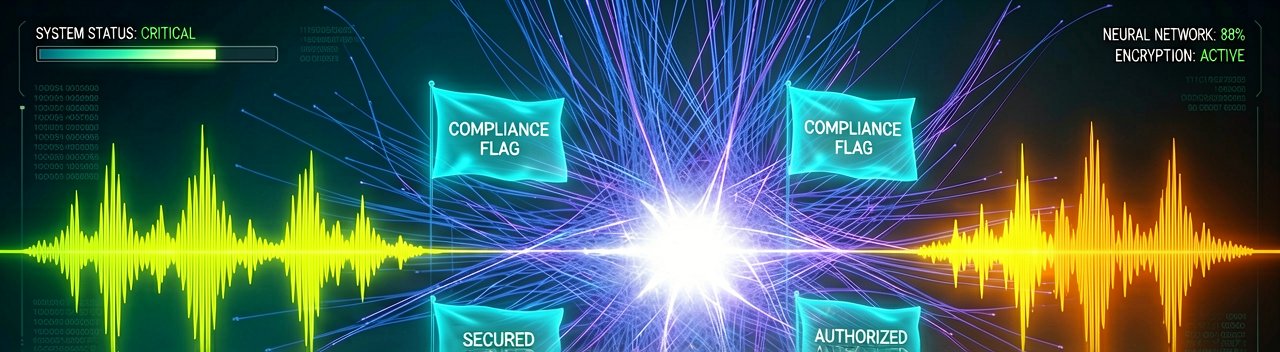
There is a distinct contradiction between the promise of streamlined automation and the chaotic reality of unstructured voice communication. If an enterprise deploys thousands of these AI-connected devices, a systemic edge-network failure could trigger an accidental denial-of-service attack on their own operational response teams. Soracom will need to convince deeply skeptical network administrators that its "Project Memory" and autonomous filtering can prevent a torrent of redundant, machine-generated voicemail spam that could easily bury a human operator.
Furthermore, this architectural shift raises massive compliance and security red flags that the marketing materials conveniently gloss over. Cellular voice networks are subject to strict regional wiretapping, lawful interception, and data sovereignty laws designed around human identities. Shoving autonomous software entities into this regulated pipeline forces a square peg into a round hole, meaning enterprise legal teams will likely stall deployments while they figure out exactly who owns the liability when an autonomous agent misunderstands an operator's voice command and proceeds to shut down a regional power grid.
Giving machines a direct phone line sounds revolutionary until you realize that within a week, an AI agent will inevitably find a way to put its human supervisor on hold while playing synthesized elevator music.
Artūras Malašauskas is an AI Systems Integrator with 20+ years of production-grade web engineering experience. He has designed, shipped, and scaled enterprise Python/PHP systems for logistics, SaaS, and public-sector clients. For the past year, he has focused exclusively on AI integrations: deploying open-source LLMs, building generative media pipelines (image, audio, video), and engineering multi-agent workflows for real production environments. His standard: reproducibility, security, cost-efficient inference—no vaporware. He documents and evaluates emerging AI tooling, separating verified capabilities from marketing noise. Technical editor at: muza-ai.eu, ai-verslas.lt, ai-naujinos.lt Connect on LinkedIn
Comments