How Intezer Custom Agents Are Reshaping the Future of Automated Security Operations Centers
The traditional enterprise Security Operations Center (SOC) model has reached a critical breaking point. Security analysts face an unprecedented influx of daily alerts, creating severe burnout and leaving enterprise environments vulnerable to hidden threats. While early automation strategies depended heavily on rigid, playbook-based tools, Help Net Security notes that today's security teams require agile, autonomous architectures capable of scaling with modern threat volume. In response to this market gap, Intezer has unveiled a new capability called Custom Agents, designed to redefine how security operations automate their workflows.
According to an announcement covered by The Manila Times , this new toolset allows enterprise security teams to build custom AI agents using natural language to automate routine, environment-specific workflows. While Intezer’s core platform handles automated alert triaging and investigations out of the box—escalating less than 2% of alerts to human teams—the introduction of Custom Agents shifts the paradigm from generalized automation to highly personalized, user-configured SecOps routines. This transition enables organizations to automate tedious daily tasks, including generating incident reports, refining detection logic, and executing proactive threat hunting, without developing complex or cost-prohibitive custom data pipelines.
The Move Toward Agentic Security Architecture
From a market analysis perspective, this release illustrates a broader industry pivot from legacy playbook-centric automation toward agentic AI ecosystems. Rather than relying on simple, linear scripts that break during unexpected anomalies, custom AI agents operate on unified engines capable of semantic understanding, dynamic planning, and tool interaction. By integrating with existing endpoint detection and response (EDR), identity, and SIEM infrastructure—such as CrowdStrike, SentinelOne, Splunk, Microsoft Sentinel, and Entra ID—these specialized agents handle localized operational friction seamlessly. This capability empowers lean security operations to maintain 24/7 forensic coverage, directly mitigating analyst fatigue while accelerating response times for enterprise organizations.
Operational Efficiency and Strategic Implications
Intezer discovered that over one-third of analyst interactions with security chatbots involved repeating the exact same requests. By enabling teams to codify these repetitive conversational tasks into standalone, event-driven, or scheduled agents, organizations can achieve compounding productivity returns. The rollout of these custom capabilities in free beta offers enterprise security leaders a distinct opportunity to scale their defensive operations efficiently without expanding human headcount. This approach positions autonomous agent frameworks as the definitive future standard for resilient enterprise threat mitigation and modern SOC design.

Reading Between the Lines: The Friction Point of Autonomous Trust
The tech industry's rapid embrace of agentic security automation often glosses over a fundamental contradiction in enterprise defense. On one hand, security leaders are eager to deploy custom AI agents to bypass the rigidity of legacy engineering frameworks. On the other hand, the core principle of modern cybersecurity remains strictly zero-trust. Introducing non-deterministic, LLM-driven agents into a corporate infrastructure creates a paradox where security teams must trust an unpredictable system to enforce absolute predictability. While an agent that translates natural language commands into API calls across CrowdStrike or Splunk offers undeniable efficiency, it also introduces an unvetted layer of software logic that operates without hardcoded boundaries.
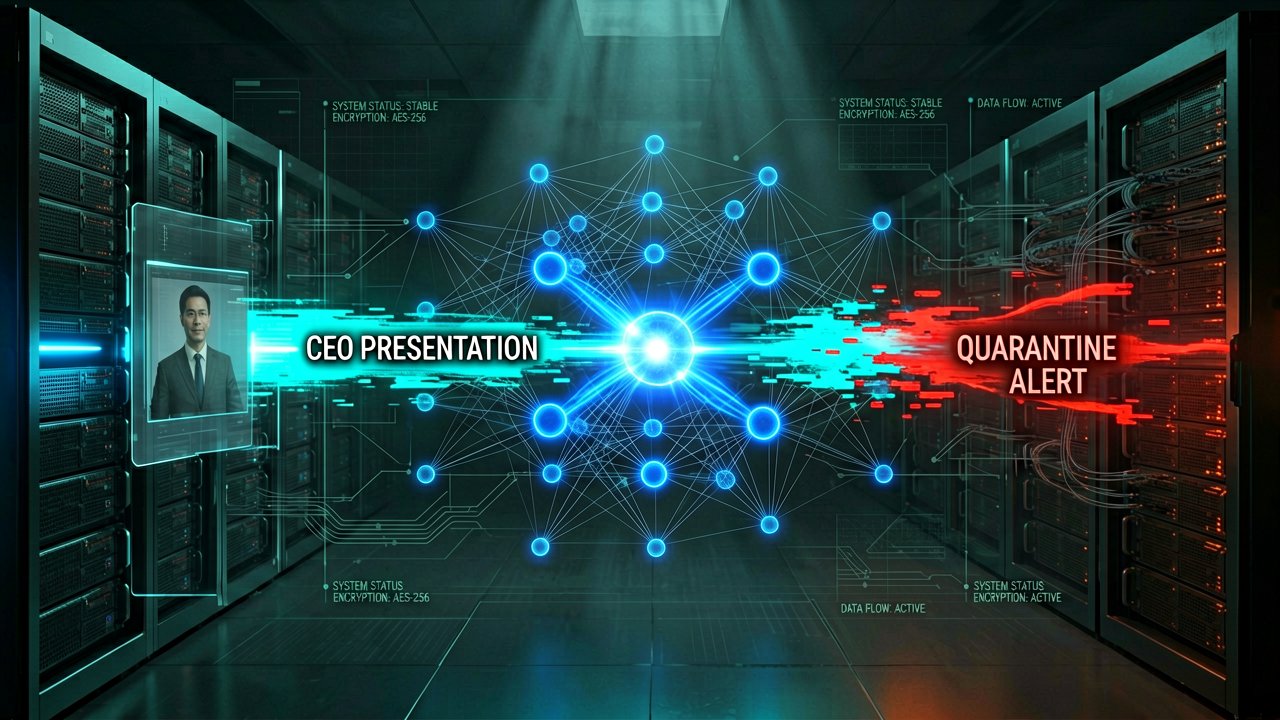
This operational reality challenges the assumption that AI agents will seamlessly eliminate security analyst burnout. In practice, the burden frequently shifts rather than disappears. Instead of spending their shifts triaging a flood of low-level alerts, enterprise analysts are transitioned into the roles of prompt engineers, validation gatekeepers, and AI auditors. When a custom agent misinterprets a nuanced internal context and accidentally quarantines a critical production server, the ensuing recovery effort can easily erase weeks of automated productivity gains. Consequently, organizations often find themselves building complex monitoring frameworks just to watch the very agents designed to save them time.
Furthermore, the long-term economic model of specialized security agents remains uncertain. The initial rollout of automated agent toolkits in free beta presents a low barrier to entry, but scaling these capabilities across complex multi-cloud environments introduces substantial hidden costs. Token consumption, API overhead, and the continuous oversight required to tune localized detection logic mean that autonomous defensive operations are rarely set-and-forget investments. Enterprise buyers will eventually have to evaluate whether maintaining a custom fleet of independent digital workers is genuinely more cost-effective than investing in a core team of highly compensated, senior engineering professionals.
The ultimate trajectory of this technology will likely be determined by how threat actors adapt to it. As defensive operations become increasingly automated, malicious groups will inevitably shift their focus toward compromising the agentic framework itself. Prompt injection attacks, data poisoning, and the exploitation of API integrations will become standard techniques for bypassing automated security perimeters. For enterprise operations centers to remain resilient, the deployment of custom agents cannot be viewed as a standalone solution, but rather as an evolving piece of a broader, deeply scrutinized defense-in-depth architecture.
Replacing burnt-out analysts with autonomous AI agents sounds brilliant in the boardroom, right up until your custom containment agent mistakes the CEO's quarterly financial presentation for a lateral data exfiltration attempt and permanently locks out the entire executive suite. Automation definitely accelerates incident response times, but as it turns out, it also accelerates the speed at which a minor misunderstanding can escalate into a full-scale corporate fire drill.
Artūras Malašauskas is an AI Systems Integrator with 20+ years of production-grade web engineering experience. He has designed, shipped, and scaled enterprise Python/PHP systems for logistics, SaaS, and public-sector clients. For the past year, he has focused exclusively on AI integrations: deploying open-source LLMs, building generative media pipelines (image, audio, video), and engineering multi-agent workflows for real production environments. His standard: reproducibility, security, cost-efficient inference—no vaporware. He documents and evaluates emerging AI tooling, separating verified capabilities from marketing noise. Technical editor at: muza-ai.eu, ai-verslas.lt, ai-naujinos.lt Connect on LinkedIn
Comments