OpenClaw Lands on iOS and Android: Your Smartphone Just Became a Sovereign AI Agent Node
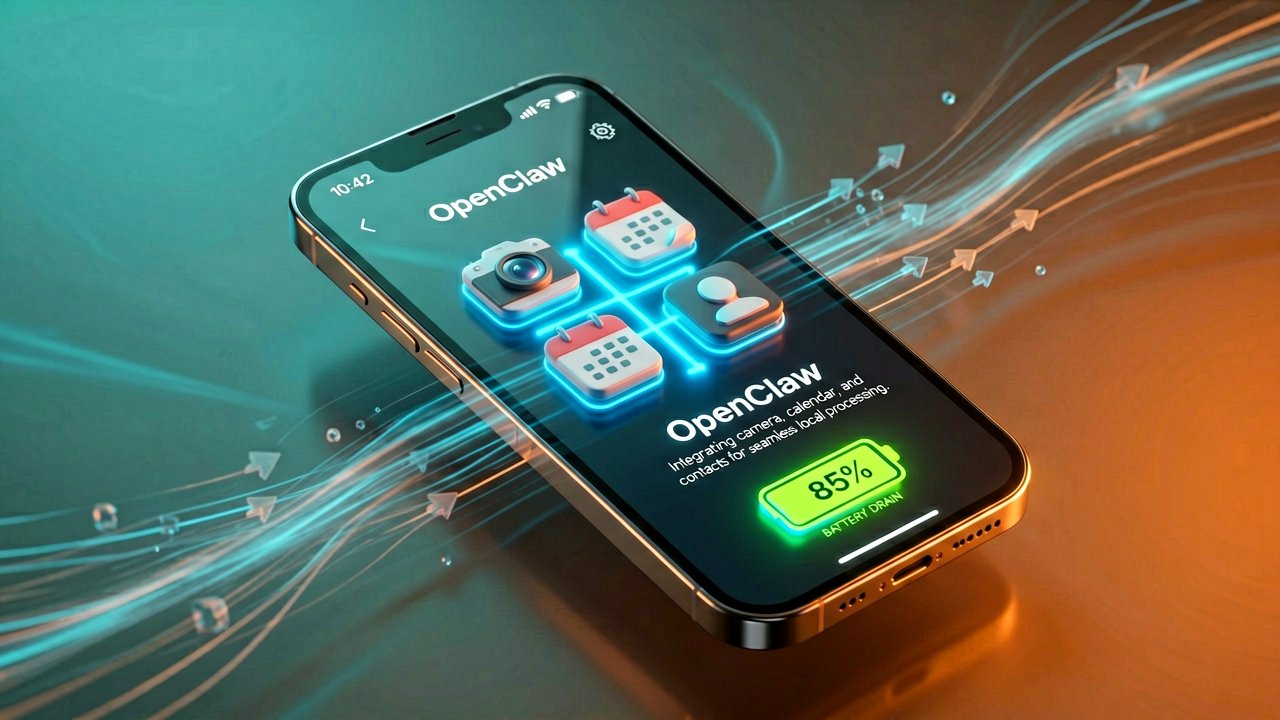
The open-source AI agent movement just claimed its most critical piece of real estate: the lock screen. The OpenClaw Foundation has officially launched standalone mobile apps for iOS and Android, breaking AI agents out of the desktop sandbox and dropping them directly into consumers' pockets. Originally built as an open-source project called Clawdbot by developer Peter Steinberger—who recently moved to OpenAI—OpenClaw has rapidly mutated from a viral github experiment into a powerhouse. This mobile rollout, highlighted by 9to5Mac and Engadget, marks the first time users can fully manage local-first agent gateways natively on mobile.
Until this release, mobile interaction with OpenClaw was a cobbled-together affair. Users were forced to pipe instructions through third-party chat apps like Telegram or WhatsApp to wake up their remote gateways. The new native apps change the paradigm completely by transforming your smartphone into a secure, device-aware node. According to TechCrunch, this lets users securely grant the AI assistant direct permission to access on-device hardware and data—including the camera, calendar, contacts, photos, and location—to trigger localized automations.
The Privacy Paradox of Pocket Automation
By keeping the architecture local-first, the software leaves the control of API keys, gateways, and configurations entirely in the user’s hands. However, giving an autonomous agent a pass to roam around your sensitive personal data is a double-edged sword. Industry analysts at Mashable have already urged caution, pointing back to severe security flaws that hit the platform earlier this year during its viral rise. While Apple’s stringent App Store review process historically blocked similar "vibe coding" tools over security fears, the OpenClaw Foundation’s sandboxed permissions model managed to clear the regulatory hurdle, turning your old or current smartphone into a 24/7 autonomous worker.
The Architectural Shift: Moving from Centralized Clouds to Local Glass
Beyond the App Store Victory: The real story of this mobile migration lies in how OpenClaw circumvents the traditional cloud tax that plagues commercial AI products. For over a decade, silicon valley has conditioned consumers to accept that advanced machine intelligence requires massive, centralized data centers. OpenClaw flips this paradigm by turning the smartphone into a control hub that orchestrates tasks locally or channels them directly to a user's private server. By bypassing corporate cloud middle-men, users avoid recurring subscription fees while gaining absolute sovereignty over their data processing.
This approach presents a fascinating technical challenge for modern mobile operating systems. iOS and Android are notoriously aggressive when it comes to killing background processes to preserve battery life and memory. To survive inside this hostile environment, the OpenClaw Foundation reengineered its agent core to run on a lightweight, event-driven architecture. Instead of maintaining a constant, power-hungry connection, the mobile node wakes up instantly when triggered by webhooks or local system changes, executes its script, and returns to a low-power state.
Balancing Developer Agility with Ecosystem Security
The transition from a viral GitHub repository to official app store distribution required a massive cultural shift for the open-source community. When Peter Steinberger first open-sourced the foundational code under the name Clawdbot, it was a wild-west environment built for developers who didn't mind editing raw config files. Bringing that level of unbridled automation to mainstream consumers meant the foundation had to build an entirely new user interface from scratch, masking the underlying complexity of API endpoint configurations and token management behind a polished, intuitive mobile dashboard.
However, this sudden accessibility introduces a highly localized security risk. Tech enthusiasts are already experimenting with letting these mobile agents auto-fill web forms, scrape personal banking portals, and interact with smart home devices via the phone's local network. If an agent misinterprets a command due to a prompt injection attack on a visited website, the consequences are no longer confined to a remote server—they happen directly to the user's personal device. Maintaining this delicate balance between absolute developer freedom and robust consumer safety will remain the project's biggest hurdle as adoption scales globally.
The Reality Check for Pocket Autonomy
Reading Between the Lines: The collective euphoria surrounding a "sovereign AI agent in every pocket" glosses over a glaring technical contradiction. While OpenClaw champions a local-first philosophy, the reality of running complex agentic workflows on standard smartphone hardware remains an uphill battle against thermal throttling and battery depletion. True autonomous agents don't just sit idle; they constantly parse DOM trees, evaluate multi-step logic, and hit external endpoints. Expecting a consumer handset to shoulder this computational burden without turning into a literal hand-warmer is highly idealistic, forcing most mainstream users to inevitably fall back on the exact remote cloud gateways the project originally sought to bypass.
Furthermore, this launch exposes the structural friction between open-source philosophy and the walled gardens of mobile ecosystems. The OpenClaw Foundation has successfully navigated the initial App Store review process, but maintaining that foothold is a completely different challenge. Apple and Google control the APIs that grant access to background processing, system notifications, and on-device storage. The moment an autonomous OpenClaw agent behaves unpredictably—or worse, executes a script that triggers a platform's anti-scraping or security tripwires—the platform owners can, and will, pull the plug on the app under the banner of ecosystem safety.
This power dynamic places OpenClaw in a fragile position. The app promises absolute user sovereignty, yet its operational survival hinges entirely on the corporate benevolence of two tech giants. If the history of mobile development has taught us anything, it is that platforms eventually absorb or restrict any third-party software that aggressively modifies or automates core system behavior. For now, early adopters can enjoy the novelty of a pocket-sized digital workforce, but the long-term viability of unconstrained AI agents on mobile remains tied to a leash held tightly by Big Tech.
We have successfully engineered a world where your phone can autonomously scrape the web, manage your schedule, and book your flights, which is incredibly impressive right up until your digital assistant drains your entire battery by aggressively arguing with a booking bot over a ten-dollar flight cancellation fee.
Artūras Malašauskas is an AI Systems Integrator with 20+ years of production-grade web engineering experience. He has designed, shipped, and scaled enterprise Python/PHP systems for logistics, SaaS, and public-sector clients. For the past year, he has focused exclusively on AI integrations: deploying open-source LLMs, building generative media pipelines (image, audio, video), and engineering multi-agent workflows for real production environments. His standard: reproducibility, security, cost-efficient inference—no vaporware. He documents and evaluates emerging AI tooling, separating verified capabilities from marketing noise. Technical editor at: muza-ai.eu, ai-verslas.lt, ai-naujinos.lt Connect on LinkedIn
Comments