Cursor's iOS App Signals Shift in Developer Workflow as AI Agents Take Over Code Management
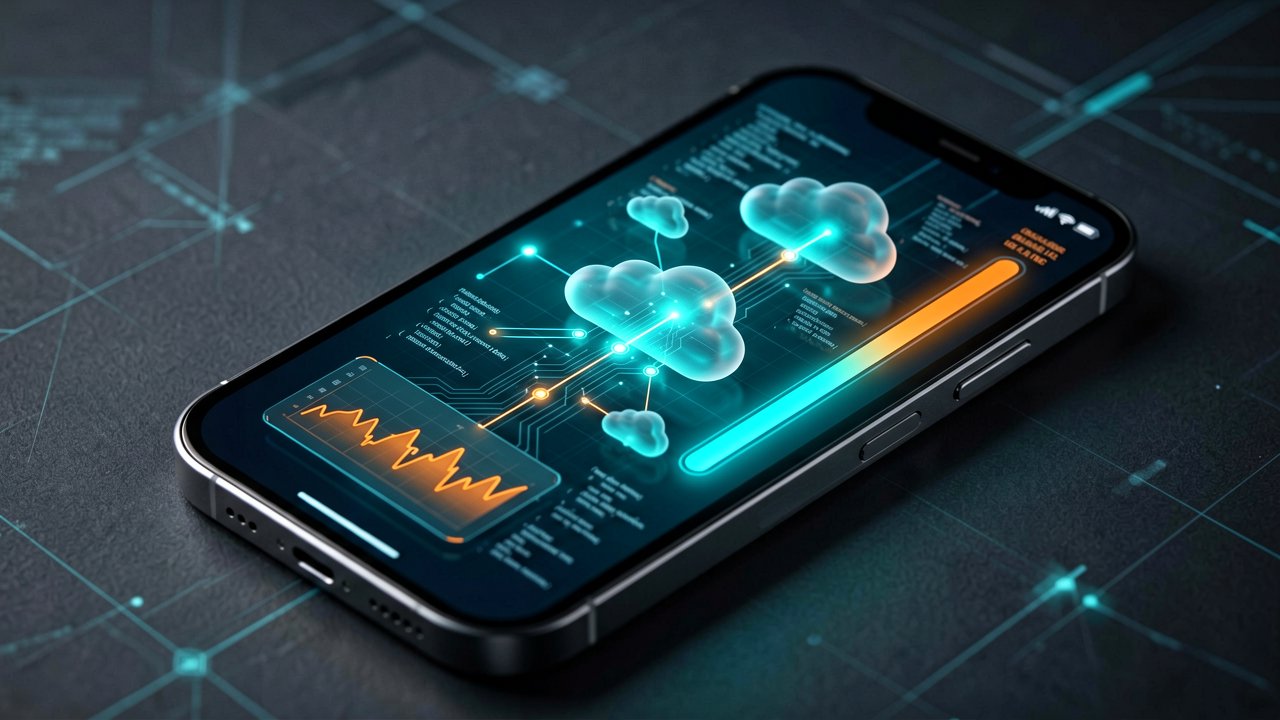
The traditional boundaries of software engineering have dissolved with the public beta launch of Cursor for iOS, a native application developed by Anysphere that untethers professional coding from desktop environments. This deployment introduces a paradigm shift where developers no longer write every line of code manually but instead orchestrate autonomous, always-on AI agents directly from mobile devices. The release leverages either isolated virtual machines in the cloud or remote desktop controls, allowing engineers to prompt, audit, and steer complex development tasks from any location via text or voice dictation.
This transition represents a critical evolutionary leap for the broader integrated development environment (IDE) market, accelerating a strategic pivot toward agentic software creation. By utilizing features like live lock-screen tracking and push notifications for code reviews, the application actively eliminates the downtime traditionally associated with long background compilation and generation tasks. Rather than replacing the engineer, this development repositions the human operator as a mobile supervisor who handles real-time course corrections, diff reviews, and pull request approvals on the move.
The Rise of Agentic Supervision Over Line-by-Line Coding
The core design philosphy behind the mobile client rests on the premise that modern AI agents are sufficiently reliable to execute code across extended stretches autonomously. According to analysis by The Next Web, the platform deliberately steers away from line-by-line editing on small touch screens, optimizing instead for high-level architecture reviews, rapid code approvals, and seamless contextual handoffs. This approach successfully addresses what the market identifies as a critical bottleneck in the modern dev cycle, allowing teams to sustain operational momentum without being anchored to a physical desk.
Market Capitalization and Strategic Consolidation
The launch of this mobile infrastructure follows explosive institutional validation and monumental consolidation within the developer tools market. As reported by TechGig, the rollout occurred shortly after a massive market surge where Anysphere secured substantial venture funding before entering a highly publicized acquisition agreement with SpaceX. This financial backing highlights an industry-wide transition where capital is aggressively shifting from generalized foundational models toward highly applied, workflow-integrated AI software capable of generating real-world business value.

Technical Integration and Remote Cloud Orchestration
From an engineering perspective, the system achieves mobility by implementing a dual-mode operational architecture announced on the official Cursor Blog . Developers can instantly provision fresh cloud environments running inside secure virtual containers or hook into local active sessions via encrypted remote conduits. The native integration of iOS-specific capabilities—such as real-time system tracking and immediate file-attachment logging—demonstrates that mobile AI orchestration has evolved past basic web wrappers into a distinct, production-ready class of developer software.
What Most Reports Miss: The Architectural Unbundling of the Desktop IDE
Behind the Scenes: The launch of Cursor's iOS application represents far more than a simple port of an editor to a smaller screen; it uncovers an aggressive architectural unbundling of the developer workspace. Historically, programming required heavy localized compute to manage compiler daemons, language servers, and continuous integration pipelines. By abstracting these operations into headless cloud environments orchestrated entirely by remote Cursor Agents, the desktop is no longer the definitive anchor of professional software production. This strategic migration shifts the primary constraint of mobile engineering from local hardware capability to the structured synthesis of high-level intent.
Industry stakeholders recognize that this transition alters the economic and operational metrics of development teams. Engineering managers note that software development lifecycle bottlenecks often stem from asynchronous code reviews and delayed deployments rather than slow typing speeds. Mobile agent management addresses this friction directly by enabling senior engineers to approve critical pull requests and debug broken production builds via natural language command while away from their desks. Consequently, engineering velocity becomes decoupled from continuous physical presence, reshaping organizational expectations around uptime, deployment speed, and asynchronous collaboration.
From a historical perspective, this pivot represents the natural conclusion of the abstraction trajectory that began with low-code platforms and basic autocomplete extensions. However, unlike traditional visual builders that compromise architectural flexibility for accessibility, agent-driven mobile environments preserve the underlying integrity of complex codebases. The human operator transitions smoothly into a system architect who evaluates contextual correctness, security implications, and design coherence. This evolution establishes a foundational shift in technical literacy, prioritizing rigorous systemic auditing and precise structural prompting over the manual management of syntactic boilerplate.
Reading Between the Lines: The Reality of Frictionless Mobile Automation
Reading Between the Lines: The celebratory narrative surrounding mobile agentic workflows conveniently minimizes a fundamental conflict between abstract natural language prompts and the absolute precision required by runtime environments. While the promise of executing a full-stack refactor via voice command on a smartphone sounds revolutionary, it assumes that AI agents can consistently interpret implicit engineering intent without introducing subtle, cascading technical debt. The reality of software engineering is that bugs are rarely caused by a developer's inability to type code fast enough; they are born from flawed logic and misunderstood requirements. Shifting the interface from a mechanical keyboard to a touchscreen prompt does not magically fix foundational logical fallacies, and it may instead make them harder to spot before they hit production environments.
Furthermore, this shift introduces an unsettling irony regarding developer productivity and cognitive fatigue. The ostensible goal of untethering engineers from their desks is to grant them greater professional autonomy and flexibility. In practice, bringing production-level code orchestration to an iOS device risks turning what used to be a clearly defined work window into an intrusive, 24/7 on-call nightmare. When code review notifications, automated bug alerts, and agent-driven branch merges can be approved directly from a lock screen while a developer is standing in line at a grocery store, the boundary between rest and active engineering disappears entirely. The tech sector must confront whether this mobile evolution actually maximizes developer output or simply commoditizes the remaining pockets of a software engineer's offline life.
Security and architectural compliance present another massive hurdle that current industry hype glosses over. Enterprises operating under strict compliance frameworks like SOC 2, HIPAA, or proprietary data guardrails face significant risks when proprietary codebases flow through external cloud orchestration layers down to consumer mobile hardware. Authenticating a complex enterprise codebase via remote desktop controls on a personal iPhone introduces a massive surface area for data exfiltration and compliance violations. Until these mobile conduits can match the rigid network isolations of localized enterprise hardware, the vision of a mobile-first developer workforce will likely remain restricted to open-source hobbyists, early-stage startup founders, and independent developers operating without corporate oversight.
We spent forty years convincing the corporate world that software engineering was a discipline of deep, uninterrupted focus requiring dual monitors and ergonomic task chairs, only to willingly surrender our hard-won boundaries so we can debug microservices while ordering a double espresso on our phones.
Artūras Malašauskas is an AI Systems Integrator with 20+ years of production-grade web engineering experience. He has designed, shipped, and scaled enterprise Python/PHP systems for logistics, SaaS, and public-sector clients. For the past year, he has focused exclusively on AI integrations: deploying open-source LLMs, building generative media pipelines (image, audio, video), and engineering multi-agent workflows for real production environments. His standard: reproducibility, security, cost-efficient inference—no vaporware. He documents and evaluates emerging AI tooling, separating verified capabilities from marketing noise. Technical editor at: muza-ai.eu, ai-verslas.lt, ai-naujinos.lt Connect on LinkedIn
Comments