Klaviyo Hits the NYSE Floor to Pit Two AI Agents Against the Retail Data Silo
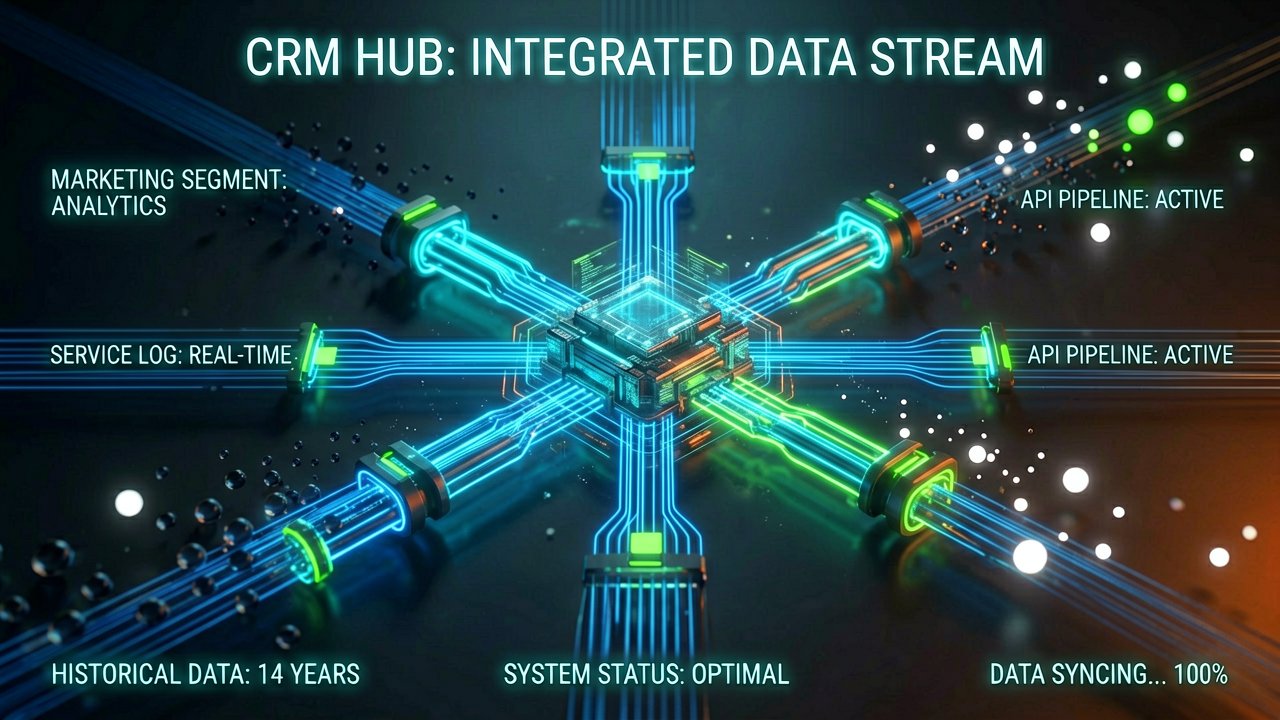
The marketing automation ecosystem is undergoing a dramatic shift from passive task assistance to fully autonomous execution, and Klaviyo is positioning itself at the absolute forefront. On June 30, 2026, during a high-profile live broadcast from the trading floor of the New York Stock Exchange, the Boston-based B2C CRM powerhouse announced the public beta of its new marketing agent, Composer. Alongside it, the company rolled out significant upgrades to its Customer Agent software, presenting the tandem as a unified, self-improving flywheel built to natively shatter the legacy walls between enterprise marketing and service data.
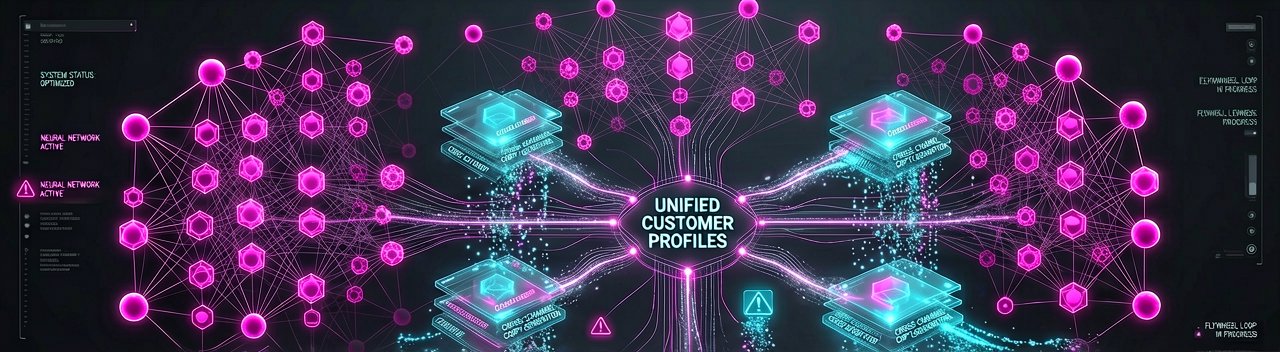
For years, e-commerce brands have struggled with generic artificial intelligence that yields generic results simply because the underlying models lack contextual brand awareness. Klaviyo's dual-agent architecture targets this exact problem by writing all interaction data back to a single customer profile in real time. When the upgraded Customer Agent handles an exchange on web chat or WhatsApp, it logs consumer preferences that Composer immediately uses to refine its marketing campaigns. It's an intelligent loop that transforms tactical support into automated growth strategies.
Breaking Down the Composer Public Beta
The core philosophy driving Composer is automation without sacrificing executive brand control. Instead of forcing teams to manually audit their workflows, users can simply prompt Composer to analyze their entire live repository. In private beta testing with brands like SPANX and Dermalogica, the system successfully flagged overlapping automation triggers and underperforming carts. The platform uses 14 years of historical data to generate cross-channel copy, but nothing goes live without explicit human sign-off.
Bridging Support and Revenue on a Unified CRM
According to an official announcement published via the Klaviyo Newsroom, the Customer Agent tool does not just surface dry policies—it actively processes live tasks like issuing refunds or applying loyalty points through open APIs. Speaking from the NYSE Live set, Klaviyo Chief Marketing Officer Jamie Domenici emphasized that the next generation of consumer loyalty belongs to companies capable of translating immediate consumer signals into highly personalized actions. While Composer is ready for public evaluation right now, further deep service capabilities are slated to roll out continuously through the remainder of the year.
The Hidden Architecture of Autonomous Retailing
Behind the Scenes: The flash of a product launch on the New York Stock Exchange floor easily obscures the gritty engineering reality required to make autonomous AI useful to a global consumer brand. For the past decade, the foundational bottleneck in e-commerce marketing hasn't been a lack of generative copy; it has been data latency. Traditional Customer Relationship Management (CRM) setups force data through complex integration pipelines, meaning a customer's recent angry interaction with a support bot might not register in the marketing tool for hours. By the time the system updates, an automated, cheery "We miss you!" promotional email has already gone out, fracturing the user experience. Klaviyo’s architecture attempts to merge these traditionally siloed software categories into a single, living data layer that processes interactions in milliseconds rather than batches.
This structural unification shifts the AI paradigm from a reactive assistant to a proactive optimization engine. When Composer scans an enterprise ecosystem, it isn't just looking for typos or broken links; it is actively cross-referencing live audience engagement against historical campaign performance. Industry insiders note that this capability addresses a massive hidden cost in modern digital marketing: automation drift. Over time, as brands layer welcome series, abandoned cart sequences, and win-back flows on top of one another, customers often find themselves trapped in overlapping, contradictory communication loops. By analyzing these relationships holistically, the system behaves less like a content generator and more like an automated traffic controller for digital brand messaging.
The operational implications for mid-market and enterprise retailers are substantial, particularly regarding human capital allocation. During early trials, internal teams at participating brands reported a marked shift in their daily workflows. Instead of spending hours building segment logic, testing variations of email subject lines, and manually routing support tickets, marketing and support executives are transitioning into editorial and strategic roles. The platform's insistence on a human-in-the-loop approval mechanism for Composer ensures that while the AI handles the heavy lifting of data analysis and initial drafting, the ultimate gatekeeping of brand voice and promotional compliance remains firmly in human hands.
However, the broader retail ecosystem remains cautiously optimistic about the speed of this autonomous transition. Veteran retail analysts point out that while a closed loop between marketing and support sounds ideal on paper, its real-world efficacy hinges entirely on the cleanliness of a brand's historical data. For legacy companies migrating from fragmented tech stacks, years of duplicated user profiles, conflicting purchase histories, and unmapped custom traits can cause autonomous agents to hallucinate or misinterpret customer intent. Klaviyo is betting that its established data ingestion infrastructure will mitigate these risks, but the true test will unfold over the coming months as thousands of public beta participants hook the agents up to their messy, real-world data pipelines.

The Friction Between Autonomy and Brand Identity
Reading Between the Lines: The tech industry's current obsession with autonomous agents overlooks a fundamental tension in consumer psychology: shoppers do not want to feel processed by a machine, no matter how seamlessly integrated its backend data is. Klaviyo’s promise of a self-improving marketing flywheel rests on the assumption that a machine can successfully balance the mathematical optimization of a campaign with the emotional nuance of brand storytelling. While an AI agent can easily determine the exact minute an abandoned cart email should be sent to maximize open rates, it cannot inherently understand the cultural zeitgeist or the subtle shifts in consumer sentiment that make a brand feel relevant and human.
Furthermore, the unified CRM model introduces a significant point of operational vulnerability. By tying marketing execution directly to customer service inputs, brands risk scaling algorithmic errors at an unprecedented velocity. If a sudden supply chain disruption or a localized shipping glitch triggers a wave of anomalous customer service inquiries, the Customer Agent's real-time logging could inadvertently cause Composer to misinterpret the broader market landscape. Optimization engines thrive on predictable patterns, but consumer retail is notoriously volatile, often leaving automated systems to optimize for a reality that changed twenty minutes prior.
There is also an undeniable paradox in the enterprise push toward total automation. If every major retail brand adopts identical autonomous agents trained on similar demographic data, the competitive advantage of using AI rapidly erodes into a baseline commodity. Marketing strategies will inevitably homogenize, leading to an ecosystem where every consumer receives perfectly timed, perfectly personalized, yet entirely uninspired communications. The true winners of this transition may not be the brands that automate everything, but rather the contrarians who use these tools to handle mundane logistics while reinvesting their human capital into wildly unpredictable, highly creative campaigns that an AI would reject as statistically sub-optimal.
"We are rapidly approaching an era of retail efficiency so absolute that a customer can get an automated refund, a tailored apology, and a personalized discount code before they even realize they are unhappy—leaving humans with absolutely nothing left to do but wonder why they bought the shoes in the first place."
Artūras Malašauskas is an AI Systems Integrator with 20+ years of production-grade web engineering experience. He has designed, shipped, and scaled enterprise Python/PHP systems for logistics, SaaS, and public-sector clients. For the past year, he has focused exclusively on AI integrations: deploying open-source LLMs, building generative media pipelines (image, audio, video), and engineering multi-agent workflows for real production environments. His standard: reproducibility, security, cost-efficient inference—no vaporware. He documents and evaluates emerging AI tooling, separating verified capabilities from marketing noise. Technical editor at: muza-ai.eu, ai-verslas.lt, ai-naujinos.lt Connect on LinkedIn
Comments