OpenClaw Goes Mobile: Native iOS and Android Apps Bring Agentic AI Directly to Your Pocket
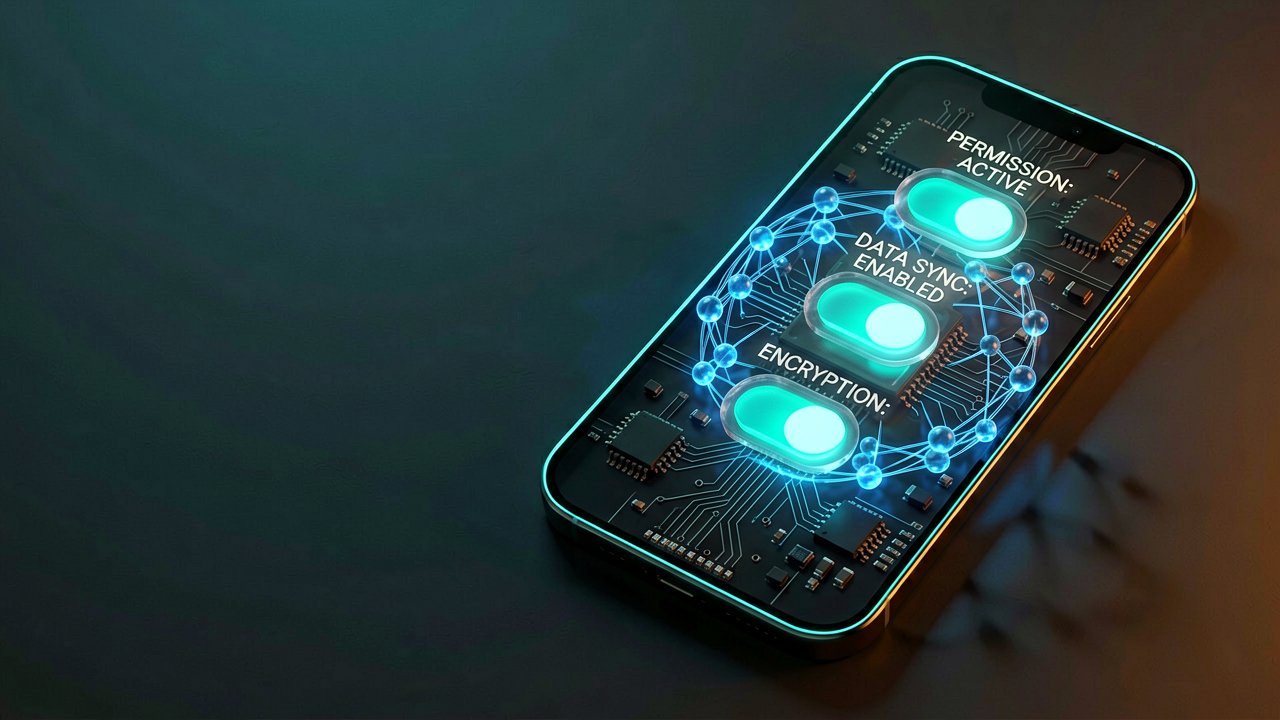
The open-source AI community just took a massive leap toward true digital autonomy. OpenClaw has officially extended its footprint beyond desktop environments by launching dedicated, native mobile apps for both iOS and Android. This cross-platform push introduces the highly anticipated Pulse 2.0 architecture, transforming standard mobile devices into fully integrated, edge-aware endpoints for self-hosted agentic AI workflows. By bridging the gap between localized control planes and cellular hardware, the team is aggressively driving mobile AI integration far beyond the limits of standard web sandboxes.
According to the official OpenClaw Documentation, these native clients don't just act as basic chat screens; instead, they function as secure nodes that directly pair with a user's self-hosted OpenClaw Gateway. By leveraging native system-level capabilities, the apps allow agents to interact with a device's hardware safely and transparently. For instance, the Android version integrates deeply with system triggers, enabling users to invoke their custom agent using standard shortcuts like holding the home button or using Google Assistant commands to seamlessly hand off prompts to the local chat composer.
Privacy-First Autonomy on the Edge
What makes this expansion particularly compelling for power users is its commitment to data sovereignty. While Big Tech tries to lock consumers into closed, cloud-dependent ecosystems, OpenClaw’s local-first architecture keeps configuration keys, workspaces, and session histories entirely in the user's hands. The mobile client utilizes granular OS permissions so that device-aware automations—ranging from handling secure approvals to managing background tasks—only access the hardware features you explicitly allow. The apps are available now on major marketplaces, including the official release on Google Play, giving developers a highly flexible, model-agnostic control plane that travels anywhere they do.
The Architectural Shift Toward True Autonomous Mobility
What Most Reports Miss: The transition from a browser-bound AI interface to a native mobile environment isn't just about UI scaling; it represents a fundamental rewiring of how autonomous agents interact with physical reality. Historically, open-source AI projects required users to be chained to their desktops or rely on clunky, third-party terminal wrappers to execute multi-step workflows. By engineering a native mobile runtime for the Pulse 2.0 architecture, developers have essentially transformed the smartphone from a passive viewing pane into an active peripheral sensor. Agents running on a remote home server can now query real-time physical telemetry without relying on proprietary cloud middleware that sanitizes or logs the transmission.

This development fundamentally alters the developer-agent paradigm by introducing persistent background execution loops. Unlike standard chatbots that run entirely on a request-response cadence, these native clients allow agents to maintain long-running context streams. A localized agent can monitor specific system states or geographic coordinates, processing these data vectors asynchronously. For the engineering team at OpenClaw, this approach circumvents the aggressive battery-saving background restrictions imposed by modern mobile operating systems, utilizing highly optimized WebSocket channels and minimalist payload serialization to ensure continuous connectivity without draining local hardware resources.
Balancing Granular Permissioning and True Agency
The core tension of mobile agentic AI lies squarely at the intersection of security and autonomy. In a traditional setup, an LLM operates safely within a sandboxed environment where its worst-case failure mode is generating hallucinated text. Once that same intelligence is granted API access to a smartphone's native camera, microphone, and file system, the risk profile changes completely. Tech journalists monitoring the space have noted that OpenClaw handles this challenge by treating the mobile application as a zero-trust gateway. Every hardware request made by a self-hosted model must match pre-configured, cryptographic security policies defined on the host server before execution is allowed.
This strict isolation protocol directly responds to a growing demand among enterprise developers and privacy advocates who are increasingly wary of monolithic, corporate AI ecosystems. While commercial providers offer mobile integration by ingesting user data into centralized telemetry pipelines, this self-hosted paradigm ensures that sensitive data, such as location histories or real-time microphone transcriptions, never touches a corporate server. It represents a philosophical bet that the future of personalized digital assistance belongs to highly fragmented, user-owned infrastructure rather than heavily policed centralized clouds.
Ultimately, this mobile push sets a new baseline for what power users expect from open-source automation. By turning smartphones into secure edge nodes, the ecosystem moves closer to providing a completely decentralized, model-agnostic assistant that operates seamlessly across environments. The focus now shifts toward community developers, who are tasked with building the plug-ins and custom modules necessary to exploit these newly unlocked mobile hardware vectors to their full potential.

The Friction Between Total Sovereignty and Mobile Realities
Reading Between the Lines: The idealistic vision of a completely self-hosted, agentic mobile companion ignores a harsh, undeniable reality: mobile operating systems are fundamentally designed to kill the very background processes that autonomous agents rely on to function. Apple and Google have spent the last decade tightening the screws on background execution to preserve battery life and enforce security. While OpenClaw’s Pulse 2.0 architecture attempts to bypass these restrictions via optimized WebSocket channels, users are still forced into a balancing act. They must choose between keeping their agents genuinely responsive or watching their phone's battery drain before lunchtime, exposing a massive gap between developer idealism and hardware practicalities.
Furthermore, the reliance on a remote, self-hosted gateway introduces an architectural bottleneck that contradicts the core promise of mobile independence. An agent is only as smart as its connection is stable. When a user enters a dead zone, steps into an elevator, or experiences a routine home broadband hiccup, their highly advanced digital assistant collapses back into a useless, non-responsive app shell. This creates a bizarre paradox where the tech-savvy elite carry around the illusion of localized edge intelligence, yet remain entirely dependent on a delicate chain of residential internet routing, dynamic DNS configurations, and reliable cellular towers.
This structural vulnerability exposes a deeper ideological divide in the current AI landscape. OpenClaw is making a bet that users are willing to tolerate technical friction, manual troubleshooting, and complex permission mapping in exchange for absolute privacy. Yet, history shows that convenience almost always triumphs over sovereignty in the consumer market. While power users celebrate the ability to pipe their system triggers into a local chat composer, the broader market is quietly adopting heavily managed, cloud-native alternatives that simply work out of the box, even if it means trading away their data piece by piece.
The ultimate trajectory of this mobile push will likely not be a revolution of mass user defection from corporate ecosystems, but rather the creation of a highly specialized sandbox for enterprise developers and privacy zealots. By turning the smartphone into a secure edge node, OpenClaw has successfully built an impressive proof of concept for decentralized infrastructure. However, until local on-device small language models can handle complex agentic workflows completely offline—without needing to phone home to a noisy desktop server running in someone's closet—mobile autonomy remains an elegant, tethered compromise.
Having a fully autonomous, privacy-respecting AI agent in your pocket is an incredible technological milestone, provided you enjoy spending your weekends debugging SSH keys on a virtual keyboard just to make your phone remind you to buy milk.
Artūras Malašauskas is an AI Systems Integrator with 20+ years of production-grade web engineering experience. He has designed, shipped, and scaled enterprise Python/PHP systems for logistics, SaaS, and public-sector clients. For the past year, he has focused exclusively on AI integrations: deploying open-source LLMs, building generative media pipelines (image, audio, video), and engineering multi-agent workflows for real production environments. His standard: reproducibility, security, cost-efficient inference—no vaporware. He documents and evaluates emerging AI tooling, separating verified capabilities from marketing noise. Technical editor at: muza-ai.eu, ai-verslas.lt, ai-naujinos.lt Connect on LinkedIn
Comments