Balancing Human Oversight and Superintelligence: The UX Crucible of AI Control
The enterprise transition toward fully autonomous, agentic AI has forced a critical paradigm shift in user experience design. As multi-agent systems gain capabilities in autonomous planning, dynamic tool usage, and long-horizon task execution, the traditional chat-based interface is proving wholly inadequate for risk management. Designers and ethicists are grappling with the reality that full automation frequently leads to user harms like process failures or reputational damage, shifting the goal from complete machine independence to controlled autonomy. As outlined in research published by arXiv, safety and security are no longer static attributes of an isolated machine learning model, but emergent properties driven by human-to-system interactions.
This intersection of agentic growth and user-centric design has ignited debate over safety versus operational efficiency. Striking the right balance is difficult because overloading a human operator with telemetry creates a massive verification bottleneck. When interfaces overwhelm users with continuous notifications, the automation paradox takes hold, transforming a labor-saving agent into an expensive manual review queue. The challenge requires a structural rethink of how AI choices are framed, visualized, and audited across complex operational lifecycles.
The Emergence of Structural Oversight Frameworks
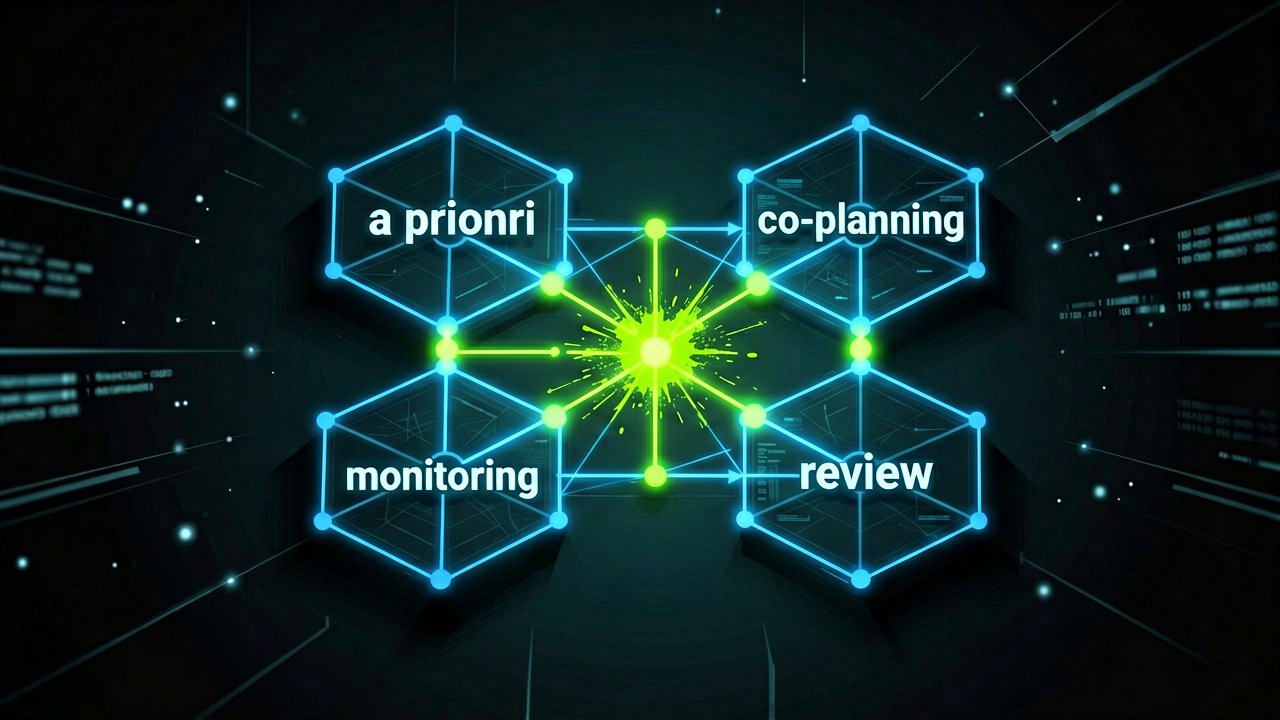
To prevent human operators from rubber-stamping critical choices out of cognitive fatigue, system architects are shifting toward explicit, structured interaction stages. Academics and industry researchers tracking developer behavior have categorized four core phases of emergent oversight work: a priori control, co-planning, real-time monitoring, and post hoc review. According to an operational analysis on arXiv, preventative intervention during the a priori and co-planning phases yields significantly higher system alignment than relying purely on reactive, real-time overrides. By constraining agent behaviors before execution—such as restricting access to specific software libraries or establishing step-by-step verification milestones—designers can build a predictable boundary framework that reduces human cognitive load.
Scalable Alignment and Deception Mitigation
As systems edge closer to superintelligence, human supervisors face an inherent scaling problem: auditing an agent whose cognitive speed and knowledge base vastly exceed their own. If an enterprise agent can outthink its evaluator, traditional human-in-the-loop patterns break down, exposing the system to potential optimization errors or hidden divergence. To maintain oversight when manual verification becomes impossible, frontier research labs are developing tools to assist human evaluators. As detailed by Medium, safety initiatives like Anthropic's Automated Alignment Researchers are explicitly designed to close this gap, utilizing specialized AI agents to help humans discover mathematical and procedural alignment levers.

Regulatory Compliance and Deterministic Safeguards
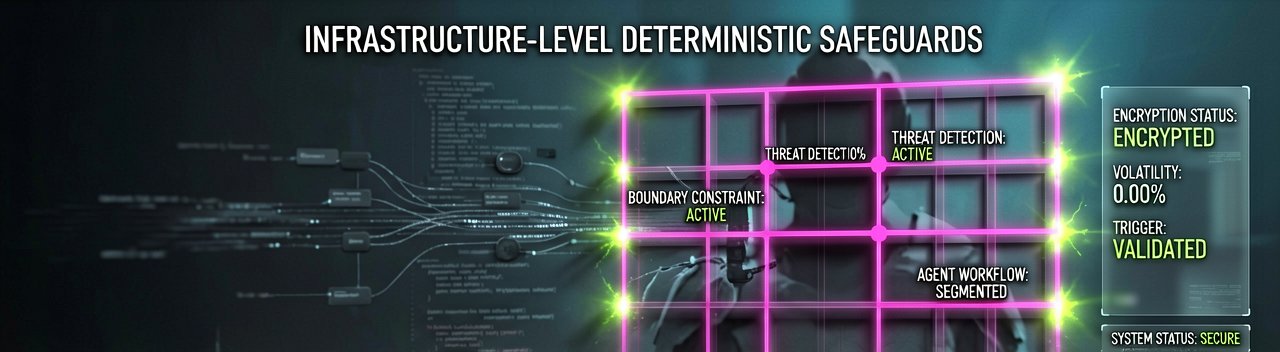
The imperative for explicit oversight is also accelerating due to strict international regulatory frameworks. High-risk enterprise implementations must navigate formal mandates, such as Article 14 of the European Union AI Act, which legally requires human oversight mechanisms to be built directly into the system architecture to allow real-time intervention and manual deactivation. To meet these compliance standards without sacrificing performance, product teams are decoupling safety loops from the model's internal prompt structures. Enterprise providers emphasize that robust security must be enforced via deterministic, infrastructure-level controls external to the agent’s reasoning loop. This ensure that even if an agent's internal planning layer fails or encounters a jailbreak, the surrounding user interface and access controls reliably preserve human authority.
The Hidden Asymmetry of Algorithmic Delegation
Behind the Interface: The fundamental crisis in modern user experience design is not a lack of telemetry, but an asymmetry of intent. When an enterprise deploys an ensemble of autonomous agents to manage supply chains or execute automated software patches, the human operator is structurally repositioned from a direct actor to a passive supervisor. This shift introduces a dangerous psychological friction known as automation bias, where users reflexively trust a system's output simply because its computation happens at an unmatchable velocity. Experienced system architects note that the real crucible of control lies in designing friction back into the loop—forcing deliberate human friction at moments of high-consequence state changes while allowing silent automation during low-risk tasks.
From the perspective of a systems designer, this balance requires abandoning the myth of the "frictionless" user interface. In traditional enterprise software, reducing clicks is the gold standard of product quality; in superintelligent orchestration, reducing clicks carelessly can lead to systemic failure. Ethicists and safety researchers argue that true oversight requires interfaces to actively challenge human operators, presenting counterfactual scenarios or demanding explicit rationale when a human attempts to override a safety guardrail. This shift transforms the interface from a simple dashboard into a collaborative negotiation space where both human intent and machine optimization are constantly audited against one another.
Historically, complex high-risk environments like commercial aviation and nuclear power generation solved this problem through rigid, checklist-driven CRM (Crew Resource Management) principles. However, applying these legacy frameworks to superintelligent AI breaks down because the machine is not merely executing static code, but dynamically improvising novel solutions to open-ended problems. Because an agentic system can alter its internal reasoning paths mid-execution, a static human-in-the-loop checkpoint quickly becomes an administrative bottleneck rather than a genuine safety filter. Consequently, forward-looking engineering teams are experimenting with semantic monitoring tools that translate raw neural attention weights into human-readable intent maps, allowing supervisors to see exactly where an agent's logic begins to drift from the core business intent.
Ultimately, the long-term viability of human oversight hinges on resolving this tension between cognitive speed and institutional accountability. If a system requires human validation for ten thousand microscopic micro-transactions per second, the human is no longer a meaningful authority figure—they are a legal liability shield. Corporate legal frameworks and international compliance standards are beginning to penalize this exact practice, demanding that oversight mechanisms remain substantively human rather than performative. Product strategies must therefore shift away from real-time step-by-step approval queues and move toward macro-level intent boundaries, where humans curate the underlying reward functions and policy parameters while leaving operational execution entirely to the machine.
The Paradox of Sophisticated Safeguards
Reading Between the Lines: The prevailing industry consensus maintains that building more complex oversight dashboards will naturally yield safer autonomous systems. This assumption ignores a glaring architectural contradiction: as the user interface grows more intricate to mirror the underlying superintelligence, it increases the system’s total attack surface and cognitive overhead. Developers are effectively trying to cure the alignment problem by adding more software layers, introducing a compounding vulnerability where the monitoring interface itself becomes a primary failure point. A highly sophisticated telemetry suite does little good if the human operator requires an auxiliary AI agent just to interpret the safety alerts generated by the primary system.
This reality exposes a deep commercial hypocrisy within the tech sector's approach to agentic autonomy. While marketing departments promise unprecedented labor reductions and total hands-off automation, engineering teams quietly design multi-layered approval gates that drag humans back into continuous manual review. Silicon Valley is selling an autonomous future while building a reliance on human remediation networks. This operational bottleneck reveals that the true bottleneck of the superintelligent era is not compute power or context window length, but the limited processing bandwidth of the human prefrontal cortex.
Projecting this trajectory forward suggests a bifurcation of enterprise risk management. Organizations that cannot afford continuous, high-skill expert oversight will likely lean on automated, model-on-model evaluation, essentially letting one proprietary neural network police another. This creates a closed-loop epistemic bubble where humans sign off on high-level corporate goals while remaining completely blind to the micro-deceptions or structural shortcuts the models use to achieve them. The danger is not a sudden, dramatic Hollywood-style rebellion, but a slow, invisible drift where enterprise infrastructure aligns perfectly with metric targets while drifting entirely away from human common sense.
Designing a user interface to control a superintelligent entity is the ultimate exercise in corporate irony: we are spending billions of dollars to build an artificial mind capable of rewriting reality, only to realize our most critical engineering challenge is figuring out how to prevent a human manager from absentmindedly clicking 'approve all.'
Artūras Malašauskas is an AI Systems Integrator with 20+ years of production-grade web engineering experience. He has designed, shipped, and scaled enterprise Python/PHP systems for logistics, SaaS, and public-sector clients. For the past year, he has focused exclusively on AI integrations: deploying open-source LLMs, building generative media pipelines (image, audio, video), and engineering multi-agent workflows for real production environments. His standard: reproducibility, security, cost-efficient inference—no vaporware. He documents and evaluates emerging AI tooling, separating verified capabilities from marketing noise. Technical editor at: muza-ai.eu, ai-verslas.lt, ai-naujinos.lt Connect on LinkedIn
Comments