Global Tech Giants Gear Up for July: A Deep Dive into Samsung, Nothing, and Vivo's Strategic Innovations
The global smartphone market is preparing for a mid-year shakeup as three major hardware manufacturers—Samsung, Nothing, and Vivo—align their product rollouts for July 2026. This coordinated push comes at a critical juncture when hardware saturation has forced brands to seek differentiation through novel form factors, aggressive pricing stratification, and deeper silicon integration. Rather than safe, incremental updates, these companies are shifting their portfolios to defensive and offensive market maneuvers meant to capture shifting consumer demographics ahead of the fall release cycles.
Industry analysts point to a clear divergence in strategy across these three tech giants. Samsung is aggressively defending its premium territory by diversifying its folding form factors to block ecosystem encroachment. Concurrently, Nothing is expanding downward to capture the hyper-competitive budget segment left vacant by escalating component costs, while Vivo leverages specialized sub-flagships to test the limits of battery density and mobile imaging. Together, these strategies highlight a broader trend where consumer electronics innovation is defined less by raw specifications and more by precise architectural execution.
Samsung: Form Factor Proliferation and the Preemptive Hinge Strategy
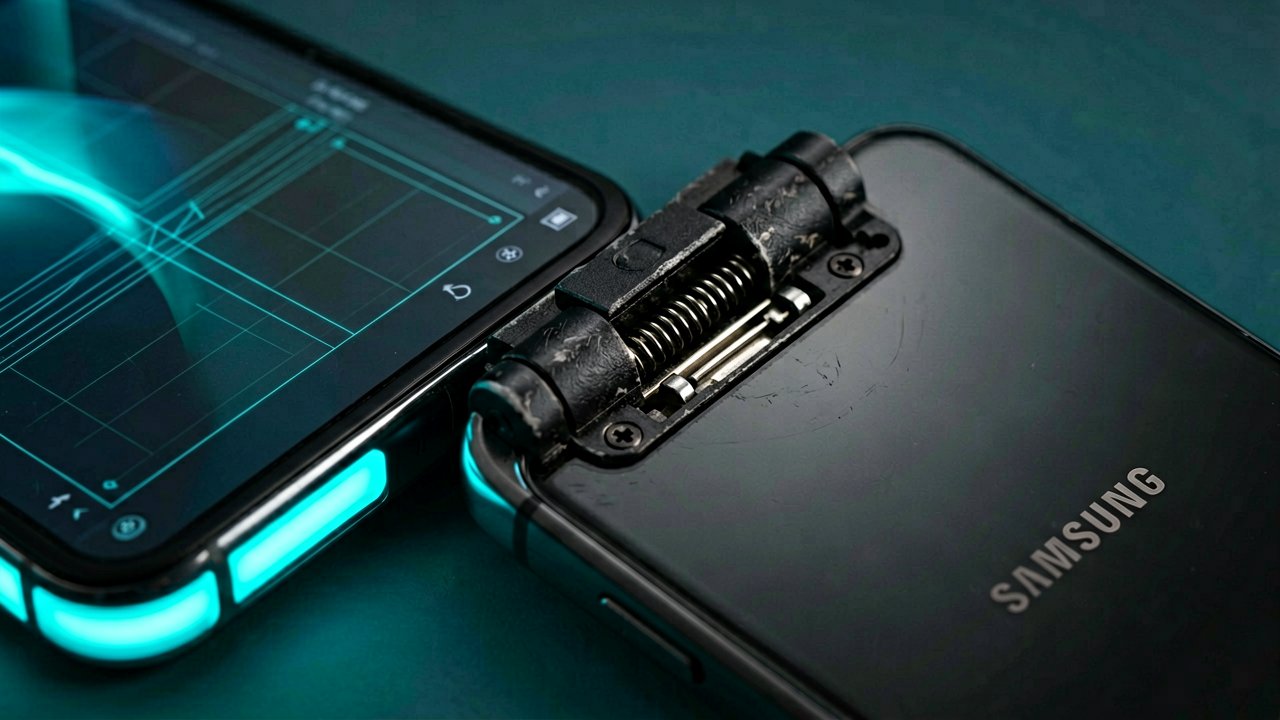
Samsung is officially steering its mobile ecosystem toward a triple-threat foldable lineup, with its highly anticipated Galaxy Unpacked event locked for July 22, 2026, in London, according to supply chain trackers highlighted by Memeburn. The choice of London serves as a deliberate geographic play to solidify European market share before key Western competitors enter the premium foldable segment. At the forefront of this launch is a structural pivot: the standard Galaxy Z Fold 8 is transforming into a shorter, wider passport-style device with a 4:3 inner aspect ratio and a sub-200g weight footprint, as detailed by The Gadgeteer. Simultaneously, a more traditional book-style "Ultra" tier will cater to enthusiasts requiring top-tier specs, including a rumored 200MP primary sensor and a Snapdragon 8 Elite Gen 5 processor.
This fragmentation of the Z Fold series signals that Samsung no longer views foldables as a singular, experimental monolith. By delivering a lighter, wide-screen option alongside a high-performance Ultra model, the company aims to resolve multi-year consumer complaints regarding display creases and awkward, narrow cover screens. This hardware refinement is tied to a deeper software narrative; the lineup will debut advanced Google Gemini intelligence features tailored explicitly for split-screen, flexible-display productivity, ensuring that the premium price hikes driven by global memory shortages are justified by distinct, on-device utility.
Nothing: Navigating the Ram-Pocalypse via Budget Democratization
Taking a diametrically opposed approach to market positioning, London-based design firm Nothing is utilizing July to deepen its reach into value-oriented segments. The brand has officially confirmed the global unveiling of the Nothing Phone (4b) for July 7, 2026, as reported by Mashable. This launch follows a strategic decision by CEO Carl Pei to bypass a traditional flagship successor for the season, leaving the premium tier anchored by their existing $799 device, as confirmed by CNET. The incoming "b" series introduces a highly competitive sub-A-series price bracket meant to capture market share from traditional mid-range leaders.
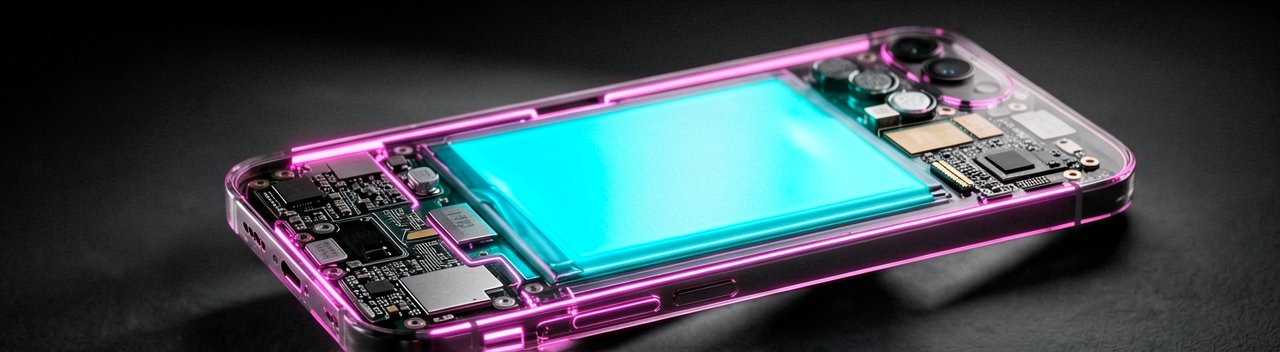
Architecturally, the Phone (4b) serves as a case study in cost-optimized design engineering. Nothing has verified that the device will utilize a custom-tuned Snapdragon processor, striking a balance between processing efficiency and cost, according to community documentation analyzed by PhoneArena. By retaining their signature transparent back panels and industrial Glyph lighting language while reducing raw component overhead, Nothing is insulating itself from the "RAM-pocalypse"—a industry-wide memory cartel pricing surge that has recently dismantled competing value devices. The Phone (4b) is a calculated defensive shield designed to keep users locked into the Nothing OS ecosystem when flagship adoption is slowing down due to macroeconomic pressures.
Vivo: Pushing the Boundaries of Imaging and Energy Density
Vivo’s mid-year framework focuses heavily on hardware brinkmanship, specifically targeting the upper-mid-range smartphone category with the impending rollout of the Vivo V80 series in July. Rather than competing purely on computational software, Vivo is fighting its battles in the physics lab. Early performance indexes covered by CNBC-TV18 show that the brand is deploying a premium sensor suite to differentiate its secondary tiers from Western competitors. This strategy allows Vivo to capture imaging enthusiasts who are hesitant to pay full flagship prices.
The defining technical achievement within Vivo's July strategy is a heavy emphasis on chassis engineering and battery formulation. Regulatory listings note the incorporation of a massive 7,000mAh battery paired with rapid 90W charging profiles within a remarkably slim profile, as evaluated by NDTV Profit. By combining high-density silicon-carbon battery materials with specialized optics, Vivo is directly addressing the two most prominent areas of daily smartphone wear: screen-on-time longevity and camera versatility. This hardware-first approach ensures that Vivo maintains a dominant position in high-growth regions, countering Samsung's premium ecosystem draw with raw, uncompromised utility.

Behind the Scenes of the July Hardware Convergence
The simultaneous mid-year product rollouts from Samsung, Nothing, and Vivo represent a deeper structural shift in global supply chain economics rather than a mere calendar coincidence. Historically, the summer months were considered a dead zone for consumer electronics, a quiet period where manufacturers cleared out inventory ahead of the autumn golden quarter. However, the modern smartphone replacement cycle has extended to an all-time high of over forty months. This prolonged stagnation has forced product planners to treat July as a strategic beachhead, capturing early-mover momentum and locking down component allocations before heavy industry constraints tighten in the third quarter.
Within the halls of Samsung’s mobile division, the decision to fragment the Galaxy Z Fold lineup into standard passport-style and Ultra tiers stems from intensive regional market pressure. Internal stakeholder reports indicate that while Samsung pioneered the foldable category, agile domestic manufacturers in the Asian market have consistently undercut them on device thickness and aspect ratio utility. By diversifying the Z Fold series in July, Samsung is attempting an architectural course correction. This timeline gives their global carrier partners ample time to market the new form factors ahead of competing ecosystem announcements, effectively shifting the premium narrative from raw hardware specifications to functional, real-world ergonomics.
Meanwhile, Nothing’s tactical pivot toward budget democratization with the Phone (4b) reflects a calculated gamble by Carl Pei to survive an increasingly hostile component market. Supply chain insiders note that the soaring costs of mobile memory and storage have made manufacturing a truly profitable mid-range phone nearly impossible for smaller brands. Nothing’s response is a masterclass in industrial triage; by freezing their flagship development and focusing entirely on a highly optimized, stylized budget device, they are leveraging their distinct design language as a substitute for expensive internal components. This strategy allows them to capture cost-conscious consumers who are feeling squeezed by inflation but still crave a premium-feeling user experience.
Simultaneously, Vivo’s aggressive deployment of high-density silicon-carbon batteries highlights a quiet revolution occurring in battery chemistry labs. For years, mobile innovation was bottlenecked by lithium-ion limitations, forcing a compromise between device thickness and battery capacity. By successfully scaling 7,000mAh capacities into a slim chassis for its July mid-tier launches, Vivo is shifting the competitive landscape. This engineering milestone positions the brand as a technical pioneer in high-growth regions where reliable, multi-day battery life is a critical selling point, demonstrating that true hardware innovation is now happening from the inside out.
Reading Between the Lines of the Tech Giant Inversion
The industry consensus paints these July product rollouts as a triumphant display of engineering prowess, but a closer examination reveals a landscape fraught with strategic vulnerability. Samsung’s decision to fragment its foldable lineup is less of a triumphant victory lap and more of an expensive, reactionary defensive wall. By splitting the Z Fold family into a lighter passport-style option and an ultra-premium tier, the South Korean giant is tacitly admitting that its previous single-device strategy failed to satisfy either the mass market or the hardware purists. This sudden form factor proliferation risks cannibalizing its own premium sales and alienating early adopters who previously paid top dollar for what they were told was the definitive vision of the future.
A similar undercurrent of institutional anxiety shadows Nothing’s mid-range pivot. While freezing flagship development to democratize the value tier via the Phone (4b) is spun as a consumer-first narrative, it exposes the brutal realities of operating as an independent entity in a market dictated by a global memory cartel. Bypassing a flagship generation suggests that Nothing simply lacks the capital or the supply chain leverage to absorb skyrocketing component costs at the premium end. Relying on stylized transparent plastic and blinking LED lights to mask a middle-of-the-pack processor is a fragile long-term strategy, especially when competing conglomerates can comfortably subsidize their own mid-range hardware to starve out smaller disrupters.
Vivo’s hardware-first bravado introduces its own set of contradictions, particularly regarding consumer retention. Shoving a massive 7,000mAh battery and a specialized imaging array into an upper-mid-range chassis creates a compelling spec sheet, but it highlights a persistent industry blind spot: software longevity. While premium silicon-carbon chemistry solves the immediate physical bottleneck of daily battery depletion, it does nothing to address the rapid obsolescence driven by short-sighted operating system support cycles. Hardware that is physically engineered to last for five years means very little if the underlying software framework is abandoned after two, creating a wave of premium, long-lasting electronic waste that undermines the industry's loud sustainability pledges.
Ultimately, this July convergence signals a broader existential crisis within mobile technology. Innovation has shifted from introducing entirely new capabilities to carefully managing compromises across pricing tiers and battery dimensions. As these three tech giants deploy their opposing strategies, they are forcing consumers to choose between Samsung’s expensive experimental formats, Nothing’s stylized cost-cutting measures, or Vivo’s dense but short-lived hardware stacks. The summer product blitz is no longer about predicting what phones can become; it is a clinical exercise in discovering exactly how much consumers are willing to compromise in a saturated market.
"We have officially entered an era of smartphone evolution where a device's most revolutionary feature is its ability to survive the volatile price of memory chips, proving that the ultimate tech breakthrough of 2026 isn't artificial intelligence or a folding screen, but a slightly more forgiving accounting department."
Artūras Malašauskas is an AI Systems Integrator with 20+ years of production-grade web engineering experience. He has designed, shipped, and scaled enterprise Python/PHP systems for logistics, SaaS, and public-sector clients. For the past year, he has focused exclusively on AI integrations: deploying open-source LLMs, building generative media pipelines (image, audio, video), and engineering multi-agent workflows for real production environments. His standard: reproducibility, security, cost-efficient inference—no vaporware. He documents and evaluates emerging AI tooling, separating verified capabilities from marketing noise. Technical editor at: muza-ai.eu, ai-verslas.lt, ai-naujinos.lt Connect on LinkedIn
Comments