The End of Experimental AI: Microsoft and Temenos Unleash 'Agenti' at TCF 2026

The era of treating artificial intelligence as a glorified, front-end digital add-on for banking is officially over. At the Temenos Community Forum (TCF 2026) in Copenhagen, tech giant Microsoft and banking software powerhouse Temenos announced the launch of Agenti, an ambitious AI-driven platform built directly into modern core banking infrastructure. By integrating Microsoft Azure AI with the cloud-native Temenos platform, the collaboration aims to transform traditional financial workflows from reactive, manual procedures into highly secure, autonomous agentic operations.
What makes this rollout particularly noteworthy is its timing and intent. Unveiled during the flagship financial event in May 2026, Agenti addresses the exact friction point that has kept risk-averse Tier-1 banks stuck in perpetual pilot phases: the delicate balance between constant evolution and regulatory safety. Rather than forcing banks to stitch generic AI models onto brittle, legacy integration layers, this native system enables deep orchestration across core ledgers with built-in financial logic. According to analysis from FF News, the partnership effectively signals the transition to decentralized, autonomous finance where speed and intelligence dictate market survival.
Driving Efficiency in the Back Office
The operational metrics attached to the Agenti launch show just how much heavy lifting these autonomous workflows are designed to handle. Early infrastructure benchmarks indicate that banks deploying these multi-step autonomous processes can achieve roughly 40% faster processing times for complex back-office tasks. By handling dense, repetitive operations like compliance auditing, data entry, and liquidity prediction, the platform minimizes human error while allowing internal teams to focus on strategy. Furthermore, security protocols leverage Microsoft’s Responsible AI framework, ensuring that all data processing remains siloed within secure enterprise banking parameters to appease cautious regulators.
A Deterministic Future for Banking Stack Modernization
Historically, core banking upgrades have been notorious for high implementation risks and multi-year timelines. During the event, leadership at FinTech Futures noted that banking environments fundamentally reject unpredictable AI outputs, demanding instead deterministic, auditable software behavior. Agenti answers this industry requirement by pairing Microsoft's scalable cloud infrastructure with domain-specific guardrails. This guarantees that every transaction automated by an AI agent remains completely traceable, positioning the joint architecture as a blueprint for progressive legacy stack modernization.
Behind the Scenes of the Agentic Turn
Beyond the Mainstage Hype: The architectural shift underpinning Agenti represents a quiet rebellion against the last three years of generative AI disillusionment in high finance. Throughout 2024 and 2025, tier-one institutions burned through historic proof-of-concept budgets on large language model wrappers that ultimately did little more than summarize internal PDFs or power slightly smarter chatbots. Risk compliance officers routinely blocked these tools from touching live transactional data due to hallucination risks and data sovereignty issues. By embedding Microsoft’s enterprise-grade Azure OpenAI orchestration directly into the immutable ledger layer of Temenos, Agenti bypasses the unsafe conversational layer entirely, focusing instead on deterministic execution pathways that banking auditors can actually sign off on.
This technical marriage solves a profound engineering bottleneck that has long plagued corporate banking IT departments. Historically, executing a multi-step financial operation—such as cross-border trade reconciliation or commercial loan underwriting—required pulling data from disparate legacy silos, passing it through translation APIs, and manually verifying compliance at every gate. Agenti utilizes localized, domain-specific AI agents that operate as microservices within the cloud core. These agents do not merely suggest actions to a human operator; they autonomously query ledger states, validate transactional history against real-time global sanctions lists, and commit data directly to the database with microsecond latency.
The strategic timing of this release also reflects shifting power dynamics within the enterprise software ecosystem. Temenos has faced intense pressure from cloud-native upstarts and decentralized core banking providers aiming to commoditize traditional software licensing models. By locking arms with Microsoft in this deep engineering alliance, Temenos secures a highly defensible moat, effectively telling its massive global client base that upgrading their core infrastructure is the only viable path to accessing true enterprise-grade automation. For Microsoft, the partnership cements Azure as the undisputed default cloud for highly regulated financial institutions, outmaneuvering rivals who lack equivalent domain-specific core integrations.
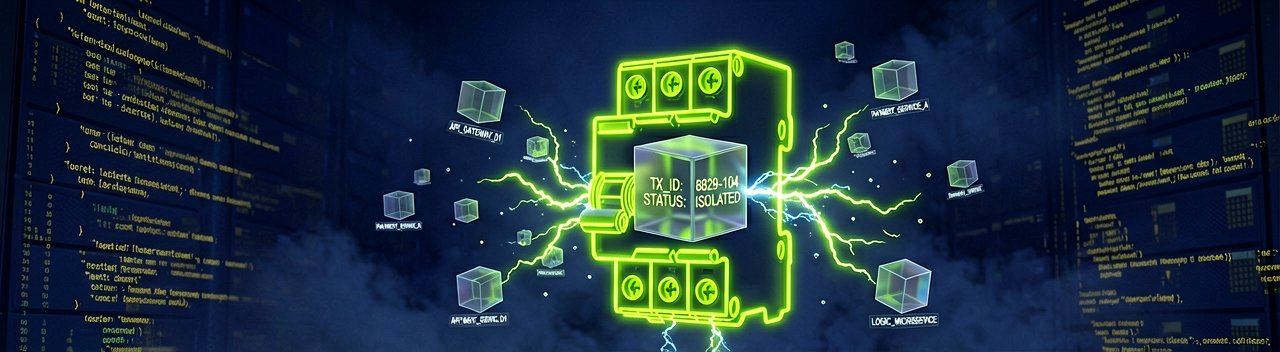
Inside the development pipelines, the engineering teams had to aggressively tackle the problem of model drift and auditability. In a standard enterprise environment, an AI model that shifts its parameters slightly over time might result in a poor product recommendation; in core banking, it could trigger a catastrophic liquidity miscalculation or an illicit fund transfer. The engineering framework behind Agenti introduces a continuous verification loop where every autonomous decision is logged as a cryptographic artifact. If an agent attempts to deviate from predefined risk parameters, the core system automatically triggers a circuit-breaker mechanism, rolling back the transaction state to the last verified ledger entry before any capital moves.

As mid-market and regional banks observe this rollout, the competitive stakes are changing rapidly from digital transformation to operational margin survival. Institutions burdened by fragmented tech stacks will find it increasingly impossible to compete with the compressed overhead costs and instantaneous settlement times enjoyed by Agenti adopters. The industry is moving toward an environment where human capital is redeployed from repetitive back-office data validation to complex edge-case management and strategic relationship building. Ultimately, this collaboration proves that the true value of financial AI lies not in its ability to mimic human conversation, but in its capacity to invisibly, securely, and flawlessly run the foundational plumbing of global commerce.
The Architectural Reality Check
Reading Between the Lines: While the marketing narrative surrounding Agenti paints a picture of seamless, frictionless automation, the reality of deploying autonomous financial agents into production reveals deep structural contradictions. The banking industry has spent the last decade preaching the gospel of decoupling systems through microservices and open APIs to avoid vendor lock-in. Yet, this deep integration between Microsoft Azure and Temenos does precisely the opposite, binding an institution’s core transaction engine directly to a single cloud provider's proprietary AI infrastructure. Banks eager to lower their operational overhead may find they have simply traded predictable legacy software maintenance fees for highly volatile, transaction-based AI compute costs that are notoriously difficult to budget for.
Furthermore, the claim of a 40% reduction in processing times assumes that internal compliance and legal frameworks are ready to move at machine speed. In practice, the primary bottleneck in banking operations is rarely the software execution itself, but rather the human-in-the-loop validation mandated by international banking regulations. If an autonomous agent flags a complex corporate loan anomaly in microseconds, but the risk committee still requires forty-eight hours and three signatures to review the audit trail, the efficiency gains evaporate. Forcing a high-velocity AI system into a low-velocity regulatory framework creates a computational traffic jam, shifting the operational burden from data entry clerks to overstretched compliance engineers.
There is also a profound philosophical tension at play regarding the concept of deterministic AI. By definition, large-scale generative models and agentic networks operate on probabilistic outcomes, finding the most likely path to a solution based on training data. Core banking systems, however, are strictly binary and zero-tolerance; a ledger must balance perfectly every single time. Attempting to enforce absolute determinism on an inherently probabilistic technology requires a massive, complex layer of software guardrails that can become just as brittle and difficult to maintain as the legacy COBOL code banks are desperately trying to replace.
Over the longer term, the widespread democratization of platforms like Agenti threatens to commoditize institutional intelligence. If every mid-tier bank buys the exact same out-of-the-box Microsoft and Temenos agent workflows to manage liquidity, assess risk, and audit compliance, operational strategies will inevitably homogenize across the market. This systemic uniformity introduces a novel form of systemic risk, where a single unpatched algorithmic bias or shared model vulnerability could trigger simultaneous, correlated operational failures across dozens of ostensibly competing institutions before human supervisors even realize a threshold has been crossed.
Ultimately, Agenti will likely succeed not because it perfectly solves the AI trust problem, but because legacy infrastructure maintenance has become financially unsustainable. Banks are trapped in a corner where doing nothing is riskier than embracing the flawed promise of autonomous software. The true measure of success for this rollout will not be found in the triumphant press releases out of Copenhagen, but in how gracefully the system handles its first inevitable out-of-distribution market event without requiring an emergency human intervention to reset the ledger.
"We are rapidly moving toward a future where a bank's most valuable asset is no longer its capital reserves or its customer relationships, but the quality of its software circuit-breakers—because nothing loses money faster than a highly efficient, perfectly automated mistake running at the speed of light."
Artūras Malašauskas is an AI Systems Integrator with 20+ years of production-grade web engineering experience. He has designed, shipped, and scaled enterprise Python/PHP systems for logistics, SaaS, and public-sector clients. For the past year, he has focused exclusively on AI integrations: deploying open-source LLMs, building generative media pipelines (image, audio, video), and engineering multi-agent workflows for real production environments. His standard: reproducibility, security, cost-efficient inference—no vaporware. He documents and evaluates emerging AI tooling, separating verified capabilities from marketing noise. Technical editor at: muza-ai.eu, ai-verslas.lt, ai-naujinos.lt Connect on LinkedIn
Comments