WeChat's Xiao Wei Redefines Ecosystem Integration in AI-Driven Messaging

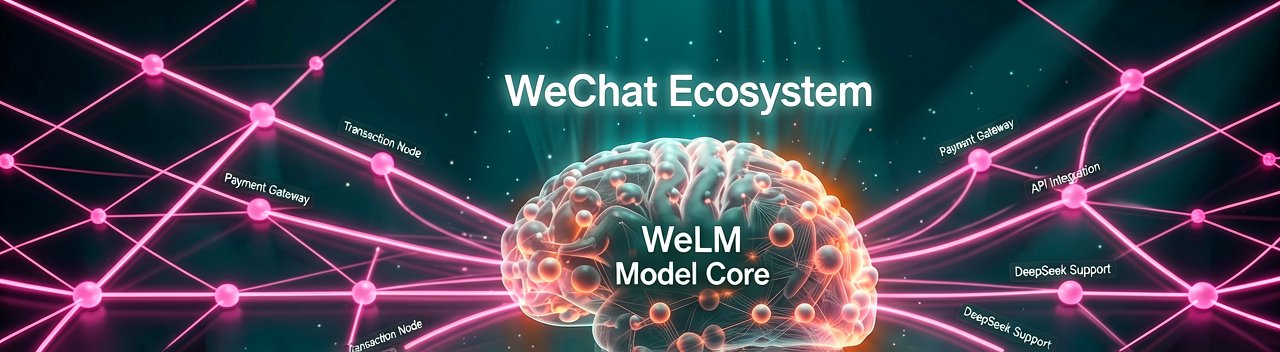
Tencent has initiated a targeted rollout of its native artificial intelligence assistant, Xiao Wei, embedding the tool directly into the core framework of its ubiquitous WeChat super-app to serve a massive user base of over 1.4 billion people. According to reports from Quartz, this native agent marks a distinct evolutionary pivot from Tencent’s previous standalone chatbot, Yuanbao, by executing actions inside the application rather than merely answering text prompts. The assistant operates natively across chat screens, Moments, and public accounts, leveraging WeChat's proprietary WeLM model alongside specialized support from DeepSeek to process user instructions without requiring external context switching.
The strategic deployment of Xiao Wei addresses a critical competitive gap in China's intensifying AI market, where Tencent faces stiff pressure from rivals like ByteDance and Alibaba. Market analysis from CNBC underscores that distributing an AI agent through a deeply entrenched application sidesteps the massive capital and user-acquisition hurdles of building an audience from scratch. Early regional platform updates reported by KuCoin highlight how this infrastructure positions WeChat at the vanguard of AI-driven commerce, establishing immediate ecosystem partnerships that bridge native payment networks with automated digital services.
Closing the Transactional Loop in China's AI Agent Race
Unlike standard text-based LLMs, Xiao Wei operates with high system-level permissions designed to streamline monetization and user retention. Evaluated during active gray-scale implementation by Pandaily , the system can dynamically trigger calendar updates, draft messages, and initiate calls directly through simple conversational prompts. This functionality is engineered to connect seamlessly with WeChat’s massive mini-program ecosystem, transforming natural language directly into automated actions like booking rides or ordering food.
Structural Pressures and Computational Hurdles
Despite the competitive advantages of an embedded user base, the sweeping integration of a system-wide AI tool presents distinct structural and fiscal challenges for Tencent. Financial evaluations compiled by Goldman Sachs focus heavily on the substantial resource consumption, escalating infrastructure costs, and long-term advertising dependencies tied to this model. Because complex multi-interface mini-programs still require partial manual intervention, Tencent's transition to an entirely automated ecosystem will rely heavily on prolonged gray-scale testing to optimize computing power before initiating a comprehensive public release.

The Architectural Pivot Toward Autonomous Agentization
Behind the Corporate Veil: The transition from the standalone Yuanbao app to an embedded ecosystem assistant marks a fundamental departure from typical consumer large language model rollouts. For nearly a decade, WeChat’s dominance rested on its walled-garden architecture, forcing third-party developers to build rigid, menu-driven mini-programs that required deliberate user navigation. By inserting Xiao Wei as an omnipresent conversational layer, Tencent is effectively dismantling these manual boundaries. The underlying technical strategy shifts from processing textual queries to orchestrating API calls across hundreds of thousands of independent services, silently shifting the super-app from a passive portal into an active operating system driven by natural language.
This structural evolution carries profound implications for the platform's relationship with merchants and service providers. Historically, brands invested heavily in user interface optimization and keyword search discoverability within the application to capture consumer attention. With Xiao Wei serving as an automated intermediary, the discovery layer changes entirely, giving Tencent absolute control over which mini-programs are selected to fulfill user requests like hailing a ride or coordinating a financial transaction. Early integration partners have noted that visibility on the platform will increasingly depend on structured data readiness and seamless back-end integration, making algorithmic compatibility the new benchmark for business survival in the ecosystem.
Balancing Data Governance Against Monetization Demands
From an infrastructural perspective, deploying a native agent across a user pool exceeding one billion active profiles introduces unprecedented computational and engineering friction. Unlike standalone chatbots that maintain siloed session histories, a native assistant must maintain real-time contextual awareness of peer-to-peer chats, corporate accounts, and financial micro-transactions without introducing latency. Engineers close to the project indicate that the initial gray-scale testing focus remains squarely on optimizing token consumption and managing the massive server loads generated by simultaneous multi-layered multi-modal processing. This cautious phased deployment reflects Tencent’s historical aversion to disruptive system overhauls that could compromise core application stability.
The monetization strategy underpinning this ecosystem upgrade reflects a long-term defense against advertising stagnation. Industry observers point out that while competitor platforms rely heavily on direct subscription models or transactional commissions, Tencent is positioning Xiao Wei to supercharge its existing high-margin business segments. By lowering the friction required to execute digital transactions, the assistant acts as a direct multiplier for mobile payments and targeted marketplace placements. Furthermore, the granular behavioral data captured through multi-interface conversational intents provides Tencent with an invaluable dataset to refine its internal ad-targeting algorithms, ensuring the platform remains highly lucrative for enterprise clients even as traditional user growth plateaus.
The Hidden Cost of Walled-Garden Automation
Reading Between the Lines: The market’s enthusiastic reception of Xiao Wei assumes that users inherently want an AI intermediary managing their digital lives, yet this narrative glosses over a fundamental contradiction in super-app mechanics. WeChat’s foundational value lies in its frictionless, lightweight utility, where users can instantly access tools without an added layer of cognitive overhead. Interposing a conversational assistant risks creating a bottleneck rather than a shortcut, especially if users find themselves repeatedly correcting an algorithmic agent that misunderstands conversational nuance. The challenge for Tencent is not just deploying advanced models, but proving that chatting with an AI is genuinely faster than tapping a traditional interface.
Furthermore, the deep integration of financial platforms like KuCoin highlights a widening regulatory tightrope that Tencent must walk with absolute precision. In an environment where systemic risk is heavily scrutinized, delegating transactional intent to an autonomous agent invites unprecedented legal and compliance scrutiny. If an AI assistant executes an erroneous financial transfer or misinterprets a complex payment prompt, the liability framework remains murky at best. Tencent’s reliance on extensive gray-scale testing is a direct response to this vulnerability, serving as a tactical slowdown to ensure that machine learning hallucinations do not translate into tangible fiscal liabilities.
Ultimately, the monetization promises of this AI-driven evolution may conflict directly with user retention. If Xiao Wei begins prioritizing sponsored mini-programs over the most efficient organic alternatives, the assistant will transform from a helpful tool into a glorified corporate concierge. This commercial bias could alienate a user base that has grown deeply cynical of algorithmic manipulation across contemporary social media platforms. For Tencent to truly redefine ecosystem integration, it must resist the immediate urge to squeeze ad revenue out of every conversational prompt, a balancing act that few tech giants have successfully managed in the internet era.
"In the race to build the ultimate digital companion, tech giants often forget that the line between a brilliant virtual butler and an irritatingly persistent salesperson is incredibly thin—especially when the butler has direct access to your digital wallet."
Artūras Malašauskas is an AI Systems Integrator with 20+ years of production-grade web engineering experience. He has designed, shipped, and scaled enterprise Python/PHP systems for logistics, SaaS, and public-sector clients. For the past year, he has focused exclusively on AI integrations: deploying open-source LLMs, building generative media pipelines (image, audio, video), and engineering multi-agent workflows for real production environments. His standard: reproducibility, security, cost-efficient inference—no vaporware. He documents and evaluates emerging AI tooling, separating verified capabilities from marketing noise. Technical editor at: muza-ai.eu, ai-verslas.lt, ai-naujinos.lt Connect on LinkedIn
Comments