Paystack Hands the Payment Reins to AI Agents with New 'Index' Checkout

The concept of conversational commerce is getting a massive upgrade in West Africa. In a bold pivot toward autonomous software, the Stripe-owned fintech giant Paystack has officially introduced an early-access checkout experiment called Index. Launched on June 25, 2026, in Nigeria, this system doesn't just put an AI chatbot in front of consumers to answer FAQs—it actually lets external AI agents directly initiate and execute real-world financial transactions.
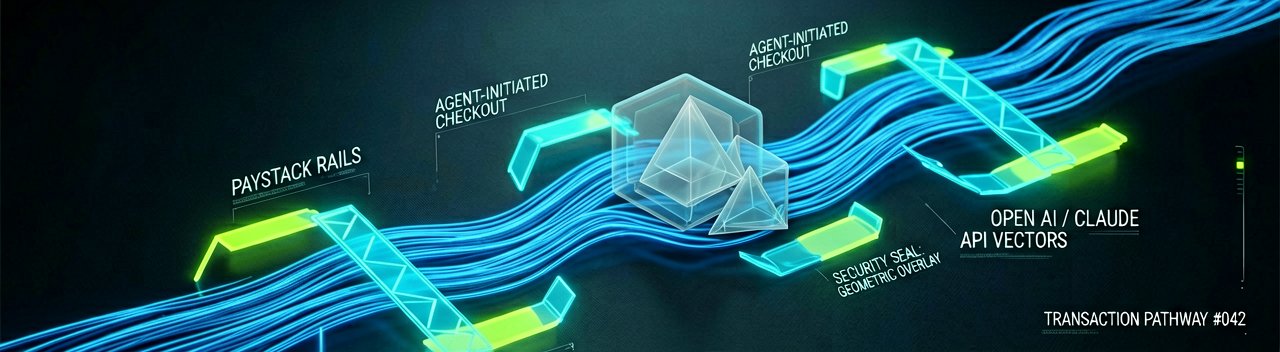
Developed in tandem with TSG Labs, the venture studio arm of Paystack's newly formed parent entity, The Stack Group, the initiative bridges the gap between large language models and secure financial infrastructure. Instead of forcing users to jump out of an active AI conversation to deal with traditional web carts, the system lets supported AI clients interface directly with Paystack's payment Rails. According to a product update shared by TechCabal, the system is designed to seamlessly process transactions while keeping security anchored tightly within Paystack’s core network.
Plugging Into ChatGPT, Claude, and OpenClaw
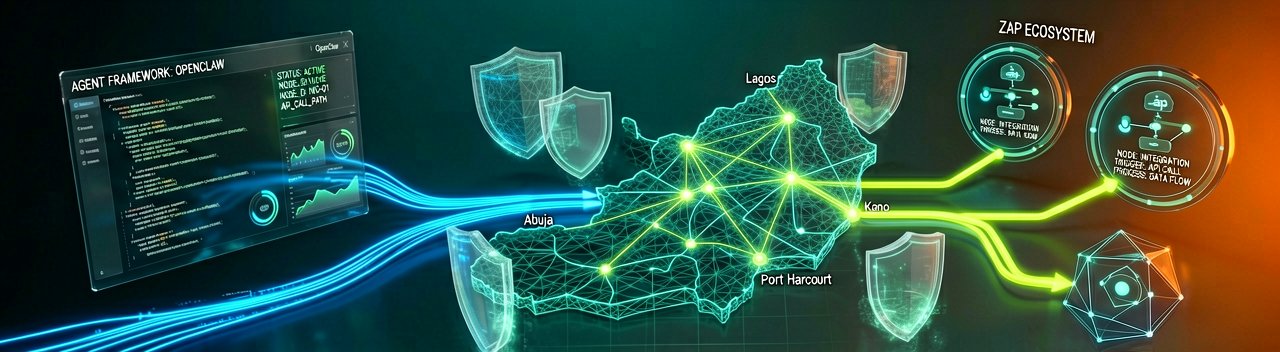
The real magic here lies in the integration roster. Right out of the gate, Paystack Index supports major heavy hitters in the AI landscape, including OpenAI's ChatGPT, Anthropic's Claude, and the open-source agent framework OpenClaw. If you're asking an AI agent to plan a trip, reorder groceries, or source a local service, that same agent can now programmatically handle the checkout layer without requiring human data entry for every form field.
Currently, early access to Index has been extended first to existing users of Zap, Paystack's quick-payment product in Nigeria. As reported by Techpoint Africa, the experiment points toward a future where everyday errands like paying utility bills or securing rides are offloaded entirely to digital assistants. It builds heavily on the merchant infrastructure Paystack has spent a decade refining, giving more than 300,000 businesses an automatic gateway into the nascent "agent economy." While the trial is tightly focused on Nigerian consumers for now, the company has already signaled that expansions into other prominent African markets are next on the roadmap.
What Most Reports Miss: The Invisible Plumbing of the Agent Economy
While mainstream coverage focuses on the novelty of talking to a chatbot to buy movie tickets, the real triumph of this launch is architectural. For years, the major bottleneck in autonomous commerce hasn't been the intelligence of the AI, but the rigid security of the banking system. Traditional payment gateways are built for human eyes and human fingers—they expect a browser session, a CAPTCHA challenge, and a two-factor authentication SMS. By creating dedicated APIs tailored specifically for software agents, Paystack is effectively rewriting the rules of interaction, allowing non-human entities to authenticate identity and intent without compromising fraud detection systems.
This paradigm shift places Nigeria at the absolute vanguard of global fintech experimentation. African tech ecosystems have a long history of leapfrogging legacy infrastructure—much like mobile money bypassed the need for physical bank branches across the continent decades ago. By integrating OpenAI’s ChatGPT and Anthropic's Claude at the protocol level, local merchants are gaining access to an entirely new demographic of buyers: automated systems executing programmatic purchasing decisions on behalf of busy consumers.
From a merchant perspective, this significantly lowers the friction that usually plagues e-commerce conversion rates. Instead of optimizing a complex multi-page web checkout for a distracted user, businesses simply need to ensure their product catalogs are machine-readable. Industry insiders note that this could spark an unprecedented wave of hyper-localized AI applications, where local developers build specialized agents tailored to the unique logistical realities of Lagos, Abuja, and beyond, leaving the heavy lifting of regional payment processing to Paystack's secure backend.
However, the rollout isn't without its massive compliance and regulatory hurdles. Moving the liability of a transaction from a human account holder to an autonomous digital assistant opens up complex legal questions regarding accidental purchases, unauthorized agent behavior, and consumer protection. Financial analysts point out that keeping the initial rollout tied to Zap—Paystack's existing peer-to-peer payment ecosystem—is a calculated risk-mitigation strategy, giving the engineering teams a sandboxed environment to monitor edge cases before a wider, continent-wide deployment.
Reading Between the Lines: The Friction of Frictionless FinTech
The tech industry's utopian vision of an "agent economy" relies heavily on the assumption that automation solves all consumer pain points. However, handing financial agency over to large language models introduces a volatile paradox: AI thrives on probabilistic gray areas, while financial ledgers demand absolute, deterministic precision. When a chatbot misunderstands a nuanced prompt and accidentally purchases three pairs of shoes instead of one, the subsequent chargeback dispute falls entirely back into the laps of human customer support teams, threatening to clog the very system designed to streamline operations.
Moreover, the launch of Index highlights a fascinating contradiction in the regional tech narrative. While the industry celebrates the ability of cutting-edge foreign AI models like Claude and ChatGPT to transact seamlessly on Nigerian rails, the underlying infrastructure of the region remains famously plagued by high token costs and inconsistent mobile internet connectivity. There is a palpable disconnect in building sophisticated autonomous purchasing pipelines for a market where everyday users frequently battle network timeouts just to load a standard web portal, let alone keep a persistent, stateful AI session alive.
From a competitive standpoint, this move is less about immediate transaction volume and more about data dominance. By positioning itself as the foundational ledger for AI agents in West Africa, Paystack is effectively securing the high ground for the next decade of commerce. If autonomous software becomes the primary interface through which consumers interact with the internet, the traditional storefront loses its value. The companies that control the underlying transaction APIs will dictate the terms of digital trade, leaving unintegrated competitors structurally isolated from the automated cash flows of tomorrow.
Ultimately, the success of this experiment hinges on whether consumers actually trust an algorithm with their wallets. While silicon-valley-adjacent tech enthusiasts are eager to offload their grocery lists to an AI assistant, the average consumer remains highly sensitive to fintech security lapses and phantom transactions. Transitioning from "click to pay" to "trust the machine to pay" requires a monumental cultural shift, one that cannot be engineered simply by publishing a new set of API documentation, no matter how elegant the code may be.
We’ve spent the last twenty years teaching humans how to avoid internet scams, only to realize the real future of fintech involves teaching software how not to accidentally bankrupt its user because of a hallucinated decimal point.
Artūras Malašauskas is an AI Systems Integrator with 20+ years of production-grade web engineering experience. He has designed, shipped, and scaled enterprise Python/PHP systems for logistics, SaaS, and public-sector clients. For the past year, he has focused exclusively on AI integrations: deploying open-source LLMs, building generative media pipelines (image, audio, video), and engineering multi-agent workflows for real production environments. His standard: reproducibility, security, cost-efficient inference—no vaporware. He documents and evaluates emerging AI tooling, separating verified capabilities from marketing noise. Technical editor at: muza-ai.eu, ai-verslas.lt, ai-naujinos.lt Connect on LinkedIn
Comments