Pentagon’s 'Agent Network' AI Tool: Redefining Tactical Targeting and the Defense Tech Market
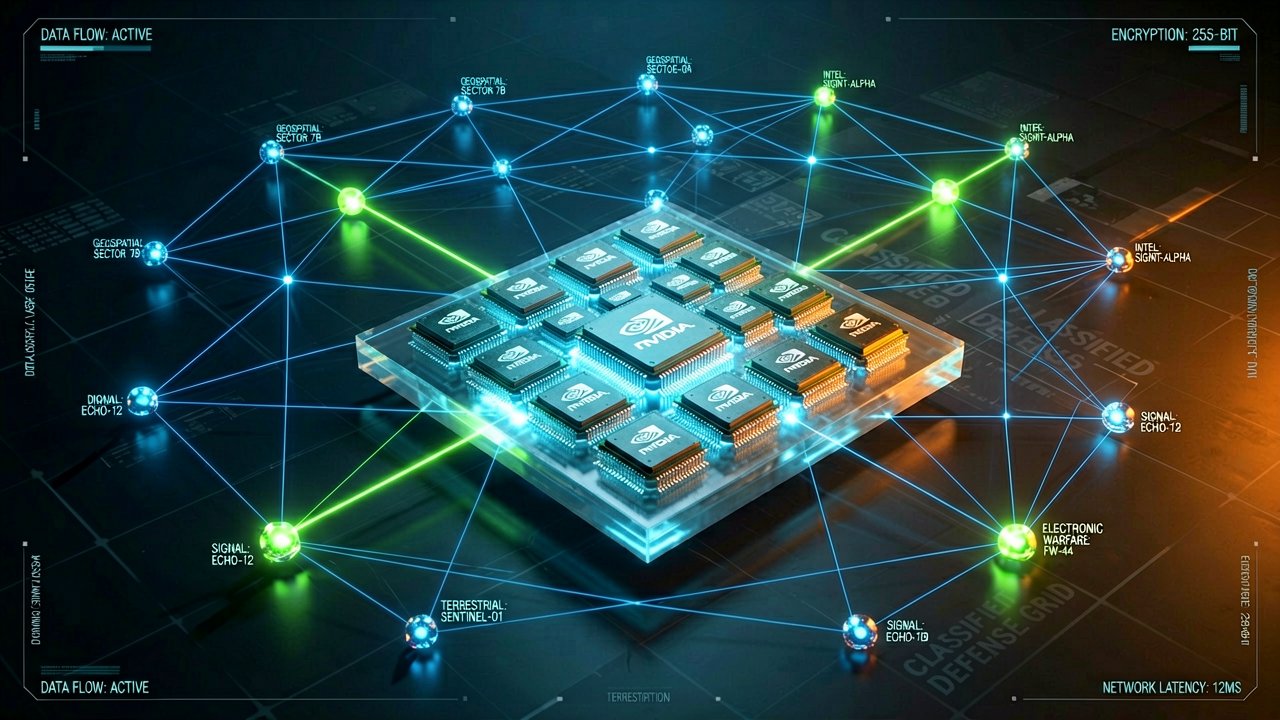
The U.S. Department of War has launched its highly anticipated Agent Network, an advanced artificial intelligence system built to revolutionize real-time combat management and automated targeting. Concurrently, updated military guidelines indicate that the Pentagon has revised its doctrine to expand the operational role of AI from merely supporting human analysis to deploying systems where AI autonomously initiates battlefield actions under continuous human oversight. This fundamental shift dramatically compresses the traditional "sensor-to-shooter" cycle from hours to seconds. It positions autonomous agents directly within secure command-and-control architectures to scan defense intelligence and instantly present operational options to field commanders.
From a market standpoint, this deployment establishes a monumental precedent for the commercial defense technology sector. The infrastructure relies heavily on an unprecedented operational bridge constructed between the military and Silicon Valley. The Pentagon secured agreements with eight of the world's leading frontier AI and infrastructure firms—including SpaceX, OpenAI, Google, NVIDIA, Microsoft, Amazon Web Services, and Oracle—to run advanced models on classified defense networks. The strategic transition toward agentic workflows signals a massive capital migration away from legacy, static data analytics and toward dynamic software capable of autonomous synthesis, course-of-action generation, and immediate predictive execution.
The Architecture of Autonomous Kill Chains
The system transforms battle management by operating as an automated target factory. Moving beyond older computer vision platforms that simply flagged objects in drone footage, the platform ingests and cross-references over 100 distinct military data feeds simultaneously. AI agents continuously scan defense intelligence and global operational systems, verify anomalous tracking data against public geospatial layers, and generate tailored tactical courses of action within seconds. This transitions traditional targeting from a slow, multi-system human manual workflow to a unified, machine-speed pipeline that shortens the find, fix, and finish target sequence.
Market Shifts: The Rise of 'Patriot Tech' Consortia
The consolidation of this initiative accelerates the rise of what industry analysts call "Patriot Tech," cementing a highly lucrative market for venture-backed defense startups and sovereign software providers. Companies like Palantir and Anduril Industries have shifted from the periphery of defense procurement to the absolute core of the modern military enterprise by embedding algorithmic models directly into tactical edges and classified environments. The commercial demand is shifting rapidly toward specialized hardware, compact edge-computing GPUs, and zero-touch application deployment frameworks that let operators field secure AI networks in contested or disconnected combat zones.

Strategic Risks and Doctrine Realities
While the operational advantages of machine-speed decision-making are profound, the Pentagon's updated guidance explicitly balances speed with legal accountability. Documentation from the U.S. Department of War notes that automated algorithms are not a direct replacement for proactive human communication and strategic judgment. Commanders retain full liability for all kinetic effects, operational rules of engagement, and compliance with the law of armed conflict. As reported by Bloomberg, the core technical challenge shifts from basic model training to strict algorithmic verification, ensuring that the scaling of automated workflows does not introduce catastrophic errors or systemic algorithmic bias during high-velocity military operations.
Unmasking the Algorithmic Vanguard
What Most Reports Miss: The deployment of the Agent Network is not a sudden technological leap, but the culmination of a decade-long internal struggle within the Pentagon to overcome structural data silos. Early algorithmic warfare initiatives, most notably Project Maven in 2017, proved that machine learning could identify objects in drone footage, yet those insights remained trapped in isolated intelligence cells. Veteran defense officials note that previous combat systems required human operators to manually copy and paste coordinates across multiple incompatible classified networks to clear a single target. The new architecture effectively dissolves these digital checkpoints by allowing autonomous software agents to pass verified data streams across disparate command systems without human middle-management intervention.
This technical integration triggers a profound shift in the power dynamics of defense procurement, favoring agile software houses over legacy aerospace giants. For decades, the defense industrial base relied on the slow, hardware-centric production of missiles, tanks, and aircraft with multi-year development cycles. Now, the battlefield priority has pivoted to software adaptability at the tactical edge. Industry executives reveal that traditional prime contractors are scrambling to acquire AI startups or form joint ventures just to remain relevant in modern budgetary allocations. The value proposition has decisively migrated from the kinetic platform itself to the intelligent operating system that directs it.
Behind closed doors, the strategic calculus among military commanders centers on the psychological concept of cognitive overload. Modern electronic warfare, autonomous drone swarms, and hypersonic munitions generate more battlefield telemetry than a human brain can process in real time. By delegating the initial phases of target discovery, tracking, and cross-referencing to the Agent Network, commanders aim to preserve human cognitive capacity for high-level ethical and strategic decisions. Silicon Valley engineers embedded with forward units report that the goal is to shift the human role from an active, exhausted data processor to a high-level systems administrator who simply approves or vetoes pre-packaged operational courses of action.
However, this transition introduces a hidden vulnerability that seasoned electronic warfare specialists view with intense scrutiny. Autonomous agents rely entirely on the integrity of the data networks they traverse, making them prime targets for algorithmic poisoning and adversarial manipulation. If an adversary introduces subtle, mathematically engineered anomalies into geospatial databases or sensor feeds, the AI could misclassify civilian infrastructure or miscalculate threat vectors entirely. The battle lines are consequently shifting from physical terrain to the defense of data pipelines, forcing the military to invest heavily in continuous, automated verification protocols to ensure the network is acting on objective reality rather than manipulated code.
The Friction of Machine-Speed Warfare
Reading Between the Lines: The Pentagon’s enthusiastic promotion of machine-speed decision-making overlooks a fundamental paradox inherent in automated command structures. While the Agent Network is engineered to shrink the decision cycle to mere seconds, military history proves that compressed timelines often amplify, rather than reduce, the fog of war. In a highly chaotic combat environment, a system designed to rapidly synthesize data and output optimized courses of action may inadvertently strip commanders of the very time required for critical skepticism. By accelerating the pipeline from detection to kinetic strike, the technology risks creating an echo chamber where speed is mistakenly prioritized over contextual accuracy.
This structural acceleration exposes a deep institutional contradiction between tech-industry ideals and operational realities. Silicon Valley's foundational philosophy of rapid iteration and algorithmic optimization clashes directly with the absolute predictability demanded by military doctrine. Commercial frontier models are notoriously prone to edge-case anomalies and unpredictable behaviors when exposed to novel environments. Deploying these volatile agentic workflows across classified networks creates an environment where a minor data corruption or an unmapped tactical anomaly could ripple through an entire theater of operations, triggering automated chain reactions before human operators can accurately diagnose the underlying software fault.
Furthermore, the insistence that human operators remain fully accountable and hold ultimate veto power over AI-generated targeting options increasingly resembles a legal fiction. When an autonomous network ingests millions of data points across a hundred distinct feeds to output a single tactical recommendation in real time, no human operator can realistically audit the system's reasoning within the window of opportunity. The sheer volume of information creates a psychological environment of automation bias, where field commanders have little choice but to trust the machine's conclusion. Consequently, human oversight risks becoming a rubber-stamping mechanism, leaving operators to shoulder the profound moral and legal liabilities of decisions they did not fully comprehend.
Ultimately, the long-term implication of the Agent Network is not the elimination of human error, but its industrialization. By outsourcing battlefield synthesis to a centralized network of commercial algorithms, the military is trading local, human vulnerabilities for systemic, digital ones. An adversary looking to disrupt U.S. military operations no longer needs to defeat individual units in the field; they merely need to exploit a shared software vulnerability or poison a foundational data layer. As the defense apparatus hitches its entire tactical strategy to agentic workflows, the ultimate measure of military dominance will shift from kinetic firepower to the silent, invisible engineering of software patch management.
"We have spent decades trying to remove the chaos of human emotion from the battlefield, only to realize we are replacing it with the flawless, hyper-efficient predictability of a software update that might accidentally delete the printer drivers on the entire eastern front."
Artūras Malašauskas is an AI Systems Integrator with 20+ years of production-grade web engineering experience. He has designed, shipped, and scaled enterprise Python/PHP systems for logistics, SaaS, and public-sector clients. For the past year, he has focused exclusively on AI integrations: deploying open-source LLMs, building generative media pipelines (image, audio, video), and engineering multi-agent workflows for real production environments. His standard: reproducibility, security, cost-efficient inference—no vaporware. He documents and evaluates emerging AI tooling, separating verified capabilities from marketing noise. Technical editor at: muza-ai.eu, ai-verslas.lt, ai-naujinos.lt Connect on LinkedIn
Comments