The Pentagon's New AI 'Agent Network' is a Massive Gamble on the Speed of Modern Warfare
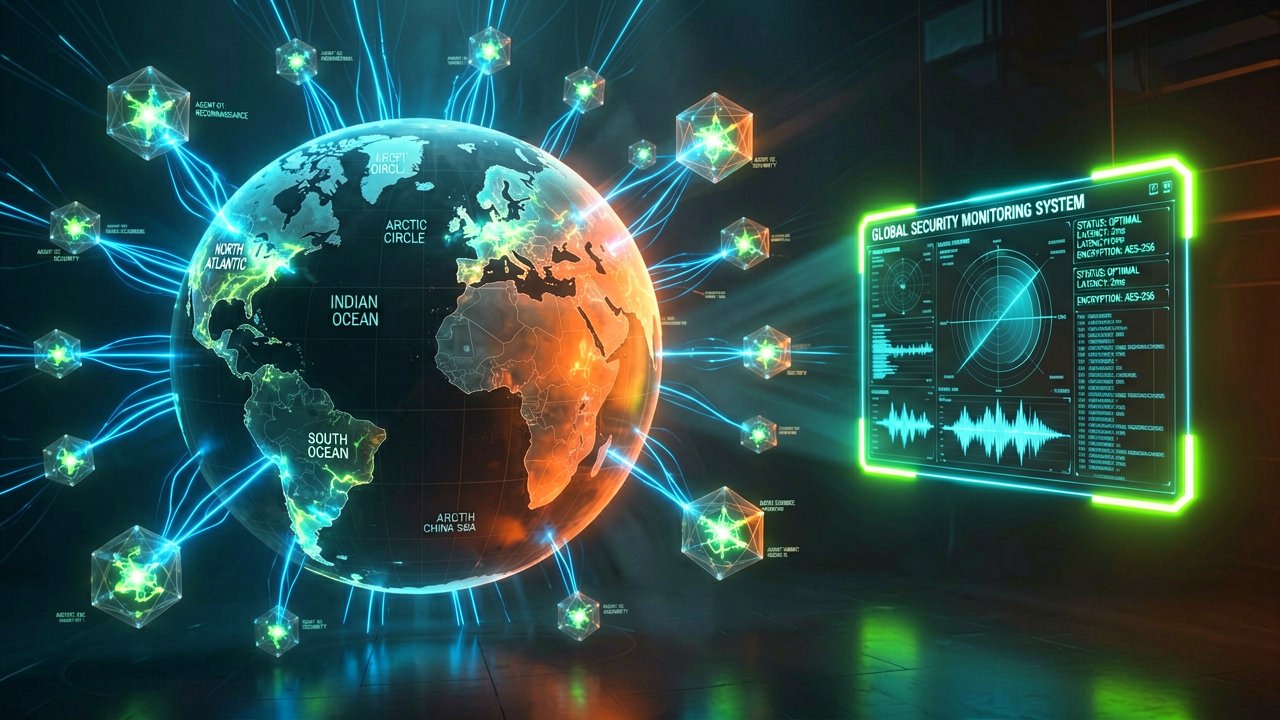
The Pentagon just took its most aggressive leap yet into the era of algorithmic warfare. On June 25, 2026, the U.S. Department of Defense officially launched a sophisticated new artificial intelligence initiative dubbed the "Agent Network." Managed by the Chief Digital and AI Officer, Cameron Stanley, this project isn't just about shuffling spreadsheets or automated logistics. Instead, it is a specialized tool engineered to completely transform battle management and enemy targeting by constantly scanning military intelligence and serving up tactical strike options to commanders in mere seconds.
The system stands out as a flagship element of the Pentagon's broader AI Acceleration Strategy. By deploying an interconnected web of machine learning agents, the military wants to compress the time it takes to process a firehose of intelligence data and turn it into real-world combat maneuvers. This marks a significant pivot toward autonomous decision-making systems, stepping well beyond the primitive drone-feed filters of yesteryear to build an integrated framework capable of parsing multi-platform intelligence simultaneously.
The Ethical Tightrope of Algorithmic Targeting
While the prospect of machine-speed warfare sounds like something out of science fiction, defense officials are working overtime to soothe public anxiety over autonomous killing machines. According to the official announcement by the U.S. Department of War, the Agent Network will not autonomously pull the trigger or select targets on its own. Human operators are explicitly kept in the loop, meaning commanders retain full responsibility for the actual timing and consequences of any strike. The military's leadership frames the AI as an incredibly fast assistant designed to clear the cognitive fog of war, rather than a replacement for human judgment.
Even so, the roll-out lands at a highly contentious moment. Recent reporting from Bloomberg revealed that the Pentagon quietly revised its official joint targeting doctrine earlier this year, opening the door for systems where AI actually initiates actions while humans merely monitor the fallout. Critics and ethics watchdogs are already expressing deep skepticism, noting that when algorithms start generating the options, the line between human control and machine control becomes razor-thin.
Behind the Fog of War: The emergence of the Agent Network isn't an overnight phenomenon, but rather the culmination of a decade-long scramble to avoid what military strategists call cognitive overload. For years, the Pentagon has been swamped by an avalanche of data from satellites, distributed drone sensors, and intercepted electronic communications. Human analysts simply cannot process this information fast enough to counter hypersonic threats or coordinated cyber-physical assaults. The Agent Network is designed to solve this exact bottleneck by acting as an algorithmic filter that instantly synthesizes messy battlefield data into actionable targeting packets.
This massive push toward machine-driven warfare traces its lineage directly back to older initiatives like Project Maven, which began years ago as a controversial effort to use computer vision for scanning drone footage. While Maven faced severe backlash from Silicon Valley tech workers who protested military involvement, the underlying philosophy won the bureaucratic battle inside Washington. The Pentagon has since learned to diversify its network of contractors, moving away from a reliance on single tech giants and instead cultivating a broader ecosystem of defense-tech startups hungry for government capital.
The Realities of the Man-in-the-Loop Concept
While official talking points heavily emphasize that humans will always make the final decision to fire, seasoned defense analysts argue this safeguard may be an illusion in practice. When an AI agent processes millions of data points to recommend a specific strike within a five-second window, a human operator lacks the time and context to effectively cross-examine the machine's logic. This creates a psychological phenomenon known as automation bias, where operators naturally defer to the system's recommendations, effectively reducing human oversight to a rubber-stamping exercise.
Furthermore, the shift to decentralized AI agents introduces unprecedented vulnerability to adversarial manipulation. Standard machine learning models are notorious for being susceptible to data poisoning and spoofing attacks, where an enemy could subtly alter the physical environment to trick the AI into misidentifying civilian infrastructure as a military threat. Ensuring these models remain resilient against electronic warfare and deliberate algorithmic deception is currently consuming a massive portion of the defense research budget.
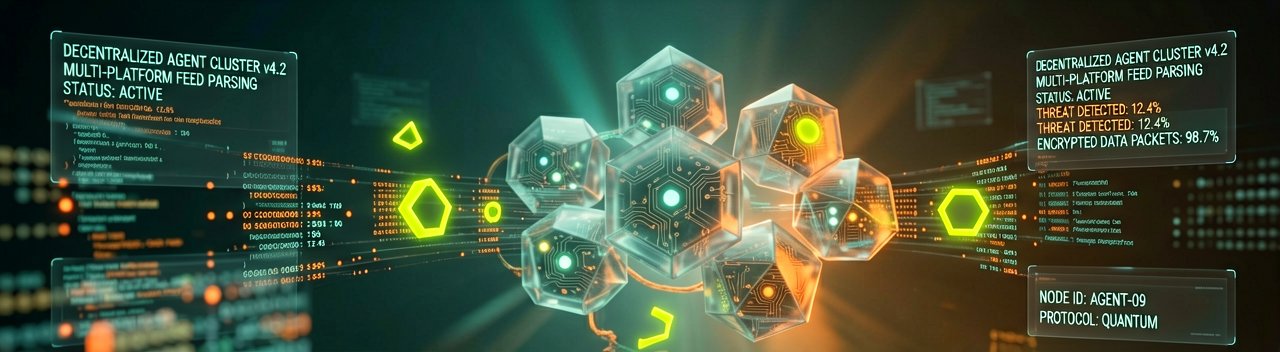
Ultimately, the deployment of the Agent Network signals a point of no return for international military doctrine. As global rivals race to develop peer capabilities, the pressure to remove humans from the loop entirely to save precious milliseconds will only intensify. The Pentagon's latest initiative isn't just an upgrade to existing hardware; it is a fundamental restructuring of command and control that will shape the ethics and execution of armed conflict for decades to come.
Reading Between the Lines: The Pentagon’s insistence that the Agent Network keeps humans firmly in control overlooks a glaring systemic contradiction. Military doctrine prioritizes speed above almost all else, yet human cognitive processing is a fixed bottleneck that cannot be upgraded with a software patch. By designing a system specifically to operate at speeds that outpace human comprehension, the defense establishment is creating a framework where meaningful human intervention becomes operationally impossible. A commander cannot truly exercise veto power over an algorithmic recommendation when the window for action is measured in fractions of a second.
This reality exposes a deep fracture within the military's ethical framework. On one hand, public-facing policies emphasize accountability and adherence to the laws of war; on the other, the operational mandate is to avoid being outpaced by automated adversaries. If a geopolitical rival deploys fully autonomous systems that bypass human approval entirely, the pressure on Western commanders to remove their own bureaucratic speed bumps will become overwhelming. The Agent Network appears less like a stable solution and more like a transitional bridge toward a future where human oversight is discarded as a luxury the battlefield can no longer afford.
The Shadow of Systemic Fragility
Beyond the philosophical dilemmas lies the pragmatic nightmare of software reliability in a chaotic, unpredictable environment. Trillions of dollars are poured into defense tech, yet military procurement has a notoriously poor track record when it comes to maintaining complex software architectures. Artificial intelligence models excel in controlled testing environments, but they routinely degrade when confronted with the messy, unmapped realities of an actual war zone. The risk of an unexpected algorithmic cascade—where interconnected agents misinterpret one another's signals and escalate a minor border skirmish into a major conflict—remains terrifyingly high.
Furthermore, the true nature of this technology shifts the balance of power within the defense sector itself. The Pentagon is no longer just buying hardware from traditional contractors; it is now entirely dependent on a select group of commercial software engineers and cloud infrastructure providers to maintain its core operational capabilities. This gives private technology corporations unprecedented leverage over national security policy, creating a complex web of corporate and state interests where accountability is easily obscured behind layers of proprietary code and classification stamps.
The supreme irony of the automated battlefield is that after spending billions of dollars to replace fallible human minds with pristine mathematical logic, we will inevitably find ourselves in a crisis caused by a software glitch that requires a human technician to unplug the system and plug it back in.
Artūras Malašauskas is an AI Systems Integrator with 20+ years of production-grade web engineering experience. He has designed, shipped, and scaled enterprise Python/PHP systems for logistics, SaaS, and public-sector clients. For the past year, he has focused exclusively on AI integrations: deploying open-source LLMs, building generative media pipelines (image, audio, video), and engineering multi-agent workflows for real production environments. His standard: reproducibility, security, cost-efficient inference—no vaporware. He documents and evaluates emerging AI tooling, separating verified capabilities from marketing noise. Technical editor at: muza-ai.eu, ai-verslas.lt, ai-naujinos.lt Connect on LinkedIn
Comments