Asian AI Firms Capitalize on Regulatory Vacuum Following Anthropic’s Mythos Development Freeze

The global artificial intelligence landscape is experiencing a significant structural realignment. A strict U.S. government directive forced Anthropic to freeze global access to its frontier, cybersecurity-focused large language models, Mythos 5 and Fable 5. This regulatory intervention was aimed at safeguarding national security by preventing foreign nationals from leveraging these highly capable systems. However, the restriction has inadvertently opened a lucrative strategic window for nimble international competitors.
Emerging tech firms across Asia have swiftly pivoted to fill this market vacuum. They are pitching local alternatives that explicitly promise to bypass the threat of Western geopolitical trade limitations. By offering high-tier technical capabilities outside the jurisdiction of U.S. export controls, these regional players are rapidly capturing institutional client trust. This dynamic underscores how domestic national security policies can fundamentally reshape global commercial technology leadership.
Sakana AI Shifts Strategy with Multi-Agent Orchestration
Instead of engaging in a prohibitively expensive compute race to train a massive monolithic model from scratch, Tokyo-based startup TechCrunch reports that Sakana AI has launched Fugu. Fugu is engineered as an orchestration model that coordinates tasks across multiple smaller AI models through a unified API endpoint. According to developers, the "Fugu Ultra" configuration successfully matches the operational benchmarks of Anthropic's restricted systems. The company positions this architecture as a decentralized, collective intelligence hedge designed to ensure infrastructural continuity if access to primary American APIs vanishes overnight.
360 Security Unveils Direct Vulnerability Discovery Rivals
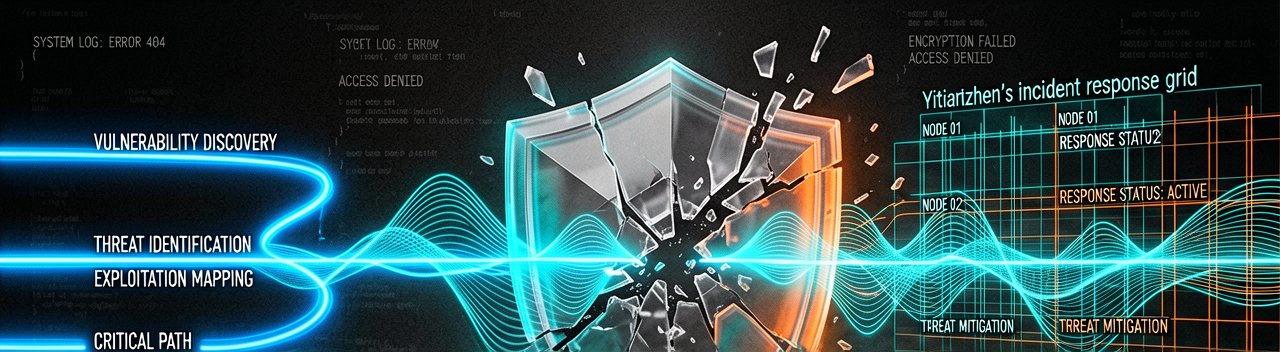
While Japanese firms approach the market shift as a defensive backup strategy for regional allies, Chinese cybersecurity giant 360 has taken a more direct competitive path. The Beijing-based corporation launched Tulongfeng, an AI model explicitly designed to automatically discover software vulnerabilities. Tulongfeng goes head-to-head with the core diagnostic capabilities of Anthropic's locked-down Mythos model. Alongside it, 360 released a companion model named Yitianzhen to automate incident response and digital defense systems. This pair creates an end-to-end sovereign cybersecurity suite entirely insulated from American regulatory pressures.
Geopolitical Fragmentation of the Global Frontier AI Supply Chain
Though the U.S. government recently authorized Anthropic to restore partial Mythos 5 access for a limited group of domestic firms and government agencies, general international access remains completely blocked. This fragmentation has signaled to global enterprises that relying on a single, Western-managed AI provider presents an acute operational risk. Industry analysts suggest that as open-source alternatives and localized orchestration layers continue to improve, the enforcement of traditional unilateral technology export controls will become increasingly difficult to sustain without accelerating the migration of customers toward unaligned foreign ecosystems.
The Counter-Intuitive Reality of Digital Containment
Reading Between the Lines: The prevailing consensus frames the current market fragmentation as an unmitigated victory for Asian tech sovereignty, yet this narrative oversimplifies the profound technical friction inherent in decoupling from the Western frontier. While multi-agent orchestration layers like Sakana AI’s Fugu cleverly bypass the need for massive computing clusters, they introduce significant systemic vulnerabilities. Coordinating dozens of smaller, unaligned models inherently increases latency, balloons token consumption costs, and compounds the risk of cascade failures across enterprise workflows. Western analysts remain deeply skeptical that these decentralized networks can truly match the deep contextual reasoning and behavioral consistency of a monolithic system like Mythos over prolonged deployment cycles.
Furthermore, the aggressive push toward localized AI models exposes a glaring contradiction within regional technology policies. The primary justification for adopting platforms like Tulongfeng is to insulate national infrastructure from American regulatory volatility, yet the local regulatory frameworks replacing them are frequently just as restrictive, albeit in different directions. Enterprise clients migrating to these new platforms are essentially swapping the risk of U.S. export bans for the risk of sudden domestic compliance mandates, localized data-residency crackdowns, or political curation. This shift reveals that the real driver of the market is not a genuine desire for open, unhindered innovation, but rather a strategic preference for familiar, domestic gatekeepers over foreign ones.
The ultimate irony of this regulatory crackdown is its long-term impact on global security standards, which was the very justification used to implement the restrictions in the first place. By forcing international enterprises away from transparent, highly auditable Western APIs, regulators have inadvertently driven cutting-edge vulnerability discovery and offensive cyber capabilities into completely unmonitored, localized black boxes. Instead of containing advanced AI risks, the policy has accelerated the proliferation of unaligned autonomous agents across global networks, leaving international security agencies with virtually zero visibility into the safety protocols, alignment frameworks, or deployment ethics governing these rapidly evolving regional systems.
"In their rush to build an airtight digital fortress, export regulators overlooked the basic laws of market physics: when you cut off the global supply of a highly coveted technology, you don't actually eliminate the demand—you just ensure that someone else, operating under entirely different rules, will build a lucrative business out of supplying it."
Artūras Malašauskas is an AI Systems Integrator with 20+ years of production-grade web engineering experience. He has designed, shipped, and scaled enterprise Python/PHP systems for logistics, SaaS, and public-sector clients. For the past year, he has focused exclusively on AI integrations: deploying open-source LLMs, building generative media pipelines (image, audio, video), and engineering multi-agent workflows for real production environments. His standard: reproducibility, security, cost-efficient inference—no vaporware. He documents and evaluates emerging AI tooling, separating verified capabilities from marketing noise. Technical editor at: muza-ai.eu, ai-verslas.lt, ai-naujinos.lt Connect on LinkedIn
Comments